
Blog
Quality Tires: Essential Guide for Distributors

Jul
Selecting quality tires represents one of the most critical decisions for distributors serving commercial, agricultural, and industrial markets. In 2026, the tire industry continues to evolve with advanced compounds, innovative tread designs, and stricter performance standards. Understanding what separates premium products from basic offerings enables distributors to build profitable partnerships while serving their customers' demanding applications. This comprehensive guide explores the essential characteristics that define quality tires, from manufacturing standards to real-world performance metrics.
Manufacturing Standards That Define Quality Tires
The foundation of any quality tire begins on the production floor. Modern tire manufacturing facilities employ stringent quality control protocols that monitor every stage of production, from raw material selection through final inspection. Advanced facilities utilize automated mixing systems that ensure consistent compound formulation, eliminating the batch-to-batch variations that plague lower-tier manufacturers.
Critical Certification Requirements
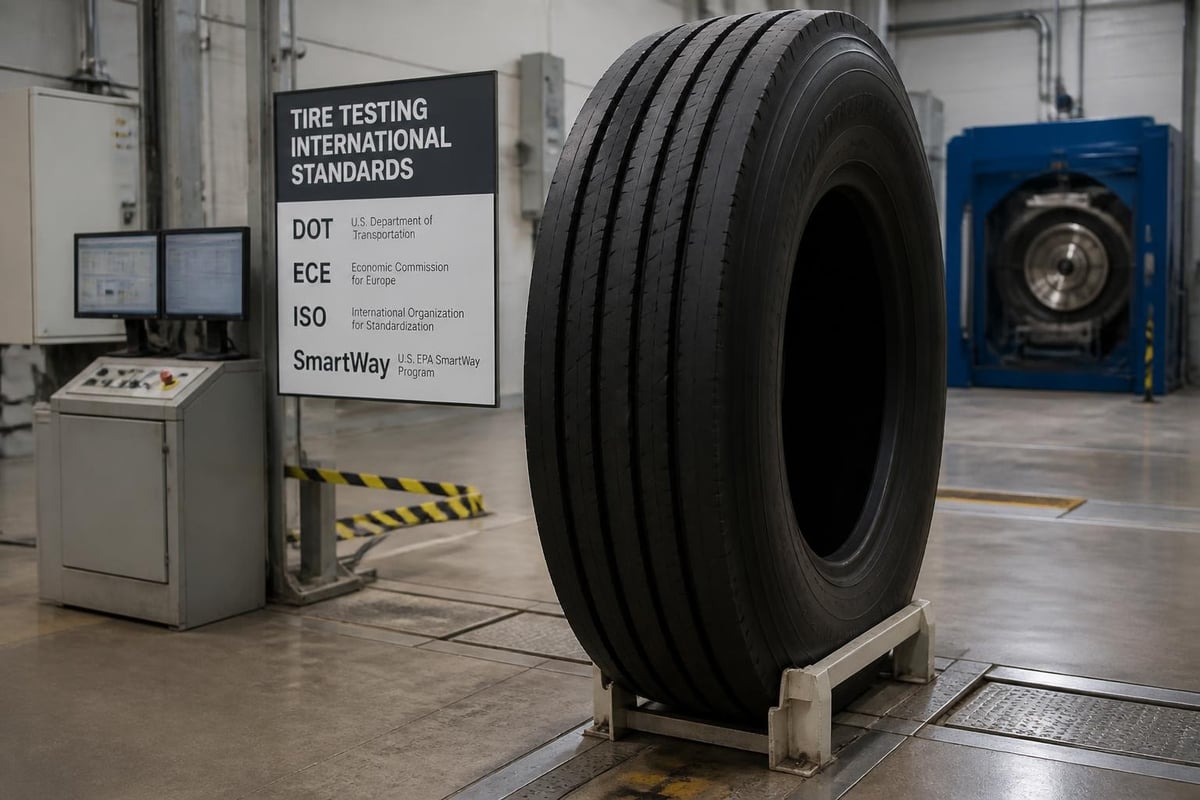
International certification standards serve as objective benchmarks for tire quality. The Department of Transportation (DOT) certification ensures tires meet minimum safety standards for the North American market, while Economic Commission for Europe (ECE) certification opens doors to European and other international markets. These certifications require extensive testing protocols that evaluate structural integrity, high-speed performance, and durability under extreme conditions.
- DOT certification: Validates safety compliance for U.S. market entry
- ECE R117: European standard for rolling resistance and wet grip
- ISO 9001: Quality management system certification for manufacturing consistency
- SmartWay verification: EPA standard for low rolling resistance in commercial applications
Quality tire manufacturers maintain multiple certifications simultaneously, demonstrating their commitment to meeting diverse market requirements. The Uniform Tire Quality Grading System provides additional transparency by rating treadwear, traction, and temperature resistance for passenger tires.
Raw Material Selection and Compound Engineering
The chemical composition of tire compounds directly impacts performance, longevity, and safety. Premium manufacturers invest in proprietary compound formulations that balance competing demands: durability versus fuel efficiency, wet traction versus tread life, and load capacity versus ride comfort.
Natural rubber content remains a key quality indicator, particularly for applications requiring high resilience and heat dissipation. Synthetic polymers complement natural rubber, enhancing specific performance characteristics. Silica reinforcement improves wet traction while reducing rolling resistance, a combination that benefits both safety and operational costs.
Carbon black percentages, processing oils, and vulcanization accelerators all contribute to the final product's performance envelope. Quality tires utilize precisely calibrated formulations tested through thousands of laboratory and field trials.
Performance Metrics for Quality Assessment
Evaluating tire quality requires looking beyond marketing claims to measurable performance data. Distributors serving commercial and industrial markets need objective criteria for comparing products and advising customers on application-specific selections.
| Performance Category | Quality Indicator | Testing Method | Target Threshold |
|---|---|---|---|
| Treadwear | UTQG rating / projected km | Accelerated track testing | 400+ rating / 80,000+ km |
| Wet Traction | Braking distance | Controlled surface testing | Grade A or B |
| Rolling Resistance | Coefficient (kg/tonne) | ISO 28580 protocol | ≤6.0 for efficiency class |
| Load Capacity | Load index precision | Static load testing | Within 2% of rated capacity |
| Heat Dissipation | Temperature grade | High-speed endurance | Grade A preferred |
According to Consumer Reports’ treadwear testing, quality tires consistently exceed their warranty mileage in real-world conditions, while budget options often fall short. This performance gap translates directly into total cost of ownership for commercial fleets and industrial operations.
Application-Specific Performance Requirements
Different applications demand distinct performance characteristics. Agricultural tires require superior traction in soft soil and resistance to stubble damage. Forklift tires need exceptional load stability and minimal deformation under static loads. Semi truck tires balance fuel efficiency with all-weather traction across hundreds of thousands of kilometers.
Quality manufacturers engineer tire families specifically for each application category rather than offering one-size-fits-all solutions. This specialization shows in tread pattern optimization, sidewall reinforcement strategies, and compound formulations tailored to expected operating conditions.
Structural Design Elements in Quality Tires
The internal architecture of a tire determines its ability to handle stress, maintain shape under load, and deliver predictable performance throughout its service life. Premium manufacturers invest heavily in structural engineering, utilizing advanced modeling software to optimize every component.
Belt Package Construction
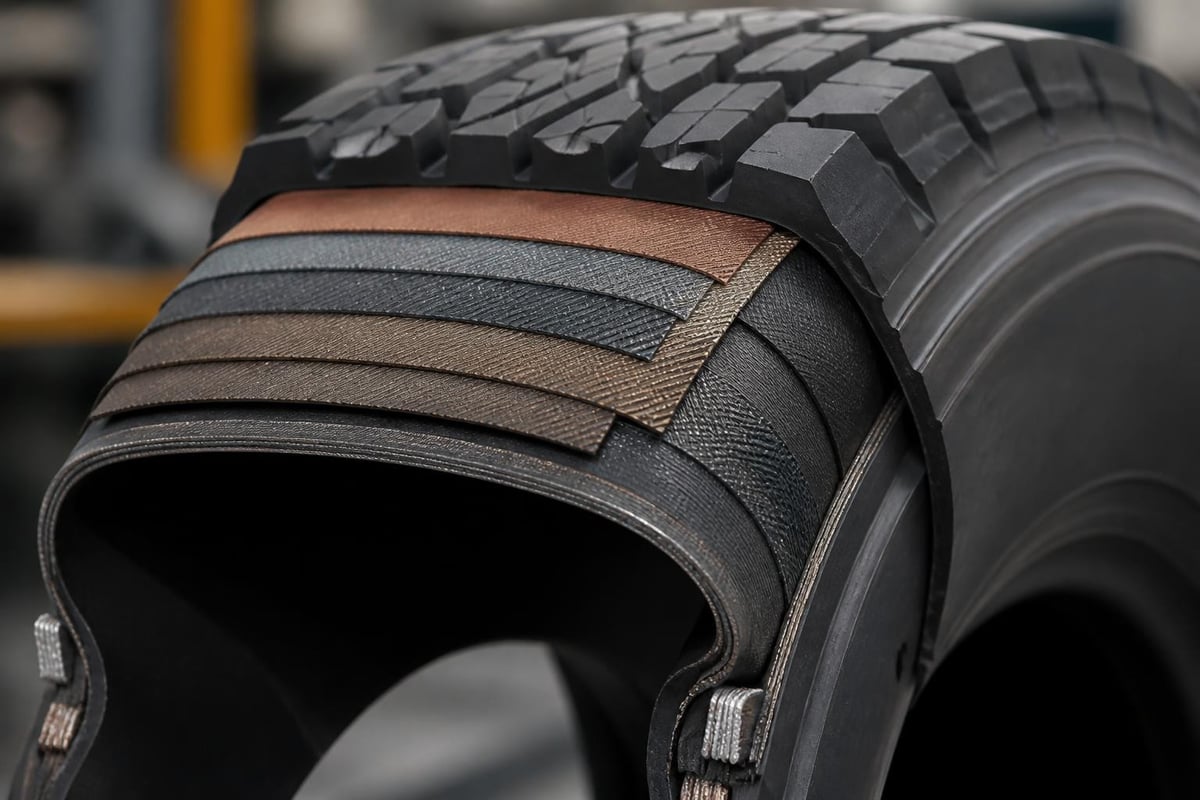
Steel belt packages in radial tires control tread shape, enhance puncture resistance, and improve high-speed stability. Quality tires feature precisely tensioned belts with optimized cord angles that balance lateral stiffness with longitudinal flexibility. The number of belt layers, cord material, and coating adhesives all impact durability and performance.
Premium radial truck tires typically employ four to five belt layers with spiral-wound nylon cap plies that contain the belt package at highway speeds. This construction prevents belt separation and maintains tread contact pressure distribution across the full footprint.
Casing Strength and Retreadability
For commercial truck applications, casing quality determines whether a tire qualifies for retreading-a critical factor in total cost of ownership. Quality casings utilize high-turn-up construction where sidewall plies extend fully into the bead area, creating exceptional strength and preventing ply separation during demanding service.
The ply rating system provides guidance on load capacity, but casing construction quality varies significantly among manufacturers claiming identical ply ratings. Premium manufacturers use higher tensile strength cords at optimal spacing, achieving rated capacity with less material and better heat dissipation.
Tread Design and Pattern Engineering
Tread pattern design represents the visible manifestation of tire engineering expertise. Quality tires feature patterns developed through extensive computer modeling, prototype testing, and real-world validation across diverse conditions.
Pattern Elements That Indicate Quality
Sophisticated tread designs incorporate multiple functional zones that work together for balanced performance:
- Center ribs provide straight-line stability and even wear distribution
- Shoulder blocks deliver cornering traction and resist irregular wear
- Lateral grooves evacuate water and enhance wet surface grip
- Sipes multiply biting edges for improved traction without sacrificing block rigidity
- Stone ejectors protect casing from penetration in off-road applications
The transitions between these zones should appear deliberate and engineered rather than arbitrary. Quality patterns maintain adequate void ratios for wet traction while preserving enough contact area for longevity.
Independent testing resources like Tire Rack’s research section provide comparative data on how different tread designs perform across standardized metrics. These third-party evaluations help distributors make evidence-based recommendations.
Quality Verification Through Testing Protocols
Reputable tire manufacturers subject their products to rigorous testing regimens that far exceed minimum certification requirements. Understanding these testing protocols helps distributors evaluate quality claims and differentiate genuine performance products from marketing-driven offerings.
Laboratory Testing Standards
Controlled laboratory testing establishes baseline performance characteristics under repeatable conditions. Key tests include:
- Bead unseating resistance: Measures sidewall integrity under extreme lateral forces
- Plunger penetration: Evaluates puncture resistance and casing strength
- High-speed endurance: Confirms structural integrity at sustained elevated speeds
- Low-temperature flexibility: Ensures performance in cold climate applications
- Ozone resistance: Predicts long-term durability in outdoor storage
Quality manufacturers conduct these tests on production samples, not just pre-production prototypes, ensuring consistency between tested and delivered products.
Field Validation Programs
Laboratory data provides important insights, but real-world performance validation remains essential. Leading manufacturers operate extensive field testing programs that place tires in actual service conditions across diverse geographies, climates, and applications.
These programs generate millions of kilometers of service data that inform ongoing product refinement. Fleet partnerships provide feedback on wear patterns, fuel consumption impact, and maintenance requirements that laboratory testing cannot fully replicate.
Distributor Considerations When Sourcing Quality Tires
For tire distributors serving commercial, agricultural, and industrial markets, product quality directly impacts business reputation and customer retention. Selecting manufacturing partners requires evaluating factors beyond initial pricing.
Consistency Across Production Batches
Quality manufacturers maintain tight tolerances across production runs, ensuring customers receive identical performance regardless of purchase timing. Batch-to-batch consistency requires sophisticated quality management systems, stable raw material sourcing, and continuous process monitoring.
Request production certificates and testing documentation that demonstrate ongoing quality verification. Premium manufacturers willingly provide this transparency because it differentiates their products in competitive markets.
Technical Support and Application Engineering
The best tire manufacturers function as technical partners rather than mere suppliers. They provide application engineering support, helping distributors match specific tire models to customer requirements. This expertise proves invaluable when addressing unique operating conditions or troubleshooting premature wear issues.
| Support Service | Quality Provider | Basic Supplier |
|---|---|---|
| Application consultation | Comprehensive analysis | Generic recommendations |
| Wear analysis | Detailed inspection reports | Visual assessment only |
| Training programs | Regular technical seminars | Product literature only |
| Warranty processing | Streamlined claim handling | Complex procedures |
Access to knowledgeable technical representatives distinguishes quality tire manufacturers from importers who simply source products without deep product knowledge.
Long-Term Value Proposition of Quality Tires
While initial pricing attracts attention in competitive markets, long-term value determines profitability for both distributors and end users. Quality tires deliver measurable advantages that justify premium positioning.
Total Cost of Ownership Analysis
Commercial operators increasingly evaluate tires based on total cost of ownership rather than purchase price alone. This comprehensive analysis includes:
- Initial acquisition cost
- Expected service life in specific applications
- Fuel consumption impact from rolling resistance
- Maintenance requirements and irregular wear potential
- Downtime costs associated with premature failures
- Retreadability for applicable tire categories
Quality tires consistently demonstrate superior total cost of ownership despite higher upfront investment. For semi truck and bus operations, fuel savings from low rolling resistance compounds can offset the tire cost difference within the first year of service.
Our Semi Truck Tires from Thailand exemplify this value approach, with drive tires featuring deep closed-shoulder lug designs and stone ejectors that extend service life on mixed-surface routes while meeting EPA SmartWay efficiency standards for fuel cost reduction.
Brand Reputation Impact on Distribution Business
Stocking quality tires from reputable manufacturers enhances distributor credibility and facilitates customer acquisition. Fleet managers and procurement professionals recognize quality brands and often specify them in tender requirements. Checkbook.org’s tire selection guide emphasizes how informed buyers research product quality before making purchase decisions.

Conversely, distributing low-quality products damages reputation and creates customer service burdens. Premature failures, excessive wear complaints, and safety incidents generate costs that far exceed any margin advantage from cheaper procurement.
Quality Indicators in Tire Specifications
Technical specifications provide objective data for comparing tire quality, but interpreting these specifications requires understanding industry conventions and measurement standards.
Load and Speed Rating Precision
Load indices and speed ratings represent minimum capabilities, not optimal operating conditions. Quality manufacturers build substantial safety margins into their ratings, while budget options often operate near the edge of their published capabilities. This distinction becomes critical in demanding applications where occasional overloading or high-speed operation occurs.
The load index number corresponds to maximum load capacity in kilograms at specified inflation pressure. Quality tires maintain structural integrity and heat dissipation even when briefly exceeding rated loads, whereas marginal products may experience catastrophic failure.
Inflation Pressure Requirements
Operating pressure recommendations reflect compound stiffness, casing strength, and intended application. Quality tires often operate effectively across broader pressure ranges, providing flexibility for applications with variable load conditions.
Lower pressure requirements at given load capacities indicate superior casing design and compound engineering. This characteristic proves valuable in agricultural applications where reduced inflation pressure improves traction and minimizes soil compaction.
Global Standards and Regional Variations
Quality tire manufacturing transcends geographical boundaries, but regional market requirements create specification variations that distributors must navigate.
Thailand's Position in Global Tire Manufacturing
Thailand has emerged as a significant tire manufacturing hub, combining competitive labor costs with increasingly sophisticated production capabilities. Leading Thai manufacturers have invested heavily in automation, quality systems, and technical expertise, enabling them to compete on quality rather than price alone.
Thai-manufactured tires serve markets worldwide, meeting stringent certification requirements for North America, Europe, Australia, and Asia-Pacific regions. The country's rubber production heritage provides access to high-quality natural rubber, a critical input for premium tire manufacturing.
Certification Harmonization Efforts
International efforts to harmonize tire regulations simplify compliance for manufacturers and distributors while maintaining safety standards. The Global Technical Regulation on tire performance represents progress toward unified testing protocols and performance thresholds.
Understanding which certifications matter in target markets enables distributors to stock appropriate inventory. Some regions require specific labeling, while others mandate certain performance thresholds that exceed basic DOT or ECE requirements.
Quality Tire Selection for Specific Applications
Different vehicle categories and operating environments demand distinct tire characteristics. Quality manufacturers develop specialized products for each major application segment rather than offering generic solutions.
Agricultural Tire Requirements
Agricultural operations demand tires that balance contradictory requirements: aggressive traction for field work yet minimal soil compaction, durability against stubble damage yet comfortable road transport, and heavy load capacity yet flexible sidewalls for flotation.
Premium agricultural tires feature specialized tread compounds that resist cutting from crop residue while maintaining flexibility in cold conditions. Lug angles are optimized for self-cleaning in muddy conditions, and reinforced bead areas withstand the torque loads from modern high-horsepower tractors.
Industrial and Material Handling Applications
Forklift and material handling tires operate in demanding environments with frequent direction changes, sustained static loads, and potential exposure to chemicals or debris. Quality industrial tires utilize specialized compounds with exceptional tear resistance and minimal deformation under load.
Solid tires for indoor applications feature precise dimensional stability to prevent vibration, while pneumatic options for outdoor use incorporate puncture-resistant layers and aggressive tread patterns for traction on unimproved surfaces.
Quality Assurance Through the Supply Chain
Maintaining tire quality extends beyond manufacturing to include proper storage, handling, and distribution practices. Distributors play a critical role in preserving product integrity from factory to end user.
Storage Environment Requirements
Tires deteriorate when exposed to ozone, direct sunlight, petroleum products, or extreme temperatures. Quality-conscious distributors maintain climate-controlled storage facilities and implement inventory rotation systems that ensure fresh stock delivery.
Proper storage orientation prevents deformation, particularly for large off-road tires. Vertical storage with adequate spacing allows air circulation while horizontal stacking requires periodic rotation to prevent flat-spotting.
Documentation and Traceability
Complete documentation enables quality tracking and warranty administration. Each tire's DOT code identifies manufacturing date and facility, critical information for managing inventory age and processing warranty claims.
Quality manufacturers provide comprehensive documentation including material certificates, test reports, and application guidance. This information supports distributor technical sales efforts and demonstrates quality commitment to discerning customers.
Emerging Quality Trends in 2026
The tire industry continues evolving with new materials, manufacturing techniques, and performance expectations. Staying informed about quality trends helps distributors anticipate market shifts and customer requirements.
Sustainability and Quality Intersection
Environmental considerations increasingly influence tire design without compromising performance standards. Quality manufacturers develop compounds using sustainable materials and renewable resources while maintaining durability and safety characteristics.
Low rolling resistance technology reduces fuel consumption and emissions across all vehicle categories. Advanced silica compounds enable this efficiency without sacrificing wet traction, demonstrating how quality engineering resolves apparent trade-offs.
Smart Tire Technology Integration
Embedded sensors and RFID technology enable tire performance monitoring, providing real-world data on pressure, temperature, and tread depth. Quality manufacturers integrate these technologies without compromising structural integrity or introducing premature failure points.
For fleet operators, this data enables predictive maintenance and optimizes tire rotation schedules, extending service life and preventing roadside failures. The sensors themselves must meet quality standards for long-term reliability in harsh operating environments.
Building Partnerships with Quality Tire Manufacturers
Long-term success in tire distribution depends on selecting manufacturing partners who share commitment to quality and customer service. Evaluating potential suppliers requires looking beyond product samples to assess organizational capabilities.
Factory Assessment Criteria
Direct factory visits provide invaluable insights into manufacturing quality and organizational competence. Observe production floor cleanliness, raw material storage practices, quality control procedures, and employee training programs.
Modern manufacturing facilities demonstrate investment in current technology and process improvement. Automated mixing equipment, computerized curing presses, and statistical process control systems indicate commitment to consistent quality output.
Partnership Support Structure
Beyond product quality, manufacturing partners should provide comprehensive support including technical training, marketing materials, warranty administration, and inventory management assistance. These services enable distributors to compete effectively and serve customers professionally.
Resources like TiresRated help end customers make informed decisions, but distributors need manufacturer support to position products effectively and address technical inquiries confidently.
Understanding what defines quality tires empowers distributors to make informed sourcing decisions that benefit their business and customers. From manufacturing standards and performance metrics to application-specific requirements and long-term value considerations, quality transcends initial pricing to deliver measurable advantages. OTR TIRE THAI combines Thailand's manufacturing excellence with international quality standards, offering distributors in over 80 countries access to premium agricultural, forklift, solid, TBR, PCR, OTR, and specialty tires at competitive wholesale prices. Partner with a manufacturer committed to quality engineering and distributor success.
