
Blog
Tires Material: Complete Guide to Modern Tire Composition
Aug
Modern tires represent one of the most sophisticated engineered products in manufacturing, combining dozens of raw materials into a composite structure designed to withstand extreme forces, temperature variations, and millions of rotations over their service life. Understanding tires material composition is essential for manufacturers, distributors, and fleet operators who need to evaluate quality, performance characteristics, and long-term value. From natural rubber harvested in tropical plantations to advanced synthetic polymers developed in chemical laboratories, every component plays a critical role in determining how a tire grips the road, resists wear, and maintains structural integrity under load. This comprehensive examination explores the materials science behind tire construction and how material selection drives performance across different tire categories.
Primary Rubber Components in Tire Construction
Natural rubber remains the foundation of tire manufacturing despite advances in synthetic alternatives. Harvested from Hevea brasiliensis trees primarily in Southeast Asia, natural rubber provides elasticity, tear resistance, and heat dissipation properties that synthetic compounds struggle to match completely. Tire manufacturers typically use natural rubber for sidewalls and inner liner applications where flexibility and air retention are paramount.
Synthetic rubber compounds complement natural rubber by offering specific performance characteristics:
- Styrene-butadiene rubber (SBR) enhances wet traction and tread wear resistance
- Polybutadiene rubber (BR) improves low-temperature flexibility and rolling resistance
- Butyl rubber creates impermeable inner liners that maintain air pressure
- Halobutyl rubber provides heat resistance for high-speed applications
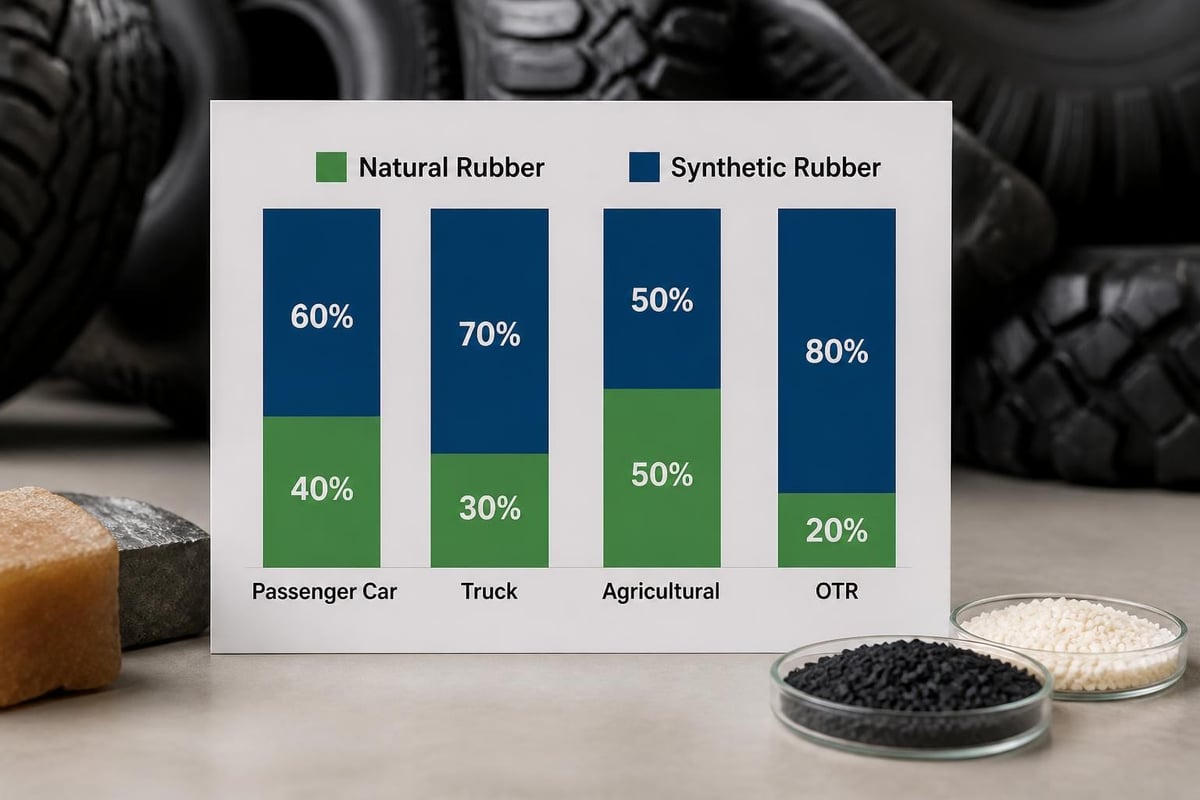
The blend ratio between natural and synthetic rubber varies dramatically by tire type and application. Passenger car tires typically use 15–20% natural rubber, while heavy-duty truck tires incorporate 30–40% to handle higher loads and heat generation. Agricultural and OTR tires often feature even higher natural rubber content for cut and tear resistance in demanding field conditions.
Polymer Chemistry and Compound Formulation
Rubber compounds in modern tires contain 100–200 individual ingredients precisely measured and mixed to achieve target performance specifications. Master batch formulations blend base polymers with processing oils, cure activators, and protective agents before adding reinforcing fillers and crosslinking systems. The vulcanization process creates molecular bridges between polymer chains, transforming plastic rubber into an elastic network that recovers from deformation.
Compounders adjust molecular weight distribution and branching to tune properties like hysteresis, glass transition temperature, and tensile strength. High-vinyl polybutadiene improves wet grip but increases rolling resistance, while solution-polymerized SBR enables silica dispersion for balanced performance. These molecular-level decisions directly influence how tires material behaves under real-world conditions ranging from sub-zero winter roads to scorching desert highways.
Reinforcing Fillers and Performance Additives
Carbon black represents 20–30% of total tires material by weight and serves as the primary reinforcing filler in most tire compounds. These nano-scale particles strengthen rubber matrices, improve abrasion resistance, and enhance UV protection. Different carbon black grades offer distinct particle sizes and surface areas: smaller particles (N110, N220) maximize reinforcement for high-performance applications, while larger particles (N550, N660) reduce rolling resistance in fuel-efficient designs.
| Carbon Black Grade | Particle Size | Primary Application | Key Benefit |
|---|---|---|---|
| N110 | 11–19 nm | Racing tires, performance treads | Maximum grip and reinforcement |
| N234 | 20–25 nm | Passenger car treads | Balanced wear and traction |
| N330 | 26–30 nm | Truck tire treads | Durability and heat resistance |
| N660 | 49–60 nm | Tire sidewalls, bases | Low hysteresis, flexibility |
Silica has emerged as an alternative reinforcing filler that reduces rolling resistance while maintaining wet traction. Precipitated silica requires silane coupling agents to bond with rubber polymers, creating a complex three-phase system. The technology enables low-rolling-resistance tire designs that improve fuel economy by 3–7% compared to carbon black compounds, though manufacturing complexity increases production costs. Studies of tire-wear compounds in urban environments have identified specific additives that migrate from tires during use, emphasizing the importance of responsible compound selection.
Chemical Additives and Processing Aids
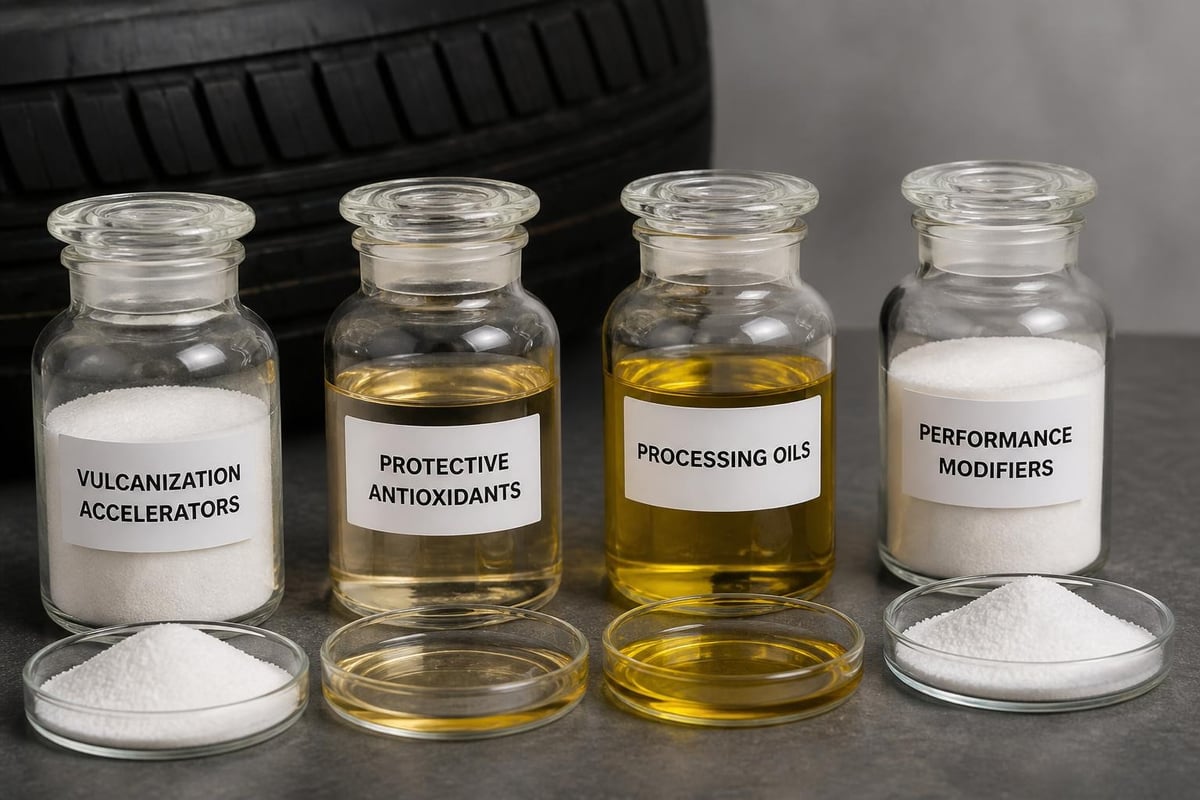
Beyond base polymers and fillers, tires material includes numerous chemical additives that enable processing and enhance durability:
- Accelerators control vulcanization speed and crosslink density
- Antioxidants prevent thermal and oxidative degradation
- Antiozonants protect against ozone cracking in sidewalls
- Processing oils improve compound flow and mixing
- Zinc oxide and stearic acid activate the vulcanization system
Anti-degradants represent a critical but small fraction of tire weight. Para-phenylenediamine derivatives (6PPD) protect against flex cracking, while waxes migrate to the surface to shield against ozone attack. Careful selection balances performance requirements against environmental considerations, particularly as regulations evolve around chemical emissions and end-of-life tire recycling.
Textile and Steel Reinforcement Systems
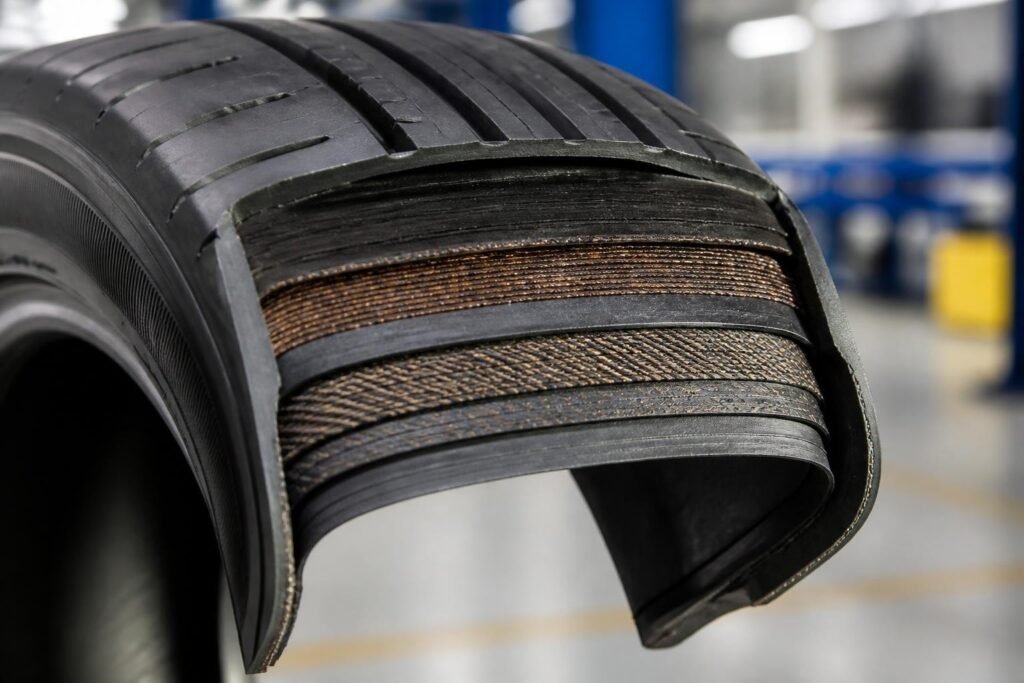
Tires material includes high-strength reinforcement cords that provide dimensional stability and load-carrying capacity. Textile plies in the carcass typically use polyester, nylon, or rayon fibers embedded in rubber to create a flexible but strong foundation. Polyester offers excellent adhesion and moisture resistance for most passenger and light truck applications, while nylon provides superior impact resistance for high-speed tires.
Steel cord belts beneath the tread prevent expansion under centrifugal forces and distribute loads across the contact patch. These belts consist of brass-plated steel wires twisted into cords and calendered into rubber sheets. Brass plating creates a chemical bond during vulcanization, ensuring the steel and rubber function as a unified composite structure rather than separate layers.
Construction varies significantly by tire category:
- Passenger car radial tires: Two polyester body plies, two steel belts, nylon cap ply
- Truck radial tires: Multiple steel body plies, three to four steel belts, optional breaker reinforcement
- Bias agricultural tires: Four to eight nylon or polyester cross-plies at 30–40° angles
- Solid industrial tires: Steel ring reinforcement with polyurethane or rubber matrix
The Semi Truck Tires from Thailand manufactured for demanding long-haul applications exemplify how steel reinforcement optimization creates durable platforms for steer, drive, and trailer positions. These designs use deep closed-shoulder lug patterns combined with strategic belt geometry to maximize casing life across multiple retreading cycles.
Bead Wire and Retention Systems
Tire beads contain multiple loops of high-tensile steel wire coated with bronze or brass to ensure chemical bonding with surrounding rubber compounds. Bead wire typically achieves tensile strengths exceeding 2,800 MPa, creating an inextensible anchor that seats against the rim flange. The bead bundle diameter, wire count, and profile geometry must precisely match rim dimensions to prevent air leaks and ensure safe retention under inflation pressure and centrifugal forces.
Apex fillers above the bead bundle transition from the rigid bead area to the flexible sidewall, controlling steering response and ride comfort. Hard apex compounds improve handling precision in performance tires, while softer formulations enhance comfort in passenger applications. This seemingly minor tires material selection significantly influences vehicle dynamics and driver perception.
Specialty Materials for Specific Applications
Agricultural and off-road tires incorporate cut-resistant compounds and specialized tread patterns to survive harsh field conditions. Natural rubber content reaches 35–45% in premium agricultural radials, providing the flex fatigue resistance needed for stubble fields and rock-laden terrain. Some manufacturers add aramid fibers or other high-modulus reinforcements to prevent snag damage and sidewall penetration.
Solid tires for forklifts and industrial equipment eliminate pneumatic construction entirely, using dense rubber or polyurethane compounds bonded to steel rings. These tires material systems prioritize puncture immunity and long service life over ride comfort, with durometer hardness ranging from 60 Shore A for cushioned applications to 95 Shore A for maximum load capacity.
Run-flat tire technology adds reinforced sidewall inserts that support vehicle weight after air loss. These inserts typically combine high-hardness rubber compounds with heat-resistant polymers to maintain structural integrity during extended zero-pressure operation. The additional tires material increases weight and manufacturing complexity but provides critical safety benefits in certain applications.
Environmental Considerations and Material Recovery
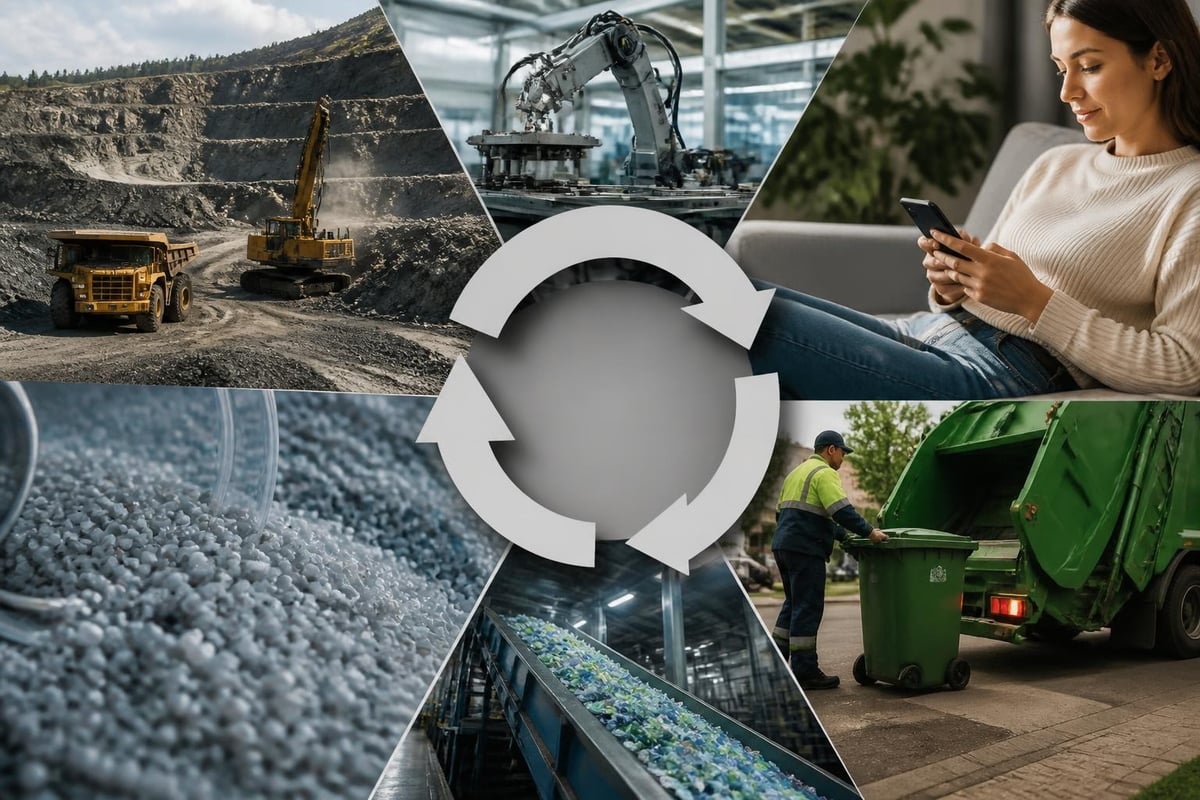
End-of-life tire management has driven innovation in material selection and recovery technologies. Approximately 1.5 billion tires reach end-of-life globally each year, representing millions of tons of valuable materials. The EPA’s scrap tire handbook outlines composition analysis and recovery pathways including crumb rubber production, civil engineering applications, and pyrolysis for material recovery.
| Recovery Method | Materials Recovered | Primary Applications |
|---|---|---|
| Mechanical grinding | Crumb rubber 10–40 mesh | Playground surfaces, athletic tracks |
| Ambient grinding | Fine rubber powder 40+ mesh | Asphalt modification, molded products |
| Cryogenic processing | Ultra-fine powder 200+ mesh | New tire compounds, plastic modification |
| Pyrolysis | Carbon black, oil, steel, gas | Industrial carbon black, fuel alternatives |
The European Tyre & Rubber Manufacturers’ Association has established circular economy targets encouraging design for recyclability. Manufacturers increasingly evaluate tires material selections based on downstream recovery potential, favoring compounds and reinforcements that facilitate separation and reprocessing.
Sustainable Material Innovations
Research into bio-based and renewable tires material alternatives continues expanding. Natural rubber alternatives from guayule, Russian dandelion, and microbial fermentation offer supply chain diversification and potentially reduced environmental impact. Soybean oil, rice husk ash silica, and lignin-derived carbon black represent additional renewable feedstock options entering commercial evaluation.
Recycled content integration faces technical challenges around quality consistency and performance validation. Recovered carbon black from pyrolysis can replace 10–15% of virgin carbon black in select compounds without compromising durability, while devulcanized rubber finds applications in non-critical tire components. These incremental improvements collectively reduce virgin material demand while maintaining the performance standards commercial and consumer markets require.
Manufacturing Process and Material Transformation
The journey from raw tires material to finished product involves precision engineering at every stage. Banbury mixers combine rubber polymers with fillers, oils, and chemicals under controlled temperature and pressure, creating homogeneous compounds. Mixing parameters including temperature profiles, rotor speed, and dump temperatures critically influence compound properties and manufacturing consistency.
Calendering processes transform mixed compounds into sheets and coat reinforcement textiles with precise rubber thickness. Steel cord calendering requires careful tension control to prevent cord distortion while ensuring complete rubber penetration between individual filaments. The calendered components then proceed to tire building, where skilled operators or automated systems assemble multiple material layers into an uncured "green tire."
Vulcanization represents the final transformation where heat and pressure activate crosslinking chemistry. Bladder curing or press curing systems apply 150–180°C temperatures and 15–20 bar pressure for 10–30 minutes depending on tire size. During this process, the sulfur vulcanization system creates molecular bridges between polymer chains, transforming plastic compounds into elastic networks. Simultaneously, the reinforcement cords bond chemically to surrounding rubber, creating the composite structure essential for tire performance.
Post-cure operations including inspection, balancing, and warehousing complete the manufacturing sequence before distribution to global markets.
Quality Control and Material Testing
Ensuring consistent tires material quality requires comprehensive testing protocols throughout production. Incoming raw material inspection verifies polymer viscosity, carbon black surface area, steel cord tensile strength, and chemical additive purity against specifications. Statistical process control monitors mixing parameters, compound rheology, and physical properties to detect variations before they affect finished tire performance.
Laboratory testing of finished tires includes:
- Load and speed endurance testing per DOT and ECE regulations
- Bead retention strength and air permeability measurements
- Tread wear simulation on road wheel abraders
- High-speed uniformity analysis for dynamic balance
- Destructive testing to verify construction and material placement
Advanced analytical techniques including thermogravimetric analysis (TGA), differential scanning calorimetry (DSC), and dynamic mechanical analysis (DMA) characterize compound behavior under various conditions. These material science tools enable manufacturers to optimize formulations and predict field performance before commercial release.
Material Selection Across Tire Categories
Different vehicle applications demand specific tires material optimization strategies. Passenger car tires prioritize low rolling resistance through silica-rich compounds, lightweight construction, and optimized belt angles. These design choices reduce fuel consumption but require careful balancing against wet traction, noise, and wear life expectations.
Commercial truck tires emphasize durability and retreadability through higher natural rubber content, steel body plies, and deep tread patterns. The material investment in robust construction pays dividends through multiple service lives when properly maintained and retreaded. Fleet operators evaluate tire total cost of ownership including casing value, which directly reflects material quality and construction integrity.
Off-highway and specialty tires face extreme operating conditions requiring application-specific material solutions. Mining tires incorporate ultra-deep treads with cut-resistant compounds, while aircraft tires use specialized polymers and reinforcements to withstand repeated high-energy landings. Agricultural radials balance soil compaction concerns against load capacity through unique carcass designs and inflation pressure optimization.
Understanding these material trade-offs enables informed tire selection aligned with operational requirements and total cost objectives. The expertise available through established manufacturers and distributors helps match tire technology to application demands across diverse industries and geographic markets.
Future Directions in Tire Materials Science
Ongoing research explores materials and technologies that will define next-generation tire performance. Nano-engineered fillers including carbon nanotubes, graphene derivatives, and engineered silicas promise enhanced reinforcement efficiency and reduced rolling resistance. These advanced materials require new processing techniques and compounding approaches but offer significant performance potential.
Smart materials incorporating sensors and monitoring capabilities represent another innovation frontier. Embedded RFID chips, pressure/temperature sensors, and conductive compounds enable real-time tire condition monitoring and predictive maintenance. Integration of these technologies requires material compatibility and manufacturing process adaptation without compromising structural integrity.
Self-healing polymers that automatically repair small punctures through chemical or physical mechanisms have progressed from laboratory curiosities to commercial development. While current self-healing tires material systems have limitations in damage size and environmental conditions, continued advancement may eventually reduce roadside failures and extend service intervals.
The convergence of materials science, manufacturing automation, and data analytics continues reshaping how tires are designed, produced, and managed throughout their lifecycle. Manufacturers investing in material innovation and process optimization position themselves to meet evolving performance, regulatory, and sustainability requirements in global tire markets.
Understanding tires material composition reveals the sophisticated engineering behind these essential vehicle components and helps industry professionals make informed decisions about tire selection, application, and lifecycle management. Whether you need premium agricultural radials, durable truck tires, or specialized industrial solutions, OTR TIRE THAI delivers internationally certified products manufactured with advanced materials and proven formulations. Our wholesale pricing and global distribution network support tire distributors in over 80 countries with the quality and consistency their customers demand.
