
Blog
Best All Season Tires for SUV: 2026 Buyer’s Guide
Sep
Sport utility vehicles demand versatile tire performance across changing weather conditions, varying road surfaces, and unpredictable driving scenarios. Selecting the best all season tires for SUV applications requires balancing wet traction, dry handling, light snow capability, and long tread life. With SUV ownership continuing to grow across North America, drivers need reliable all-season compounds that deliver confidence throughout the calendar year without the hassle of seasonal changeovers.
Understanding All-Season SUV Tire Technology
All-season tires designed for SUVs incorporate specialized engineering to handle the unique demands of higher vehicle weight, elevated center of gravity, and diverse usage patterns. Modern all-season compounds use silica-enhanced rubber formulations that remain pliable in temperatures ranging from freezing to summer heat, while asymmetric tread patterns channel water efficiently and provide multi-directional biting edges for light winter conditions.
Key Performance Characteristics
The best all season tires for SUV applications must excel across multiple performance dimensions simultaneously. Wet braking distance represents one of the most critical safety metrics, as SUVs' higher mass and momentum require enhanced hydroplaning resistance and shorter stopping distances on rain-soaked pavement.
- Tread compound flexibility across temperature ranges
- Circumferential grooves for water evacuation
- 3D sipes that maintain block rigidity while creating biting edges
- Reinforced internal structure to support heavier loads
- Optimized contact patch for even wear distribution
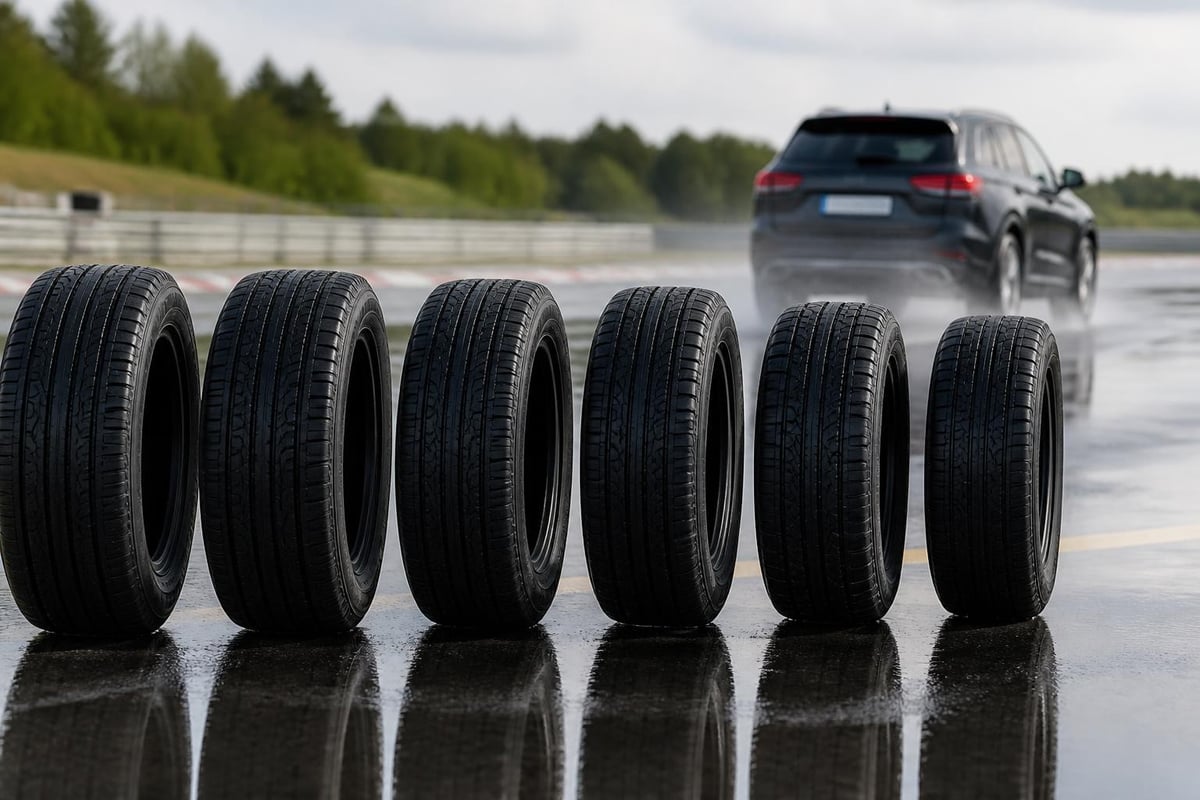
Independent testing reveals significant performance gaps between premium and budget all-season SUV tires. According to extensive independent lab and real-world test results, stopping distance variations of 15-20 feet from 60 mph in wet conditions are common across different tire models in identical sizes.
Top Performance Categories for SUV All-Season Tires
Grand Touring All-Season Options
Grand touring all-season tires prioritize ride comfort and highway refinement while maintaining competent all-weather capability. These tires feature continuous center ribs for responsive steering and lower void ratios that reduce road noise during freeway cruising. Tread life warranties for grand touring models typically range from 60,000 to 80,000 miles, reflecting their bias toward even wear and highway durability.
| Feature | Grand Touring | Performance All-Season | Crossover/SUV Specific |
|---|---|---|---|
| Ride Comfort | Excellent | Good | Very Good |
| Dry Handling | Good | Excellent | Good |
| Snow Traction | Moderate | Limited | Good |
| Tread Life | 60-80k miles | 40-50k miles | 50-70k miles |
| Highway Noise | Very Low | Moderate | Low |
Performance all-season tires deliver sharper cornering response and higher dry-road grip limits, making them ideal for sport-oriented crossovers and performance SUVs. These models sacrifice some tread life and cold-weather capability in exchange for enhanced lateral grip and steering precision during aggressive driving.
Crossover and SUV-Specific Designs
Purpose-engineered crossover all-season tires represent the sweet spot for most SUV owners. These designs incorporate higher load ratings, reinforced sidewalls to resist flexing under vehicle weight, and tread patterns optimized for light truck applications. The sidewall construction typically includes additional polyester plies or steel belts that prevent excessive squirm during lane changes and emergency maneuvers.
Modern crossover-specific all-season tires also address the growing demand for fuel efficiency. Low-rolling-resistance compounds reduce the energy lost to tire deformation, improving EPA fuel economy ratings by 2-4 percent compared to conventional all-season designs.
Selection Criteria and Size Considerations
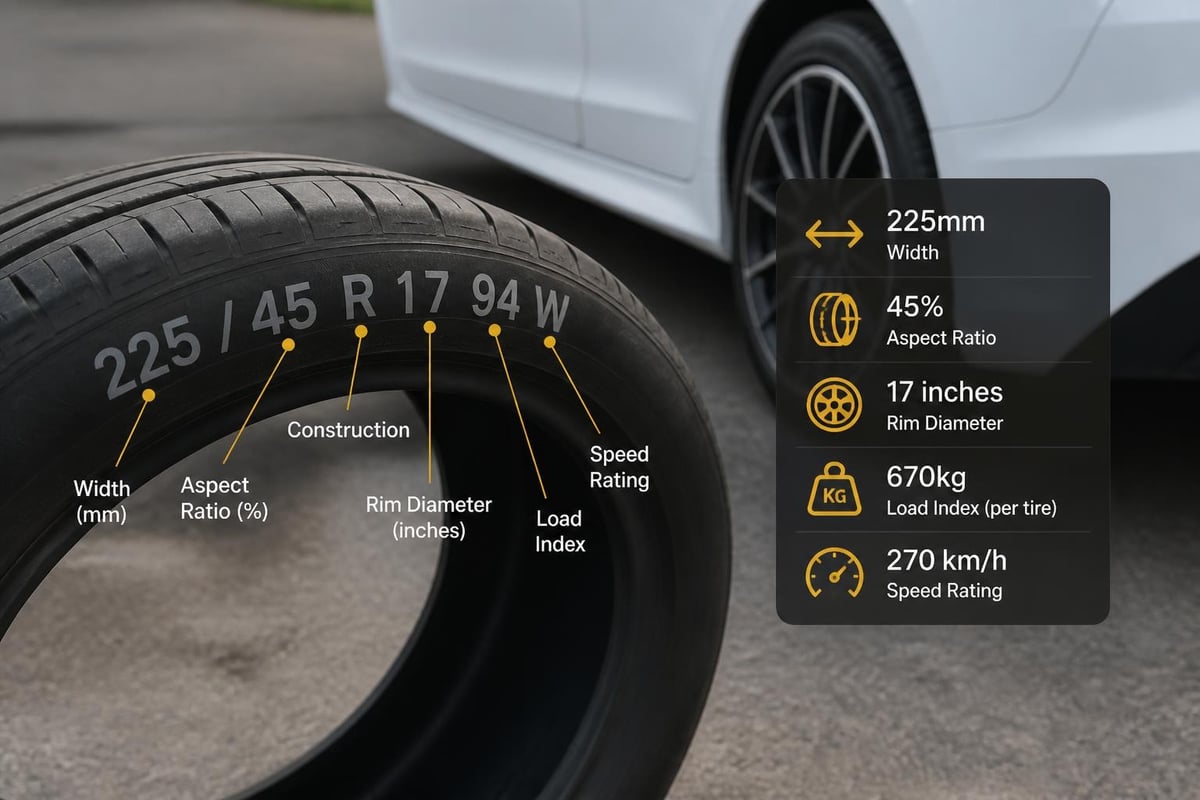
Choosing the best all season tires for SUV use begins with understanding your vehicle's original equipment tire specifications. The alphanumeric code on your sidewall reveals critical information about width, aspect ratio, construction type, wheel diameter, load index, and speed rating.
Decoding Tire Specifications
Consider a common SUV tire size: 235/65R18 106H. This designation breaks down as follows:
- 235 = Section width in millimeters
- 65 = Aspect ratio (sidewall height as percentage of width)
- R = Radial construction
- 18 = Wheel diameter in inches
- 106 = Load index (maximum 2,094 pounds per tire)
- H = Speed rating (130 mph maximum)
According to authoritative consumer guidance on tire shopping, maintaining the original equipment load index and speed rating ensures your replacement tires can safely support your vehicle's weight and performance capabilities.
Plus-sizing represents a popular modification where owners install wider tires on larger-diameter wheels. While this can enhance cornering grip and visual appeal, it often compromises ride quality and may reduce fuel economy due to increased rolling resistance and unsprung weight.
Weather Performance and Three-Peak Mountain Snowflake Certification
The traditional M+S (Mud and Snow) designation stamped on most all-season tires represents only a basic design criterion, not rigorous winter performance testing. The Three-Peak Mountain Snowflake (3PMSF) symbol indicates a tire has passed standardized snow traction testing and achieved at least 110 percent of the reference tire's performance.
Severe Snow Service Rating
While true winter tires remain superior for sustained freezing conditions, select all-season models now carry the 3PMSF certification. These enhanced all-season tires incorporate higher sipe density, specialized tread compounds that resist hardening below 32°F, and more aggressive void ratios for snow evacuation.
- Standard all-season: Adequate for occasional light snow
- 3PMSF all-season: Competent in moderate snow accumulation
- Dedicated winter tire: Required for consistent winter conditions
For SUV owners in moderate climates with occasional winter precipitation, 3PMSF-certified all-season tires eliminate the need for seasonal changeovers while providing measurably better snow traction than conventional all-season designs.
Load Range and Ply Ratings for Heavier Vehicles
Full-size SUVs, particularly body-on-frame models used for towing, require attention to load range specifications beyond passenger-car considerations. Load Range SL (Standard Load) suffices for most crossovers and lighter SUVs, while Load Range XL (Extra Load) provides additional weight capacity for three-row SUVs and vehicles equipped with towing packages.
Light truck tires designated with Load Range C, D, or E feature progressively stronger construction with additional ply layers. These reinforced tires handle the demands of heavy payload and trailer tongue weight, though they typically deliver a firmer ride quality on unloaded vehicles.
For distributors and fleet operators sourcing tires for mixed SUV and light truck applications, manufacturers like OTR TIRE THAI provide wholesale light truck radial tires with comprehensive HT, AT, and MT patterns that bridge the gap between passenger SUV and commercial vehicle requirements.
Tread Life, Warranties, and Rotation Schedules
Treadwear ratings provide a relative comparison of tire longevity, with most all-season SUV tires ranging from 500 to 800 on the UTQG scale. A tire rated 600 should theoretically last 20 percent longer than one rated 500 under identical conditions, though real-world results depend heavily on driving habits, climate, and maintenance practices.
Maximizing Tire Longevity
Rotation intervals of 5,000 to 7,500 miles promote even wear distribution, particularly important for all-wheel-drive SUVs where uneven tread depth can strain drivetrain components. Front-to-rear rotation patterns work for most AWD systems, while directional tread designs require side-to-side rotations on the same axle.
| Maintenance Task | Recommended Interval | Impact on Tread Life |
|---|---|---|
| Tire Rotation | 5,000-7,500 miles | +20-30% longevity |
| Alignment Check | Annually or after impact | +15-25% longevity |
| Pressure Monitoring | Monthly | +10-15% longevity |
| Visual Inspection | Monthly | Early problem detection |
Proper inflation pressure affects not only tire life but also fuel economy, handling precision, and ride comfort. Under-inflation by just 6 psi increases rolling resistance significantly and causes accelerated shoulder wear, while over-inflation creates a harsh ride and promotes rapid center tread erosion.
Noise, Vibration, and Harshness (NVH) Characteristics
Premium all-season SUV tires invest heavily in reducing cabin noise and vibration transmission. Variable pitch tread block sequences interrupt the repetitive air-pumping frequency that creates droning highway noise, while polyester and nylon cap plies dampen road impact harshness before it reaches the suspension.
Computer-optimized tread patterns now feature random void variations and phase-shifted blocks that break up harmonic resonance. The best all season tires for SUV applications achieve remarkably quiet operation even at highway speeds, with noise levels below 70 decibels measured inside the cabin during standardized testing.
As consumer-facing technical research consistently demonstrates, tire selection influences vehicle dynamics more significantly than drivetrain configuration in many scenarios, making NVH characteristics a priority consideration for daily-driven SUVs.
Fuel Efficiency and Rolling Resistance
Transportation accounts for a substantial portion of operational costs for fleet SUVs, making rolling resistance a critical specification. Low-rolling-resistance (LRR) all-season tires reduce fuel consumption by 3-5 percent compared to conventional designs, translating to meaningful savings over the tire's service life.
Compound chemistry drives rolling resistance performance. Silica-enriched tread compounds maintain wet traction while reducing internal friction and heat generation during tire deflection. Carbon black ratios, polymer chain lengths, and cross-linking density all influence the balance between grip and efficiency.
EPA SmartWay certification identifies tires meeting strict rolling resistance thresholds. While this program focuses primarily on commercial vehicles, the technology increasingly migrates to consumer SUV applications as manufacturers respond to corporate average fuel economy (CAFE) standards.
Regional Climate Considerations
Geographic location fundamentally shapes tire selection priorities. SUV owners in the Sun Belt prioritize heat resistance, UV-stable sidewalls, and extended wet-season performance, while northern drivers need enhanced cold-weather flexibility and snow capability.
Temperature Range Performance
Southern climates with sustained temperatures above 80°F demand tread compounds resistant to thermal degradation and accelerated wear. High silica content helps maintain traction as temperatures climb, while heat-resistant polymers prevent chunking and irregular wear patterns on hot pavement.
Northern and mountain-state buyers should prioritize all-season tires with the 3PMSF symbol and tread compounds formulated to remain pliable near freezing. Sipe density becomes increasingly important as temperatures drop, with thousands of microscopic cuts in each tread block creating biting edges on packed snow and ice.
Coastal regions with high humidity and frequent rain require exceptional hydroplaning resistance. Deep circumferential grooves paired with lateral channels evacuate water volume efficiently, maintaining rubber-to-pavement contact at highway speeds during heavy precipitation.
Brand Reputation and Manufacturing Quality
Tire manufacturing quality directly impacts safety, performance consistency, and service life. Uniformity specifications for premium tires maintain tighter tolerances on radial force variation, lateral force variation, and dynamic balance, resulting in smoother operation and reduced wear rate.
First-tier manufacturers invest substantially in compound research, mold precision, and quality control systems. Each production tire undergoes automated inspection using laser shearography and X-ray imaging to detect internal defects invisible to conventional inspection methods.
For wholesale buyers and distributors, sourcing from established manufacturers with proven quality systems ensures consistent batch-to-batch performance and reduces warranty claims. International certifications including DOT, ECE, and ISO 9001 provide objective verification of manufacturing standards and process controls.
Selecting the best all season tires for SUV applications requires balancing performance priorities, understanding load requirements, and matching tire capabilities to regional climate conditions. Whether you prioritize comfort, handling precision, or all-weather capability, modern all-season technology delivers impressive versatility for year-round driving. For distributors seeking premium all-season SUV tires backed by international quality standards and competitive wholesale pricing, explore the comprehensive range available at OTR TIRE THAI to meet your global customer requirements.
