
Blog
Car Tires All Season: Complete 2026 Buyer’s Guide
Sep
Choosing the right tires for your vehicle represents one of the most critical decisions for safety, performance, and long-term value. Car tires all season have evolved dramatically over the past decade, incorporating advanced compounds and engineering that deliver year-round capability without the hassle of seasonal changeovers. As we navigate 2026, understanding what all-season tires can and cannot do has never been more important for drivers, fleet managers, and tire distributors worldwide.
Understanding All-Season Tire Technology
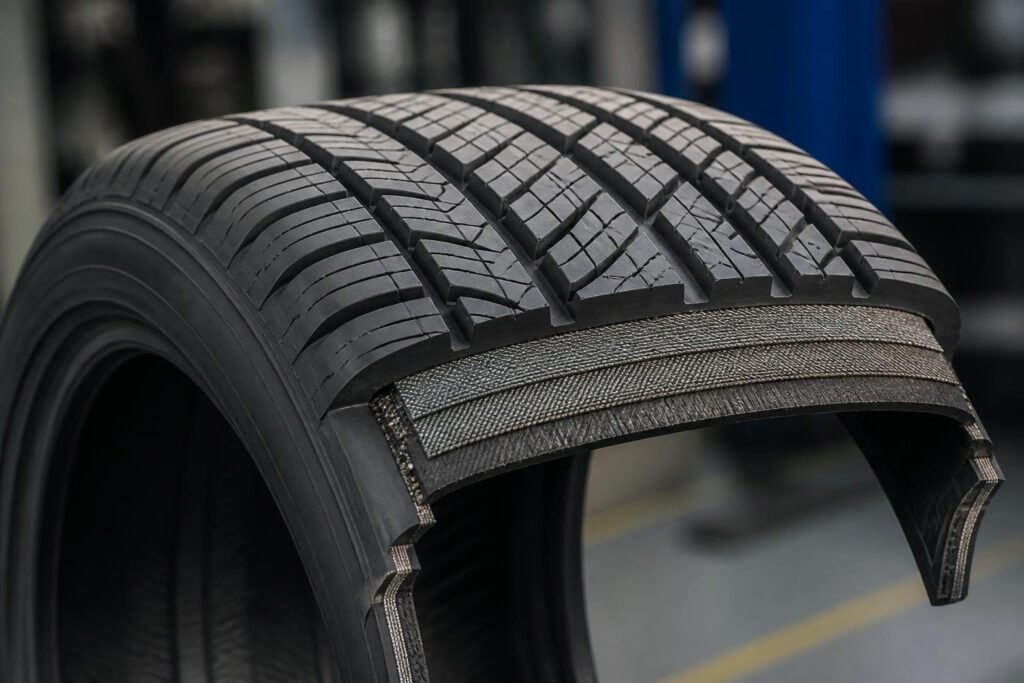
Modern car tires all season leverage sophisticated rubber compounds designed to remain flexible across a broad temperature range. Unlike summer tires that harden in cold weather or winter tires that wear rapidly in heat, all-season tires strike a carefully engineered balance.
Tread compound chemistry forms the foundation of all-season performance. Manufacturers blend natural rubber with synthetic polymers, silica, and carbon black to create compounds that maintain grip from approximately 45°F down to freezing and up to summer heat levels. The result is a tire that won't crack in moderate cold yet resists excessive wear when temperatures climb.
Key Performance Characteristics
All-season tires are designed around several core performance metrics:
- Tread life typically ranging from 50,000 to 80,000 miles depending on compound and driving conditions
- Wet traction with circumferential grooves that channel water away from the contact patch
- Dry handling using continuous center ribs for stability at highway speeds
- Light snow capability through sipes and biting edges (though not true winter performance)
- Ride comfort with optimized pitch sequences that reduce road noise
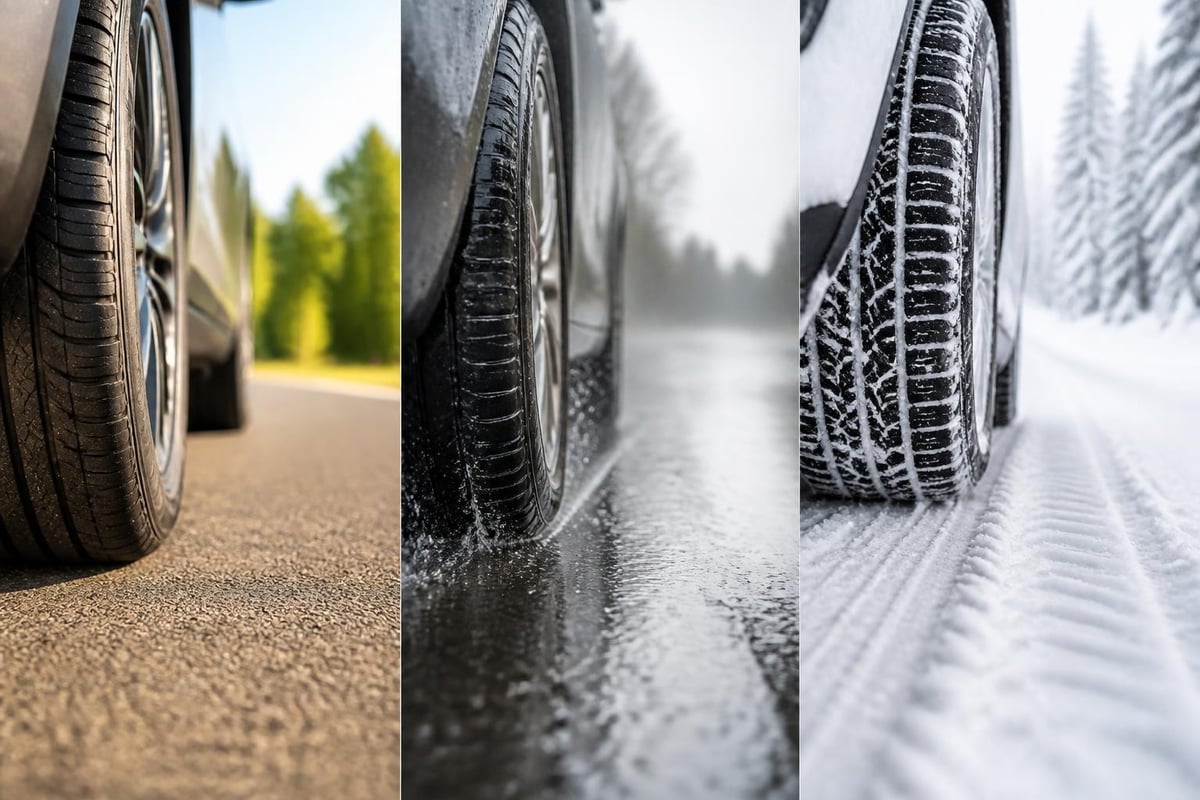
According to Consumer Reports’ comprehensive testing, today's top all-season tires deliver impressive wet-braking performance, with stopping distances approaching dedicated summer tires in many test scenarios. This advancement reflects years of development in tread pattern simulation and compound optimization.
All-Season vs All-Weather: Critical Distinctions
The tire industry introduced a new category in recent years that causes significant confusion: all-weather tires. These are not the same as traditional car tires all season, despite the similar naming.
| Feature | All-Season Tires | All-Weather Tires |
|---|---|---|
| Three-Peak Mountain Snowflake (3PMSF) | Typically no | Yes (certified) |
| Severe winter capability | Limited | Moderate to good |
| Warm weather performance | Excellent | Good |
| Tread life expectancy | 50,000-80,000 miles | 40,000-60,000 miles |
| Price point | Moderate | Premium |
As Car and Driver explains, all-weather tires carry the 3PMSF certification, meaning they've passed standardized severe snow testing. Traditional all-season tires generally cannot achieve this certification and should not be considered winter-capable in regions with harsh, prolonged winter conditions.
Regional Considerations
Geography plays a decisive role in tire selection. Drivers in southern U.S. states, coastal California, or Southeast Asia find car tires all season perfectly adequate year-round. The moderate temperature swings and minimal snow exposure align perfectly with all-season capabilities.
Conversely, regions with extended freezing periods require careful consideration. Quebec’s winter tire regulations mandate 3PMSF-certified tires from December through March, effectively eliminating traditional all-season tires as a legal option during those months. Similar regulations exist in parts of Europe and mountainous regions worldwide.
Sizing and Fitment for Passenger Vehicles
Proper tire sizing is non-negotiable for safety and performance. Car tires all season come in hundreds of size combinations, each designated by a standardized alphanumeric code found on your vehicle's door placard and existing tires.
Reading Tire Size Codes
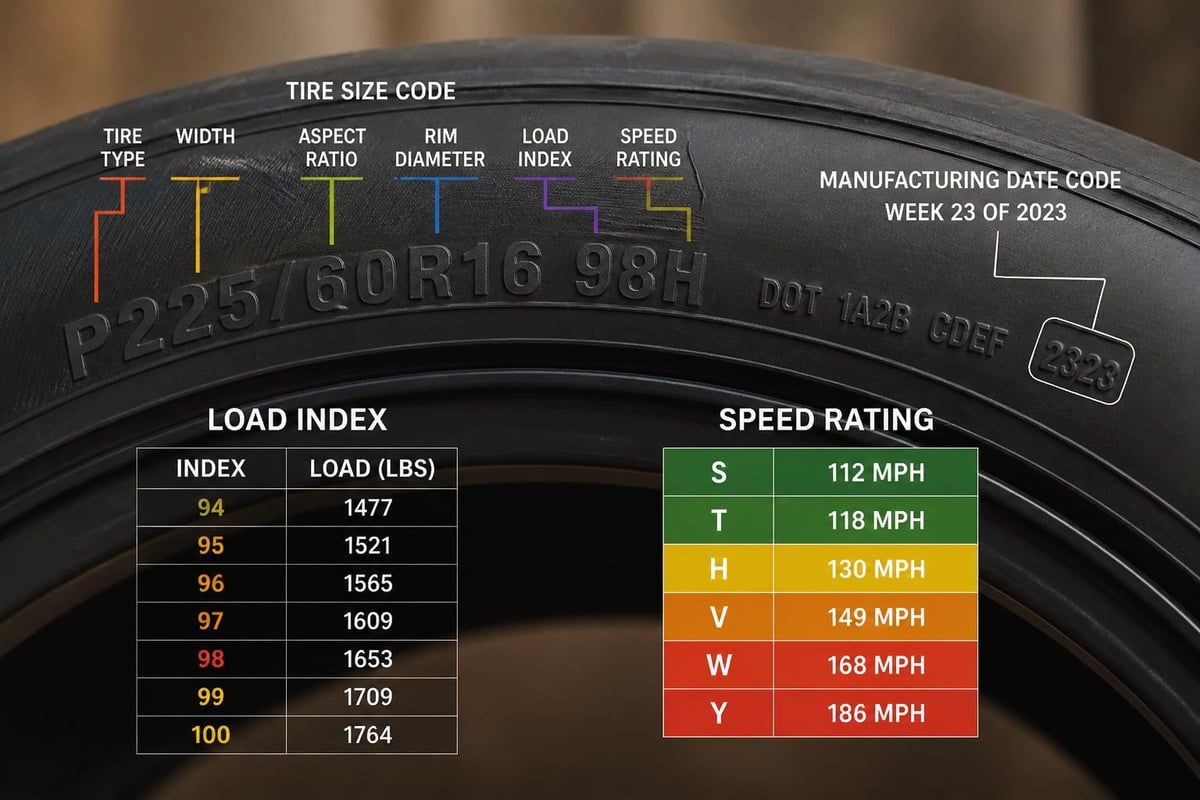
A typical passenger car tire might be marked 225/55R17 97V. Here's the breakdown:
- 225 = Section width in millimeters
- 55 = Aspect ratio (sidewall height as percentage of width)
- R = Radial construction
- 17 = Wheel diameter in inches
- 97 = Load index (maximum 1,609 pounds per tire)
- V = Speed rating (up to 149 mph)
Never substitute tire sizes without consulting load and speed requirements. Undersized tires create dangerous overload conditions, while oversized tires can interfere with suspension components and trigger traction control faults.
Fuel Efficiency and Environmental Impact
Rolling resistance directly affects fuel economy, and car tires all season vary significantly in this metric. The EPA’s research on tire rolling resistance demonstrates that low-rolling-resistance tires can improve fuel economy by 3-5% compared to conventional designs.
In 2026, most premium all-season tires incorporate silica-enhanced compounds that reduce internal friction without sacrificing wet grip. This represents a major engineering achievement, as these two characteristics historically existed in opposition.
Tread Depth and Replacement Timing
New car tires all season ship with tread depths between 10/32" and 12/32". Most manufacturers place tread wear indicators at 2/32", the legal minimum in most jurisdictions. However, all-season performance degrades significantly before reaching this threshold.
- Replace at 4/32" for optimal wet traction and hydroplaning resistance
- Monitor at 6/32" if you frequently drive in rain or need maximum safety margins
- Rotate every 5,000-7,000 miles to ensure even wear across all four positions
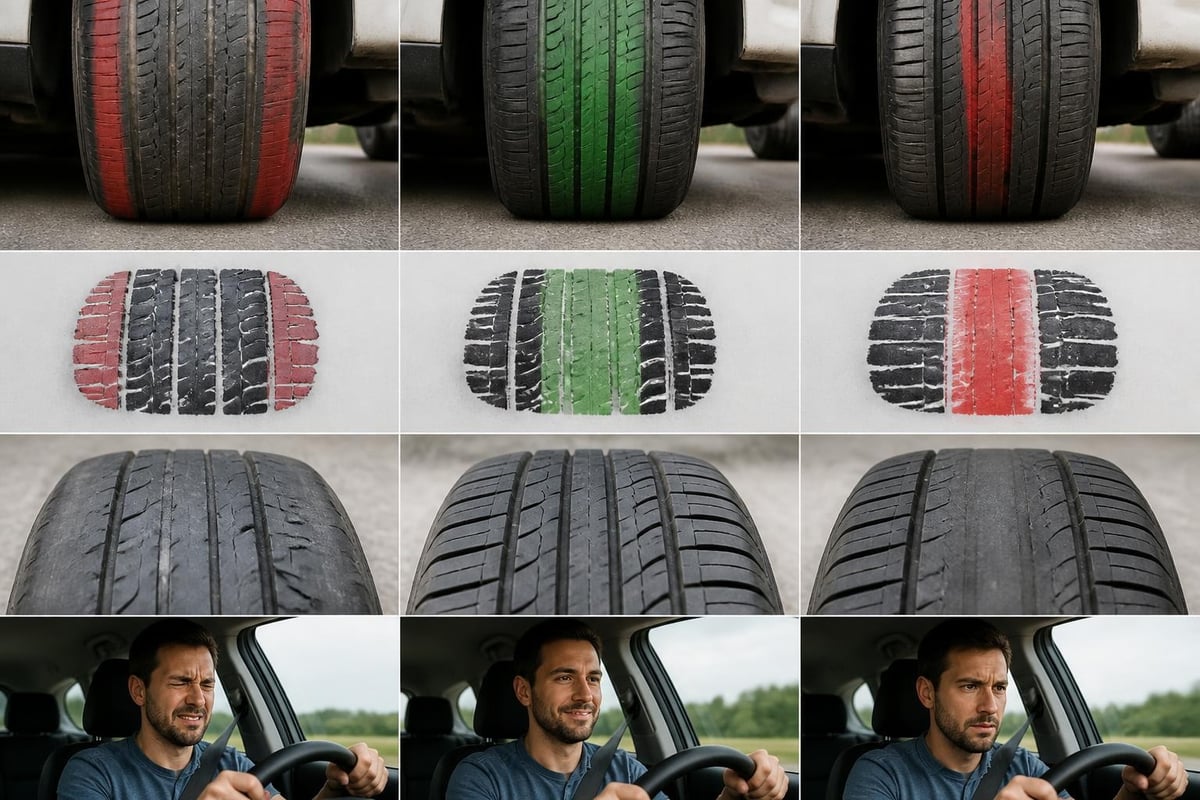
Uneven wear patterns signal alignment problems, improper inflation, or suspension issues. Addressing these promptly extends tire life and maintains the balanced performance all-season tires are designed to deliver.
Commercial and Fleet Applications
While passenger vehicles dominate the all-season market, commercial applications require specialized consideration. Light trucks, delivery vans, and service vehicles accumulate high mileage under varied loads, demanding tires engineered for durability beyond typical passenger car requirements.
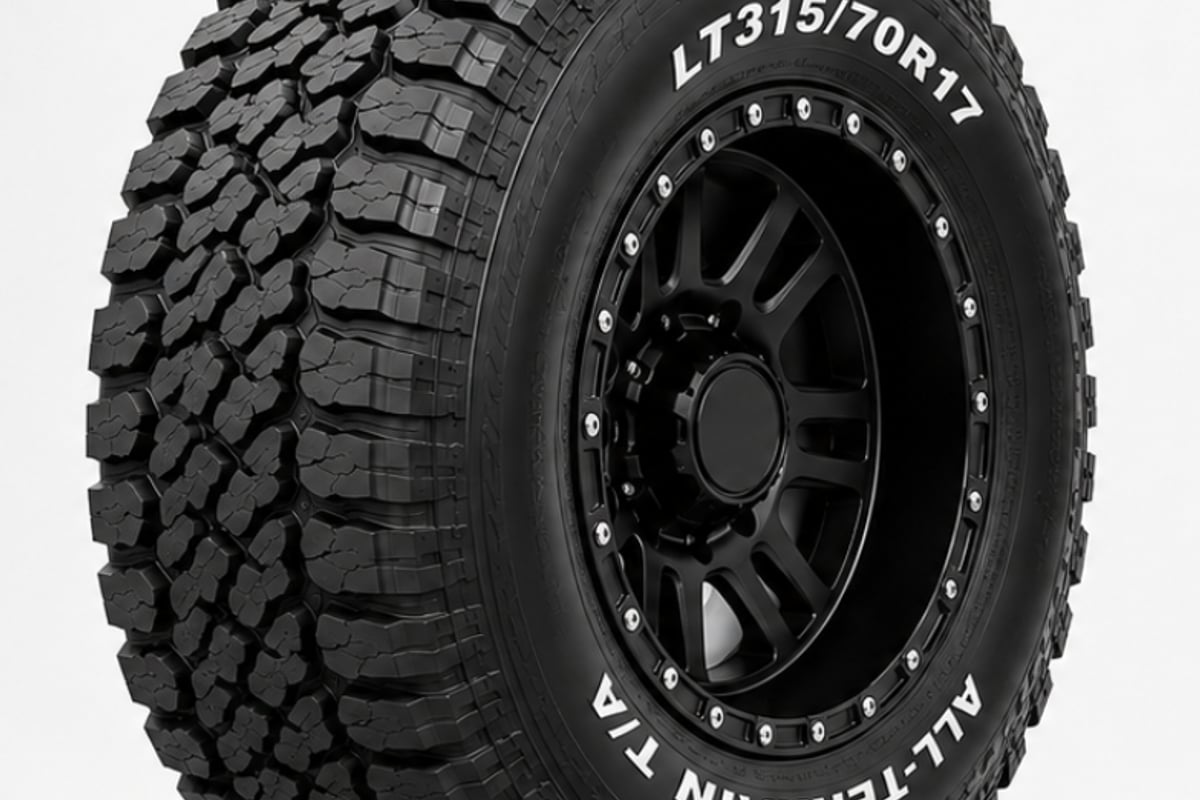
Light truck all-season tires use reinforced sidewalls and higher load ratings to handle payload while maintaining year-round capability. The construction differs fundamentally from passenger car tires, with additional ply layers and stiffer bead construction to resist damage from curb impacts and heavy loads.
For distributors and fleet operators seeking reliable wholesale sources, partnering with established manufacturers ensures consistent quality and global certification compliance. Our Light Truck Tires feature DOT and ECE certification with highway terrain patterns optimized for fuel efficiency and extended tread life, making them ideal for commercial fleets operating in regions where car tires all season remain viable year-round.
Performance Testing and Safety Standards
Independent testing organizations provide crucial data for evaluating car tires all season. The U.S. Tire Manufacturers Association’s industry reports outline standardized testing protocols that manufacturers follow to validate performance claims.
Critical Test Metrics
- Wet braking distance from 60 mph on wet asphalt
- Snow traction using accelerometer-measured grip on packed snow
- Dry handling through standardized slalom and skidpad testing
- Tread wear rating projected from controlled wear tests
- Noise levels measured in decibels at highway speeds
The Insurance Institute for Highway Safety research emphasizes that tire choice significantly impacts crash avoidance capability. Worn or inappropriate tires compromise electronic stability control and anti-lock brake effectiveness, undermining vehicle safety systems.
| Test Category | All-Season (Good) | All-Season (Poor) | Performance Delta |
|---|---|---|---|
| Wet braking 60-0 mph | 135 feet | 165 feet | 22% longer |
| Dry handling lateral g | 0.82 g | 0.76 g | 8% less grip |
| Snow acceleration 0-20 mph | 5.2 seconds | 7.8 seconds | 50% slower |
Inflation Pressure and Maintenance
Proper inflation represents the single most important maintenance task for car tires all season. The Tire Pressure Monitoring System (TPMS) required on vehicles since 2008 alerts drivers to significant under-inflation, but optimal pressure demands regular manual checking.
Check pressure monthly when tires are cold (before driving or at least three hours after driving). The vehicle placard specifies recommended pressure, typically between 32-35 PSI for passenger cars. This recommendation balances:
- Contact patch shape for even wear
- Sidewall flexing for ride comfort
- Rolling resistance for fuel economy
- Load capacity for safe operation
Under-inflation by just 20% (e.g., 28 PSI vs. 35 PSI recommended) reduces tread life by up to 25%, increases rolling resistance by 5-10%, and raises the risk of catastrophic failure from excessive sidewall flexing and heat buildup.
Seasonal Performance Boundaries
Understanding where car tires all season reach their limits helps drivers make informed decisions about seasonal tire changes or alternative tire types. All-season tires excel in temperate climates with mild winters, but physical laws governing rubber compounds create unavoidable boundaries.
Temperature Thresholds
Below 40°F, all-season tread compounds begin losing flexibility. They remain functional and safe for dry pavement and light precipitation, but braking distances extend and cornering grip diminishes compared to warmer conditions. This isn't a failure-it's inherent to the compound formulation that enables summer performance.
Below 20°F, all-season tires approach the edge of their design envelope. In regions where temperatures consistently stay this low for weeks or months, dedicated winter tires become the safer choice. The safety margin gained from proper winter tires in severe conditions far exceeds the cost and inconvenience of seasonal changeovers.
Noise, Comfort, and Ride Quality
Modern car tires all season employ sophisticated design techniques to minimize road noise while maintaining performance. Variable pitch tread patterns use blocks of different sizes arranged in computer-optimized sequences that prevent sound waves from reinforcing at specific frequencies.
Premium all-season tires now achieve noise levels comparable to touring tires from a decade ago, typically between 68-72 decibels at highway speeds. This represents a remarkable achievement given that all-season tires maintain deeper grooves and more aggressive siping than pure summer touring tires.
Construction Factors
Multiple construction elements influence ride quality:
- Polyester cord body plies provide smooth ride characteristics and impact absorption
- Steel belt packages deliver high-speed stability and precise steering response
- Nylon cap plies prevent belt separation and maintain shape at highway speeds
- Sidewall rubber thickness balances impact resistance with responsive handling
Budget all-season tires often sacrifice some of these construction refinements to hit aggressive price points. The trade-off shows up in harsher ride quality, increased road noise, and sometimes reduced tread life despite similar appearance to premium alternatives.
Wholesale Considerations for Distributors
For tire distributors serving markets with year-round moderate climates, car tires all season represent the largest volume opportunity in the passenger tire segment. Inventory planning requires balancing size mix, load ratings, and speed ratings to match regional vehicle populations.
Key distribution factors include:
- Container loading efficiency for international shipping
- Warehouse space allocation by size category
- Seasonal demand fluctuations (even all-season tires see spring and fall peaks)
- Certification requirements for target markets (DOT, ECE, GCC, CCC)
- Brand positioning strategy (premium vs. value segments)
Successful distributors maintain deep relationships with manufacturers capable of consistent quality, reliable delivery schedules, and responsive technical support. Factory-direct pricing structures allow competitive retail positioning while maintaining healthy margins across the distribution chain.
Emerging Technologies and Future Developments
The all-season tire category continues evolving with technologies that seemed impossible just years ago. Several developments are reshaping what car tires all season can achieve:
Self-sealing technology incorporates a viscous sealant layer beneath the tread that automatically seals punctures up to 5mm diameter. This reduces roadside tire failures by approximately 85% according to manufacturer data, though it adds cost and slight weight.
Foam noise-canceling inserts bonded to the inner liner absorb road noise before it enters the cabin. This technology, once exclusive to luxury vehicles, is migrating to mainstream all-season tires as manufacturing costs decline.
Connected tire systems embed sensors that monitor temperature, pressure, and tread depth in real-time, transmitting data to vehicle systems and smartphone apps. By 2026, several premium all-season tire lines offer this capability as standard equipment.
Size-Specific Performance Variations
Not all car tires all season perform identically across their size range. Physics dictates that aspect ratio, section width, and diameter each influence handling characteristics, ride quality, and durability.
Low-Profile All-Season Tires
Sizes with aspect ratios of 45 or lower (e.g., 245/45R18) prioritize responsive handling and cornering grip. The shorter sidewall flexes less during cornering, delivering sharper turn-in and more precise steering feedback. However, these benefits come with trade-offs:
- Harsher ride quality over broken pavement
- Increased susceptibility to wheel and sidewall damage from potholes
- Typically higher prices due to lower production volumes
- Shorter tread life in some cases due to increased tread block movement
Standard-Profile All-Season Tires
Sizes with aspect ratios between 55 and 70 deliver the best all-around balance for most drivers. The taller sidewall absorbs impacts more effectively, provides better ride comfort, and often achieves longer tread life through more uniform contact pressure distribution.
Installation and Professional Service
Proper installation determines whether car tires all season deliver their designed performance. DIY tire mounting rarely achieves the precision of professional installation with calibrated equipment.
Professional mounting includes:
- Cleaning the wheel bead seat and hub mounting surface
- Applying appropriate tire lubricant to prevent bead damage
- Inflating to specified pressure and verifying bead seating
- Dynamic balancing to minimize vibration
- Torquing lug nuts to manufacturer specifications
- Initializing TPMS sensors and verifying function
Skipping any of these steps compromises safety, performance, or tire longevity. The modest cost of professional installation represents excellent value compared to the consequences of improper mounting.
Price-Performance Optimization
The all-season tire market spans an enormous price range, from economy imports under $60 per tire to ultra-premium performance all-seasons exceeding $300. Understanding what drives these price differences helps buyers optimize value.
Premium all-season tires justify higher costs through:
- Longer tread life warranties (often 70,000-80,000 miles)
- Superior wet braking performance (5-15 feet shorter stops from 60 mph)
- Quieter operation (3-5 decibels reduction)
- Better snow traction despite lacking 3PMSF certification
- More uniform wear characteristics
Economy all-season tires compete on price but typically compromise:
- Shorter tread life (often 40,000-50,000 miles)
- Adequate but not exceptional wet performance
- Higher noise levels
- Less refined ride quality
- Simpler tread patterns with fewer performance features
For most drivers in temperate climates, mid-range car tires all season from established manufacturers deliver the best value proposition. They capture 80-90% of premium tire performance at 60-70% of the cost.
Selecting the right car tires all season requires balancing performance needs, climate conditions, and budget constraints while understanding the real-world capabilities and limitations of this versatile tire category. Whether you're a driver seeking reliable year-round traction or a distributor building inventory for temperate markets, all-season tires remain the practical choice for the majority of passenger vehicles worldwide. OTR TIRE THAI manufactures premium quality passenger car radial PCR tires and light truck tires with international certifications, delivering wholesale pricing to distributors in over 80 countries who serve markets where all-season performance meets year-round demand.
