
Blog
Best Light Truck Tires: 2026 Buyer’s Guide
Oct
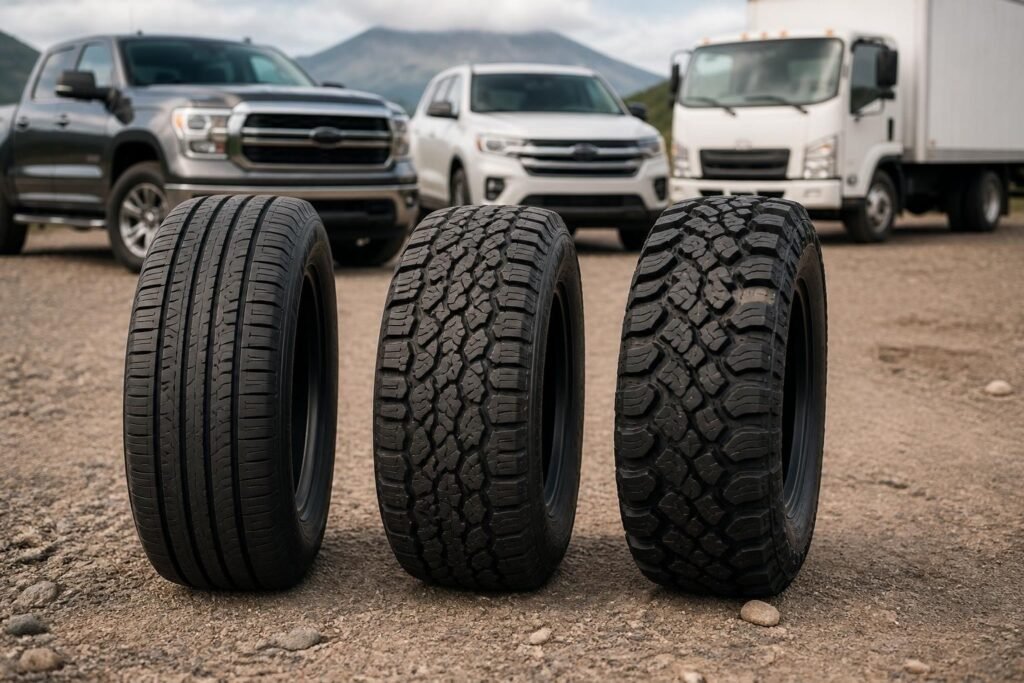
Selecting the best light truck tires requires understanding the distinct demands placed on pickup trucks, SUVs, and commercial delivery vehicles. Unlike passenger car tires, light truck (LT) tires must handle heavier loads, variable terrain conditions, and longer service intervals while maintaining safety and performance standards. This guide examines the critical factors that separate premium light truck tires from basic options, helping fleet managers and distributors make informed purchasing decisions that balance initial cost with total cost of ownership.
Understanding Light Truck Tire Classifications
The designation "LT" on a tire sidewall indicates construction and performance characteristics specifically engineered for light trucks. These tires feature reinforced sidewalls, higher load capacities, and tread compounds optimized for vehicles weighing between 6,000 and 10,000 pounds gross vehicle weight rating.
Load Range and Ply Rating Fundamentals
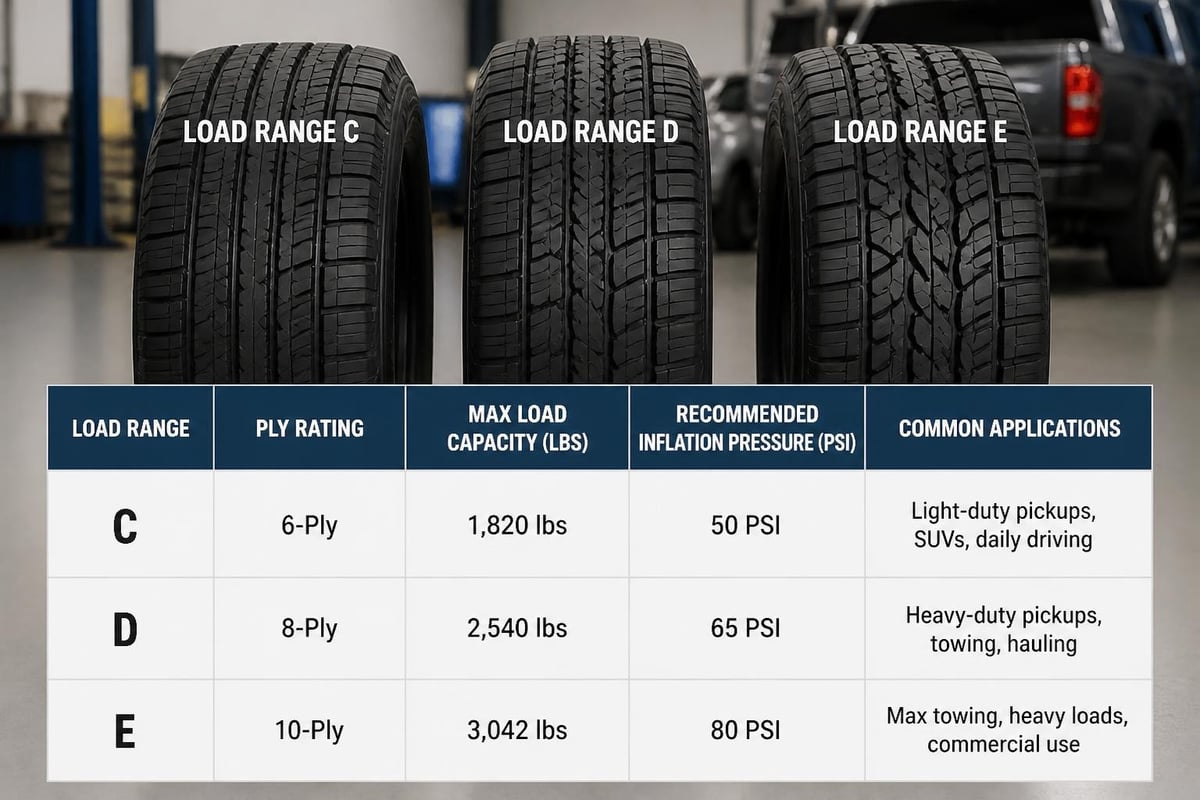
Load range specifications determine how much weight a tire can safely support at maximum inflation pressure. The most common light truck load ranges include:
- Load Range C: 6-ply rating, typically supporting 1,820 pounds per tire at 50 psi
- Load Range D: 8-ply rating, supporting 2,205 pounds per tire at 65 psi
- Load Range E: 10-ply rating, supporting 2,680 pounds per tire at 80 psi
Higher load ranges provide greater durability and puncture resistance but may compromise ride comfort on unloaded vehicles. The Tire Industry Association provides detailed guidance on proper selection and service procedures for C-type light truck tires.
Fleet managers should match load range to actual payload requirements rather than automatically choosing the highest rating. Over-specification increases rolling resistance and fuel consumption without delivering meaningful benefits for lighter-duty applications.
Highway Terrain Tires for Paved Road Performance
Highway terrain (HT) tires represent the best light truck tires for vehicles operating primarily on paved surfaces. These tires prioritize fuel efficiency, low road noise, and extended tread life over off-road capability.
Design Characteristics of HT Tires
The tread pattern features shallow grooves with a high void ratio, typically between 60-70% solid rubber contact with the road. Circumferential ribs run continuously around the tire to reduce rolling resistance and improve straight-line stability. Silica-enhanced tread compounds maintain flexibility across temperature ranges while resisting irregular wear patterns.
| Feature | Highway Terrain | All-Terrain | Mud-Terrain |
|---|---|---|---|
| Tread Depth (mm) | 10-12 | 13-16 | 16-20 |
| Void Ratio | 30-40% | 45-55% | 60-70% |
| Road Noise | Low | Moderate | High |
| Fuel Efficiency | Excellent | Good | Fair |
Commercial delivery fleets running urban routes benefit most from HT specifications. The reduced tread depth and optimized compound formulation deliver 15-20% longer tread life compared to aggressive all-terrain patterns when operated exclusively on pavement.
Wet Weather Performance Standards
Premium highway terrain tires incorporate advanced siping technology that creates thousands of microscopic edges for wet traction. The tire's ability to evacuate water through wide circumferential grooves prevents hydroplaning at highway speeds. Testing standards from Consumer Reports demonstrate how tread pattern geometry affects braking distances on wet surfaces.
All-Terrain Tires for Mixed-Use Applications
All-terrain (AT) tires serve as the most versatile option among the best light truck tires, balancing on-road comfort with moderate off-road capability. These tires suit contractors, outdoor recreation enthusiasts, and fleet operators who encounter both paved roads and unpaved work sites.
Tread Pattern Engineering
AT tires feature interlocking tread blocks with aggressive shoulder lugs that bite into loose surfaces. Stone ejectors molded into the tread grooves prevent rocks from embedding and causing damage. The center tread maintains continuous contact patches for highway stability while outer blocks provide additional grip in dirt, gravel, and light mud conditions.
Modern all-terrain designs incorporate variable pitch sequencing, where tread blocks of different sizes are arranged in specific patterns to reduce road noise. This technology narrows the acoustic gap between AT and HT tires, making all-terrain options viable for daily commuting applications.
Sidewall Construction and Protection
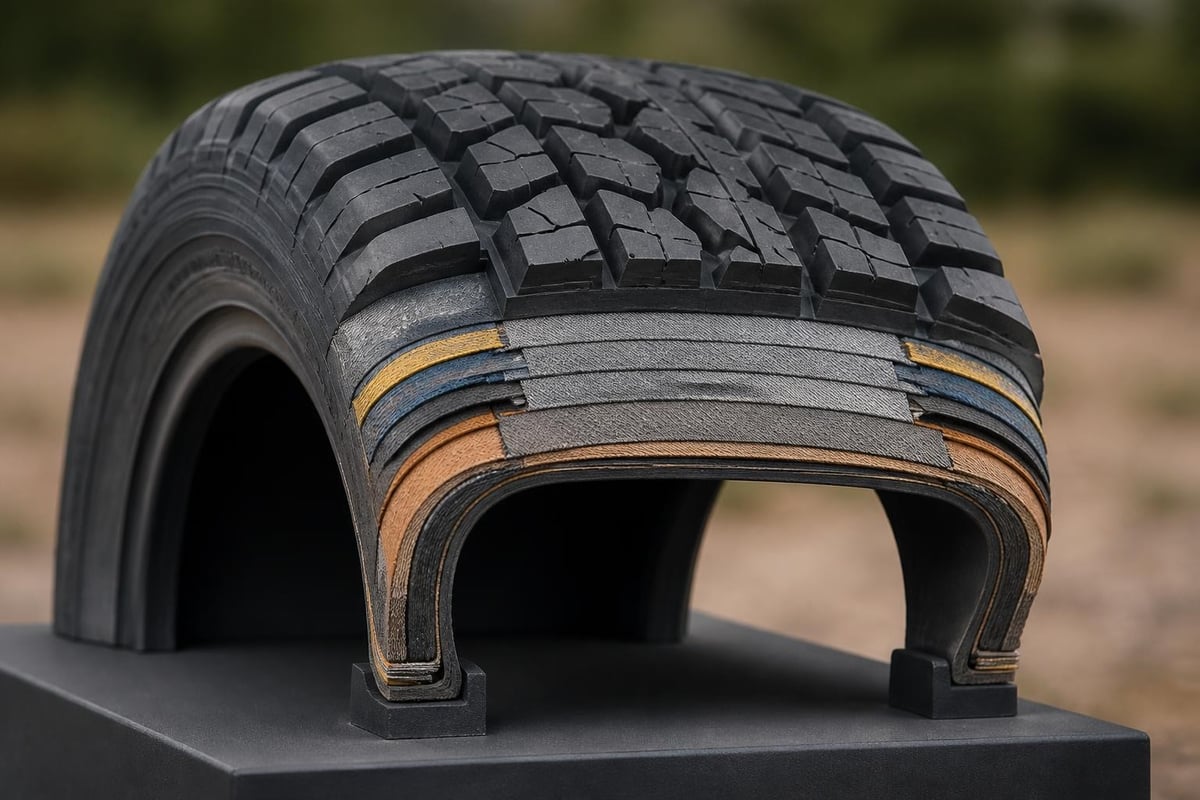
Reinforced sidewalls distinguish quality all-terrain tires from basic designs. Three-ply sidewall construction adds weight but provides critical puncture resistance when navigating rocky terrain or construction debris. The additional reinforcement supports vehicle weight during aired-down operation on sand or soft soil.
Key sidewall features include:
- Extended shoulder tread that wraps onto the sidewall for additional traction in deep ruts
- Rim protector ribs that shield wheels from curb damage
- Cut-resistant rubber compounds that withstand abrasion from brush and obstacles
Mud-Terrain Tires for Severe Off-Road Conditions
Mud-terrain (MT) tires represent the most aggressive category among the best light truck tires, engineered for vehicles operating in severe off-road environments. These tires sacrifice highway refinement for maximum traction in mud, sand, rocks, and other challenging terrain.
Tread Architecture for Maximum Grip
MT tires feature large, widely spaced tread blocks with void ratios exceeding 60%. The open design allows mud and debris to escape from the tread, maintaining continuous contact with the underlying surface. Shoulder lugs extend prominently beyond the sidewall for additional bite when climbing over obstacles or extracting from deep ruts.
The tread depth on quality mud-terrain tires ranges from 16 to 20 millimeters, providing substantial material for extended service life despite aggressive use. However, this depth creates significant road noise on pavement and increases rolling resistance by approximately 25-30% compared to highway terrain designs.
Specialized Compound Formulations
Premium mud-terrain tires utilize dual-compound technology, with a harder base layer for durability and a softer surface layer for traction. This configuration maintains flexibility at low temperatures while resisting chunking and tearing on sharp rocks. Cut-and-chip resistant compounds extend service life in commercial applications where tire damage represents a significant operational cost.
Load Index and Speed Rating Selection
Proper specification of load index and speed rating ensures the best light truck tires meet both safety requirements and performance expectations. The load index number on the sidewall corresponds to a specific weight capacity per tire, while the speed rating letter indicates maximum sustained velocity.
Decoding Tire Sidewall Information
A typical light truck tire designation reads: LT265/70R17 121/118S. This indicates a tire 265 millimeters wide with a 70% aspect ratio on a 17-inch rim. The dual load index (121/118) shows capacity for single (121) and dual (118) rear wheel configurations. The "S" speed rating permits sustained speeds up to 112 mph.
Commercial operators should verify that load index calculations account for actual vehicle weight plus maximum cargo capacity. The AAA tire guide provides detailed instructions for measuring vehicle weight and selecting appropriate specifications.
Critical selection factors include:
- Matching load index to GVWR requirements with 10% safety margin
- Selecting speed ratings appropriate for maximum operating velocity
- Verifying sidewall clearance for desired width specifications
- Confirming wheel well clearance for larger diameter options
Seasonal Performance Considerations
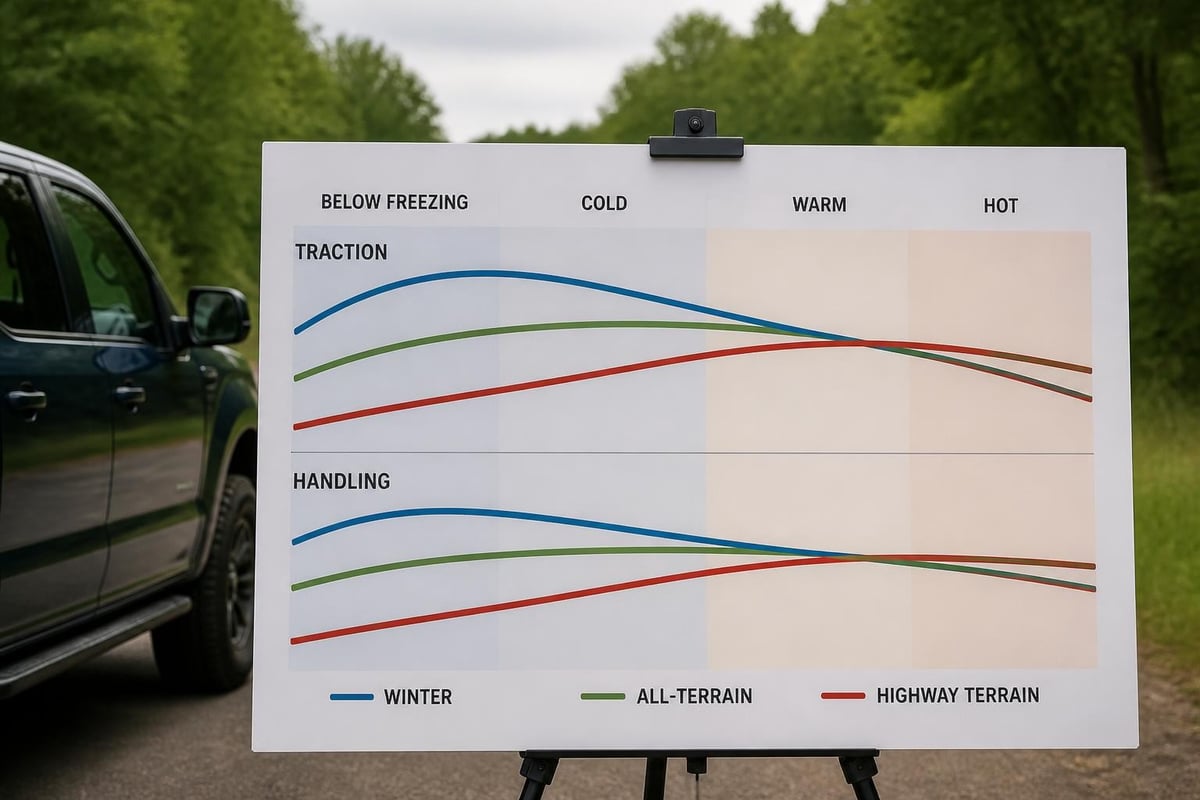
Temperature variations throughout 2026 operating seasons affect tire compound performance and selection criteria. The best light truck tires maintain traction and handling characteristics across the full temperature range encountered in specific geographic regions.
Three-Peak Mountain Snowflake Certification
Tires carrying the 3PMSF symbol have passed standardized testing for severe snow traction. This certification requires 10% better snow traction than a reference tire during controlled testing. Light truck operators in northern climates should prioritize 3PMSF-certified options over basic M+S (Mud and Snow) markings.
Winter-rated all-terrain tires combine year-round versatility with genuine cold-weather capability. These tires use silica-rich compounds that remain pliable below 40°F, maintaining flexibility for snow traction without sacrificing warm-weather durability. The tread patterns incorporate additional siping density compared to summer-only designs.
Manufacturer Quality Standards and Certifications
Distinguishing premium manufacturers from budget suppliers requires understanding international quality standards and testing protocols. The best light truck tires carry multiple certifications demonstrating compliance with regional safety requirements.
DOT and ECE Certification Requirements
Department of Transportation (DOT) certification in the United States requires manufacturers to meet Federal Motor Vehicle Safety Standard (FMVSS) 119 for new pneumatic tires. This testing evaluates strength, endurance, and high-speed performance under controlled laboratory conditions.
Economic Commission for Europe (ECE) regulation ECE-R30 establishes parallel standards for European markets. Tires certified under both standards undergo rigorous testing for dimensional stability, strength, and endurance. OTR TIRE THAI manufactures light truck tires that meet both DOT and ECE requirements, ensuring global compliance for distributors serving multiple markets.
| Standard | Test Requirements | Regional Applicability |
|---|---|---|
| DOT FMVSS 119 | Strength, endurance, high-speed | United States, Canada |
| ECE R30 | Physical dimensions, performance | European Union, 50+ countries |
| ISO 3877 | Performance verification | International baseline |
Manufacturing Process Controls
Premium tire manufacturers implement comprehensive quality management systems certified to ISO 9001 standards. These systems govern material sourcing, production processes, and final inspection procedures to ensure consistent product quality across production runs.
Advanced manufacturing facilities utilize automated inspection systems that measure critical dimensions and detect internal defects before tires leave the factory. X-ray imaging identifies belt separation or void formation invisible to visual inspection, preventing premature failures that damage fleet operations.
Tread Life Expectancy and Warranty Coverage
Service life represents a critical component of total cost of ownership for the best light truck tires. Premium manufacturers provide mileage warranties that guarantee minimum tread life under specified operating conditions.
Factors Affecting Tread Longevity
Multiple variables influence actual tread life beyond base tire design. Proper inflation maintenance extends service life by preventing irregular wear patterns that concentrate stress on specific tread areas. The TIA Tire Conditions Manual provides detailed guidance for inspection and maintenance procedures that maximize tire longevity.
Primary factors include:
- Inflation pressure accuracy (±2 psi of specification)
- Wheel alignment within manufacturer tolerances
- Regular rotation every 5,000-7,000 miles
- Payload distribution and securing methods
- Operating speed and environmental conditions
Highway terrain tires typically deliver 60,000-80,000 miles under ideal conditions with proper maintenance. All-terrain designs range from 40,000-60,000 miles depending on the proportion of paved versus unpaved operation. Mud-terrain tires generally provide 30,000-45,000 miles, with service life heavily dependent on off-road intensity.
Warranty Structure and Exclusions
Mileage warranties guarantee replacement credit if tires fail to reach specified tread depth at the warranted mileage. Prorated credits calculate replacement value based on remaining unused mileage. Standard exclusions include damage from road hazards, improper inflation, misalignment, and commercial use in some consumer-grade tire lines.
Commercial warranty programs recognize the different demands placed on fleet vehicles. These warranties often cover manufacturing defects separately from tread life, with specific provisions for inspection and documentation requirements when filing claims.
Fuel Efficiency and Rolling Resistance
Rolling resistance significantly impacts fleet operating costs through fuel consumption. The best light truck tires incorporate design features that minimize energy loss as tires flex and contact the road surface.
Low Rolling Resistance Technology
Modern tire compounds utilize silica reinforcement that reduces internal friction without compromising wet traction. This technology decreases rolling resistance by 15-25% compared to conventional carbon black compounds. The fuel economy improvement translates to 3-5% reduction in fuel consumption for vehicles operating primarily on highways.
Optimized tread patterns contribute additional efficiency gains. Shallow tread depth and continuous center ribs reduce flex energy loss compared to aggressive block patterns. Fleet managers should evaluate total cost of ownership including fuel savings when comparing tire options with different rolling resistance characteristics.
The Insurance Institute for Highway Safety research on light truck vehicle dynamics provides context for understanding how tire selection affects overall vehicle efficiency and safety performance.
Installation and Service Considerations
Proper mounting and balancing procedures ensure the best light truck tires deliver optimal performance throughout their service life. Professional installation includes multiple verification steps that prevent common problems affecting ride quality and longevity.
Mounting Best Practices
Tire technicians must verify size compatibility between tire and wheel before mounting. The bead seat diameter must match precisely, and rim width should fall within the tire manufacturer's approved range. Light truck tires require higher seating pressures than passenger tires due to stiffer bead construction.
Installation checklist includes:
- Visual inspection for shipping damage or defects
- Verification of load range marking matches vehicle requirements
- Proper lubrication of bead areas with approved compounds
- Inflation to seating pressure with safety cage or restraint
- Reduction to recommended operating pressure after bead seating
- Dynamic balancing to minimize vibration across speed range
Torque Specifications and Retorque Requirements
Wheel lug nuts must be tightened to manufacturer specifications using calibrated torque wrenches. Light truck applications typically require 90-140 ft-lbs depending on stud size and wheel material. Star-pattern tightening ensures even pressure distribution around the mounting surface.
New tire installations require retorquing after the first 50-100 miles of operation. Thermal cycling and initial bead settling can reduce clamping force, potentially allowing wheel movement. Fleet maintenance protocols should include systematic retorque procedures for all new tire installations.
Performance Testing and Comparison Methods
Objective evaluation of the best light truck tires requires standardized testing protocols that measure specific performance attributes under controlled conditions. Understanding these testing methods helps fleet managers interpret manufacturer claims and independent test results.
Wet and Dry Braking Performance
Braking distance testing measures stopping performance from 60 mph on wet and dry surfaces. Premium light truck tires demonstrate 5-10 foot shorter stopping distances compared to economy options in wet conditions. This difference represents critical safety margin in emergency situations.
Test protocols control surface temperature, water depth, vehicle load, and brake application force to ensure repeatability. Multiple test runs average out variations, producing statistically significant comparisons between tire models.
Noise Level Measurement
Sound level testing uses calibrated microphones positioned at standardized locations while vehicles pass at constant speed. Results measured in decibels (dB) provide objective comparison between tire designs. Highway terrain tires typically measure 68-72 dB, while aggressive mud-terrain patterns range from 74-78 dB.
The 6 dB difference represents a perceived doubling of loudness to human hearing. Fleet managers specifying vehicles for executive use or extended highway travel should prioritize lower noise ratings to reduce driver fatigue.
Regional Climate Adaptation
Geographic operating regions influence the best light truck tires selection through temperature extremes, precipitation patterns, and surface conditions. Manufacturers optimize compound formulations and tread designs for specific climate zones.
Hot Climate Specifications
Desert and tropical environments demand heat-resistant compounds that maintain structural integrity at sustained high temperatures. Ozone-resistant sidewall formulations prevent weather checking and cracking under intense UV exposure. Deeper tread grooves facilitate heat dissipation compared to shallow patterns.
Light truck operators in hot climates should verify maximum ambient temperature ratings match local conditions. Tires designed for temperate climates may experience accelerated aging and increased failure risk when operated continuously above design temperatures.
Cold Weather Performance
Northern operations require compounds that remain flexible below freezing temperatures. Standard rubber formulations harden in cold weather, reducing traction and increasing stopping distances. Winter-rated compounds maintain elasticity to 40°F below zero, preserving performance in extreme cold.
Light truck tires manufactured for global distribution must accommodate diverse climate requirements. OTR TIRE THAI’s wholesale light truck tire range includes highway terrain, all-terrain, and mud-terrain patterns engineered for year-round performance across multiple climate zones.
Balancing Performance and Cost
Total cost of ownership calculations incorporate purchase price, installation costs, fuel consumption impact, and expected service life. The best light truck tires optimize this equation rather than simply minimizing initial purchase price.
Premium vs. Economy Tire Analysis
Premium tires typically cost 30-50% more than economy options but deliver longer tread life, better fuel efficiency, and superior safety performance. Fleet analysis should calculate cost per mile rather than cost per tire to identify true value.
| Factor | Premium Tier | Mid-Range | Economy |
|---|---|---|---|
| Purchase Price | $200-280 | $140-180 | $90-130 |
| Expected Miles | 60,000 | 45,000 | 30,000 |
| Cost Per Mile | $0.0037 | $0.0036 | $0.0040 |
| Fuel Economy Impact | Baseline | +2% | +5% |
This analysis demonstrates that economy tires often deliver higher total cost despite lower purchase price. Additional fuel consumption and more frequent replacement intervals eliminate initial savings over the tire's service life.
Volume Purchasing Strategies
Distributors and large fleet operators achieve significant cost advantages through direct manufacturer relationships. Factory-direct pricing eliminates multiple distribution layers, reducing costs by 20-35% compared to retail channels while maintaining quality standards and warranty coverage.
Selecting the best light truck tires requires balancing multiple performance factors against specific operational requirements and total cost considerations. Highway terrain, all-terrain, and mud-terrain categories each serve distinct applications, with load range, seasonal ratings, and quality certifications providing critical selection criteria. OTR TIRE THAI manufactures DOT and ECE certified light truck tires with highway, all-terrain, and mud-terrain patterns available at wholesale prices for distributors worldwide, combining international quality standards with competitive factory-direct pricing across all major size specifications.
