
Blog
Tires Off Road: Complete Guide for Performance & Durability
Jul
Selecting the right tires off road determines whether your vehicle conquers challenging terrain or gets stranded miles from help. Off-road tires represent a specialized engineering category designed to handle conditions that would destroy conventional passenger car tires within hours. From agricultural operations requiring heavy loads across muddy fields to construction equipment navigating rocky job sites, the right tire selection directly impacts operational efficiency, safety, and total cost of ownership. Understanding the technical distinctions between tire categories, tread patterns, construction methods, and maintenance requirements enables fleet managers and distributors to make informed decisions that maximize return on investment.
Understanding Off-Road Tire Categories
Off-road tire classifications exist on a spectrum from highway-capable all-terrain designs to extreme mud-terrain patterns built exclusively for unpaved surfaces. Each category serves specific applications and terrain types.
All-Terrain Tires
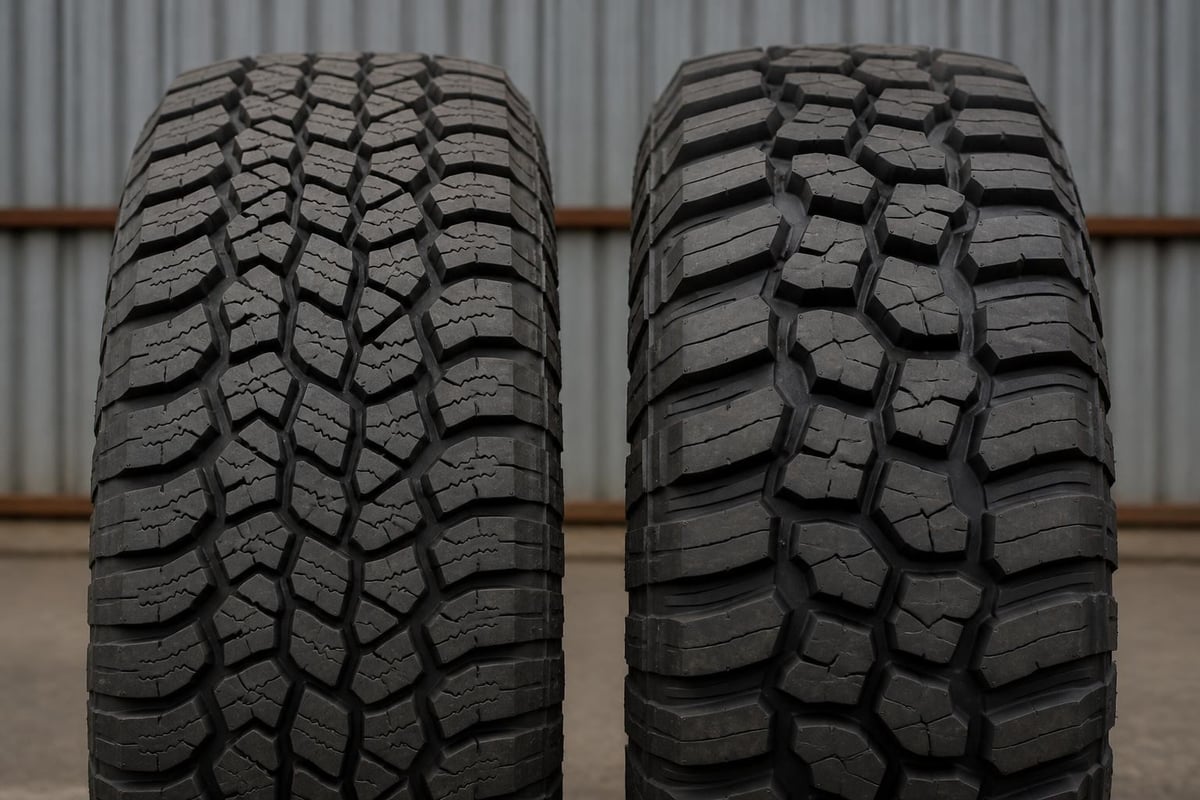
All-terrain (AT) tires bridge the gap between highway performance and off-road capability. These versatile tires feature moderate tread depth ranging from 12/32" to 15/32", providing adequate traction on dirt, gravel, and light mud while maintaining acceptable road manners for daily driving.
Key characteristics of all-terrain tires:
- Balanced void ratio (30-40%) for multi-surface traction
- Reinforced shoulder blocks resist sidewall punctures
- Siping patterns enhance wet-road grip
- Lower noise levels compared to aggressive patterns
- Suitable for 50/50 on-road/off-road use
The compound formulations in quality all-terrain tires off road balance durability with flexibility, allowing the tread to conform to irregular surfaces without compromising tread life on pavement.
Mud-Terrain Tires
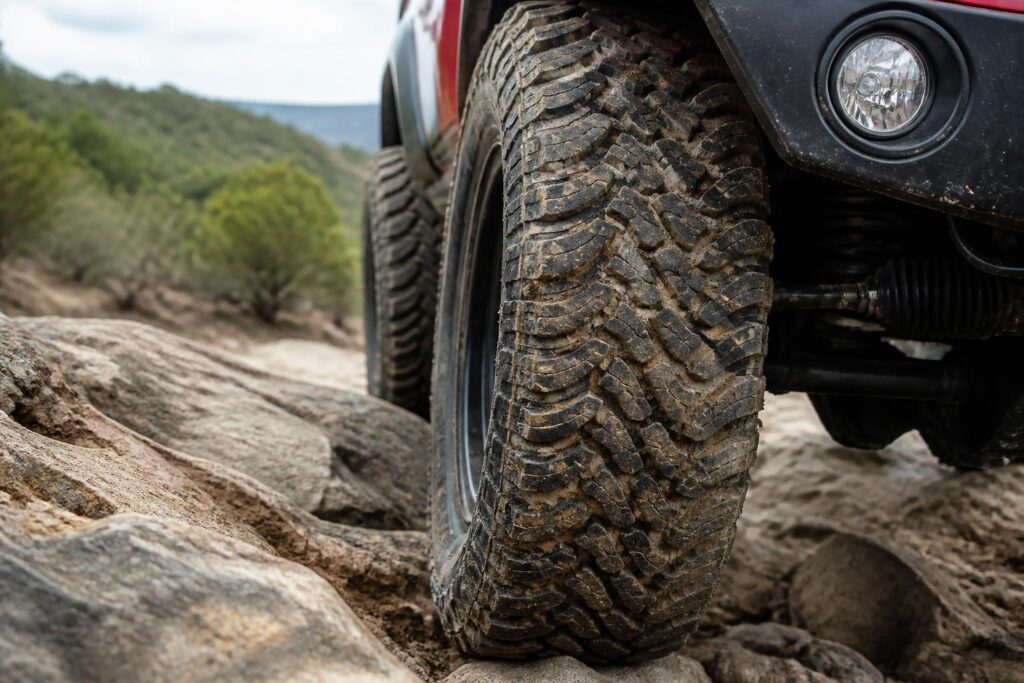
Mud-terrain (MT) tires prioritize maximum traction in challenging conditions where all-terrain designs lose effectiveness. These aggressive tires off road feature void ratios exceeding 50%, allowing mud, clay, and debris to evacuate from the tread rather than packing between lugs.
| Feature | All-Terrain | Mud-Terrain | Highway |
|---|---|---|---|
| Tread Depth | 12-15/32" | 18-24/32" | 9-11/32" |
| Void Ratio | 30-40% | 50-65% | 20-30% |
| Noise Level | Moderate | High | Low |
| Pavement Wear | Good | Fair | Excellent |
| Off-Road Grip | Good | Excellent | Poor |
Mud-terrain designs incorporate stone ejectors within tread grooves that prevent rocks from becoming wedged and causing punctures. The deeper tread pattern provides self-cleaning action as the tire rotates, maintaining traction even in saturated conditions.
Critical Selection Factors for Tires Off Road
Choosing appropriate tires off road requires analyzing multiple technical specifications beyond simple diameter and width measurements. Load rating, ply construction, and compound formulation all influence real-world performance.
Load Range and Ply Rating
Load range indicates the maximum weight capacity at specified inflation pressure. Off-road applications typically require Load Range D (8-ply rating) or Load Range E (10-ply rating) construction to withstand impacts, punctures, and heavy loads across uneven terrain.
Load capacity by range:
- Load Range C: 1,820-2,270 lbs per tire (50 PSI)
- Load Range D: 2,540-3,415 lbs per tire (65 PSI)
- Load Range E: 2,830-3,860 lbs per tire (80 PSI)
Agricultural and industrial tires off road often specify even higher ply ratings, with 12-ply and 14-ply constructions common for equipment operating in quarries, mines, and logging operations. This beginner’s guide to off-road tires provides additional context on selecting the appropriate load range for specific applications.
Sidewall Construction
Sidewall strength determines puncture resistance and load-carrying capability when operating at reduced pressures. Three-ply sidewalls provide enhanced protection compared to standard two-ply construction, crucial when navigating rocky terrain or brush-filled trails.
Reinforced sidewalls incorporate additional fabric layers and gauge steel belts that resist cuts from sharp objects. This construction allows operators to reduce tire pressure for improved traction without risking sidewall collapse or bead unseating.
Sizing and Fitment Considerations
Proper tire sizing ensures compatibility with vehicle specifications while optimizing performance characteristics. Understanding how diameter, width, and aspect ratio affect handling helps distributors recommend appropriate options.
Diameter and Lift Requirements
Increasing tire diameter requires corresponding suspension modifications. Each inch of additional diameter necessitates approximately 0.5 inches of lift height to prevent rubbing during suspension compression and steering articulation.
- 33" tires: 2.5-3" lift minimum
- 35" tires: 3.5-4.5" lift minimum
- 37" tires: 5-6" lift minimum
- 40" tires: 6.5-8" lift minimum
Understanding how lift height affects tire selection prevents fitment issues that compromise safety and accelerate component wear. Insufficient clearance causes tires to contact fender liners, suspension components, or chassis during full steering lock or suspension compression.
Width and Contact Patch
Wider tires off road increase the contact patch area, distributing vehicle weight across more square inches of tread surface. This reduced ground pressure improves flotation in sand and soft soil while providing additional grip on rock faces.
However, excessive width creates drawbacks including increased rolling resistance, greater vulnerability to hydroplaning, and reduced fuel economy. Matching tire width to typical operating conditions balances these competing factors.
Maintenance Protocols for Maximum Tire Life
Proper maintenance extends service life and prevents premature failure of tires off road. Regular inspection routines, appropriate rotation patterns, and correct inflation practices yield measurable returns.
Inspection and Cleaning Procedures
Post-operation inspection identifies damage before minor issues escalate into catastrophic failures. Following professional maintenance protocols catches problems during the window when repair remains viable.
Essential inspection points:
- Tread depth measurements at multiple locations
- Sidewall examination for cuts, bulges, or abrasions
- Bead seat condition and rim damage assessment
- Foreign object removal from tread grooves
- Valve stem integrity and cap presence
Cleaning tires off road immediately after operation prevents corrosive materials from degrading rubber compounds. Mud containing agricultural chemicals, road salt, or industrial contaminants accelerates deterioration when allowed to remain in contact with tire surfaces.
Rotation and Balancing
Systematic rotation patterns distribute wear evenly across all tire positions. Proper rotation schedules prevent premature replacement by ensuring no single tire accumulates disproportionate wear from specific vehicle positions.
| Vehicle Type | Rotation Pattern | Interval |
|---|---|---|
| 4WD Non-Directional | Cross-Rotation | 3,000-5,000 miles |
| 4WD Directional | Front-to-Rear | 3,000-5,000 miles |
| Heavy Equipment | Position-Specific | 500-1,000 hours |
Dynamic balancing eliminates vibration caused by weight distribution irregularities. Off-road conditions frequently dislodge balancing weights, requiring more frequent rebalancing compared to highway applications.
Pressure Management Strategies
Inflation pressure directly affects traction, ride quality, and tire longevity. Adjusting pressure for terrain conditions optimizes performance while maintaining safety margins.
Trail Pressure Reduction
Reducing inflation pressure from highway specifications increases the contact patch and allows tires off road to conform around obstacles rather than riding over them. Lower pressures also improve ride quality by enabling the sidewall to absorb impacts.
Recommended pressure reductions by terrain:
- Gravel roads: Reduce 5-10% from highway pressure
- Sand and soft soil: Reduce 30-50% from highway pressure
- Rock crawling: Reduce 40-60% from highway pressure
- Mud: Reduce 20-40% from highway pressure
Operating at reduced pressures requires monitoring tire temperature to prevent overheating. Excessive heat buildup indicates inadequate pressure for the load and speed conditions.
Re-Inflation Before Highway Travel
Returning tires off road to manufacturer-specified pressures before highway speeds prevents excessive sidewall flexing that generates heat and accelerates wear. Portable air compressors enable pressure adjustment in remote locations.
Michelin’s inspection and maintenance guidelines emphasize the importance of maintaining proper inflation across varying operating conditions to maximize tire service life.
Tread Pattern Selection for Specific Terrains
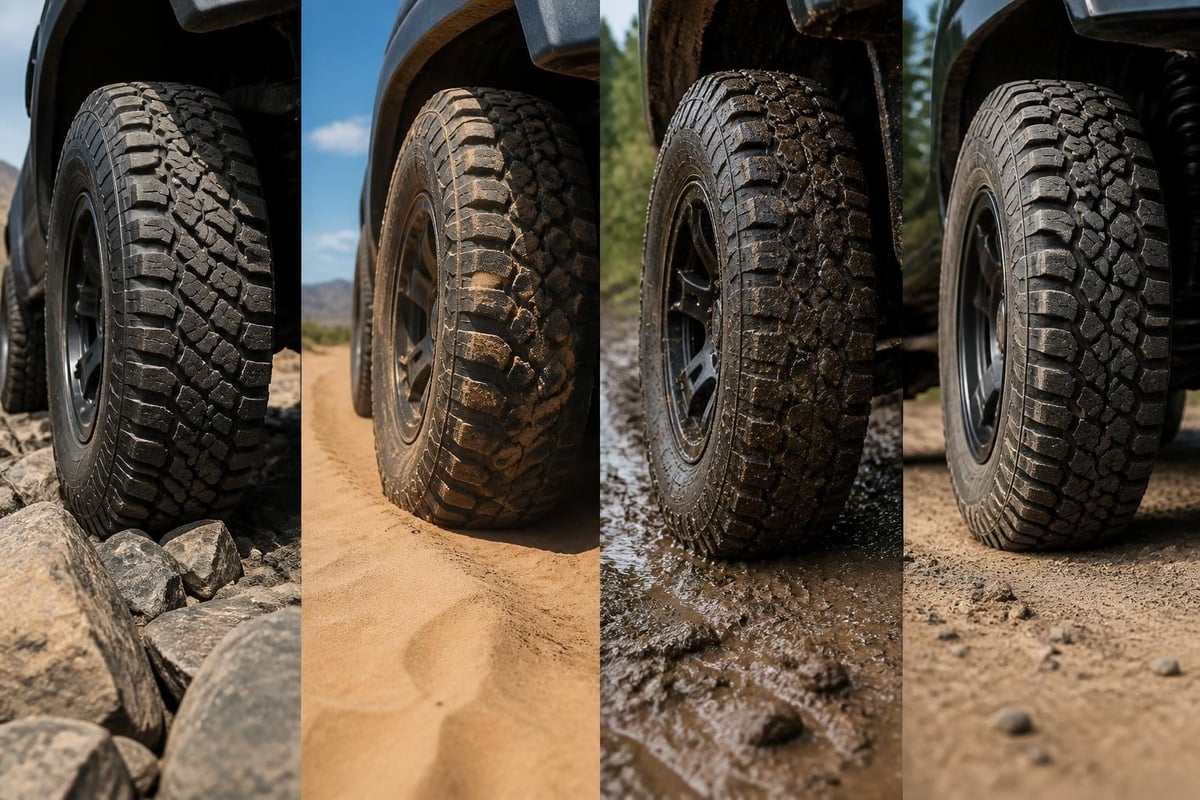
Different tread designs excel in particular conditions. Matching pattern characteristics to predominant terrain types optimizes traction and minimizes unnecessary wear.
Rock and Hardpack Surfaces
Rock terrain demands tires off road with aggressive shoulder lugs that bite into crevices and provide lateral support. Tread blocks with chamfered edges grip irregular surfaces more effectively than rounded designs.
Siping patterns across the tread face increase the number of biting edges without compromising block stiffness. This combination delivers traction on wet rock while maintaining stability on hardpack dirt.
Soft Sand and Mud
Sand and mud require tires off road that resist digging and maintain flotation. Paddle-style tread patterns with wide, spaced lugs scoop material backward rather than allowing the tire to sink.
Self-cleaning void spaces prevent mud from packing between tread blocks, which would transform an aggressive pattern into a smooth surface with minimal traction. Selecting the right tread pattern for specific operating conditions prevents performance compromises.
Light Truck Applications and Commercial Use
Light trucks operating in mixed-use environments benefit from specialized tire designs that balance off-road capability with on-pavement durability. Light Truck Tires (LT) from manufacturers like OTR TIRE THAI offer engineered solutions spanning highway terrain (HT), all-terrain (AT), and mud-terrain (MT) patterns to serve diverse fleet requirements.
These tires incorporate reinforced construction suitable for commercial payloads while delivering the traction characteristics necessary for job site access, agricultural operations, and utility work across unpaved surfaces. Factory-direct sourcing from established manufacturers provides cost advantages for distributors serving international markets.
Compound Formulation and Temperature Performance
Rubber compound chemistry influences traction, wear resistance, and performance across temperature ranges. Understanding these characteristics helps match tires off road to specific climate zones and operating conditions.
Cold Weather Formulations
Tires designed for cold climates incorporate plasticizers that maintain flexibility below freezing. Standard all-season compounds harden in low temperatures, reducing traction on icy or snow-covered surfaces.
Winter-rated tires off road carry the Three-Peak Mountain Snowflake (3PMSF) symbol, certifying performance in severe snow conditions. These specialized compounds trade some warm-weather durability for cold-weather grip.
Heat Dissipation in High-Temperature Zones
Desert and tropical operations generate extreme heat loads through solar radiation and internal flexing. Tires off road operating in these environments require compounds with enhanced heat resistance and belt packages designed for thermal stability.
Heat-related failures manifest as tread separation, belt edge failures, and accelerated compound degradation. Selecting tires engineered for high-temperature operation prevents premature replacement in demanding climates.
Fleet Management and Total Cost Analysis
Evaluating tires off road requires analyzing total cost of ownership rather than focusing exclusively on purchase price. Service life, fuel efficiency, and downtime costs all contribute to the complete financial picture.
Service Life Projections
Tread depth monitoring enables data-driven replacement decisions. Recording initial depth and tracking wear rates establishes baseline expectations for specific applications and operating conditions.
Factors affecting service life:
- Operating surface characteristics (abrasive vs. smooth)
- Load distribution and weight management
- Inflation pressure maintenance discipline
- Rotation schedule adherence
- Compound formulation quality
Tires off road in severe service may deliver 20,000-30,000 miles, while highway-biased patterns on light-duty vehicles achieve 50,000-70,000 miles. Understanding these ranges supports accurate budgeting and replacement planning.
Downtime Cost Considerations
Tire failures in remote locations generate costs far exceeding the component replacement expense. Recovery operations, lost productivity, and potential cargo spoilage must factor into tire selection decisions.
Investing in premium tires off road with proven durability records reduces failure frequency and associated downtime expenses. Construction Equipment’s maintenance tips highlight preventive approaches that minimize unexpected failures.
Certification Standards and Quality Verification
International quality standards ensure tires off road meet minimum performance and safety requirements. Understanding these certifications helps distributors identify products suitable for regulated markets.
DOT and ECE Compliance
Department of Transportation (DOT) certification indicates compliance with U.S. Federal Motor Vehicle Safety Standards. ECE (Economic Commission for Europe) approval certifies conformity with European Union regulations.
These certifications require manufacturers to meet specifications for load capacity, high-speed performance, endurance, and resistance to abrasion. Products carrying both certifications demonstrate compatibility with major global markets.
Load and Speed Ratings
Load index numbers indicate maximum weight capacity per tire, while speed ratings specify sustained velocity limits. Off-road applications typically prioritize load capacity over speed capability.
| Load Index | Capacity (lbs) | Speed Rating | Max Speed (mph) |
|---|---|---|---|
| 121 | 3,197 | L | 75 |
| 126 | 3,748 | M | 81 |
| 131 | 4,409 | N | 87 |
| 136 | 5,181 | P | 93 |
Matching ratings to actual operating conditions prevents overloading and excessive speed, both primary causes of catastrophic tire failure.
Emerging Technologies in Off-Road Tire Design
Ongoing research and development yield innovations that enhance performance, durability, and sustainability. Understanding these trends positions distributors to advise customers on next-generation solutions.
Run-Flat and Self-Sealing Technologies
Run-flat construction enables continued operation after puncture, critical for remote operations where immediate tire service isn't available. Reinforced sidewalls support vehicle weight even with complete air pressure loss.
Self-sealing tires incorporate internal sealant layers that automatically plug punctures up to 6mm diameter. This technology reduces downtime from minor tread punctures common in construction and agricultural environments.
Compound Sustainability Initiatives
Manufacturers increasingly incorporate sustainable materials including silica derived from rice hull ash, natural rubber from certified plantations, and recycled carbon black. These materials reduce environmental impact while maintaining performance standards.
Tires off road designed with sustainability considerations appeal to organizations with environmental goals and corporate social responsibility programs. Distributors serving these markets benefit from offering certified sustainable options.
Selecting and maintaining the right tires off road requires balancing multiple technical factors including tread pattern, construction strength, load capacity, and terrain-specific requirements. OTR TIRE THAI manufactures comprehensive tire solutions spanning agricultural, industrial, and specialty applications, delivering factory-direct quality to distributors in over 80 countries. Contact our technical team to identify the optimal tire specifications for your specific off-road applications and operating conditions.
