
Blog
Light Truck Off Road Tires: Ultimate 2026 Guide
Jul
Selecting the right tires for light trucks operating in challenging off-road environments requires understanding how construction, tread design, and compound formulation affect performance across diverse terrain. Whether you're outfitting a commercial fleet of pickup trucks, managing distribution vehicles that traverse unpaved job sites, or supplying tires to dealers serving recreational off-road enthusiasts, the specifications you choose directly impact vehicle capability, safety, and operating costs. Modern light truck off road tires have evolved significantly, incorporating advanced materials and engineering that balance off-pavement traction with acceptable on-road manners and longevity.
Understanding Light Truck Off-Road Tire Categories
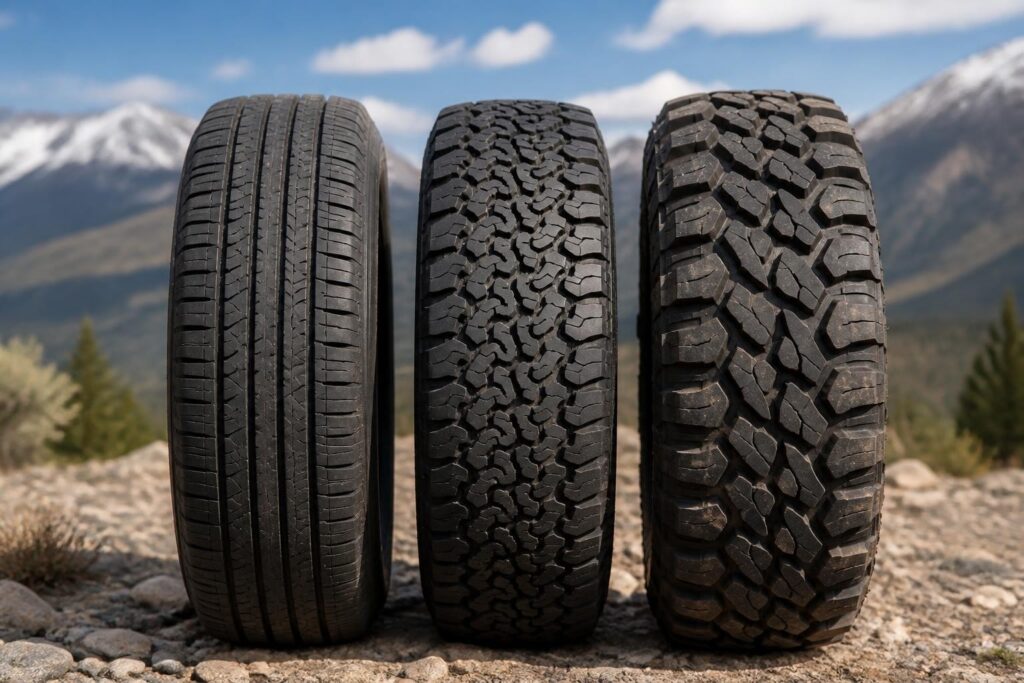
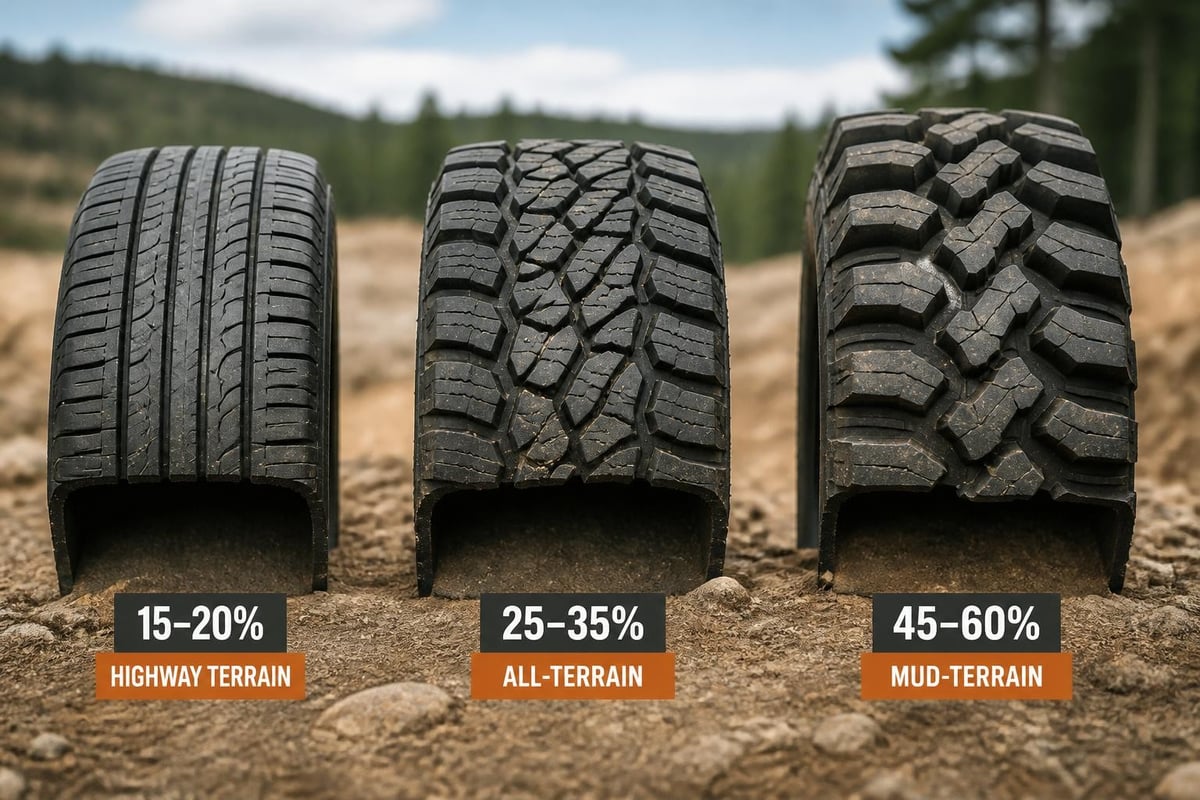
The off-road tire market segments into three primary categories, each engineered for specific usage patterns and terrain conditions. Highway terrain (HT) tires prioritize paved-road performance with minimal off-road capability, while all-terrain (AT) tires strike a middle ground, and mud-terrain (MT) tires maximize traction in extreme conditions at the expense of on-road refinement.
Highway Terrain Tires for Mixed Use
Highway terrain designs feature continuous center ribs and shallow siping that deliver quiet operation and long tread life on paved surfaces. These tires suit commercial fleets where vehicles spend 80-90% of operating time on asphalt but occasionally encounter gravel driveways or unpaved parking areas. The tread depth typically ranges from 10-12 thirty-seconds of an inch when new, with a symmetric pattern that promotes even wear.
Load range ratings for HT tires commonly reach E or F for three-quarter-ton and one-ton pickups, supporting payloads up to 3,750 pounds per tire. The sidewall construction uses polyester body plies with steel belt reinforcement, balancing flexibility for ride comfort against puncture resistance. Car and Driver’s experts note that modern HT designs have narrowed the performance gap with passenger car tires while maintaining the load capacity essential for truck applications.
All-Terrain Tires: The Versatile Middle Ground
All-terrain light truck off road tires represent the most popular segment for vehicles that regularly transition between paved roads and moderate off-road conditions. The tread pattern incorporates larger, more aggressive shoulder blocks than HT designs, with void ratios typically between 25-35% to aid self-cleaning in mud and loose soil.
Key design elements include:
- Interlocking tread blocks that provide biting edges for loose surfaces while maintaining road contact patch stability
- Stone ejectors in the groove bases to prevent gravel retention that can lead to casing damage
- Reinforced sidewall rubber extending partway up the sidewall for protection against impacts
- Three-peak mountain snowflake (3PMSF) ratings on many models, certifying winter traction performance
- Tread depths ranging from 13-16 thirty-seconds when new for extended service life
The compound formulation in AT tires uses silica reinforcement to maintain pliability across temperature ranges while resisting chip-and-tear damage from sharp rocks. Testing conducted by Tire Rack demonstrates that premium all-terrain tires now achieve wet-braking distances within 10-15% of highway-terrain equivalents, a significant improvement over previous generations.
Mud-Terrain Tires for Extreme Conditions
Mud-terrain designs maximize traction in soft, unpredictable surfaces through aggressive lug patterns with void ratios exceeding 40%. The individual tread blocks stand taller and farther apart than AT patterns, creating channels that evacuate mud, sand, and snow while the lugs penetrate to firmer substrate below.
| Feature | Highway Terrain | All-Terrain | Mud-Terrain |
|---|---|---|---|
| Tread Depth (new) | 10-12/32" | 13-16/32" | 16-21/32" |
| Void Ratio | 15-20% | 25-35% | 40-50% |
| On-Road Noise | Minimal | Moderate | Significant |
| Off-Road Traction | Limited | Good | Excellent |
| Tread Life (miles) | 60,000-80,000 | 40,000-60,000 | 30,000-45,000 |
The trade-offs inherent in MT designs include increased road noise from the large tread blocks impacting the pavement, higher rolling resistance that reduces fuel economy by 1-3 MPG compared to HT tires, and faster wear rates on paved surfaces. However, for applications involving construction sites, mining access roads, or agricultural fields, the traction advantage justifies these compromises.
Load Range and Ply Rating Considerations
Light truck off road tires use alphanumeric load range designations (C, D, E, F) that correspond to the tire's maximum load capacity at specified inflation pressures. Understanding these ratings ensures proper matching between tire capability and vehicle requirements, particularly for commercial applications involving heavy payloads or trailer towing.
Decoding Load Range Specifications
Load Range E, the most common specification for three-quarter-ton and one-ton pickups, supports approximately 3,750 pounds per tire at 80 PSI cold inflation pressure. This rating uses ten-ply-equivalent construction, though modern radial tires achieve this strength with fewer actual layers through advanced materials. Load Range F extends capacity to roughly 3,960 pounds per tire at 95 PSI, suitable for the heaviest-duty light truck applications.
Commercial fleet managers must account for the combined weight of the vehicle, payload, passengers, and tongue weight from trailers when selecting load range. A one-ton pickup with a manufacturer's gross vehicle weight rating (GVWR) of 11,500 pounds requires tires that collectively support this weight plus a safety margin. Dividing the GVWR by four tires yields the minimum per-tire capacity, but best practice adds 10-15% buffer for dynamic loading during acceleration and cornering.
The inflation pressure required to achieve rated capacity affects ride quality and tire wear patterns. Over-inflation concentrates tread wear in the center, while under-inflation overworks the sidewalls and causes shoulder wear. For distributors serving mixed-use customers, recommending tires with load capacity exceeding minimum requirements allows operators to reduce pressure slightly for improved comfort without compromising safety margins.
Tread Compound Technology and Durability
Modern light truck off road tires incorporate specialized rubber compounds engineered to withstand the unique stresses of unpaved surfaces while delivering acceptable road manners and longevity. The formulation balances hardness for cut-and-chip resistance against pliability for traction and ride comfort.
Cut-Resistance and Puncture Protection
Off-road environments present hazards uncommon on paved roads: sharp rocks, thorns, metal debris from construction sites, and abrasive soil. Premium tire manufacturers address these threats through multiple strategies in their light truck off road tires:
Base compound modifications include higher percentages of natural rubber for tear strength and carbon black reinforcement for puncture resistance. Some manufacturers add aramid fibers or nylon overlays beneath the tread for additional protection. The sidewalls incorporate thicker gauge rubber extending higher up the profile, creating a "rim protector" shoulder that guards against impacts.
Tread depth engineering provides a deeper sacrificial layer before reaching the belt package. While passenger car tires typically measure 10/32" new, quality off-road light truck tires start at 15-18/32" for AT patterns and 18-22/32" for MT designs. This additional rubber extends service life on abrasive surfaces and provides more opportunities for rotation and balancing to even out wear.
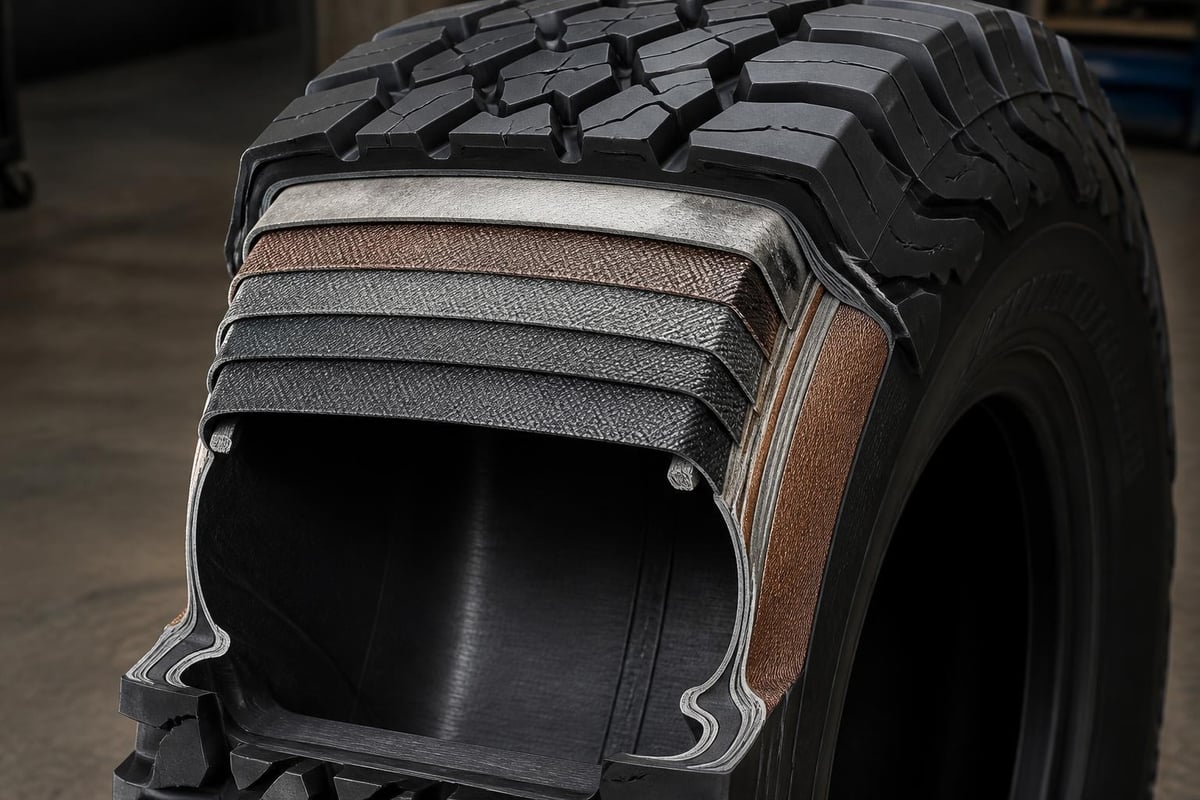
Temperature management in the compound prevents overheating during sustained high-speed highway operation, a common scenario for work trucks traveling to remote job sites. Silica-enhanced compounds dissipate heat more effectively than pure carbon-black formulations, reducing the risk of tread separation and extending casing life for potential retreading.
Sizing and Fitment Guidelines
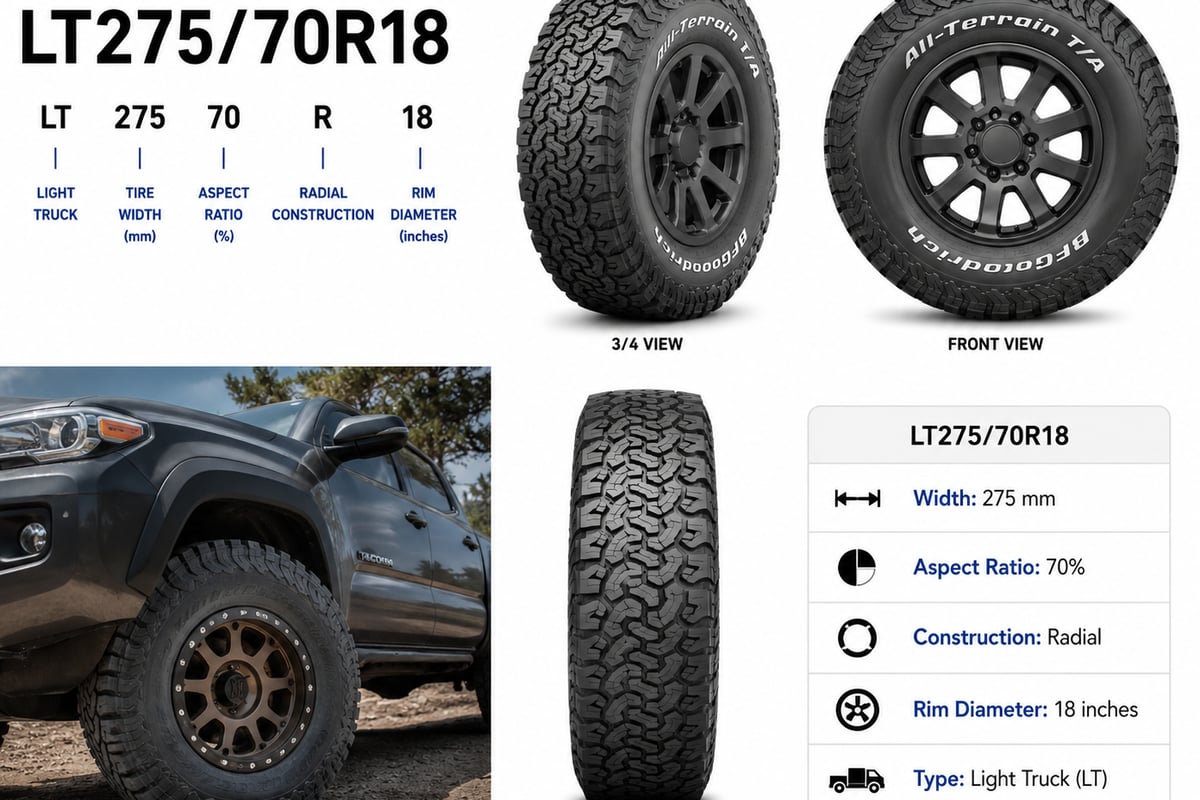
Proper tire sizing ensures compatibility with vehicle load ratings, clearance for suspension travel, and accurate speedometer readings. Light truck off road tires use the LT prefix designation and follow specific sizing conventions that differ from passenger car tires.
Interpreting LT Tire Size Markings
A common light truck tire size reads LT265/70R17 Load Range E. The "LT" prefix designates light truck construction with reinforced sidewalls. The 265 indicates section width in millimeters, while 70 represents the aspect ratio (sidewall height as a percentage of width). "R" denotes radial construction, and 17 specifies the wheel diameter in inches.
When selecting replacement or upgrade tires, diameter changes affect final drive ratio and speedometer accuracy. Installers can use the formula (New Diameter ÷ Original Diameter) × Indicated Speed = Actual Speed. A change from 31-inch to 33-inch diameter tires causes a 6.5% speedometer error, reading 60 MPH when actually traveling 63.9 MPH. Many jurisdictions require speedometers to remain within ±5% accuracy.
Width changes impact handling characteristics and fuel economy. Wider tires increase the contact patch for improved traction but raise rolling resistance and can reduce fuel economy by 5-8%. They also require verification of clearance at full suspension compression and steering lock to prevent rubbing against fenders or suspension components.
OTR TIRE THAI manufactures light truck radial tires covering the full spectrum of applications, from highway terrain patterns optimized for fuel efficiency to aggressive all-terrain and mud-terrain designs. Our factory-direct wholesale pricing and DOT/ECE certification make these tires ideal for distributors building relationships with commercial fleet operators and retail dealers across diverse markets.
Terrain-Specific Performance Factors
Different off-road environments demand specific tread characteristics and construction features. Understanding how various designs perform across terrain types helps distributors match inventory to customer requirements and regional conditions.
Mud and Soft Soil Performance
Soft, saturated soil requires aggressive void patterns that allow the tire to self-clean as it rotates. Light truck off road tires designed for mud incorporate tall, widely-spaced lugs with open shoulder designs that extend traction to the sidewalls. The individual tread blocks may incorporate additional siping to enhance flexibility and surface conformity.
Flotation becomes critical in very soft conditions where narrow tires sink deeply and create excessive rolling resistance. Wider tires with lower aspect ratios distribute vehicle weight over a larger surface area, reducing ground pressure. However, this advantage applies primarily to vehicles modified with aftermarket wheels accommodating wider tires than factory specifications.
Rock and Hard-Pack Terrain
Rocky trails and hardpan surfaces prioritize puncture resistance and edge-biting traction over self-cleaning capability. Reviews of tires tested in rock conditions reveal that compound hardness significantly affects both grip and durability. Softer compounds conform to rock surfaces for better traction but wear faster on abrasive granite and limestone.
Sidewall strength becomes paramount in rocky terrain where impacts against trail obstacles can tear or puncture the casing. Three-ply sidewall construction, increasingly common in premium light truck off road tires, adds weight but dramatically reduces the risk of damage requiring roadside repair or replacement. Some manufacturers reinforce sidewalls with additional rubber extending halfway up the profile, creating a buffer zone against impacts.
Sand and Desert Conditions
Sand driving demands specific tire pressure management and tread characteristics. Lower pressures (15-20 PSI for many light trucks) increase the contact patch and improve flotation, but require tires with sidewalls engineered to support the vehicle weight at reduced inflation. Load Range E and F tires better tolerate the flexing that occurs during low-pressure operation.
Tread pattern affects sand performance less dramatically than compound and construction. The tire must conform to the surface and provide sufficient contact area to prevent sinking. Self-cleaning channels matter less than in mud, since dry sand evacuates easily. However, the siping pattern influences traction during acceleration and braking on loose sand slopes.
Maintenance and Longevity Optimization
Maximizing the service life of light truck off road tires requires systematic maintenance addressing the unique stresses of both paved and unpaved operation. Commercial fleets implementing proper tire management typically achieve 15-25% longer service life compared to neglected tires.
Pressure Monitoring and Adjustment
Maintaining correct inflation pressure ranks as the single most important factor in tire longevity and safety. Under-inflation by just 10 PSI (from 80 PSI to 70 PSI in a Load Range E tire) increases sidewall flexing, generating excess heat that can lead to tread separation. The tire also loses approximately 10% of its load capacity, creating an unsafe condition for heavily loaded vehicles.
Modern tire pressure monitoring systems (TPMS) alert drivers to significant pressure losses but may not detect gradual decreases from natural permeation. Fleet maintenance programs should verify cold inflation pressure weekly, checking tires before operation when temperatures approximate the conditions during the last inflation service. Temperature changes affect pressure by approximately 1 PSI per 10°F, necessitating seasonal adjustments.
Rotation Patterns and Alignment
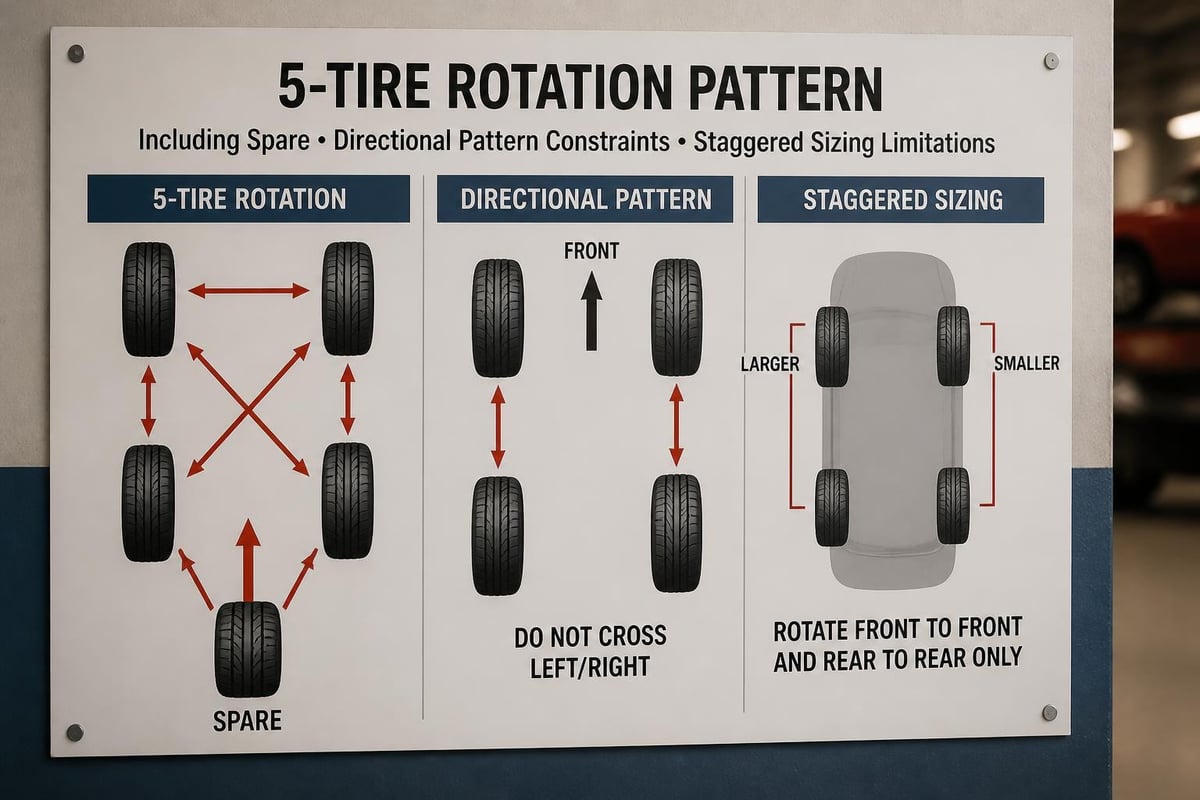
Regular rotation distributes wear evenly across all positions, particularly important for light truck off road tires that may develop irregular wear from the high torque loads in four-wheel-drive systems. The optimal rotation interval varies by application:
- Highway-primary use: Every 6,000-8,000 miles using a standard forward-cross pattern
- Mixed use with moderate off-road: Every 5,000-6,000 miles with inspections for cuts and punctures
- Severe off-road use: Every 3,000-4,000 miles with detailed tread depth measurements
- Directional tread patterns: Front-to-rear rotation on same side only
- Staggered sizes: Rotation within same axle position only
Wheel alignment significantly affects tire wear rates, especially on vehicles subjected to impacts from potholes or off-road obstacles. Research on vehicle dynamics demonstrates that even slight misalignment causes measurable increases in rolling resistance and uneven tread wear. Annual alignment verification, or immediately following any significant impact, prevents premature tire replacement.
Winter Performance and Three-Peak Ratings
Light truck operators in cold climates require tires maintaining traction in snow and ice without sacrificing the load capacity and durability essential for work applications. The three-peak mountain snowflake (3PMSF) symbol indicates tires meeting specific winter traction standards.
Understanding 3PMSF Certification
The 3PMSF rating requires tires to achieve a traction index of 110 or higher in standardized testing on medium-packed snow compared to a reference tire. This certification applies to all-season and winter-specific tires, providing a reliable indicator of cold-weather capability. However, the rating doesn't address ice traction, deep snow performance, or how the tire performs on dry or wet pavement.
Many modern all-terrain light truck off road tires carry 3PMSF ratings, incorporating sipe patterns and compound formulations that maintain pliability at temperatures below 45°F. These tires serve dual purposes for fleets operating year-round in regions with distinct winter seasons, eliminating the need for seasonal tire changes. Long-term testing of hybrid off-road tires reveals that aggressive all-terrain patterns with winter ratings deliver acceptable snow traction while maintaining off-road capability.
Siping Technology for Cold-Weather Traction
Sipes are thin slits molded into tread blocks that create additional biting edges for traction on slippery surfaces. Light truck off road tires use various siping strategies:
- 2D sipes: Simple straight or zigzag cuts providing basic traction enhancement
- 3D interlocking sipes: Complex patterns that maintain block stability while adding edges
- High-density siping: Closely spaced cuts maximizing edge contact with ice and packed snow
- Variable-depth siping: Deeper cuts that continue providing edges as the tire wears
The sipe depth affects how long winter traction persists through the tire's service life. Shallow sipes (3-4mm) disappear after 30-40% tread wear, while full-depth siping maintains performance until replacement becomes necessary for other reasons.
Noise and Ride Quality Considerations
The aggressive tread patterns that provide off-road traction inevitably generate more noise than highway-oriented designs. Understanding the sources of tire noise and vibration helps distributors set realistic customer expectations and recommend appropriate applications.
Mechanisms of Tire Noise Generation
Tire noise originates from three primary sources: tread block impact, air pumping in the grooves, and resonance in the tire structure itself. Large, widely-spaced tread blocks in mud-terrain light truck off road tires create rhythmic impacts as they contact pavement, generating noise levels 6-10 dB higher than highway tires. The frequency and amplitude depend on block size, spacing, and the tire's rotational speed.
Air pumping occurs when tread blocks compress against the road surface, forcing air rapidly through the grooves. This phenomenon increases with void ratio, explaining why mud-terrain tires generate significantly more noise than all-terrain designs. Manufacturers mitigate pumping noise through variable pitch tread patterns that distribute sound energy across a broader frequency range, preventing concentration at specific tones perceived as particularly annoying.
Premium tire designs incorporate computer-optimized pitch sequences that minimize noise generation. Reviews comparing modern all-terrain tires note that recent designs achieve noise levels approaching highway tires from five years ago, demonstrating continued progress in this area.
Balancing Performance and Comfort
Commercial fleet operators face trade-offs between off-road capability and driver comfort during highway operation. Vehicles spending 70% or more time on paved roads often benefit from all-terrain rather than mud-terrain tires, accepting slightly reduced extreme off-road traction for significantly better road manners.
The relationship between tread depth and noise evolves over the tire's service life. New tires with maximum tread depth typically generate peak noise levels, which gradually decrease as the tread wears down by 30-40%. This reduction occurs because shorter tread blocks create less impact energy and smaller void volumes reduce air pumping. However, this benefit must be weighed against the reduced traction that accompanies tread wear.
Wholesale Distribution Considerations
Distributors stocking light truck off road tires must balance inventory breadth against capital investment and warehouse space constraints. Understanding market segmentation and regional demand patterns optimizes inventory allocation and turnover rates.
Market Segmentation Analysis
The light truck tire market divides into distinct customer segments with different priorities:
| Segment | Primary Need | Price Sensitivity | Volume Potential |
|---|---|---|---|
| Commercial Fleets | Durability, TCO | Moderate | High (recurring) |
| Recreational 4×4 | Traction, Image | Low | Moderate |
| Daily Drivers | Balance, Quiet | High | High |
| Work Trucks | Load Capacity | Moderate | High |
Commercial fleet buyers typically purchase in sets of 4-20 tires per transaction, prioritizing total cost of ownership over initial price. These customers value local availability, flexible payment terms, and technical support for application selection. Developing relationships with fleet managers generates recurring revenue as vehicles require replacement tires every 18-36 months.
Recreational off-road enthusiasts research extensively before purchasing, often requesting specific brand and model combinations. This segment tolerates higher pricing for premium performance but expects expertise from sales staff. Maintaining stock depth in popular sizes for trending products captures sales that would otherwise go to competitors or online retailers.
Inventory Optimization Strategies
Effective inventory management for light truck off road tires requires analyzing local vehicle populations, seasonal demand patterns, and supplier lead times. High-volume sizes (LT265/70R17, LT275/65R18, LT285/70R17) justify deeper stock levels, while specialty sizes move to a just-in-time model supported by reliable supplier relationships.
Seasonal demand fluctuations affect inventory planning in regions with distinct climate patterns. Northern distributors experience peak demand for 3PMSF-rated all-terrain tires during October-November as operators prepare for winter, while southern markets maintain steadier year-round demand. Timing bulk orders to capture volume pricing while avoiding excess carrying costs requires forecasting based on historical sales data and market trends.
Selecting optimal light truck off road tires requires balancing terrain requirements, load capacity, longevity, and operating cost considerations across diverse applications. Whether outfitting commercial fleets, serving retail customers, or building distribution networks, understanding how tread design, compound technology, and construction features affect real-world performance enables confident specification decisions. OTR TIRE THAI manufactures premium light truck radial tires with DOT and ECE certification, offering distributors in over 80 countries factory-direct wholesale pricing on highway terrain, all-terrain, and mud-terrain patterns engineered for the demanding conditions light trucks encounter worldwide.
