
Blog
Largest Tyre in the World: Giants of Engineering
Aug
When we think about tires, we typically envision the standard rubber rings mounted on our cars or trucks. Yet the tire industry produces engineering marvels that dwarf everyday passenger vehicle tires by orders of magnitude. The largest tyre in the world represents the pinnacle of rubber manufacturing technology, serving vehicles that move mountains-quite literally. These colossal tires power ultra-class mining haul trucks, each one a testament to advanced materials science and precision engineering. Understanding these giants offers valuable perspective on the tire manufacturing industry's capabilities and the specialized expertise required to serve diverse market segments.
Production Mining Tires: The True Giants
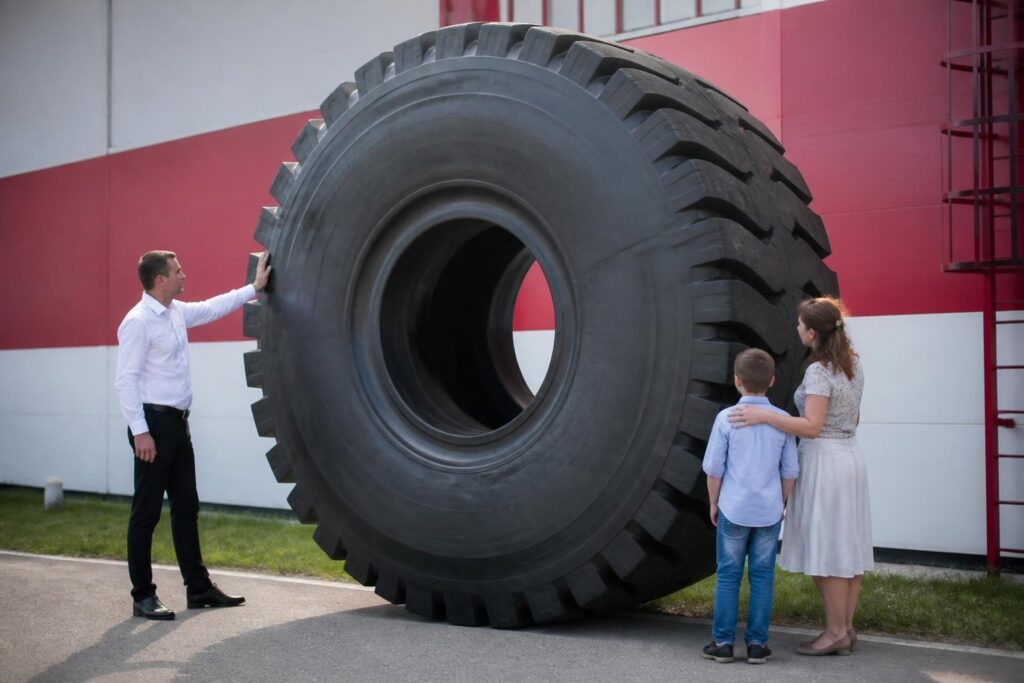
The distinction between the largest tyre in the world in active production and sculptural landmarks is an important one. Belshina, a Belarusian tire manufacturer, produces the 59/80R63 career-pattern radial tyre, which currently holds the title as the largest production tire manufactured today. This mammoth tire stands over 4 meters tall and weighs approximately 5.7 metric tons.
Engineering Specifications and Capabilities
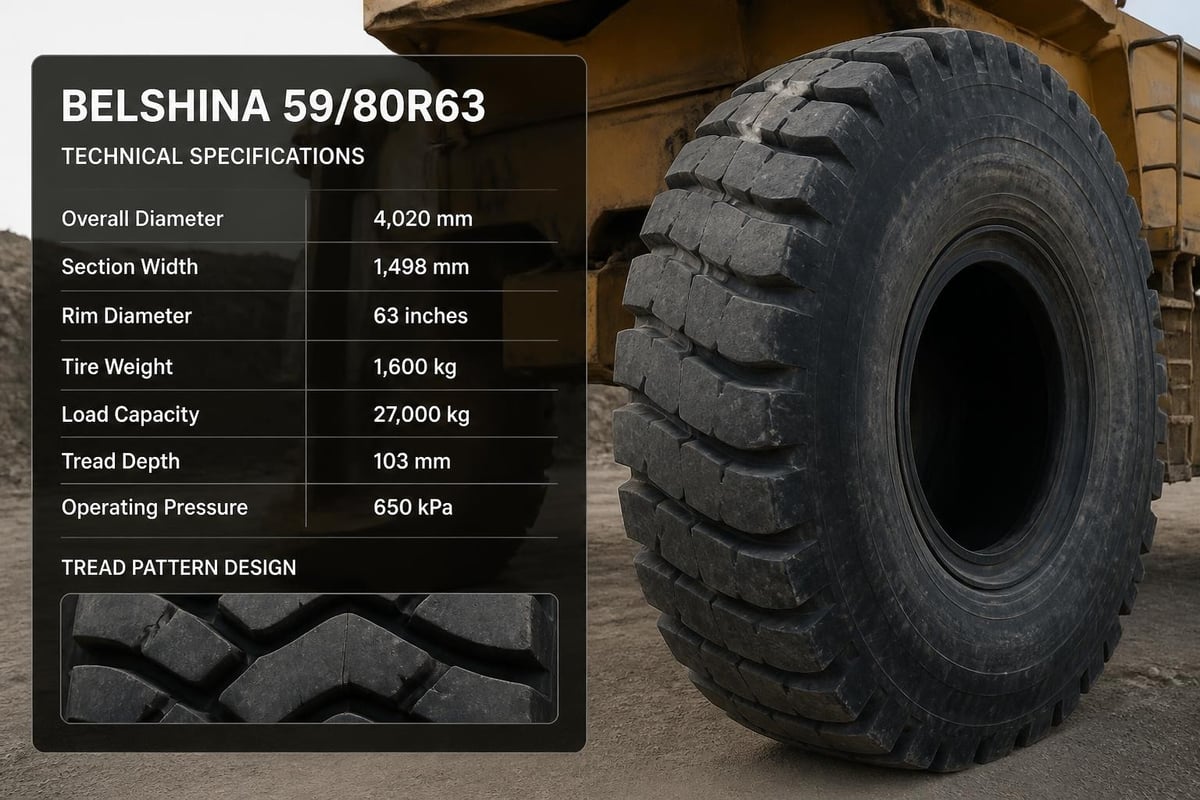
The 59/80R63 designation reveals critical dimensional information. The tire measures 59 inches in section width, with an aspect ratio of 80, designed to fit a 63-inch diameter rim. The tread width alone spans 1.47 meters, providing the contact patch necessary to distribute the immense loads these tires must carry.
Key specifications include:
- Overall diameter: 4+ meters (approximately 13 feet)
- Weight: 5,700 kilograms (12,566 pounds)
- Tread width: 1.47 meters
- Load capacity: Supporting vehicles exceeding 400 tons
- Operating pressure: Engineered for extreme duty cycles
These tires are engineered specifically for ultra-class mining haul trucks manufactured by companies like Caterpillar and Komatsu. The trucks themselves represent some of the largest land vehicles ever constructed, with payload capacities reaching 400 tons or more. Each tire must withstand not only tremendous static weight but also the dynamic forces generated when navigating rough terrain in open-pit mines.
Applications in Mining and Heavy Industry
Ultra-class mining operations rely on the largest tyre in the world to maintain productivity in challenging environments. These tires operate in conditions that would destroy conventional tires within hours-sharp rocks, extreme temperatures, corrosive materials, and grades that test traction limits.
| Application | Tire Size Range | Typical Load | Operating Environment |
|---|---|---|---|
| Ultra-Class Haul Trucks | 55/80R63 – 59/80R63 | 350-450 tons | Open-pit mining |
| Large Haul Trucks | 40.00R57 – 50/80R57 | 250-350 tons | Mining, quarrying |
| Rigid Dump Trucks | 33.00R51 – 37.00R57 | 150-250 tons | Construction, mining |
| Loader Vehicles | 29.5R29 – 35/65R33 | 50-150 tons | Material handling |
Manufacturing Complexity
Producing the largest tyre in the world requires specialized facilities and processes. The manufacturing process begins with carefully formulated rubber compounds that balance cut resistance, heat dissipation, and wear characteristics. Steel belts and radial plies must be precisely positioned to handle both vertical loads and lateral forces.
The curing process alone can take several days. Giant autoclaves heat the assembled tire under controlled pressure, cross-linking the rubber molecules and bonding all components into a unified structure. Quality control at this scale demands sophisticated testing equipment capable of simulating years of service in accelerated time frames.
Temperature management during operation presents unique challenges. A tire carrying hundreds of tons generates substantial heat through flexing and friction. Engineers must design tread patterns and sidewall configurations that promote airflow and heat dissipation while maintaining structural integrity.
Iconic Tire Landmarks and Sculptures
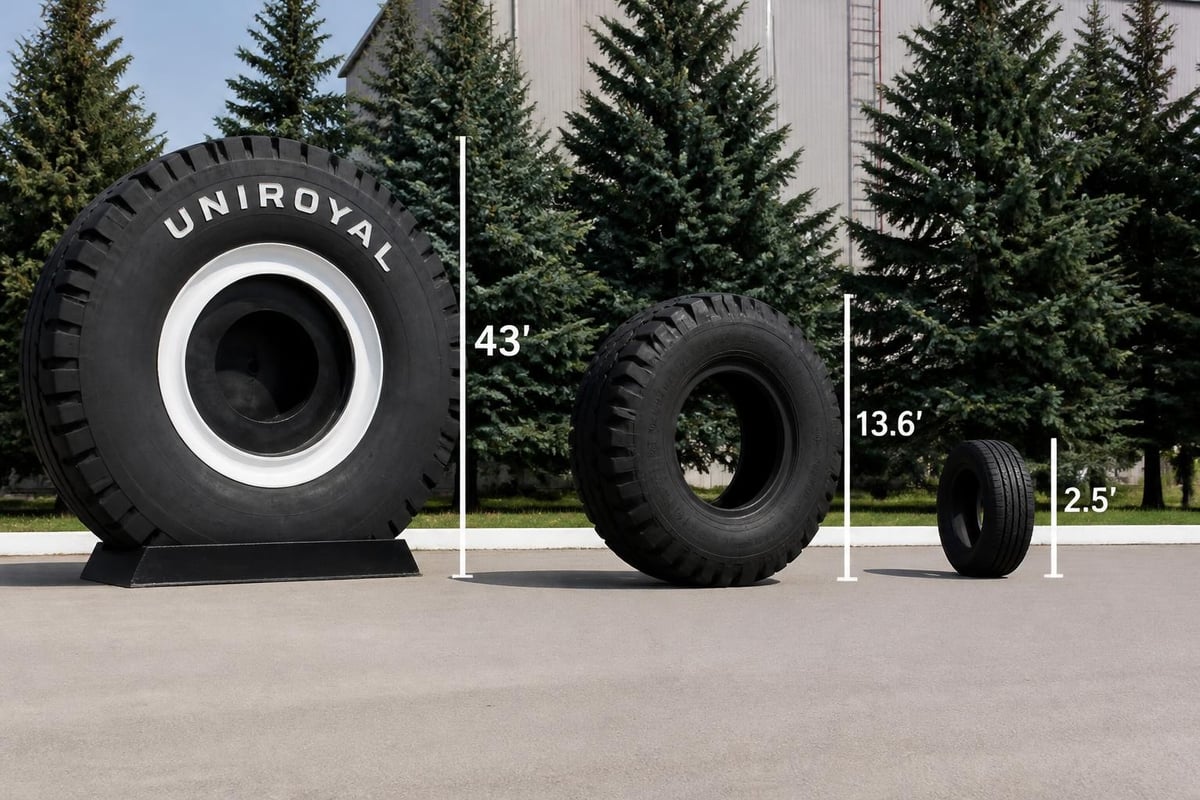
While production mining tires claim functional supremacy, several monumental tire sculptures capture public imagination. The Uniroyal Giant Tire in Allen Park, Michigan, stands as the tallest tire sculpture in the world at 24.38 meters (80 feet) tall, according to Guinness World Records.
The Uniroyal Giant: From Ferris Wheel to Landmark
This massive structure wasn't originally designed as a static sculpture. Created for the 1964-1965 New York World's Fair, it functioned as a working Ferris wheel, carrying passengers in enclosed gondolas. After the fair, Uniroyal relocated the structure to Allen Park, where it has served as an advertising landmark along Interstate 94 since 1966.
Construction details:
- Height: 24.38 meters (80 feet)
- Weight: 12 tons
- Material: Steel and fiberglass
- Original function: Ferris wheel with 24 gondolas
- Current status: Static roadside attraction
The detailed history of this American roadside icon reveals fascinating engineering decisions. The structure's framework consists of steel ribs covered with fiberglass panels molded to resemble tire tread. Despite its appearance, it was never intended to roll-the engineering focused entirely on vertical stability and weather resistance.
Tire Size Progression Across Industries
Understanding the largest tyre in the world requires context within the broader spectrum of tire sizes. The tire manufacturing industry serves diverse applications, each with specific engineering requirements and size constraints.
Commercial and Industrial Tire Categories
The progression from passenger car tires to mining giants illustrates how load requirements drive dimensional scaling. A standard passenger car tire might measure 700mm in diameter, while the largest production tire exceeds 4,000mm-nearly six times larger.
For distributors and fleet operators working with commercial vehicles, understanding this spectrum helps contextualize their own tire needs. Semi truck tires, for instance, represent a middle ground between passenger vehicles and industrial applications. The 295/75R22.5 size-common in commercial trucking-measures approximately 1,000mm in diameter and handles loads around 3,000 kilograms per tire.
Our semi truck tire offerings bridge the gap between passenger car applications and industrial use. These TBR (Truck and Bus Radial) tires feature all-position patterns for steer, drive, and trailer applications, with load capacities and durability engineered for long-haul operations. While they don't approach the scale of mining giants, they represent sophisticated engineering that balances weight, fuel efficiency, and service life for commercial fleets.
Agricultural and Specialty Applications
Agricultural tires occupy their own niche, with some models approaching impressive dimensions. Large agricultural tractors and combines use tires exceeding 2 meters in diameter, though they remain significantly smaller than mining applications. These tires prioritize soil flotation and traction over sheer load capacity, with wider footprints and lower inflation pressures.
| Tire Category | Typical Diameter | Primary Design Focus | Load Range |
|---|---|---|---|
| Passenger Car | 600-800mm | Comfort, efficiency | 400-800 kg |
| Light Truck | 800-900mm | Versatility, durability | 1,000-1,500 kg |
| Semi Truck | 900-1,100mm | Longevity, fuel economy | 2,500-3,500 kg |
| Agricultural | 1,200-2,000mm | Flotation, traction | 2,000-6,000 kg |
| Mining OTR | 3,000-4,000mm+ | Extreme load, cut resistance | 20,000-60,000 kg |
Material Science and Innovation
The largest tyre in the world showcases advanced materials engineering. Natural and synthetic rubber compounds form the foundation, but modern mining tires incorporate numerous specialized components to achieve required performance characteristics.
Compound Formulation
Tire compounds must balance competing demands. Softer compounds provide better traction but wear more quickly. Harder compounds last longer but generate more heat and offer less grip. Mining tire compounds lean toward durability and heat resistance, accepting some traction compromise in favor of extended service life.
Carbon black reinforcement strengthens the rubber matrix while improving abrasion resistance. Silica additives enhance tear strength and reduce rolling resistance. Antioxidants and anti-ozonants protect against environmental degradation during the multi-year service life these tires are expected to deliver.
Structural Engineering
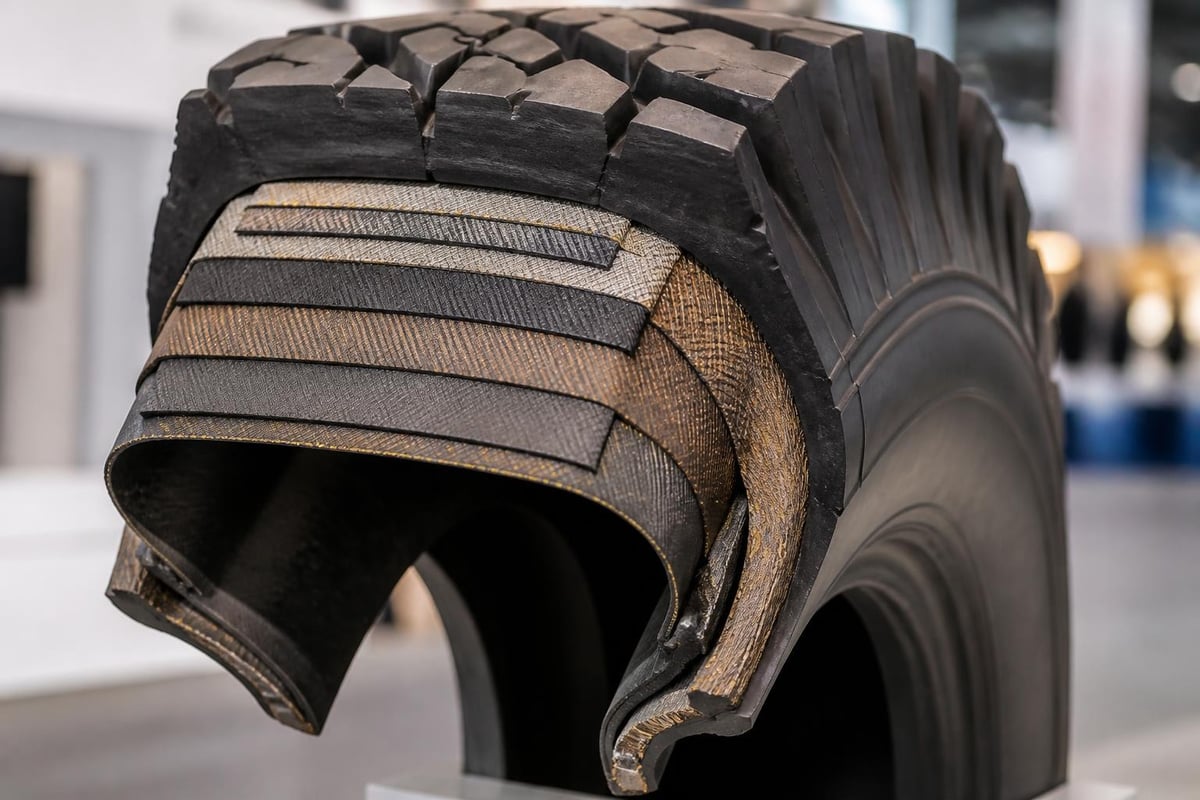
Steel cord belts running beneath the tread provide dimensional stability and puncture resistance. The belt package in the largest tyre in the world may contain thousands of individual steel cords, each precisely positioned and tensioned. Radial ply construction allows the sidewalls to flex while the tread remains stable, optimizing both ride quality and tread wear.
Bead construction must secure the tire to the rim while handling tremendous forces. Multiple steel wire bundles form the bead core, wrapped and cushioned with specialized rubber compounds. The bead design must prevent tire slip on the rim even under extreme cornering or braking forces.
Economic Impact and Service Considerations
Operating the largest tyre in the world involves substantial financial considerations. A single 59/80R63 tire can cost $50,000 or more, meaning a single ultra-class haul truck rides on nearly $300,000 worth of tires. These costs make tire management a critical component of mining economics.
Total Cost of Ownership
Mining operations don't simply consider purchase price. They calculate cost per hour or cost per ton of material moved. Premature tire failure-whether from cuts, heat damage, or improper pressure management-dramatically impacts these metrics.
Cost factors include:
- Initial purchase price per tire
- Expected service hours before replacement
- Fuel consumption impacts (rolling resistance)
- Downtime for tire changes
- Specialized mounting equipment and expertise
- Monitoring systems for pressure and temperature
- Retreading viability and economics
Maintenance and Monitoring
Modern mining operations employ sophisticated tire monitoring systems. Pressure sensors track inflation levels continuously, alerting operators to slow leaks before they cause damage. Infrared temperature monitoring identifies hotspots that signal internal structural issues or overloading.
Tire maintenance specialists inspect tread depth, cut damage, and sidewall condition during regular intervals. Industry resources emphasize that proper maintenance extends service life significantly, sometimes doubling the hours obtained from a single tire.
Global Manufacturing and Distribution
The largest tyre in the world comes from a relatively small number of specialized manufacturers. Beyond Belshina, companies like Bridgestone, Michelin, and Goodyear produce ultra-class mining tires, each with proprietary designs and compound formulations.
Manufacturing Locations
Production facilities for these giant tires require substantial capital investment. The specialized equipment, skilled workforce, and quality control systems necessary to produce consistent, reliable ultra-class tires limit production to dedicated facilities. Most manufacturers operate only one or two plants globally capable of producing their largest models.
Geographic proximity to major mining regions influences distribution networks. Mines in Australia, Chile, South Africa, and North America represent the largest markets for ultra-class tires. Manufacturers maintain regional distribution centers and technical support teams to serve these critical markets.
Quality Standards and Testing
Every tire undergoes rigorous testing before release. Manufacturers subject sample tires to controlled overload testing, endurance testing at elevated speeds and temperatures, and structural integrity verification through X-ray inspection. Field testing in actual mining operations provides real-world validation before full production release.
Future Developments in Large Tire Technology
The tire industry continues innovating even at the largest scales. Research focuses on extending service life, reducing rolling resistance for fuel savings, and incorporating smart technologies for predictive maintenance.
Airless and Alternative Designs
Some manufacturers explore airless tire concepts even for large vehicles. Eliminating inflation pressure removes one failure mode while potentially simplifying logistics. However, the heat dissipation challenges at mining tire scales make this approach technically demanding.
Sectional tire designs-where the tire consists of replaceable segments rather than a single monolithic unit-could reduce waste by allowing partial replacement rather than discarding an entire tire when one section sustains damage. These concepts remain largely experimental at ultra-class sizes.
Sustainability Initiatives
Environmental considerations increasingly influence tire design. Manufacturers work to incorporate recycled materials, reduce manufacturing energy consumption, and design for end-of-life recycling. The largest tyre in the world represents substantial material investment, making recycling and retreading economically attractive beyond environmental benefits.
Some mines experiment with tire-derived fuel, converting worn tires into energy for industrial processes. Others pursue mechanical recycling, recovering steel cord and rubber for use in other applications. The scale of these tires makes transportation to recycling facilities economically challenging, driving interest in on-site processing technologies.
From the Belshina 59/80R63 production tires powering mining operations to iconic sculptures like the Uniroyal Giant, the largest tyre in the world showcases remarkable engineering achievements across functional and artistic dimensions. These giants demonstrate the tire industry's capacity to serve specialized applications through advanced materials science and precision manufacturing. Whether you're sourcing tires for commercial fleets, agricultural operations, or specialized industrial applications, OTR TIRE THAI delivers premium quality tires manufactured in Thailand with international standards, serving distributors in over 80 countries with wholesale pricing and technical expertise across passenger, commercial, agricultural, and industrial tire categories.
