
Blog
Tractor Tires: Complete Guide for Farm Performance
Aug
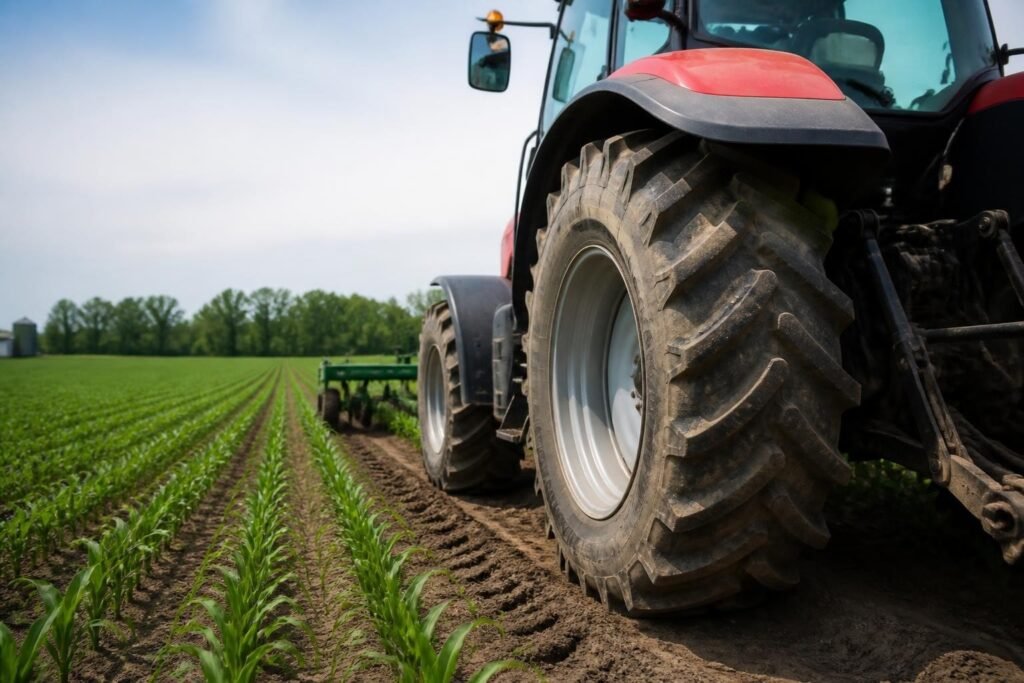
Modern agricultural operations depend on reliable equipment, and few components are as critical to farm productivity as the tires beneath your tractor. The right tractor tires can improve fuel efficiency by up to fifteen percent, reduce soil compaction damage, extend equipment service life, and ultimately contribute to healthier yields across your entire operation. Yet many farmers and fleet managers struggle to navigate the complex landscape of tire specifications, inflation strategies, and maintenance protocols. This comprehensive guide examines the technical considerations, performance trade-offs, and best practices that separate optimal tire choices from costly mistakes.
Understanding Tractor Tire Construction and Design
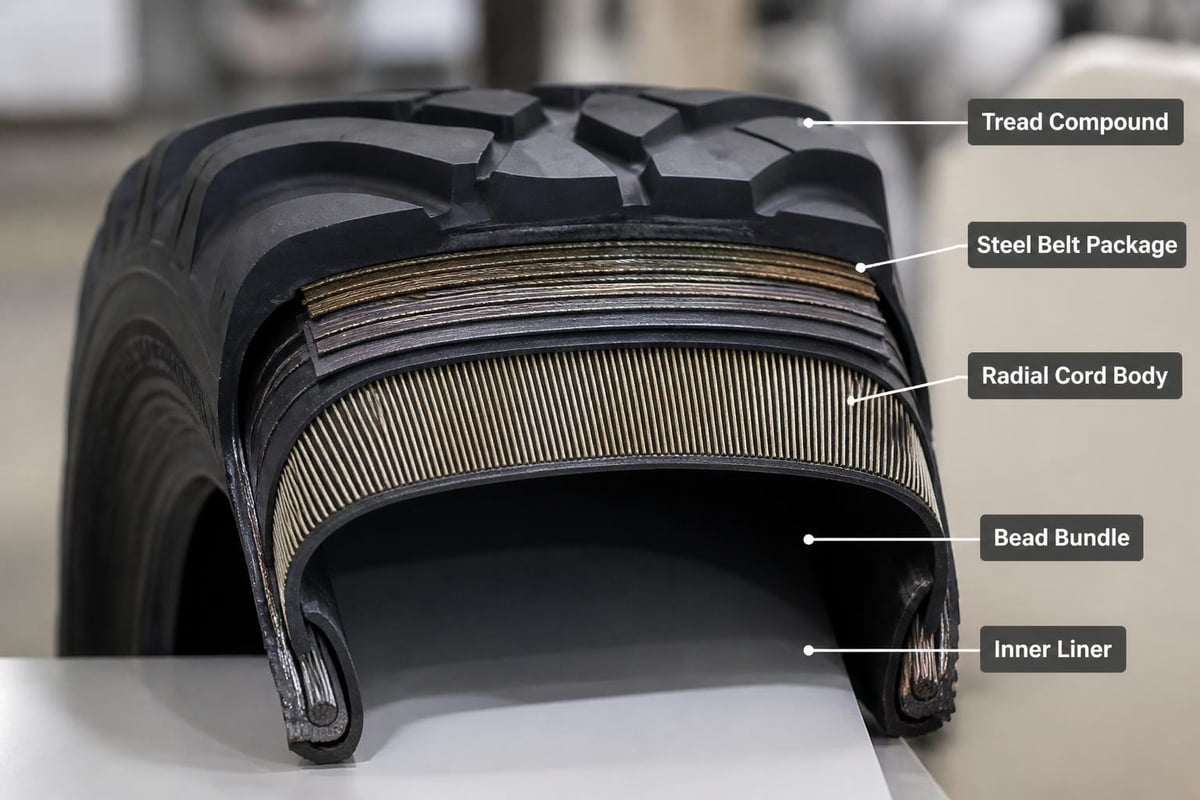
The engineering behind agricultural tires has evolved dramatically over the past three decades. Modern tractor tires feature radial construction that replaced bias-ply designs across most agricultural applications. Radial tires use cord plies oriented perpendicular to the direction of travel, creating a flexible sidewall that allows the tread to flex independently. This construction delivers a larger footprint under load, distributing weight more evenly across the soil surface.
Key Structural Components
Every agricultural tire comprises several critical layers working together:
- Tread compound formulated to resist cuts from stubble, chemicals, and sharp debris while maintaining flexibility across temperature extremes
- Belt package under the tread that provides structural stability and puncture resistance
- Radial cord body allowing sidewall flex that absorbs shocks and maintains ground contact
- Bead bundle anchoring the tire securely to the wheel rim under high torque loads
- Inner liner retaining air pressure in tubeless designs or protecting tubes in traditional configurations
The tread pattern itself divides into several recognized categories. R-1 agricultural tires feature aggressive lugs spaced widely for self-cleaning in mud and loose soil. R-1W models extend lug depth by twenty percent for enhanced traction in wet conditions. R-2 rice and cane tires use even deeper lugs for extreme muddy environments. R-3 turf tires minimize surface disturbance for groundskeeping applications, while R-4 industrial tires balance traction with road-friendly characteristics for machines splitting time between field and pavement.
Sizing Systems and Load Capacity
Agricultural tire sizing follows multiple concurrent systems that can confuse even experienced operators. Traditional imperial sizing uses a format like 18.4-38, indicating an 18.4-inch section width and a 38-inch rim diameter. Metric sizing adopts a format such as 480/80R46, where 480 represents the section width in millimeters, 80 indicates the aspect ratio (sidewall height as a percentage of width), R denotes radial construction, and 46 gives the rim diameter in inches.
Load Index and Ply Rating
Every tire carries a load index number that corresponds to a maximum weight capacity at a specified inflation pressure. A load index of 165, for example, indicates a single-tire capacity of 3,860 kilograms at the rated pressure. Ply rating, despite its historical origin in actual fabric plies, now serves as a strength indicator. A tire marked 12-ply (or 12PR) can carry heavier loads than a 6-ply equivalent, though both may contain similar actual materials arranged differently for strength.
| Size Format | Example | Width | Aspect Ratio | Rim Diameter | Construction |
|---|---|---|---|---|---|
| Imperial | 18.4-38 | 18.4" | Variable | 38" | Bias or Radial |
| Metric | 480/80R46 | 480mm | 80% | 46" | Radial |
| LI/SI | 165A8/165B | Varies | Varies | Varies | Speed/Load indexed |
Matching tire capacity to actual field loads requires understanding dynamic weight distribution. Front tractor tires typically carry less weight than rears but absorb greater steering stresses. Implement weight transfers hundreds of additional kilograms to rear axles during transport. The SAE J3229 standard establishes performance requirements and test procedures for agricultural wheels and rims, ensuring tire-rim combinations can safely handle these variable loads.
Inflation Pressure Strategy and Soil Health
Perhaps no single factor influences both tractor performance and soil condition as profoundly as tire inflation pressure. The relationship between inflation, contact patch, and soil compaction has driven extensive research across agricultural institutions worldwide. Proper inflation management can reduce compaction-related yield loss by up to twenty percent in sensitive soils.
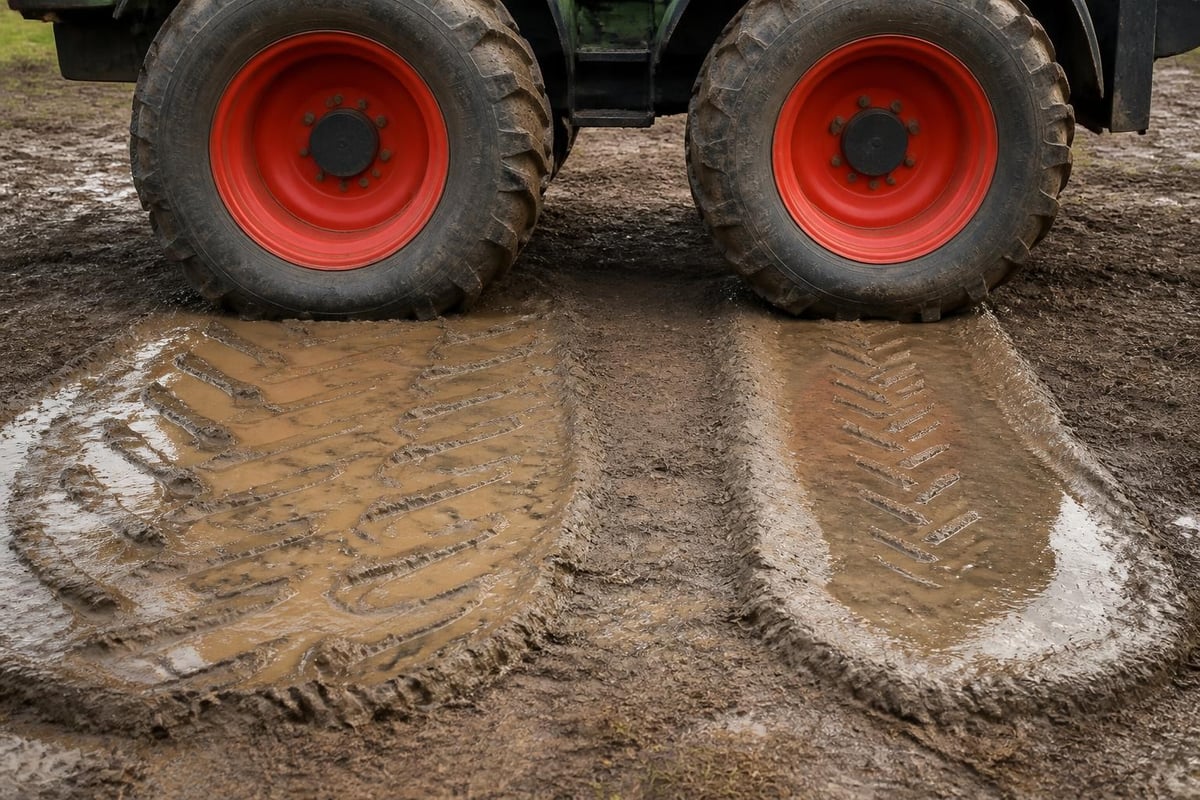
Research from the U.S. Department of Agriculture demonstrates that reducing inflation pressure from road transport levels (1.6 bar) to field-appropriate settings (0.8 bar) can nearly double the tire's contact area. This expanded footprint distributes weight over more soil surface, reducing the compressive force at any single point. The study tracked row-crop tractors and planters across multiple seasons, measuring both surface and subsoil compaction effects.
Field vs. Transport Inflation
Modern farms demand that tractors move frequently between field and road. Highway transport at low field pressures causes excessive tire flex, generating heat that degrades rubber compounds and can lead to catastrophic failure. The solution requires disciplined inflation adjustment:
- Establish baseline pressures for your heaviest field implement configuration using manufacturer load tables
- Install central tire inflation systems (CTIS) on high-value tractors to automate pressure changes
- Schedule manual pressure checks every morning during intensive field periods
- Mark target pressures clearly on equipment for operators who may rotate between machines
- Document seasonal adjustments as soil moisture and crop residue levels change throughout the year
The University of Minnesota Extension provides practical guidance on managing soil compaction through controlled traffic farming, reduced tillage, and appropriate tire selection. Their research emphasizes that compaction effects extend beyond the current season, with subsoil damage persisting for five to ten years in many soil types.
Tread Pattern Selection for Different Operations
Choosing the optimal tread configuration requires matching tire design to your primary operations and soil conditions. The aggressive lugs on R-1 agricultural tires excel in tilled soil, providing bite that converts engine torque into forward motion. Those same lugs, however, create a harsh ride on pavement and accelerate wear during road transport.
Application-Specific Recommendations
Row-crop operations benefit from standard R-1 tires with forty-five-degree lug angles that balance traction with self-cleaning. The angled bars shed mud as the tire rotates, preventing buildup that would reduce grip. Spacing between lugs should match your typical soil conditions; wider spacing suits heavy clay that tends to pack between bars.
Mixed-use tractors serving both field and road duty often perform best with R-1W tires. The twenty-percent deeper lugs maintain traction advantage in fields while the radial construction's flexible sidewall improves road comfort compared to older bias-ply designs. Some operators select R-4 industrial tires for tractors primarily handling loader work, trading peak field traction for smoother operation on gravel and pavement.
Specialty crops including rice, sugarcane, and wetland production demand R-2 tires with lugs extending seventy-five percent deeper than standard agricultural designs. These extreme-traction tires distribute weight across a larger surface area when properly inflated, allowing equipment to traverse saturated soils that would bog down conventional tires. The trade-off comes in initial cost, increased road noise, and faster wear if the tractor sees significant pavement time.
For distributors serving diverse agricultural markets, understanding these application nuances helps match customers with appropriate inventory. Light truck tires extend beyond traditional farm equipment into the agricultural logistics chain, where pickups and SUVs transport supplies, samples, and personnel across farm operations daily.
Dual Tire Configurations and Wheel Spacing
Adding dual rear tires transforms tractor performance across multiple dimensions. The combined footprint of duals distributes weight over significantly more soil surface, reducing compaction risk during critical planting and harvest windows. Dual configurations also improve stability on hillsides and reduce slippage in wet conditions, translating to measurable fuel savings when conditions challenge traction.
Implementation Considerations
Converting from singles to duals requires more than purchasing additional tires:
- Axle capacity verification to ensure the housing and bearings can handle increased loads
- Wheel offset calculation to maintain proper track width for your row spacing
- Inflation synchronization so both tires share the load equally without one tire carrying disproportionate weight
- Clearance assessment between duals to prevent mud accumulation that adds rolling resistance
Research documented in the CSBE/SCGAB library examined how tire inflation pressure and soil moisture interact to influence compaction. Their findings confirmed that duals at optimized pressure outperform singles across nearly all moisture conditions, with the greatest advantage appearing in soils between field capacity and saturation.
The economics of duals involve balancing initial investment against long-term soil health benefits. A wheel-soil interaction study published in PMC assessed contact stress changes based on tractor tire parameters, providing models that quantify how dual configurations reduce peak contact pressures by forty to sixty percent depending on load and inflation settings.
| Configuration | Contact Pressure | Compaction Risk | Initial Cost | Fuel Efficiency |
|---|---|---|---|---|
| Single R-1 | High | Moderate-High | Baseline | Good |
| Single R-1W | Moderate-High | Moderate | +15% | Good |
| Dual R-1 | Low | Low | +120% | Excellent |
| Dual R-1W | Very Low | Very Low | +140% | Excellent |
Maintenance Protocols for Maximum Service Life
Agricultural tires represent significant capital investment, and systematic maintenance extends their productive lifespan considerably. Visual inspection should occur daily during intensive field periods, checking for cuts, punctures, embedded debris, and unusual wear patterns that signal alignment or inflation problems.
Pressure monitoring remains the single most important maintenance task. Under-inflation causes excessive sidewall flex that generates heat and accelerates structural fatigue. Over-inflation reduces the contact patch, concentrating loads and increasing susceptibility to impact damage from rocks and roots. Digital pressure gauges calibrated for agricultural use provide accuracy that traditional stick gauges cannot match at low field pressures.
Rotation and Balancing
Unlike highway vehicles, agricultural equipment rarely benefits from tire rotation due to the distinct loading patterns between front and rear axles. Front tractor tires handle steering stresses and typically wear differently than rear drive tires subjected to torque and slip. Balancing, however, matters more than many operators realize. An unbalanced tire on a tractor traveling at transport speeds creates vibration that accelerates wear on wheel bearings, spindles, and steering components.
Seasonal storage procedures protect tires during off-season periods:
- Clean all soil and crop residue that can trap moisture and accelerate rubber degradation
- Elevate equipment to remove weight from tires or reduce inflation pressure to minimize flat-spotting
- Cover stored equipment to block UV exposure that hardens and cracks rubber compounds
- Maintain minimum inflation even during storage to support sidewall structure
- Rotate position monthly if tires remain under load to prevent permanent deformation
Chemical exposure presents particular risk in agricultural environments. Fertilizers, herbicides, and petroleum products can attack rubber compounds, and residue left in tire treads continues the damage long after application. Prompt washing after chemical exposure and avoiding fuel spills during refueling protects tire investment.
Technology Integration and Future Developments
The agricultural tire industry continues rapid innovation driven by precision farming demands and environmental regulations. Central tire inflation systems once limited to military and high-end commercial trucks now appear as factory options on advanced agricultural equipment. These CTIS platforms allow operators to adjust pressure from the cab, optimizing inflation for current field conditions and then raising pressure for road transport with the push of a button.
Sensor integration represents the next frontier. Tire-mounted pressure and temperature sensors transmit real-time data to cab displays and fleet management systems, alerting operators to developing problems before catastrophic failure occurs. Some systems integrate with GPS and yield mapping, correlating tire performance with soil conditions across different field zones.
Sustainable Materials and Manufacturing
Environmental pressure is driving research into sustainable tire construction. Prototype agricultural tires incorporate bio-based oils replacing petroleum derivatives in rubber compounds. Silica derived from rice hull ash serves as an alternative to carbon black in some experimental formulations. Manufacturers are exploring tire designs that facilitate retreading, extending carcass life through multiple tread replacements rather than complete tire disposal.
The FAO’s guidance on conservation agriculture emphasizes avoiding soil compaction as fundamental to sustainable farming systems. This policy framework recognizes that tire selection and inflation management contribute directly to long-term soil health and agricultural productivity goals.
Advanced modeling now allows engineers to simulate tire-soil interaction under thousands of parameter combinations, optimizing tread patterns and carcass construction for specific crops and soil types. These digital tools accelerate development cycles and enable customization impossible through traditional trial-and-error testing.
Economic Analysis and Return on Investment
Evaluating tire investment requires looking beyond purchase price to total cost of ownership. Premium tractor tires command higher initial prices but often deliver superior value through extended service life, better fuel efficiency, and reduced soil compaction that protects yield potential.
Cost Components to Consider
Fuel consumption links directly to tire choice through rolling resistance and slippage. Radial construction reduces rolling resistance by approximately fifteen percent compared to bias-ply equivalents. Proper inflation minimizes slippage, ensuring more engine power translates to productive work rather than wasted wheel spin. On a 200-horsepower tractor operating 800 hours annually, this efficiency gain can save 1,200 liters of fuel per year.
Compaction-related yield loss represents a hidden cost many operations fail to quantify. Studies across various crops document three to fifteen percent yield reductions in compacted soil. On a 500-hectare operation growing crops valued at $1,000 per hectare, even modest compaction affecting ten percent of the area costs $5,000 in lost production. Tires that reduce compaction pay for themselves through preserved yield.
Service life variability spans dramatic ranges based on application and maintenance. Agricultural tires in careful row-crop service might deliver 6,000 hours before replacement. The same tires subjected to frequent road transport, chemical exposure, and neglected inflation maintenance might fail after 2,000 hours. Documenting actual tire life on your operation informs future purchasing decisions.
| Cost Factor | Budget Tire | Premium Tire | Value Difference |
|---|---|---|---|
| Purchase Price | $800 | $1,200 | -$400 initial |
| Fuel Savings (5 years) | Baseline | +$1,500 | +$1,500 cumulative |
| Service Life | 3,000 hours | 5,000 hours | +67% lifespan |
| Yield Protection | Baseline | +3% average | +$7,500 over rotation |
Troubleshooting Common Performance Issues
Even with proper selection and maintenance, operators occasionally encounter tire performance problems. Systematic diagnosis identifies root causes rather than treating symptoms.
Excessive slippage in field conditions usually traces to insufficient weight on drive axles, incorrect inflation pressure, or tread pattern mismatch to soil type. Adding ballast brings more weight to bear on drive tires, improving traction. Reducing inflation pressure within manufacturer limits expands the contact patch. Switching to deeper-lugged R-1W or R-2 tires may be necessary in consistently challenging conditions.
Rapid shoulder wear indicates over-inflation pushing the center tread into excessive contact while shoulders wear minimally. Conversely, center wear with good shoulder condition signals under-inflation causing excessive sidewall flex and center tread contact. Both patterns waste tire investment and compromise performance.
Irregular wear patterns often result from mechanical issues rather than tire problems. Alignment specifications matter in agricultural equipment just as they do in highway vehicles. Bent axles, worn bushings, and damaged steering components create uneven tire contact that accelerates localized wear. Addressing the underlying mechanical fault prevents replacing tires that were casualties rather than the root problem.
Vibration at transport speeds can stem from tire imbalance, wheel damage, or foreign objects embedded in treads. A thorough inspection often reveals rocks, wire, or wood wedged between lugs. Professional balancing equipment designed for agricultural wheels and tires ensures smooth highway operation without the vibration that fatigues operators and damages equipment.
Regulatory Compliance and Safety Standards
Agricultural tires must meet various regulatory requirements depending on their intended use and the jurisdictions where they operate. Equipment licensed for highway use requires tires carrying DOT approval in North America or ECE certification in markets following European standards. These certifications verify the tire meets minimum performance criteria for load capacity, speed rating, and structural integrity.
Speed ratings matter more than many farm operators realize. A tire marked A6 carries a maximum speed of thirty kilometers per hour, while A8 extends to forty kilometers per hour. Operating beyond rated speed generates excessive heat that can cause sudden structural failure. Modern agricultural equipment capable of fifty kilometers per hour transport speed requires tires rated appropriately for that application.
Load capacity compliance protects both equipment and operator safety. Every tire displays maximum load at maximum pressure ratings molded into the sidewall. Exceeding these limits risks catastrophic failure, particularly when combined with high-speed operation or sustained heavy loads. Fleet managers should maintain detailed weight records for tractor-implement combinations, verifying that tire capacities accommodate all operational scenarios with appropriate safety margins.
Insurance and liability considerations increasingly demand documented tire maintenance and compliance records. Following manufacturer specifications and industry standards protects farm operations from liability if equipment failures cause accidents or property damage.
Selecting and maintaining tractor tires properly transforms these critical components from consumable expenses into strategic assets that protect soil health, improve efficiency, and maximize agricultural productivity. Whether you're managing a small farm operation or distributing equipment across multiple continents, the principles of matching tire design to application, optimizing inflation for conditions, and implementing systematic maintenance deliver measurable returns. OTR TIRE THAI manufactures premium agricultural tires engineered for the demanding conditions modern farms face daily, serving distributors in over eighty countries with the quality and technical support needed to keep operations productive across every season.
