
Blog
How Duty Cycles Determine the Right 17.5R25 OTR Tire Size
Sep
Match The 17.5R25 OTR Tire To Real Work Cycles
A 17.5R25 OTR tire may fit the same wheel on two machines, yet each machine can need a very different tire setup. The reason is simple: tires work through real duty cycles, not just size labels. We recommend looking beyond the machine category and studying what the equipment does during every shift.
Your duty cycle includes loaded and empty travel, payload, distance, speed, grades, turns, idle time, and total operating hours. A machine that carries heavy loads over long distances creates different demands than one that makes short runs with frequent turns. When we match a 17.5R25 OTR tire to those details, you have a better basis for choosing the right capacity, inflation pressure, tread, and compound within OEM and manufacturer guidance.
A tire that does not suit the work can lead to problems such as:
- Heat buildup during long or fast hauls
- Faster tread and shoulder wear from frequent turning
- Sidewall damage on rough ground or debris-filled routes
- Reduced traction in loose, muddy, or wet conditions
- Unplanned downtime when tire issues interrupt production
The size printed on the sidewall matters, but it is only the starting point. The tire must also handle the way your machine is loaded, driven, and maintained.
Measure Duty Cycles Before Specifying Tire Capacity
Before selecting a tire specification, we suggest collecting jobsite data from each machine. This does not need to be complicated. A clear record of daily use gives you a stronger picture than choosing based on average conditions or a quick visual check of the site.
Include information such as average payload, the heaviest expected load, cycles per shift, travel distance, road condition, speed, operating temperature, and wheel position. Front and rear wheel positions may face different loads and turning forces, so they should not be treated as identical by default.
A useful duty-cycle worksheet can track:
- Typical and maximum payloads
- Loaded and empty travel distances
- Haul-road surfaces, grades, and turning areas
- Average travel speeds and operating hours
- Repeated tire concerns, such as cuts, heat, or uneven wear
Long loaded hauls and higher speeds can raise heat generation inside a tire. Heat is a serious consideration because it can affect tire life and operating reliability. On the other hand, short cycles may seem easier on a tire, but repeated sharp turns and stop-and-go movement can wear tread shoulders quickly.
We also recommend planning for the heaviest normal operating condition, not only the average load. A tire that is suitable for a light shift may not be suitable when the machine carries its fullest payload over the roughest route. Overloading and underinflation can shorten tire life and create avoidable safety concerns, so load and pressure requirements should always be checked against the applicable technical data.
Choose 17.5R25 OTR Tire Features For The Job
The 17.5R25 OTR tire designation identifies key dimensional compatibility, including the rim diameter and general tire size category. It does not automatically tell you whether the tire has the right load rating, tread pattern, compound, construction, or speed capability for your equipment.
That difference matters on active jobsites. A tire that performs well on compacted haul roads may not be the right choice for loose material, abrasive rock, steep grades, or wet soil. We encourage you to compare the working environment with the tire features designed for that kind of service.
For example, different duty cycles may call for different priorities:
- Deeper tread for abrasive surfaces and longer wear needs
- Heat-resistant compounds for longer distances and sustained travel
- Traction-focused tread patterns for loose, soft, or muddy ground
- Tread designs that clear material more effectively in messy conditions
A deeper tread is not automatically the best answer for every machine. The right tread must balance traction, heat control, wear, and the surface being traveled. Likewise, a tougher-looking tire may still be unsuitable if its load or inflation limits do not match the work.
Before changing or substituting a 17.5R25 OTR tire, confirm the approved rim dimensions, load index, inflation specifications, speed limits, and machine compatibility. OEM documentation and tire manufacturer fitment data should guide the final decision. We find that this step helps prevent a fitment choice based only on what is available or what worked on a different machine.
Prepare for Wet Haul Routes and Seasonal Demand
Late September often brings extra attention to wet working conditions in Thailand. Rain can change a haul route quickly. Standing water, soft soil, mud, and hidden debris can affect traction, tire damage risk, and the machine’s ability to move safely through the site.
Wet conditions make tread depth especially important, but tread design matters too. A pattern that sheds mud more effectively can help reduce material packing in the tread. Controlled speeds also matter on slick or uneven routes, since fast travel over wet ground can increase the chance of impact damage and loss of traction.
During rainy periods, we recommend closer checks of:
- Tread depth and signs of uneven wear
- Inflation pressure before operating shifts
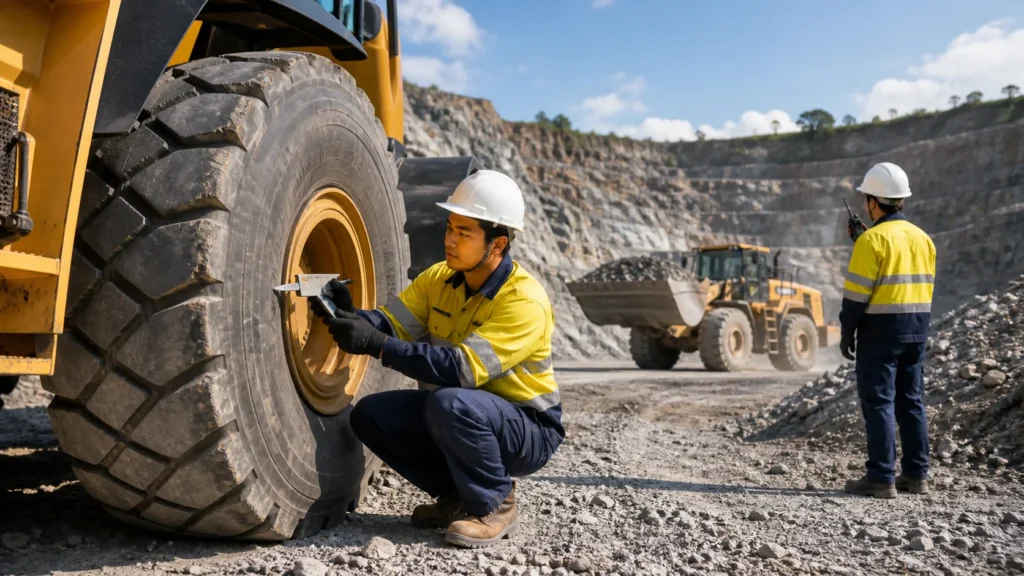
- Cuts, cracks, and embedded stones or metal
- Mud buildup between tread blocks
- Route changes that add soft ground, water, or steep grades
Daily visual inspections can reveal small issues before they become larger interruptions. If the route has changed because of rain, the original tire plan may need a fresh review. A tire selected for dry, firm ground may face a very different job once the road becomes soft and slippery.
Seasonal planning should also include replacement timing and available tire inventory. If equipment or tires will be used outside Thailand, the final 17.5R25 OTR tire choice should reflect local climate, road surfaces, payloads, and site conditions rather than assumptions based on another region.
Use Site Data to Finalize a Tire Purchase
The best tire decision comes from turning daily observations into a written specification. For each machine, record loads, travel distances, road conditions, operating hours, speeds, wheel positions, and recurring tire issues. This gives you a practical way to compare tire options against the work that actually happens on site.
Before purchasing or substituting a 17.5R25 OTR tire, review the worksheet with qualified tire specialists and compare the technical specifications carefully. A well-matched tire balances machine compatibility, payload, terrain, travel distance, seasonal conditions, and the need to keep equipment working reliably.
Find the Tire That Fits Your Operation
At OTR Tire Thai, we can help you compare available 17.5R25 OTR tire options for the demands of your equipment and jobsite. Our team can clarify specifications, tread patterns, and application considerations so you can make a confident selection. Contact us to request a wholesale quotation for your next tire order.
