
Blog
Port Equipment Uptime Starts with the Right Container Handler Tire
Oct
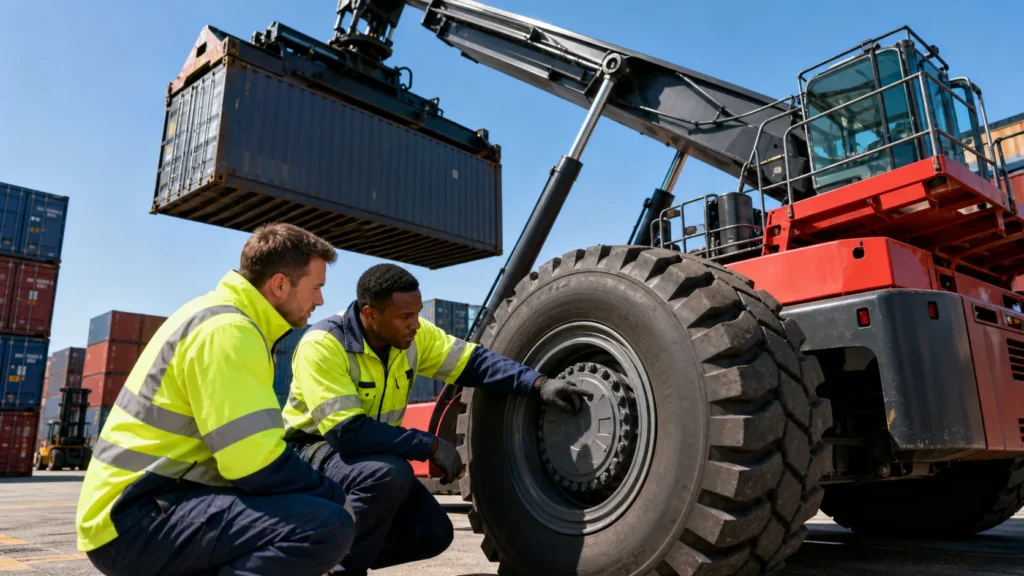
A container handler tire does far more than keep a machine rolling. It affects lifting stability, operator safety, equipment uptime, and the flow of containers through your terminal. When a tire fails during a vessel turnaround window, a reach stacker, empty container handler, or laden container handler can be taken out of service when you need it most.
At OTR Tire Thai, we understand that port fleets work under pressure. The right tire choice helps you reduce surprise service calls, support steady handling, and keep your equipment prepared for demanding shifts.
Keep Container Moves on Schedule with Better Tire Choices
Port work is hard on tires in ways that ordinary yard work is not. Container handlers carry heavy loads, make frequent tight turns, travel short distances, and operate on surfaces that can be rough, hot, wet, or covered with debris. Those conditions put steady stress on tread, sidewalls, beads, and internal tire construction.
A poorly matched container handler tire can wear too quickly, build heat, or lose the stability needed for safe lifting. That can lead to delays that spread beyond one machine. A stopped handler may affect stacking plans, truck loading, gate activity, and vessel schedules.
We recommend viewing tires as part of your operating plan, not simply as replacement parts. The right fit can support:
- Fewer unplanned tire-related service interruptions
- More stable lifting and carrying performance
- Smoother movement through container storage areas
- Better control of tire wear over operating hours
For distributors and fleet managers serving ports in multiple markets, supplier experience matters as well. Export requirements, tire specifications, and DOT-certified tire standards should be part of the buying conversation before tires arrive at the terminal.
Match Each Container Handler Tire to Its Duty Cycle
Equipment type should come first when selecting a tire. Laden container handlers need tires built for extreme load capacity and stability because they move loaded containers. Empty container handlers face a different pattern of work, often involving repeated stacking cycles, tight maneuvering, and frequent starts and stops.
Your daily operating conditions matter just as much as the machine itself. Before choosing a tire, we encourage you to review the actual duty cycle rather than relying only on the tire size currently installed. A tire that works well on smooth concrete may not last the same way on rough asphalt, uneven storage yards, or areas where debris is common.
Key details to review include:
- Average load weight and lifting frequency
- Operating hours per shift
- Travel distance between stacks, gates, and loading areas
- Pavement condition and debris exposure
- Turning frequency and typical travel speed
Load rating, ply rating, tire size, and inflation requirements all affect safety. A tire with insufficient capacity can experience higher heat buildup, sidewall stress, and irregular wear. Under demanding port conditions, that added stress can turn into downtime at the worst possible time.
Choose Construction and Tread Built for Port Demands
Tire construction changes how a container handler responds to heat, impacts, and heavy loads. Radial tires can support heat dissipation, ride quality, and fuel efficiency in certain applications. Bias tires may be a strong option where sidewall protection and durability are needed in impact-heavy work areas.
Neither construction is automatically right for every machine. We look at the equipment, surface, load pattern, and shift schedule before recommending a direction. The goal is to match the tire to the work, not force the work to fit a tire.
Tread design also deserves close attention. Port yards can become slick in rain, rough near container stacks, and abrasive in high-traffic lanes. Deep, reinforced tread patterns can help maintain traction and stability while resisting cuts, chunking, and early tread loss.
Frequent lifting, braking, turning, and acceleration create friction. Over time, that friction raises tire temperature and speeds up wear. Durable rubber compounds help manage heat buildup and can support a longer working life when your equipment operates through repeated, demanding cycles.
Prepare for Wet-Season Port Conditions and Peak Demand
October can bring wet conditions and changing weather patterns to many Asian port operations. Rain-slick pavement changes the way container handlers brake, turn, and carry loads. Reliable traction becomes especially important when operators are lifting containers or moving through crowded terminal lanes.
Peak cargo periods can add another layer of pressure. Longer shifts and limited downtime leave less room for unexpected tire problems. Instead of waiting for visible failure, we recommend building tire checks into regular fleet maintenance planning.
A professional inspection routine should look for:
- Tread depth and signs of uneven wear
- Correct air pressure for the tire and application
- Cuts, cracking, bulges, and sidewall damage
- Bead condition and signs of air loss
- Stones, metal, or other embedded debris
These checks can help you spot a developing issue before a tire removes a handler from service. They also give your team a clearer picture of when replacement planning is needed, which is especially helpful before a busy operating period.
Strengthen Your Port Fleet with the Right Tire Partner
A tire supplier should understand more than tire dimensions. When we work with distributors and fleet buyers, we consider product range, export experience, tire certification, technical needs, and the demands of serving equipment across different markets. Clear specifications and a dependable supply process help prevent mismatches that can create problems later in the yard.
Before purchasing, verify the supplier’s location, manufacturing role, product scope, certification documentation, and experience serving the markets relevant to your operating requirements.
The practical takeaway is simple: select each container handler tire based on the machine, load, surface, turning pattern, and working hours. When tire selection and maintenance reflect the real conditions in your port, your fleet is better prepared to lift safely, move steadily, and stay productive through demanding shifts.
Improve Uptime With the Right Tire Support
At OTR Tire Thai, we help operations identify a container handler tire suited to their equipment and daily demands. Our team can help you compare options for dependable traction, stability, and service life. For wholesale pricing or tailored product guidance, contact us today.
