Blog
Why Eco Tire Manufacturers Need Verifiable Rolling-Resistance Data
Oct
Environmental tire claims need proof before they can guide a serious purchase. Distributors, fleet managers, and procurement teams are asked to balance efficiency with traction, load capacity, safety, and long service life. A green label or fuel-saving statement may sound promising, but it does not tell you how a tire will perform in your equipment.
As an eco-friendly tire manufacturer and wholesale exporter, we believe rolling-resistance data should be clear enough for you to review, compare, and relate to your own duty cycle. That evidence helps turn a broad sustainability promise into a purchasing decision you can support with confidence.
Proof Turns Green Claims Into Buyer Confidence
Rolling resistance is one of the most useful measurements for tire efficiency. Put simply, a tire bends slightly as it rolls. That movement creates heat and uses energy. The more energy a vehicle needs to keep its tires moving, the more fuel or battery power it may require.
For combustion-powered trucks and vehicles, lower rolling resistance may support lower fuel use. For electric forklifts, delivery vehicles, and other electric equipment, it may help preserve operating range. Neither outcome is automatic, but the tire’s rolling-resistance coefficient gives buyers a measurable starting point.
Still, an eco-friendly tire manufacturer should never treat one number as the whole story. A tire also has to suit the job. That can mean dependable traction, suitable tread wear, proper load support, strong casing construction, heat resistance, or puncture protection. In OTR and industrial work, uptime and durability can carry just as much weight as energy efficiency.
Rolling Resistance Shapes More Than Fuel Use
A rolling-resistance coefficient, often called RRC, gives a way to compare how much energy a tire loses while rolling. A lower result can point to lower energy loss under the stated test conditions. It does not promise the same result on every road, jobsite, or vehicle, but it gives you a useful benchmark.
When we help buyers review tire specifications, we recommend looking at efficiency as part of total operating performance. For TBR, PCR, forklift, agricultural, and specialty tires, lower rolling resistance may contribute to lower energy use. The actual result will depend on many factors, including:
- Vehicle type and the work it performs
- Route surface, speed, stops, and temperature
- Load level and tire inflation pressure
- Driver habits and maintenance practices
- Tire wear, alignment, and overall vehicle condition
A highway truck running steady routes has different needs than a forklift working in a busy warehouse. Likewise, an agricultural tire may face soft ground and changing loads, while an OTR tire may spend long hours under severe weight on rough surfaces. We encourage buyers to ask not only, “Is this tire efficient?” but also, “Is this tire efficient for our exact application?”
Verifiable Tests Make Results Comparable
Rolling-resistance results are meaningful only when you know how they were produced. A single statement such as “low rolling resistance” leaves too many questions unanswered. You need enough detail to compare one tire with another fairly.
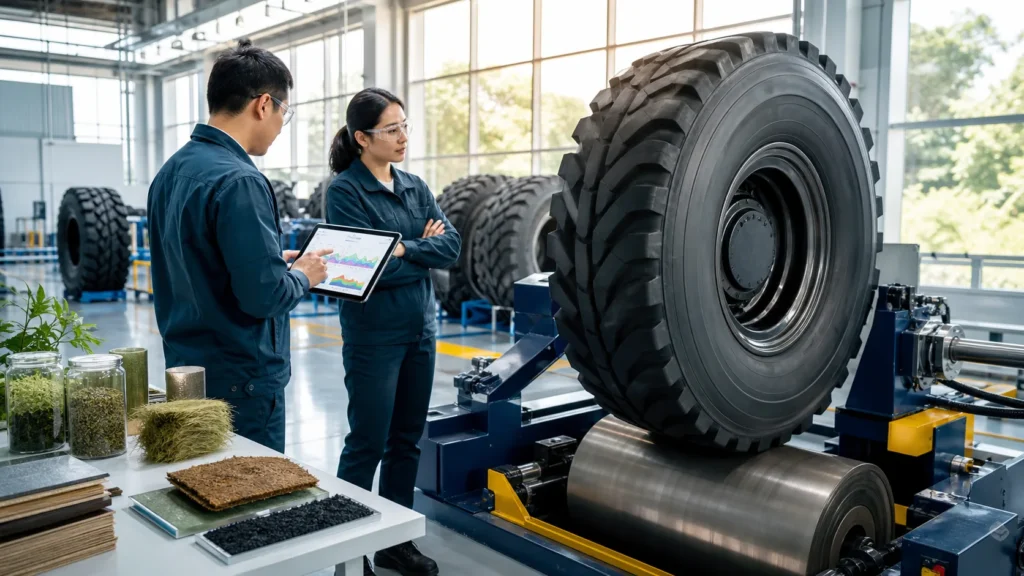
Clear product documentation should identify the tire size and construction tested, along with the method used and the testing conditions. Depending on the application, that information may include load, inflation pressure, test speed, temperature, and the units used for the result.
Recognized test methods and qualified laboratory reports can add another layer of confidence. Independent validation, when available, can help reduce uncertainty when you are comparing tires from different factories or supply regions. It also helps your team separate documented performance from marketing language.
A supplier should also explain the baseline behind any efficiency claim. Is the result compared with an earlier tire model? A standard product in the same line? A regulatory threshold? Without a defined comparison point, phrases like “fuel-saving” and “energy-efficient” can mean very different things.
Real Duty Cycles Put Data in Context
Laboratory testing matters, but it cannot copy every condition your tires will face. We see major differences between long-haul transport, regional delivery, mining, ports, agriculture, construction, and material-handling work. Frequent stops, uneven surfaces, changing weather, heavy loads, and low-speed heat buildup can all affect real operating results.
Tire specifications also matter more than buyers sometimes expect. Rolling resistance can change based on tire size, tread pattern, compound, ply rating, casing design, retreadability, and inflation pressure. A test result from one configuration should not be applied automatically to every tire in a product family.
For that reason, field trials are a smart part of evaluating a tire program. A controlled trial can give your team a fuller view of real service performance. Useful items to monitor include:
- Fuel use or battery operating time across comparable equipment
- Tire pressure, heat buildup, and tread wear
- Downtime related to tire damage or service needs
- Retread performance where retreadability applies
- Driver or operator feedback on handling and traction
Field results will not remove every variable, but they can show whether the documented tire data holds up under the work your fleet actually performs.
Verified Data Supports Sustainable Tire Buying
Good purchasing decisions connect environmental goals with reliable operations. When rolling-resistance information is transparent, you can better compare tire options for fuel-efficiency planning, emissions-reduction efforts, customer reporting, and internal sustainability goals. Just as importantly, you can confirm that efficiency is not being pursued at the expense of safety or working life.
October is often a practical time to review inventory plans, annual budgets, and supply agreements for the coming year. Before committing to larger tire orders, we recommend gathering the same type of documentation from each supplier so your comparison is based on like-for-like information.
For products across OTR, TBR, PCR, agricultural, forklift, solid, and specialty tire categories, ask for rolling-resistance reports, product data sheets, load and speed specifications, warranty terms, and quality-control details. Tires with DOT markings and established brand reputations can support confidence, but they should not replace product-specific performance records.
Request Evidence Behind Every Tire Claim
The strongest sustainability claims are transparent, repeatable, and connected to the way a tire will be used. Before placing an order, ask what test method was used, which tire size was tested, what conditions were simulated, and whether independent documentation is available. Also ask how the tire balances rolling resistance with traction, durability, heat control, load capacity, and safety.
When the answers are clear, you can choose tires based on evidence rather than broad promises. That approach helps you build a tire program that supports efficiency goals while staying grounded in the demanding work your vehicles and equipment need to do.
Choose Tires With Data You Can Trust
At OTR Tire Thai, we help fleets compare options from an eco-friendly tire manufacturer with performance requirements in mind. Our team can help you evaluate tire specifications alongside your operating conditions and equipment demands. For wholesale pricing or product guidance, contact us to discuss the right fit for your tire program.
