
Blog
Inside Tire Tread Development: Matching Patterns to Duty Cycles
Oct
Turn Tire Tread Into Longer Uptime
Tread is more than the part of a tire that meets the ground. It is a working tool that affects traction, wear life, heat control, handling, fuel use, and how steadily your equipment stays in service.
At OTR Tire Thai, we help buyers look beyond appearance when comparing tire patterns. A tire that works well on a muddy construction site may wear too quickly on a long paved route, while a smooth highway tread may lose grip in loose aggregate, wet fields, or soft ground. The best place to begin is with the real duty cycle.
Start with the Actual Duty Cycle
A duty cycle is the set of conditions a tire faces again and again throughout its service life. For fleets, that may mean daily distance, load weight, speed, terrain, turning frequency, operating hours, weather, and how much downtime the operation can handle. For distributors, asking about these details makes it easier to recommend a pattern that fits the customer’s work instead of offering one general-purpose option.
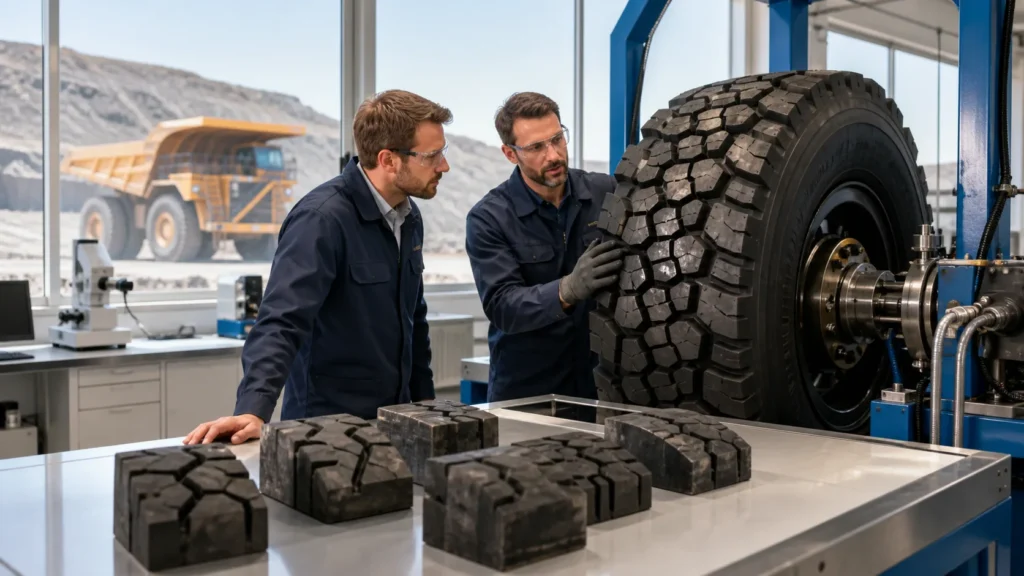
As a tire tread manufacturer, we develop tread designs around the demands of specific applications. A truck that spends most of its time on maintained roads needs different contact pressure and tread movement than a loader working in a quarry. Likewise, a forklift in a busy warehouse faces different challenges from a tractor working through wet soil.
Before selecting a tread, we recommend reviewing:
- The main surface, such as pavement, gravel, soil, sand, concrete, or rock
- Typical loads, speeds, travel distances, and operating hours
- Frequent turns, stops, slopes, and tight work areas
- Seasonal weather, standing water, mud, and temperature changes
- The route where the tire spends most of its working time
The toughest stretch of a route matters, but it should not be the only factor. If a truck sees one rough access road each day but spends most hours on highways, an overly aggressive tread may create unnecessary wear and rolling resistance. Matching the tire to the majority of the work usually supports more predictable performance.
Match Pattern Geometry to Surface Conditions
Rib patterns are common for paved-road and long-distance work. Their continuous ribs create a broad contact area that supports stable steering, smoother road feel, and even wear. For TBR and PCR applications that stay mainly on highways, regional roads, or delivery routes, this type of pattern can provide steady performance at sustained travel speeds.
Mixed terrain calls for a different approach. Lug and block patterns use deeper grooves and more edges to bite into dirt, gravel, loose stone, sand, and uneven job sites. Open spaces between tread blocks also help move mud and debris away from the contact area. That self-cleaning action can help the tire hold traction when the surface is soft or wet.
Still, a more aggressive pattern has tradeoffs. Large blocks and deep voids can create more noise, more tread movement, and faster wear if the tire works mostly on hard pavement. This is why tread geometry should match the main operating surface, not just look capable of handling every possible condition.
Key tread features often include:
- Continuous ribs for road stability and controlled wear
- Deep lugs for traction on loose or soft surfaces
- Wider voids for clearing mud, soil, and debris
- Strong block edges for uneven ground and job sites
- Tread depth suited to abrasive surfaces and expected service hours
Tread depth and void ratio both matter. Deeper tread may help in abrasive off-road conditions, while wider voids can improve grip in mud or loose material. Yet those features must work with the tire’s casing and compound so heat and stress remain manageable under load.
Balance Traction, Wear, and Heat
Maximum traction does not always mean the longest tread life. Deep lugs can grip loose ground well, but hard roads may wear those edges down quickly. On the other hand, a shallower highway-style tread can last well on smooth surfaces but may not give enough traction on wet yards, construction entrances, or farm routes.
Heat deserves just as much attention as visible tread wear. Heavy loads, long hauling distances, fast travel, hot weather, and repeated work cycles can raise internal tire temperatures. Tread design affects how the tire flexes and transfers energy into the road, while the compound and casing influence how it handles that heat over time.
We consider the full working system when reviewing a tire application. Contact pressure, inflation practices, load handling, tread depth, and road surface all play a role. A pattern that does not fit the job can lead to irregular wear, unstable handling, loss of traction, or added strain on the casing.
For better long-term value, look beyond the purchase decision and consider how the tire behaves in service. A suitable pattern can support steadier replacement planning, reduce avoidable downtime, and help operators work with greater confidence.
Plan for Changing Seasonal Conditions
October is a smart time to review tire needs before weather patterns shift. In Thailand and many Southeast Asian markets, changing rainfall can bring wet roads, softer ground, and muddy work areas. At the same time, buyers in colder regions may be preparing for lower temperatures, winter roads, and seasonal hauling demands.
Wet conditions make drainage especially important. Grooves and channels need to move water away from the contact patch so the tire can maintain a firmer connection with the road. Agricultural and off-road work may need open lug patterns that resist clogging when soil becomes wet and heavy.
Temperature also affects how a tire performs. In colder conditions, compound selection can matter alongside tread shape, particularly for commercial applications that need dependable grip through changing weather. We encourage distributors to plan inventory based on destination climate, application demands, required certifications, and expected delivery timing.
Our export-ready OTR, TBR, PCR, industrial, agricultural, and solid tire options are supplied for customers working across varied climates and duty cycles. A clear understanding of the end use helps us support product selection that fits the market where the tire will actually operate.
Specify the Right Tread Before the Next Cycle
The clearest way to select tread is to work from operating evidence, not assumptions. Review the surfaces your tires travel on, the loads they carry, their usual speeds, the weather they face, and the service hours you expect. Those details reveal whether you need steady road contact, stronger off-road bite, better self-cleaning, or improved heat control.
Rapid wear, poor wet traction, excess heat, frequent punctures, and unstable handling can all point to a mismatch between the tread and the real duty cycle. When the pattern fits the work, fleets and distributors can make replacement plans with more confidence and keep their focus on the job ahead.
Get Tread Guidance That Fits Your Fleet
At OTR Tire Thai, we help customers compare options from a tire tread manufacturer with the demands of their equipment and operating conditions. Our team can help identify patterns that support traction, durability, and dependable performance across your duty cycles. For wholesale pricing and product recommendations, contact us today.
