
Blog
Fleet Tire Management: Complete Guide for 2026

Oct
Managing a commercial fleet's tire program represents one of the largest controllable operating expenses for transportation companies. The right fleet tire strategy balances upfront capital costs, fuel efficiency, service life, and safety performance across hundreds or thousands of tires. For fleet managers overseeing delivery trucks, long-haul tractors, refuse vehicles, or regional distribution networks, tire decisions directly impact bottom-line profitability. This comprehensive guide examines procurement strategies, maintenance protocols, technology choices, and emerging trends that define successful fleet tire management in 2026.
Understanding Fleet Tire Economics
The total cost of ownership for commercial tires extends far beyond the purchase price. Fleet managers must account for fuel consumption, maintenance labor, downtime, casing value for retreading, and disposal costs when evaluating tire programs.
Fuel efficiency stands as the single largest variable expense tied to fleet tire selection. Low rolling resistance compounds and optimized tread patterns can improve fuel economy by 3-7% in over-the-road applications. According to the EPA SmartWay verification process, verified low rolling resistance tires meet specific performance thresholds that translate directly into measurable fuel savings and reduced greenhouse gas emissions.
Capital versus Operating Expense Tradeoffs
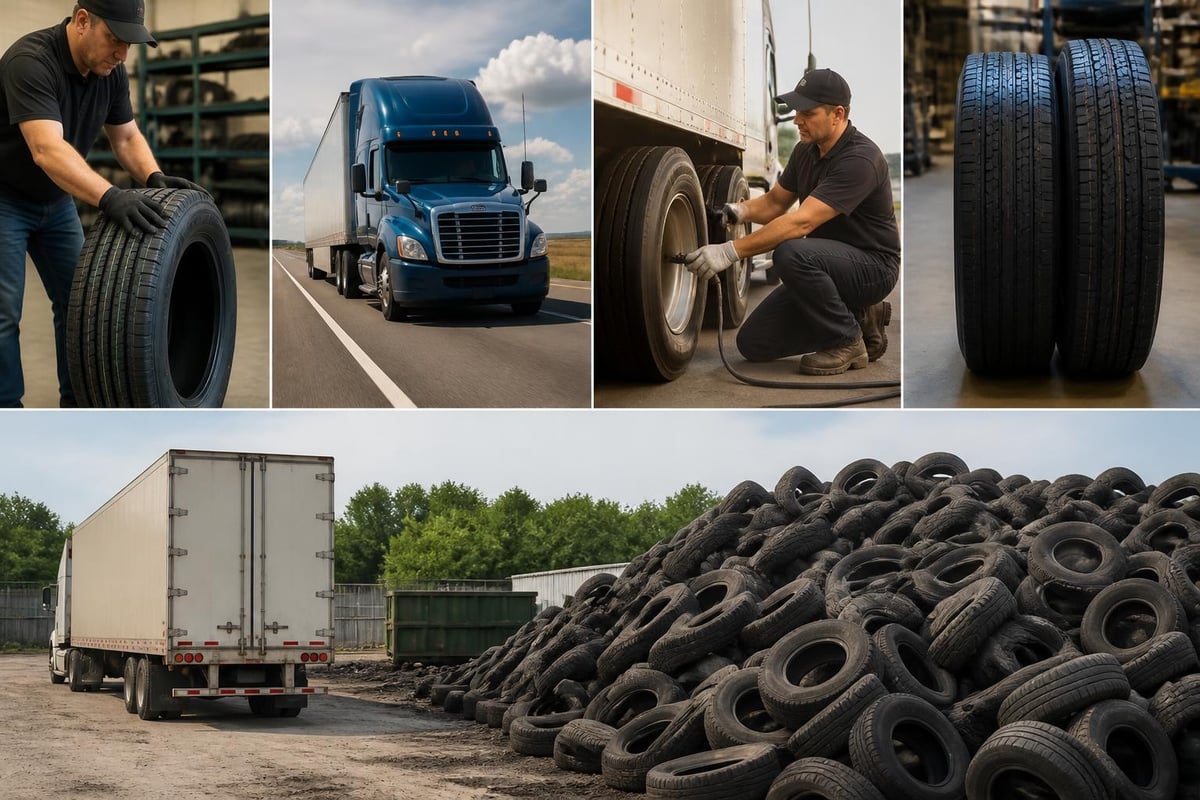
Premium fleet tire brands command higher initial prices but often deliver superior casing durability that enables multiple retreads. A commercial steer tire purchased for $425 might support three retread cycles at $150 each, yielding four service lives from a single casing. Budget alternatives priced at $280 may only support one or two retreads before casing failure.
| Tire Category | Initial Cost | Retread Cycles | Total Service Miles | Cost per Mile |
|---|---|---|---|---|
| Premium Steer | $425 | 3 cycles | 300,000 | $0.054 |
| Mid-Range Steer | $340 | 2 cycles | 225,000 | $0.049 |
| Budget Steer | $280 | 1 cycle | 150,000 | $0.051 |
This analysis demonstrates how mid-range products sometimes offer the best value when accounting for the full lifecycle. Fleet managers should request casing return rates and average retread cycles from their tire suppliers when comparing brands.
Procurement Strategies for Fleet Operations
Centralized procurement enables fleets to negotiate volume pricing, standardize specifications across locations, and leverage data analytics for continuous improvement. Large national fleets typically maintain tire contracts with two or three manufacturers to ensure supply chain resilience while capturing competitive pricing.
Brand Diversification and Supply Chain Risk
Single-source tire programs expose fleets to supply disruptions, price increases, and quality issues without alternative suppliers. FleetOwner’s research on tire strategies found that 68% of large fleets now split purchases between multiple brands to mitigate these risks.
A balanced procurement strategy allocates:
- 60-70% of purchases to a primary partner offering best-in-class pricing and technical support
- 20-30% to a secondary brand providing competitive pressure and backup supply
- 10% for trial programs testing emerging technologies or regional specialists
This structure maintains leverage in contract negotiations while allowing controlled testing of new products. Regional fleets operating in specific climates or terrain may benefit from specialized fleet tire compounds not available from national brands.
Direct Factory Purchasing for International Distributors
Distributors serving local commercial fleets can access factory-direct pricing from manufacturers in Thailand, India, and China. These sources offer significant cost advantages on proven patterns that meet DOT, ECE, and INMETRO certifications for international markets.
When evaluating offshore suppliers, verify manufacturing quality through third-party audits, request test data for fuel efficiency and durability claims, and establish clear warranty terms for casing defects. The landed cost including freight and customs should be compared against domestic options on a total-cost-of-ownership basis.
Position-Specific Fleet Tire Selection
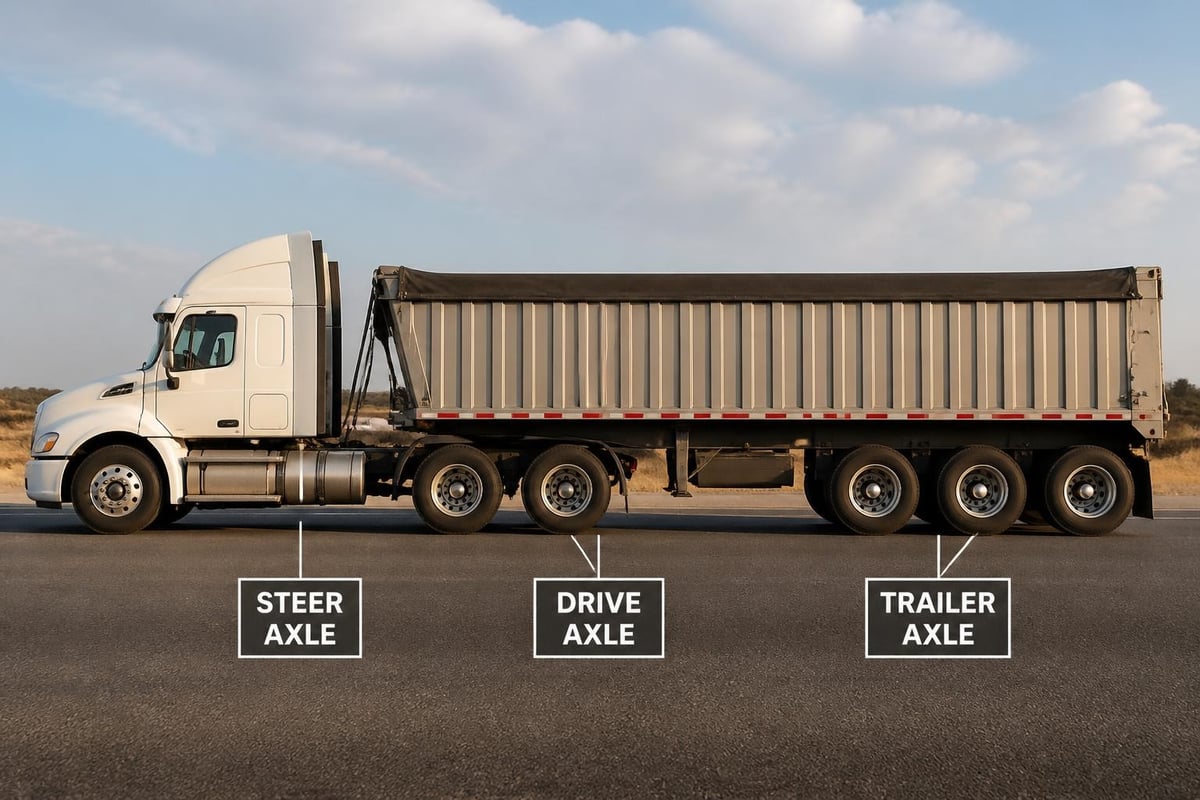
Commercial truck tire applications divide into three distinct positions, each requiring different performance characteristics. Optimal fleet tire programs specify the right product for each wheel position rather than using a single tire across all positions.
Steer Axle Requirements
Steer tires must deliver precise handling response, even wear, and long service life. Multi-rib tread patterns with four or five continuous ribs provide straight-line stability and resistance to irregular wear. Premium steer products incorporate visual alignment indicators that alert drivers to suspension issues before they cause rapid shoulder wear.
Key performance metrics for steer tires:
- Even wear across the full tread width through 150,000+ miles
- Low rolling resistance for fuel economy
- Cut and chip resistance in urban delivery applications
- Strong casing construction for multiple retreads
Drive Axle Considerations
Drive axles transmit torque to the pavement and require aggressive traction patterns with deep lugs. Closed-shoulder designs prevent stone retention while maintaining traction on wet and dry surfaces. Stone ejector features in the tread grooves reduce casing damage from trapped debris.
Long-haul operations prioritize fuel efficiency in drive tire selection, while vocational fleets hauling construction materials or refuse emphasize cut resistance and traction. Regional delivery fleets splitting highway and city routes benefit from all-position patterns that balance these requirements.
Trailer Applications and Fuel Economy
Trailer tires contribute significantly to overall fleet fuel consumption due to their numbers-eight tires on a standard 53-foot dry van versus four drive tires. Low rolling resistance trailer products certified under EPA SmartWay standards can improve fuel economy by 2-4% compared to conventional trailer tires.
Wide-base single tires on trailer axles eliminate the weight of dual wheel assemblies and reduce rolling resistance through a single contact patch. However, they require careful load management and may not suit all applications. The North American Council for Freight Efficiency provides detailed analysis tools helping fleets evaluate the payback period for wide-base conversions.
Maintenance Programs that Extend Service Life
Systematic maintenance directly determines whether fleet tires reach their design life or fail prematurely. The most successful programs combine daily driver inspections with scheduled service bay procedures and data-driven analysis.
Daily Pre-Trip Inspection Protocol
Drivers should check for visible damage, proper inflation, and irregular wear patterns during their pre-trip walkaround. A standardized checklist ensures consistency:
- Visual inspection for cuts, punctures, embedded objects, and sidewall damage
- Tread depth measurement at multiple points across the tire width
- Inflation pressure verification against manufacturer specifications for current load
- Valve stem condition and cap security
- Wheel end check for bearing temperature and lug nut torque
Digital inspection tools with mobile apps enable drivers to photograph and document tire conditions, creating audit trails and trend data. Fleets that enforce daily inspections reduce road failures by 40-60% compared to reactive maintenance approaches.
Scheduled Service Bay Maintenance
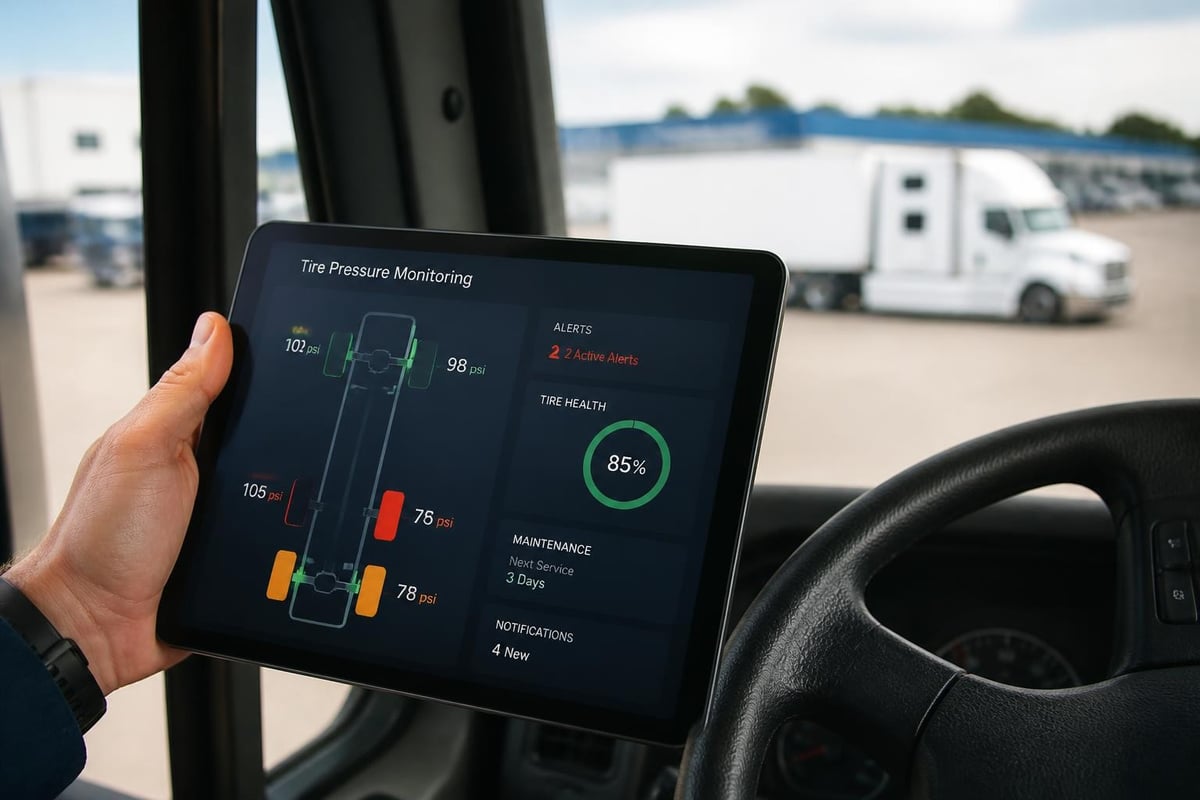
Monthly or mileage-based service intervals should include comprehensive tire rotations, detailed tread depth mapping, and alignment checks. Fleet Maintenance recommends rotating steer tires every 25,000-30,000 miles to equalize wear rates across the fleet.
Professional maintenance procedures:
- Pressure adjustment to precise specifications using calibrated gauges
- Tread depth recording at three points across each tire
- Visual inspection under proper lighting for early damage detection
- Valve core replacement at retread or when leaks develop
- Documentation in maintenance management systems
Tire Pressure Monitoring Systems
Automatic tire pressure monitoring systems (TPMS) eliminate manual pressure checks and alert fleet managers to inflation issues in real time. Commercial TPMS solutions use wireless sensors mounted inside or outside the tire to transmit pressure and temperature data to cab displays and back-office software.
| TPMS Type | Installation | Accuracy | Lifespan | Cost per Tire |
|---|---|---|---|---|
| Cap-mounted | External | ±3 psi | 2-3 years | $25-40 |
| Valve-stem | External | ±2 psi | 4-5 years | $45-65 |
| Internal sensor | Inside tire | ±1 psi | 6-8 years | $75-95 |
Return on investment for TPMS typically occurs within 12-18 months through fuel savings alone, before accounting for reduced tire wear and roadside failures. Underinflation by just 10 psi increases rolling resistance by 1.5% and accelerates irregular wear that shortens tire life by 20-30%.
Retread Programs and Circular Economy
Commercial tire retreading represents the most sustainable and cost-effective strategy for extending fleet tire value. A quality retread delivers 80-90% of new tire performance at 35-50% of the replacement cost. According to the U.S. Tire Manufacturers Association retread report, North American fleets retreaded 13.2 million commercial tires in 2024, saving 218 million gallons of oil and preventing 2.1 million tons of waste.
Casing Management Best Practices
Successful retread programs begin with proper casing care from day one. Maintaining correct inflation pressures, avoiding curb damage, and removing tires before tread reaches minimum depth all preserve casing integrity for future retreads.
Optimal removal specifications:
- Steer tires: 4/32" remaining tread depth
- Drive tires: 6/32" remaining tread depth
- Trailer tires: 4/32" remaining tread depth
Tires run past these thresholds risk casing damage from impacts, heat buildup, and belt separation. The incremental service gained from running tires to the legal minimum often costs more in lost retread cycles than the additional miles justify.
Retread Quality Standards and Testing
Modern commercial retreads undergo the same performance testing as new tires, including high-speed durability and endurance protocols. Reputable retread facilities inspect 100% of casings through shearography and other non-destructive methods that detect internal separations invisible to visual inspection.
Fleet managers should verify that their retread supplier:
- Holds industry certifications (RMA, TRIB, or equivalent)
- Uses premium tread rubber compounds from major manufacturers
- Employs trained technicians following process specifications
- Provides warranty coverage matching new tire terms
- Documents full traceability for each casing
Premium suppliers offer retread warranties covering 12-24 months or 150,000-250,000 miles, demonstrating confidence in their process quality and materials.
Technology Integration and Data Analytics
Advanced fleets leverage telematics, tire sensors, and analytics platforms to optimize their tire programs through data-driven decisions. Integration between tire management software and fleet management systems enables predictive maintenance and automated procurement.
Predictive Analytics for Tire Replacement
Machine learning algorithms analyze historical wear patterns, route characteristics, and maintenance history to forecast when specific tires will reach end of life. These predictions enable:
- Proactive purchasing that captures seasonal pricing opportunities
- Optimized inventory levels at each terminal or service location
- Planned downtime for tire replacements during scheduled maintenance
- Budget forecasting with 95%+ accuracy on tire expenditures
Fleets operating 500+ power units typically achieve 6-month forecast accuracy within 3-5% of actual tire consumption, enabling strategic purchasing and inventory reduction.
Performance Benchmarking Across Routes
Tire wear rates vary dramatically based on route characteristics, load factors, and driver behavior. Analytics platforms segment performance data by terminal location, route type, and individual vehicle to identify opportunities for specification changes or driver coaching.
A fleet might discover that urban delivery routes average 55,000 miles per tire set while regional haul routes achieve 85,000 miles using identical products. This insight drives specification changes-perhaps a cut-resistant compound for city routes and a fuel-efficient design for highway applications-that optimize performance and cost for each duty cycle.
Environmental and Regulatory Considerations
Regulatory pressure around fuel efficiency, emissions, and waste management increasingly influences fleet tire decisions. California's Advanced Clean Trucks regulation and similar programs in other states create incentives for fleets to adopt verified fuel-saving technologies including low rolling resistance tires.
Carbon Footprint and Sustainability Reporting
Corporate sustainability commitments drive many fleets to track and reduce their tire-related environmental impact. Key metrics include:
- Retread utilization rates and virgin rubber consumption
- End-of-life disposal methods and landfill diversion
- Fuel consumption attributable to rolling resistance
- Tire-related emissions in Scope 1 and Scope 3 calculations
Third-party sustainability frameworks like CDP (Carbon Disclosure Project) and SASB (Sustainability Accounting Standards Board) increasingly require detailed tire program reporting from fleet operators. Working with tire suppliers who provide environmental product declarations and lifecycle assessment data simplifies this reporting.
Extended Producer Responsibility Regulations
Several states and provinces now mandate tire manufacturers and distributors to fund end-of-life collection and recycling programs. These extended producer responsibility (EPR) schemes add per-tire fees but ensure proper disposal through certified processors rather than illegal dumping.
For fleet managers, EPR programs often include free scrap tire pickup and recycling when working with compliant suppliers. Verifying that your tire vendor participates in regional EPR programs protects against future liability for improper disposal.
Emerging Technologies and Future Trends
The commercial tire industry continues to evolve through material science advances, sensor integration, and alternative business models that may reshape fleet tire procurement over the next decade.
Airless and Non-Pneumatic Tire Development
Airless tire concepts eliminate inflation pressure entirely through engineered structures that support load without compressed air. While still primarily in testing phases for commercial applications, airless designs promise to eliminate flats, reduce maintenance, and extend service life.
Current limitations include higher initial costs, reduced fuel efficiency compared to optimized pneumatic designs, and limited high-speed capability. Most industry analysts project commercial availability for vocational applications (refuse, construction) in 2028-2030, with long-haul applications following by 2032-2035.
Tire-as-a-Service Business Models
Some tire manufacturers and fleet service providers now offer subscription-based tire programs where fleets pay per mile or per month rather than purchasing tires outright. These programs include:
- All tire supply and replacements
- Mounting and balancing labor
- Roadside assistance and emergency service
- Predictive maintenance and inspections
- Data analytics and reporting
Tire-as-a-service shifts tire costs from capital to operating expenses, eliminates procurement complexity, and transfers performance risk to the service provider. Early adopters report 8-15% total cost reductions compared to traditional tire ownership, primarily through optimized maintenance and reduced administrative overhead.
OTR TIRE THAI offers commercial truck tires engineered specifically for fleet applications. Our steer, drive, and trailer positions deliver the durability and fuel efficiency that professional fleets demand across diverse operating conditions.
Connected Tire Intelligence
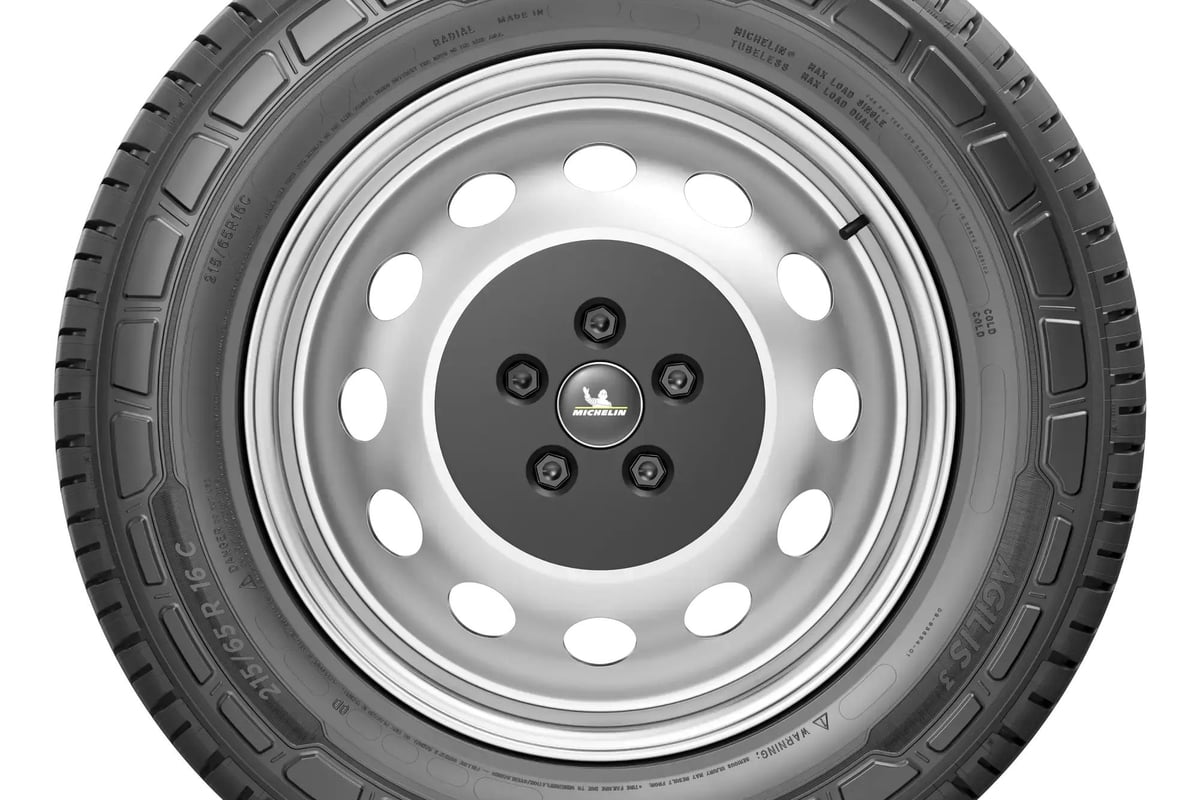
Next-generation tire sensors will measure tread depth, internal temperature gradients, and structural integrity in addition to pressure monitoring. This intelligence enables condition-based maintenance where tires are serviced or replaced based on actual wear state rather than time or mileage intervals.
Integration with vehicle telematics allows correlation between tire performance and driving behaviors. Harsh cornering, rapid acceleration, and hard braking all accelerate tire wear-connected systems can identify vehicles and drivers exhibiting these patterns for targeted coaching interventions.
International Quality Standards and Certifications
Fleet operators procuring tires for international markets must navigate varying regulatory requirements across regions. Understanding certification standards ensures compliance and confirms product quality regardless of manufacturing origin.
DOT, ECE, and INMETRO Compliance
The three major certification frameworks for commercial tires are:
- DOT (Department of Transportation): Required for tires sold in the United States, verifying minimum safety and durability standards
- ECE (Economic Commission for Europe): Mandatory for European Union markets, often considered the most stringent performance standard
- INMETRO: Brazilian certification covering safety and performance for South American markets
Quality manufacturers maintain certifications across all major markets, enabling distributors to serve multiple regions from a single supplier relationship. Certificates should be verified through regulatory databases rather than simply accepting supplier claims.
ISO Quality Management Systems
ISO 9001 certification indicates a manufacturer maintains documented quality management systems covering design, production, testing, and continuous improvement. For fleet tire procurement, ISO certification provides assurance of consistent manufacturing processes and quality control.
Beyond ISO 9001, some manufacturers hold ISO 14001 (environmental management) and ISO 45001 (occupational health and safety) certifications that demonstrate comprehensive operational excellence. These additional standards reduce supply chain risk through better-managed, more sustainable manufacturing partners.
Effective fleet tire management in 2026 requires balancing immediate cost pressures with long-term total cost of ownership through strategic procurement, systematic maintenance, and data-driven decision making. By implementing the proven practices outlined in this guide-from position-specific tire selection and comprehensive maintenance protocols to retread programs and emerging technologies-fleet managers can significantly reduce operating costs while improving safety and environmental performance. OTR TIRE THAI supports international distributors and fleet operators with factory-direct access to DOT and ECE certified commercial tires engineered for demanding fleet applications across steer, drive, and trailer positions in over 80 countries worldwide.
