
Blog
Tractor Tires for Sale: Complete 2026 Buyer’s Guide
Oct
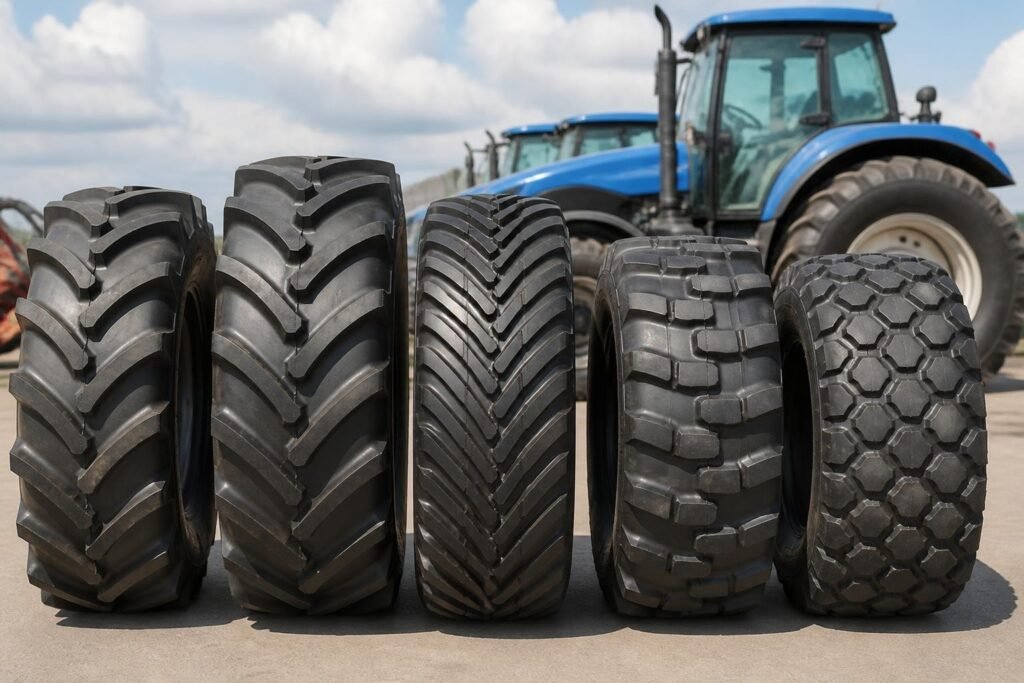
Finding the right tractor tires for sale requires understanding far more than just physical dimensions. Agricultural operations in 2026 demand tires that balance traction, soil preservation, fuel efficiency, and long-term durability across diverse field conditions. Whether you're running a compact utility tractor on a small farm or managing a fleet of high-horsepower machines across thousands of acres, selecting appropriate tires directly impacts your productivity, operating costs, and soil health. This comprehensive guide walks through everything distributors and farm managers need to know when evaluating tractor tires for sale, from understanding load ratings and inflation technologies to matching tread patterns with specific applications.
Understanding Agricultural Tire Construction and Types
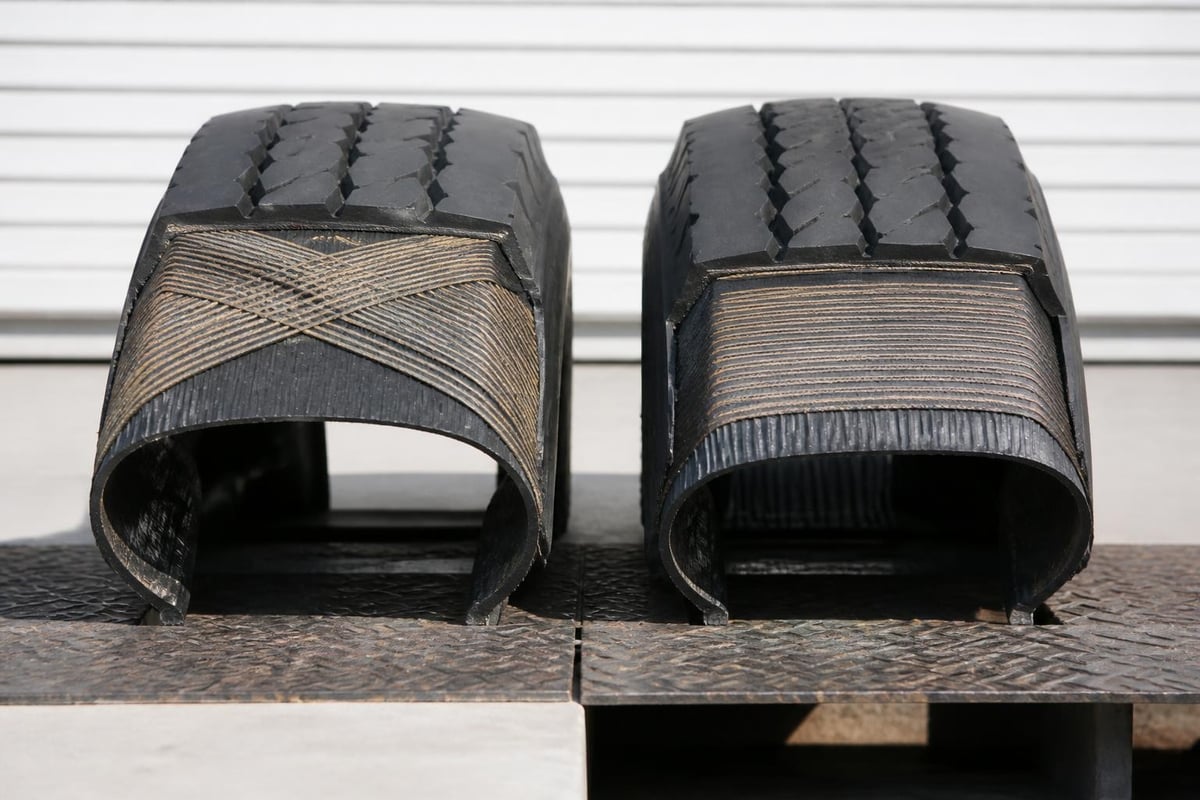
Modern agricultural tires fall into several distinct construction categories, each engineered for specific performance characteristics. Bias-ply tires, the traditional workhorse of farming, feature crisscrossed nylon or polyester cords that create a sturdy, puncture-resistant sidewall ideal for heavy loads and rough terrain. Radial tires, by contrast, position cords at 90-degree angles to the tread direction, allowing the sidewall to flex independently from the tread surface.
Bias vs. Radial Performance Differences
The construction difference between bias and radial designs creates measurable performance variations in the field. Radial tires typically deliver 10-15% better fuel economy due to reduced rolling resistance, a significant advantage for operations logging long hours on large acreage. Their flexible sidewalls also create a larger, flatter contact patch that distributes weight more evenly and reduces soil compaction by up to 20% compared to bias-ply equivalents.
Bias-ply tires remain popular for specific applications despite radial advantages. They excel in situations requiring maximum sidewall stability, such as front-end loader work, where lateral forces would stress a radial's flexible sidewall construction. Many operators also prefer bias tires for implements and trailers due to their lower initial cost and proven durability in stationary or slow-speed applications.
Increased Flexion and Very High Flexion Technologies
The past decade has seen widespread adoption of IF (Increased Flexion) and VF (Very High Flexion) tire technologies. IF tires carry 20% more load than standard tires at the same inflation pressure, or the same load at 20% lower pressure. VF tires push this further, supporting 40% more load at equivalent pressure or allowing even lower inflation for field work.
These technologies matter tremendously for soil health. A University of Minnesota Extension study on tractor operation demonstrates that VF tires inflated to field-appropriate pressures can reduce subsoil compaction by 30-40% compared to conventional tires. This translates directly to improved root penetration, water infiltration, and long-term soil productivity.
Decoding Tire Sizing and Load Ratings
When reviewing tractor tires for sale, understanding the sizing nomenclature prevents costly mistakes. Agricultural tire sizes appear in several formats, each conveying critical information about dimensions and capabilities.
Standard Size Format Explained
A tire marked 18.4-38 uses the traditional format: 18.4 inches is the section width (inflated width), and 38 inches is the rim diameter. The section width measurement assumes standard inflation; actual width varies with pressure. This format predominately appears on older equipment and bias-ply tires.
Metric sizing presents information differently. A tire sized 480/80R50 breaks down as follows:
- 480: nominal section width in millimeters
- 80: aspect ratio (sidewall height as percentage of section width)
- R: radial construction
- 50: rim diameter in inches
The aspect ratio provides crucial information about sidewall height and tire profile. Lower aspect ratios (70 or below) create a flatter profile with less sidewall flex, suitable for road transport. Higher ratios (85 or above) provide taller sidewalls that absorb field irregularities and enable lower inflation pressures.
Understanding Load Index and Ply Ratings
Every tire carries a load index number that corresponds to a maximum weight capacity at specified inflation pressure. The Tire & Rim Association standards publish comprehensive load tables that cross-reference index numbers with actual weight capacities. A load index of 156, for example, indicates capacity for 4,000 kg (8,818 lbs) per tire at maximum inflation.
Ply rating, despite its name, no longer indicates the actual number of fabric layers. Modern tires use the term to express load-carrying strength in equivalent terms to older bias-ply construction. A 10-ply rated (or "PR 10") tire delivers strength equivalent to a 10-layer bias tire, though actual construction may use far fewer layers of stronger materials.
| Ply Rating | Typical Applications | Load Capacity Range |
|---|---|---|
| 6-8 PR | Small tractors, implements | Up to 3,000 lbs |
| 10-12 PR | Mid-size tractors, moderate field work | 3,000-5,000 lbs |
| 14-16 PR | Large row-crop tractors, heavy implements | 5,000-8,000 lbs |
| 18+ PR | High-horsepower tractors, heavy ballast | 8,000+ lbs |
Matching Tread Patterns to Field Conditions
Tread design fundamentally determines how a tire interacts with soil, pavement, and everything in between. When evaluating tractor tires for sale, matching tread architecture to your primary operating conditions ensures optimal performance.
R-1 Agricultural Tread Designs
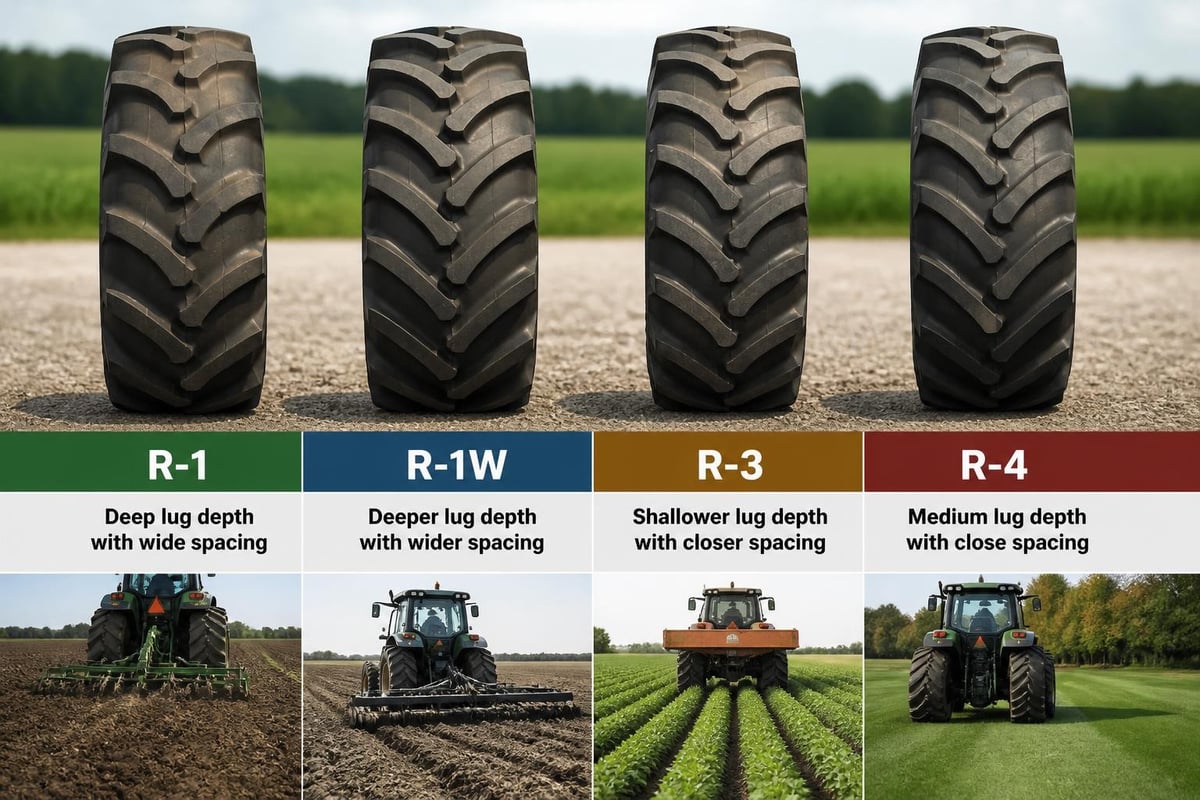
R-1 represents the standard agricultural lug pattern, featuring aggressive, widely-spaced bars angled 23-45 degrees from the tire centerline. Bar height typically reaches 1.5-2.5 inches, providing excellent self-cleaning in sticky soils and powerful traction in tilled or soft ground. The deep voids between lugs prevent mud buildup that would otherwise fill the pattern and compromise grip.
Standard R-1 tires perform best in cultivated soils and general field work. They bite aggressively into prepared seedbeds and provide excellent drive-wheel traction for implements requiring substantial drawbar pull. However, this aggressive pattern can damage turf, tears up sod, and creates uncomfortable vibration on paved surfaces.
R-1W Wet-Traction Patterns
R-1W tires modify the basic agricultural pattern with 20-25% taller lugs, reaching depths of 2.5-3 inches. This extra bar height serves two purposes: enhanced traction in muddy, wet conditions where tires must penetrate surface mud to find firm soil beneath, and extended service life as the deeper lugs take longer to wear down to replacement depth.
These tires excel in operations facing frequent wet conditions or heavy residue. The taller bars maintain cleaning action in challenging mud, though they do amplify road vibration compared to standard R-1 designs. Many operators choose R-1W patterns for rear drive tires while running standard R-1 or even R-3 tires on the front axle where traction demands are lower.
R-3 and R-4 Turf and Industrial Patterns
R-3 turf tires feature shallow, tightly-spaced lugs or rib patterns designed to minimize turf damage while providing adequate traction on firm ground. Common on compact tractors used for mowing, landscaping, and grounds maintenance, these tires sacrifice field traction for surface preservation and road comfort.
R-4 industrial tires blend moderate lug depth (40-65% of R-1 depth) with closer spacing. They bridge the gap between aggressive agricultural and gentle turf patterns, offering reasonable traction in light field work while remaining road-friendly for tractors that split time between farm and pavement. Loader tractors and municipal equipment frequently specify R-4 patterns.
Inflation Pressure Management for Performance and Soil Health
Proper inflation pressure represents the single most important adjustment operators can make to optimize tire performance. Research from the USDA Agricultural Research Service confirms that running appropriate pressures can reduce soil compaction by 25-40% while improving traction efficiency by 10-15%.
Field vs. Road Pressure Requirements
Most agricultural operations require two distinct inflation profiles: field pressures optimized for traction and soil protection, and road pressures providing stability and load capacity for transport. Field pressures typically run 6-12 PSI for rear drive tires and 10-16 PSI for front steer tires, creating maximum contact patch area that distributes weight and enhances traction.
Road transport demands higher pressures to prevent excessive sidewall flexing and heat buildup at highway speeds. Manufacturers typically specify minimum road pressures of 18-24 PSI for most agricultural radials, though exact requirements depend on load and speed. Operating below these minimums risks catastrophic tire failure from heat-induced casing separation.
The challenge lies in adjusting pressures between applications. Some operations invest in central tire inflation systems that allow on-the-go pressure changes, but most farmers rely on manual adjustment. Penn State Extension guidance on equipment management recommends creating pressure charts specific to each machine that account for ballast weight, implement loads, and seasonal conditions.
Load-Appropriate Inflation Tables
Every tire manufacturer publishes load-inflation tables specifying the exact pressure required to safely support a given weight. These tables form the foundation of proper inflation management. To use them correctly, operators must first determine actual axle loads by weighing the fully-ballasted, implement-equipped tractor at a certified scale.
With actual weights in hand, divide total axle weight by two to determine per-tire load, then consult the manufacturer's table to find minimum pressure for that load. Many operators add 10-15% as a safety margin, particularly for field work where dynamic loads from implement draft and terrain irregularities can momentarily exceed static weight measurements.
Sourcing Quality Tractor Tires for Sale
The tire marketplace has expanded dramatically in 2026, with manufacturers across Asia, Europe, and North America competing for distributor and fleet business. Understanding where and how to source tires ensures access to quality products backed by appropriate certifications and warranty support.
Direct Manufacturer Relationships
Establishing relationships with tire manufacturers rather than purchasing through multiple distribution layers delivers significant cost advantages. Factory-direct sourcing typically reduces landed costs by 15-30% compared to traditional wholesale channels, allowing distributors to improve margins or pass savings to end customers.
When evaluating manufacturers, prioritize those holding internationally recognized certifications. DOT (U.S. Department of Transportation) approval confirms compliance with American safety and performance standards, essential for tires sold in North American markets. ECE certification indicates compliance with United Nations Economic Commission for Europe standards, facilitating sales across European and many other international markets.
Thailand has emerged as a major manufacturing hub for agricultural and specialty tires. OTR TIRE THAI exemplifies this trend, offering factory-direct access to agricultural tire lines manufactured to international quality standards. Their direct model allows distributors to source premium tires at wholesale prices while maintaining quality control through established manufacturing partnerships.
Quality Indicators Beyond Price
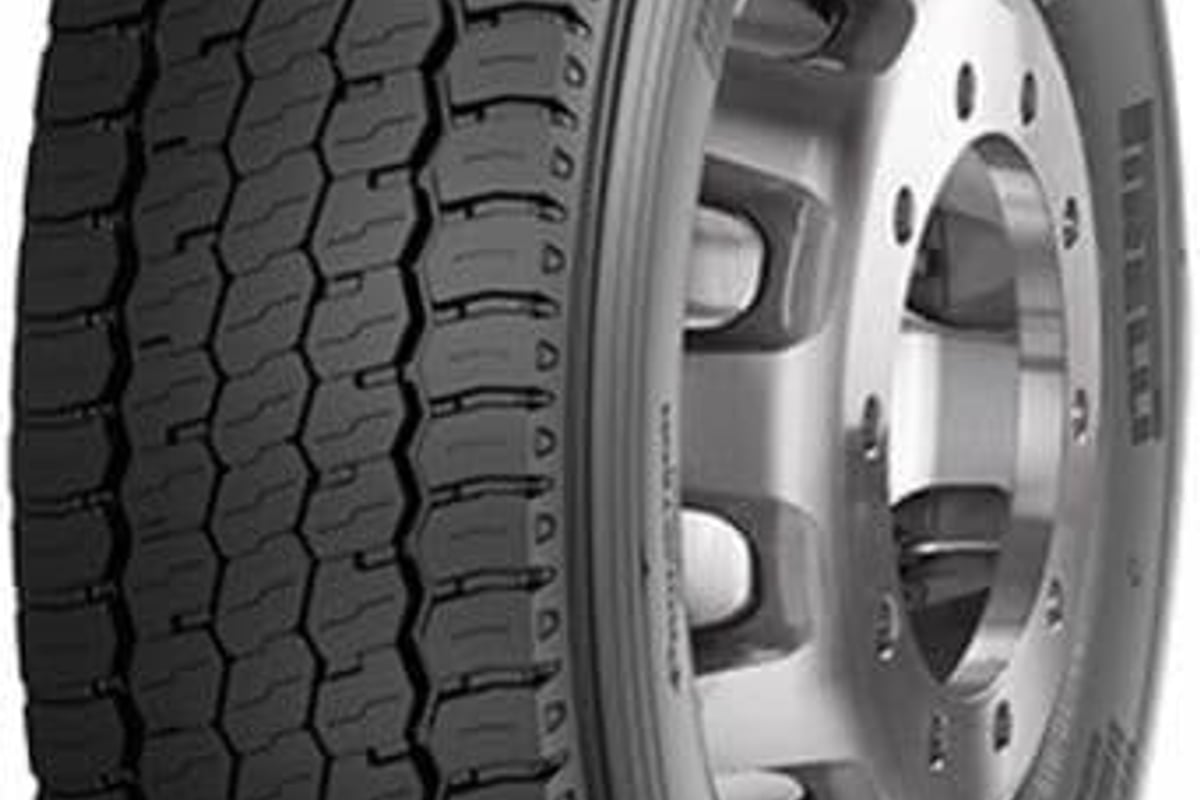
While cost matters, several quality indicators separate premium tires from budget alternatives when reviewing tractor tires for sale:
- Rubber compound formulation: Premium tires use advanced compounds blending natural rubber for flexibility with synthetic materials for wear resistance and ozone protection
- Casing construction: Multiple reinforcing plies with proper calendering (rubber penetration between cords) prevent ply separation
- Bead design: Steel-cable beads with proper wrapping resist the high torque loads agricultural applications impose on the tire-rim interface
- Manufacturing consistency: Dimensional uniformity, balanced weight distribution, and consistent tread depth across production batches
Request technical datasheets that specify compound durometer hardness, tensile strength ratings, and expected service hours under defined conditions. Reputable manufacturers provide detailed specifications; vague or missing technical data suggests lower manufacturing standards.
Specialized Agricultural Tire Categories
Beyond standard field-work tires, several specialized categories address specific agricultural applications. Understanding these options ensures proper tire selection for specialized equipment.
Floatation and Low-Pressure Tires
Floatation tires feature extremely wide section widths and low aspect ratios that spread weight across massive contact patches. Designated with an "F" suffix (for example, 67×34.00-25 F), these tires support heavy loads at single-digit inflation pressures, making them ideal for grain carts, manure tankers, and other high-capacity implements where minimizing soil compaction justifies the premium cost.
The ASABE engineering standards cover testing protocols and performance classifications for floatation tires, providing objective benchmarks for comparing products. Many VF-technology tires now compete with traditional floatation designs, offering similar ground pressure at slightly narrower widths.
Dual and Triple Tire Configurations
High-horsepower tractors frequently mount dual or even triple tires per axle position to distribute weight and increase traction. Dual configurations present unique challenges:
- Matched circumference: Dual tires must maintain nearly identical rolling circumference (within 1%) to prevent uneven loading and power-hop. SAE Standard J2523 establishes circumference index groups to ensure compatibility
- Spacing: Adequate lateral spacing (typically 10-15 inches between centers) prevents soil compaction between tires from exceeding single-tire levels
- Inflation synchronization: Both tires must maintain equal pressure; imbalance causes the underinflated tire to carry excess load
When sourcing tractor tires for sale for dual applications, verify that tires carry matching circumference index codes and purchase from a single production batch to minimize dimensional variation.
Implement and Trailer Tires
While drive tires receive most attention, implement and trailer tires merit careful selection. These positions typically use I-1 (implement rib) or F-2 (three-rib) patterns optimized for free rolling with minimal soil disturbance. Lower-cost bias construction often suffices since these positions rarely encounter the torque loads drive axles experience.
Key considerations include:
- Load capacity: Implement tires must support loaded implement weight, often substantially heavier than empty transport weight
- Rolling resistance: Low-resistance designs reduce draft requirements and improve fuel economy
- Bearing compatibility: Verify that hub and bearing configurations match implement axle specifications
Maintenance and Service Life Optimization
Proper maintenance extends tire service life by 30-50%, directly impacting operating economics. When purchasing tractor tires for sale, factor in these maintenance requirements:
Regular Pressure Monitoring
Weekly pressure checks using a calibrated gauge prevent the most common cause of premature tire failure: chronic underinflation. Tires lose 1-3 PSI per month through normal permeation; more with temperature swings or minor bead leaks. Underinflation by just 20% can reduce tire life by 40% through accelerated shoulder wear and sidewall flexing damage.
Digital pressure monitoring systems now integrate with precision agriculture platforms, providing real-time inflation alerts. These systems justify their cost on large fleets where manual checking becomes impractical.
Ballast Management and Weight Distribution
Excessive ballast creates unnecessary soil compaction and tire stress, while insufficient ballast reduces traction efficiency and increases tire slippage wear. Target 40-45% of tractor weight on the front axle for optimal stability and steering response. Rear-wheel slip should stay in the 8-15% range; higher values indicate insufficient weight while lower values suggest excess ballast wasting fuel.
Liquid ballast offers easy adjustment but adds significant unsprung weight that accelerates component wear. Bolt-on cast weights concentrate mass closer to the axle centerline for better handling dynamics. Many operations maintain both for seasonal adjustment flexibility.
Rotation and Storage Practices
Unlike automotive tires, tractor tire rotation provides limited benefit due to position-specific wear patterns and the impracticality of swapping rear drive tires with smaller front steer tires. However, dual-mounted tires should swap positions (inside to outside) at mid-life to equalize wear patterns.
Off-season storage requires attention to prevent premature aging. Store tires indoors away from ozone sources (electric motors, welders), maintain 50-60°F temperatures when possible, and block tires off the ground on wooden cribbing to prevent flat-spotting. Cover stored tires to block UV exposure, which degrades rubber compounds even in climate-controlled buildings.
Environmental and Regulatory Considerations
Agricultural tire selection in 2026 must account for evolving environmental regulations and sustainable farming practices. Forward-thinking operators consider tires' full lifecycle impact beyond initial purchase price.
Soil Health and Compaction Mitigation
Soil compaction from heavy equipment represents one of agriculture's most pressing environmental challenges. Deep compaction layers persist for years, restricting root growth and reducing water infiltration. Strategic tire selection plays a crucial role in compaction management:
| Tire Technology | Compaction Reduction vs. Standard | Best Applications |
|---|---|---|
| Standard radial | Baseline (0%) | General field work, balanced loads |
| IF (Increased Flexion) | 15-20% reduction | Heavy implements, wet conditions |
- VF (Very High Flexion) | 25-35% reduction | High-capacity equipment, compaction-sensitive soils |
| Floatation tires | 30-40% reduction | Grain carts, tankers, minimize ground pressure |
The Iowa State University Extension recommendations emphasize matching tire technology to soil conditions and moisture levels. Clay soils at field capacity require more aggressive compaction prevention than well-drained sandy soils.
End-of-Life Management and Recycling
Agricultural tires present unique disposal challenges due to their size and steel-cable bead construction. The EPA’s Used Tires Quick Start Guide outlines federal recommendations for responsible tire disposal, recycling into crumb rubber products, and energy recovery through tire-derived fuel programs.
Many tire dealers now include disposal fees in purchase prices and arrange collection of worn casings. Some manufacturers operate casing credit programs that refund a portion of tire cost when worn casings are returned in acceptable condition, supporting retreading operations and material recovery.
Road Safety and Legal Requirements
Tractors operating on public roads face specific tire-related regulations. University of Minnesota Extension safety guidance covers the requirements that vary by jurisdiction but commonly include:
- Minimum tread depth (typically 2/32" remaining lug height)
- Maximum width restrictions (often 12-13.5 feet total vehicle width)
- Speed ratings appropriate for maximum transport speed
- Adequate load capacity at road inflation pressures
Transport-configuration specifications should appear on a placard near the operator station, displaying required inflation pressures and confirming tire speed ratings meet or exceed the tractor's maximum road speed.
Making the Purchase Decision
After evaluating technical specifications, applications, and vendor options, the final purchase decision should balance multiple factors weighted to your operation's specific priorities.
Total Cost of Ownership Analysis
Looking beyond sticker price to total cost of ownership provides a clearer picture of tire economics:
- Initial purchase price: Factory-direct sourcing and volume discounts
- Expected service hours: Premium tires often deliver 20-30% longer service life
- Fuel efficiency impact: Radials save 10-15% fuel over bias equivalents
- Maintenance requirements: Some designs need more frequent pressure adjustment or specialized service
- Disposal costs: Factor in end-of-life fees or casing credit values
A tire costing 15% more initially but delivering 25% longer service life and 12% better fuel economy represents superior value over its lifetime. Spreadsheet modeling across expected service hours clarifies these tradeoffs.
Warranty and Support Considerations
Comprehensive warranty coverage protects against manufacturing defects and premature failure. Strong agricultural tire warranties typically include:
- Defect coverage: 100% replacement for manufacturing flaws within the first year
- Wear-out warranty: Pro-rated credit based on remaining tread depth
- Road-hazard protection: Some premium lines cover failure from field debris, cuts, and impact damage
- Technical support: Access to agronomists and tire engineers for application guidance
Verify warranty terms specifically address agricultural applications. Some manufacturers void coverage if tires are used in severe-service conditions or mounted on equipment exceeding specified weight limits.
Building Supplier Relationships
Long-term relationships with tire suppliers deliver value beyond individual transactions. Preferred customers gain access to:
- Priority allocation: During supply chain disruptions, established customers receive available inventory first
- Technical consultation: Experienced suppliers help specify tires for new equipment or changing applications
- Extended payment terms: Established credit relationships smooth cash flow for seasonal operations
- Volume pricing: Committed annual purchases unlock better pricing tiers
When evaluating suppliers offering tractor tires for sale, consider their technical knowledge, responsiveness to questions, and willingness to stand behind their products when issues arise.
Selecting the right agricultural tires requires balancing technical specifications, application requirements, and long-term operating economics to find the optimal solution for your specific needs. OTR TIRE THAI manufactures premium agricultural tires engineered for demanding field conditions, offering distributors factory-direct access to internationally certified products at wholesale prices. Whether you're sourcing for a single farm or building distributor inventory across multiple markets, partnering with an established manufacturer ensures access to quality tires backed by comprehensive technical support and international shipping to over 80 countries.
