
Blog
Used Tractor Tires: A Complete Guide for 2026
Oct
The market for used tractor tires has evolved significantly as farm operations seek cost-effective solutions for equipment maintenance while managing tighter budgets. Agricultural producers and equipment managers routinely face decisions about whether to invest in new tires or source quality used options for their fleet. Understanding the practical considerations, inspection protocols, and safety standards surrounding secondhand agricultural tires helps operations make informed choices that balance initial cost savings against long-term performance and reliability. This guide examines the critical factors that determine whether used tractor tires represent a smart investment or a costly compromise.
Evaluating the Value Proposition
Used tractor tires can deliver substantial cost savings, often priced at thirty to fifty percent below comparable new units. The value equation extends beyond sticker price, however, encompassing factors like remaining tread life, structural integrity, and compatibility with specific agricultural applications.
Small and mid-sized farm operations frequently turn to the used tire market when replacing single damaged tires or outfitting older equipment scheduled for limited seasonal use. The University of Minnesota Extension provides practical guidance on buying used tractors, emphasizing tire condition as a critical inspection checkpoint that directly affects both safety and operating costs.
Financial Impact Analysis
The true cost of used tractor tires includes several components beyond purchase price:
- Initial acquisition cost (typically 30-60% of new tire price)
- Remaining service life based on tread depth and structural condition
- Installation and balancing expenses
- Potential downtime if premature failure occurs
- Fuel efficiency impact from worn tread patterns
| Cost Factor | New Tires | Quality Used Tires | Poor-Quality Used |
|---|---|---|---|
| Purchase Price | $800-$1,200 | $300-$600 | $150-$300 |
| Expected Hours | 2,000-3,000 | 800-1,500 | 200-600 |
| Cost per Hour | $0.40-$0.60 | $0.40-$0.75 | $0.50-$1.50 |
| Failure Risk | Very Low | Low-Moderate | High |
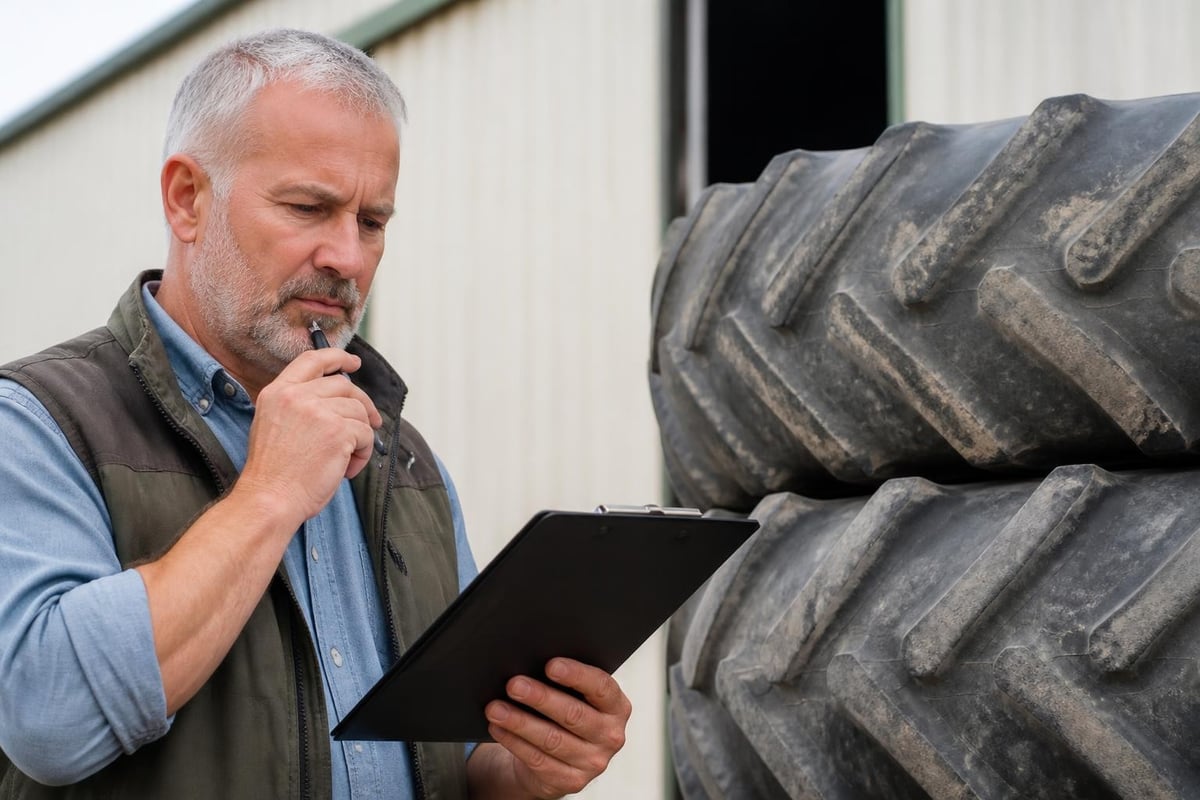
Smart buyers calculate cost per operating hour rather than focusing solely on upfront savings. A used tire with sixty percent remaining tread at half the price of new delivers excellent value. A heavily worn tire at forty percent discount represents false economy.
Inspection Protocol for Agricultural Tire Assessment
Thorough inspection separates viable used tractor tires from hazardous liabilities. Professional equipment managers employ systematic evaluation procedures before committing to any secondhand tire purchase.
Critical Inspection Points
Tread depth measurement stands as the primary assessment criterion. Agricultural tires typically begin service with tread depths between 45 and 60 millimeters depending on application. Minimum safe operating depth varies by tire design, but most experts recommend replacement when tread reaches 10-15 millimeters.
- Measure tread depth at multiple points across the entire tire surface
- Check for uneven wear patterns indicating alignment or ballast issues
- Inspect lug integrity for broken, torn, or missing tread blocks
- Examine tread base for weather checking or ozone cracking
Sidewall condition reveals structural health and prior use patterns. Deep cuts, bulges, or exposed cord material disqualify a tire regardless of remaining tread depth.
The Penn State Extension machinery management guide outlines systematic inspection procedures that help extend the operational life of agricultural tires and identify when replacement becomes necessary.
Age and Service History Considerations
Used tractor tires manufactured more than six years ago warrant extra scrutiny even with adequate tread depth. Rubber compounds degrade over time through oxidation and UV exposure, compromising structural integrity independent of wear patterns.
Check the DOT date code molded into the sidewall to determine manufacturing date. The four-digit code indicates week and year of production. A tire showing "2618" was manufactured in the twenty-sixth week of 2018, making it eight years old in 2026.
- Locate the DOT number on the tire sidewall
- Identify the four-digit date code at the end of the sequence
- Calculate tire age from manufacturing date to present
- Apply heightened scrutiny to tires exceeding six years
- Reject tires older than ten years regardless of appearance
Service history provides valuable context when available. Tires removed from equipment due to trade-in or fleet upgrades often retain significant useful life. Those pulled because of operational problems require careful evaluation to identify the underlying cause.
Matching Tires to Application Requirements
Not all agricultural applications demand identical tire specifications. Used tractor tires suitable for low-speed fieldwork may prove inadequate for road transport or high-torque operations.
Application-Specific Selection Criteria
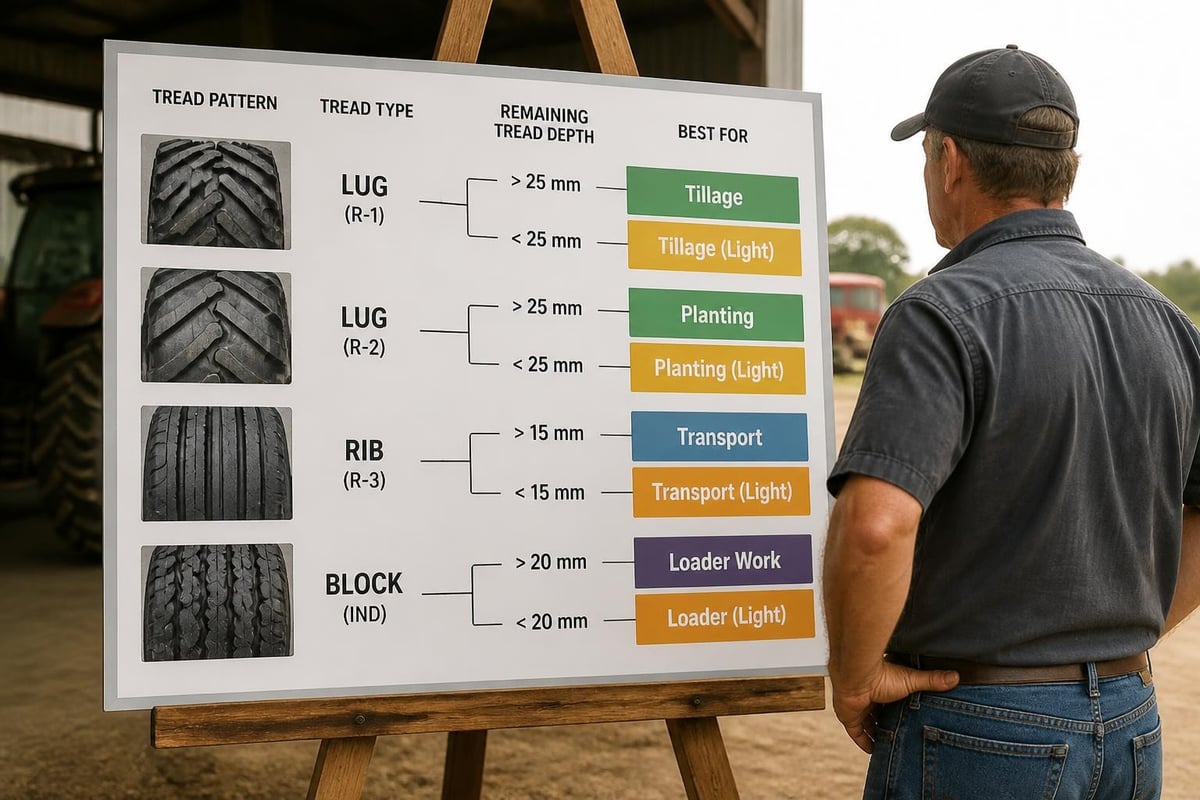
Field operations including plowing, planting, and cultivation prioritize traction and flotation over road speed capability. R-1 agricultural tires with aggressive lug patterns excel in these applications. Used R-1 tires with fifty percent remaining tread depth provide adequate service for seasonal fieldwork.
Transport and loader duty demands different characteristics. R-3 turf tires or R-4 industrial tires minimize turf damage and offer better road manners. These applications justify tires with deeper remaining tread since pavement wear accelerates quickly.
| Application Type | Recommended Pattern | Minimum Tread Depth | Speed Rating |
|---|---|---|---|
| Primary Tillage | R-1 Agricultural | 50% original | Not critical |
| Row Crop Work | R-1 or R-1W | 60% original | Not critical |
| Hay & Forage | R-1 or R-3 | 50% original | Moderate |
| Loader & Transport | R-3 or R-4 | 70% original | Important |
Ballast and weight distribution affect tire performance and longevity. Operations planning to add liquid ballast or implement specific weight configurations should select used tires rated for anticipated loads. Underrated tires fail prematurely and create safety hazards.
Sourcing Reliable Used Tire Suppliers
The source significantly influences used tractor tire quality and reliability. Established agricultural tire dealers, equipment auction houses, and specialty used tire merchants each offer distinct advantages and limitations.
Dealer Networks and Tire Retailers
Agricultural tire dealers occasionally stock quality trade-ins taken during new tire sales or equipment servicing. These sources provide several advantages including professional inspection, warranty options, and installation services. Prices typically run higher than private-party sales but include value-added services and recourse if problems arise.
Reputable dealers stand behind their used inventory because their business model depends on repeat customers and referrals. Many offer limited warranties covering structural defects for thirty to ninety days following purchase.
- Professional mounting and balancing included
- Documented inspection reports available
- Limited warranty coverage standard
- Higher prices offset by reduced risk
- Expert sizing and application guidance
Farm Auctions and Equipment Sales
Equipment auctions present opportunities to purchase used tractor tires mounted on complete tractors or sold as individual lots. Prices often reflect true market conditions, but buyer-beware principles apply since most auction sales proceed "as-is" without warranties or returns.
Successful auction buyers arrive prepared with inspection tools, tire depth gauges, and knowledge of current market prices. Time pressure during active bidding can lead to poor decisions, so establishing maximum bid limits beforehand prevents emotional overspending.
Online Marketplaces and Classified Listings
Digital platforms expand access to used agricultural tire inventory but eliminate hands-on inspection before purchase. Detailed photographs, accurate descriptions, and seller reputation scores help mitigate risks inherent in remote transactions.
Insist on comprehensive photos showing tread depth measurements, sidewall condition from multiple angles, and DOT date codes. Reputable sellers provide this documentation without prompting. Those unwilling to supply detailed condition information likely understand their inventory contains defects they prefer to hide.
Retreading and Refurbishment Options
Retreading extends tire life economically when casings retain structural integrity. While more common in commercial trucking, agricultural tire retreading serves specific applications where initial casing quality justifies the investment.
The California tire market report documents retreading volumes and market trends, highlighting both environmental benefits and quality control considerations that affect retread performance.
Retread Viability Assessment
Quality casings from premium tire manufacturers withstand multiple retreading cycles when properly maintained. Agricultural operators considering retreads should verify:
- Original tire construction quality and brand reputation
- Existing casing condition through professional inspection
- Retread pattern availability matching intended application
- Retreader certification and warranty terms
- Cost comparison against quality used and new alternatives
Retreading makes strongest economic sense for large, expensive tires where casing replacement costs represent significant capital expenditure. Smaller tractor tires often cost less to replace with new units than to retread professionally.
Agricultural tire manufacturers design premium products with retreading potential built into the original construction. Multi-ply casings, reinforced bead areas, and durable rubber compounds enable successful retreading when tread wear occurs before structural degradation.
Environmental and Regulatory Considerations
Proper management of used tractor tires carries environmental responsibilities and increasingly involves regulatory compliance. The EPA provides comprehensive guidance on used tire management options, state regulatory frameworks, and safe disposal practices that agricultural operations should understand.
Waste Tire Management Requirements
State regulations governing used tire storage, processing, and disposal vary considerably. Agricultural operations accumulating used tractor tires may trigger registration or permitting requirements depending on quantity and duration of storage.
Most states exempt small accumulations for on-farm use from strict waste tire regulations, but commercial tire dealers and large-scale agricultural operations face specific requirements:
- Maximum storage quantities without permits
- Fire prevention and vector control measures
- Record-keeping for tire receipts and disposition
- Approved disposal or recycling channels
- Cleanup liability for abandoned tire piles
The EPA rural recycling presentation addresses challenges specific to agricultural and off-road tires, including limited recycling infrastructure in rural areas and processing difficulties with large-diameter agricultural tires.
Beneficial Reuse Applications
Used tractor tires unsuitable for continued road or field service often find second lives in farm applications:
- Silage cover weights and hay stack protection
- Livestock water tank construction and feed bunks
- Erosion control and drainage applications
- Equipment ballast and counterweight systems
- Playground equipment and recreational structures
These beneficial reuse applications extend tire utility while deferring disposal costs and environmental impact. Operations implementing creative reuse programs reduce waste management expenses and demonstrate environmental stewardship.
Safety Standards and Liability Concerns
Operating equipment on used tractor tires creates potential liability exposure if inadequate inspection or improper application contributes to accidents, injuries, or property damage. Farm managers bear responsibility for ensuring all equipment, including tires, meets minimum safety standards.
Operator Safety Protocols
Tire failure during operation poses serious injury risks to operators and bystanders. Catastrophic failures can result from:
Structural defects including internal separations, weakened sidewalls, or faulty bead areas that escape visual inspection. Professional inspection techniques including ultrasound or shearography can detect hidden structural damage in high-value tires.
Over-inflation exceeds tire structural limits, particularly dangerous with aged or damaged casings. Always verify current pressure recommendations match tire specifications and load conditions.
Under-inflation causes excessive sidewall flexing, generating heat that accelerates rubber degradation. Chronic under-inflation leads to catastrophic failure without obvious external warning signs.
| Safety Check | Frequency | Critical Indicators |
|---|---|---|
| Visual Inspection | Before each use | Cuts, bulges, foreign objects |
| Pressure Verification | Weekly minimum | Match load/speed requirements |
| Tread Depth Measurement | Monthly | Maintain minimum safe depth |
| Professional Assessment | Annual | Structural integrity confirmation |
Agricultural tire specialists provide inspection services that identify marginal tires before they fail in service. The modest investment in professional evaluation prevents costly downtime and potential injury incidents.
Integration with Fleet Management Systems
Professional agricultural operations increasingly adopt systematic approaches to tire management that optimize replacement timing, reduce unscheduled downtime, and control operating costs. Used tractor tires fit strategically within comprehensive fleet maintenance programs when properly evaluated and deployed.
Tire Tracking and Lifecycle Management
Modern fleet management systems track individual tire performance metrics including:
- Installation date and initial tread depth measurements
- Operating hours and application types
- Maintenance interventions including rotations and pressure adjustments
- Tread depth progression and projected replacement timing
- Failure incidents and root cause analysis
Data-driven management identifies optimal replacement intervals that balance tire utilization against failure risk. Operations discover whether used tires deliver acceptable performance or create excessive maintenance burdens requiring policy adjustments.
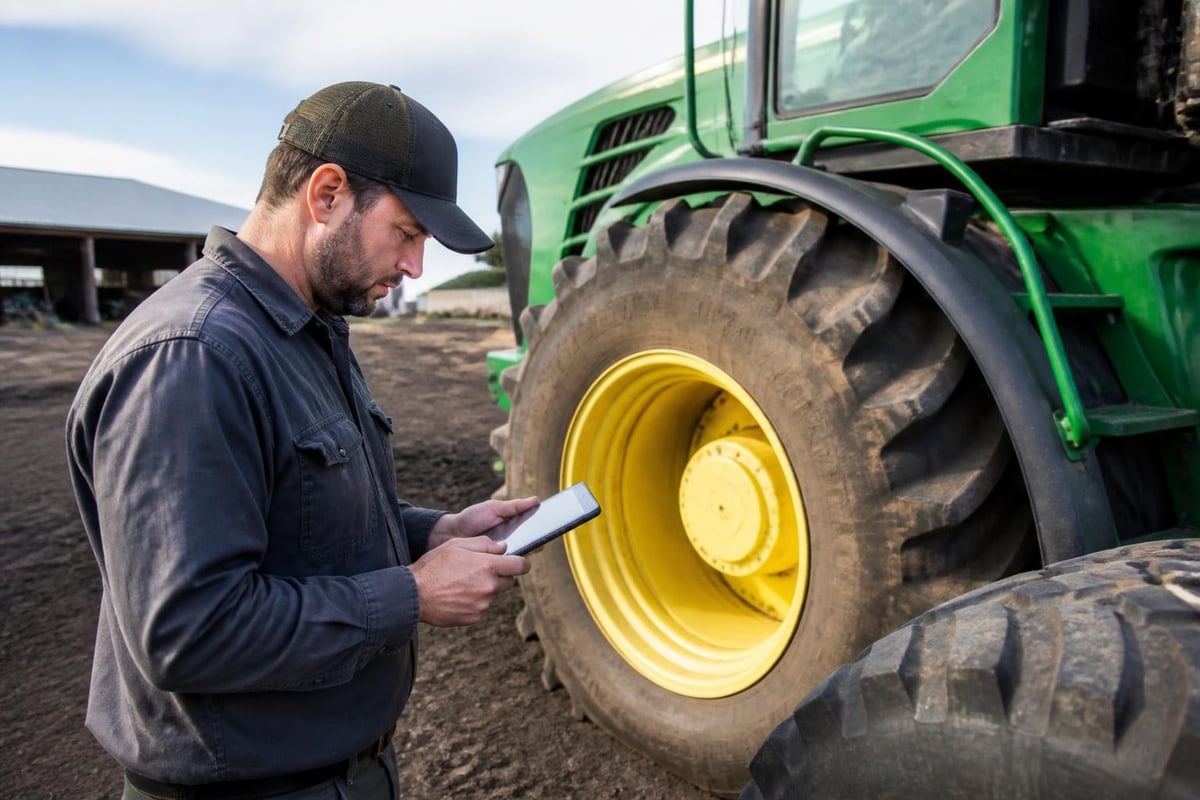
Tire rotation protocols extend service life and ensure even wear patterns. Operations that systematically rotate tires between positions extract maximum value from both new and used inventory. Front tires typically wear faster than rears in many tractor configurations, so strategic rotation balances wear across all positions.
For agricultural operations seeking reliable tire solutions across their entire fleet, OTR TIRE THAI manufactures comprehensive agricultural tire lines designed for durability and long service life, providing the quality casings that maintain value even in the secondary market.
Regional Market Dynamics and Pricing Trends
Used tractor tire markets exhibit significant regional variation driven by local agricultural patterns, equipment demographics, and new tire pricing. Understanding these dynamics helps buyers negotiate effectively and time purchases for optimal value.
Seasonal Price Fluctuations
Agricultural tire demand follows predictable seasonal patterns that influence used tire availability and pricing:
Spring planting season drives peak demand as operations prepare equipment for fieldwork. Used tire inventory tightens, and prices firm as buyers compete for available stock. Operations planning ahead by purchasing during winter months often secure better pricing and selection.
Post-harvest periods see increased used tire supply as operations trade equipment and retire seasonal machinery. Prices soften slightly as supply temporarily exceeds demand, creating purchasing opportunities for patient buyers.
Winter months represent optimal buying opportunities in northern climates where fieldwork ceases. Dealers motivated to reduce inventory before year-end may negotiate aggressively, and private sellers liquidate equipment ahead of property tax assessments.
Regional economic conditions influence pricing beyond seasonal patterns. Areas with strong commodity prices and robust farm income support higher used tire values. Regions experiencing agricultural downturns see softer pricing as distressed sellers liquidate assets.
Size and Specification Availability
Common tire sizes maintain liquid secondary markets with consistent availability and competitive pricing. Specialty sizes for specific equipment applications trade less frequently, creating both scarcity and opportunity.
Rear tractor tires in popular sizes including 18.4-38, 20.8-38, and radial equivalents change hands regularly. Adequate inventory supports price competition and buyer negotiating leverage.
Front tires and specialty sizes see thinner markets where patient searching and relationship-building with multiple suppliers proves necessary to locate suitable inventory.
Operators managing mixed equipment fleets face challenges sourcing appropriate used tractor tires for diverse size requirements. Standardizing tire sizes across equipment where practical improves parts availability and simplifies inventory management for both new and used tire purchases.
Technical Specifications and Performance Considerations
Agricultural tire specifications directly impact traction, flotation, fuel efficiency, and overall equipment performance. Buyers evaluating used tractor tires must understand how technical attributes affect suitability for intended applications.
Load and Speed Ratings
Load index numbers indicate maximum weight-carrying capacity at specified inflation pressures. Used tires must maintain adequate load rating for current applications even if original equipment specifications allowed higher loads.
Calculate actual tire loads based on equipment weight plus implement loads, then verify used tires meet or exceed requirements. Under-specification creates failure risk and safety hazards regardless of tread condition.
Speed ratings matter less for dedicated field tractors but become critical for equipment used in road transport. Used tires rated for lower speeds than operating conditions require pose blowout risks and potential legal liability.
Radial Versus Bias Construction
Radial agricultural tires offer superior traction, longer tread life, and better fuel efficiency compared to bias-ply construction. The used tire market includes both construction types at varying price points.
Mixing radial and bias tires on the same axle creates handling problems and uneven wear. Operations replacing single tires should match construction type to existing inventory. Those replacing complete sets gain flexibility to upgrade from bias to radial construction if budget permits.
Premium radial tires from established manufacturers retain significant value in secondary markets because buyers recognize superior performance and longevity. These quality casings command justified price premiums over generic bias alternatives.
Best Practices for Used Tire Acquisition
Successful used tractor tire purchasing combines technical knowledge, negotiation skills, and systematic decision-making processes. Professional equipment managers follow established protocols that deliver consistent results.
Pre-Purchase Documentation
Detailed photographs documenting tread depth, sidewall condition, and date codes provide essential decision-making information. Request multiple images showing:
- Overall tire profile from both sides
- Close-ups of tread depth measurements at multiple points
- Sidewall condition highlighting any damage or repairs
- DOT date code and size/specification molding
- Bead area and mounting surface condition
Reputable sellers provide comprehensive documentation without hesitation. Those unwilling to supply detailed condition information signal potential problems warranting extreme caution or complete avoidance.
Negotiation Strategies and Fair Pricing
Research comparable sales and current market pricing establishes negotiating baselines. Online marketplaces, auction results, and dealer quotes provide pricing references that inform offer strategies.
Value-based negotiation focuses on objective condition assessment rather than arbitrary discounting. Used tires with documented superior condition justify premium pricing. Those with identified defects or limitations warrant corresponding price reductions.
- Calculate remaining tread life as percentage of original depth
- Adjust for age-related depreciation beyond tread wear
- Factor installation costs into total acquisition expense
- Consider warranty or return provisions in price evaluation
- Compare multiple options before committing to purchase
Building relationships with reliable used tire suppliers generates long-term value through preferential access to quality inventory, advance notice of incoming stock, and flexible terms on volume purchases.
Maintenance Protocols for Extending Service Life
Proper maintenance maximizes return on used tractor tire investments by extracting full remaining service potential while maintaining safe operating conditions. Systematic care protocols prove equally important for used and new tire inventory.
Inflation Management Systems
Proper inflation pressure represents the single most important maintenance factor affecting tire longevity and performance. Check pressures weekly minimum, and adjust based on load conditions and operating environment.
Under-inflation by just ten percent reduces tire life by fifteen to twenty percent while increasing fuel consumption and reducing traction efficiency. Over-inflation concentrates wear on tread centers and increases puncture susceptibility.
Many modern agricultural operations invest in central tire inflation systems or tire pressure monitoring technology that automates pressure management and alerts operators to problem conditions requiring immediate attention.
Storage and Seasonal Considerations
Off-season storage practices influence tire condition when equipment returns to service. Used tires with limited remaining life prove particularly susceptible to storage-related degradation.
Store equipment on firm, level surfaces that prevent tire flat-spotting. Block equipment to remove ground contact during extended storage periods exceeding sixty days. Cover tires to minimize UV exposure and ozone damage that accelerate rubber deterioration.
Seasonal equipment requires inspection before returning to service. Verify pressures, examine for weather checking or cracking, and measure tread depth to confirm adequate remaining life for upcoming workload.
Acquiring used tractor tires successfully requires balancing cost considerations against performance requirements, safety standards, and long-term value delivery. Thorough inspection protocols, careful supplier selection, and realistic service-life expectations separate smart investments from costly mistakes that compromise equipment uptime and operator safety. Whether sourcing individual replacements or managing comprehensive fleet tire programs, the principles outlined here provide frameworks for informed decision-making that optimizes agricultural equipment performance while controlling operating costs. OTR TIRE THAI manufactures premium agricultural tires engineered for durability and extended service life, delivering the quality and reliability that supports successful farming operations across more than eighty countries worldwide.
