
Blog
Best Rated Tires for SUV: 2026 Buyer’s Guide
Sep
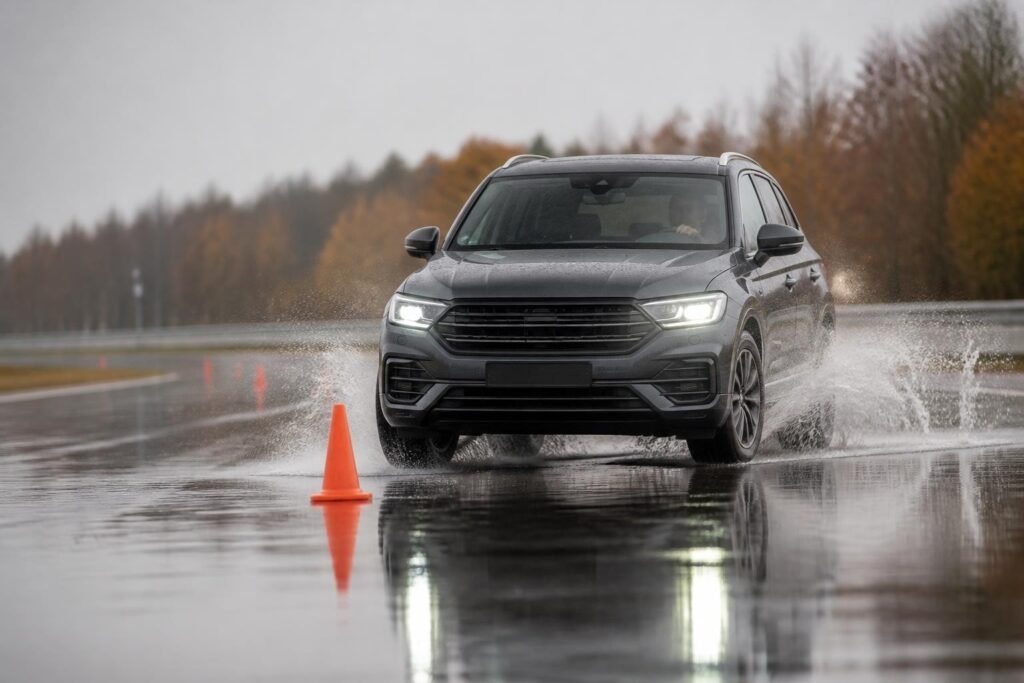
Sport utility vehicles dominate American roadways, and selecting the right rubber remains one of the most critical decisions any SUV owner faces. The best rated tires for SUV applications balance multiple performance criteria-from wet-weather safety to tread longevity-while adapting to wildly different driving patterns. Whether navigating suburban commutes, towing heavy trailers, or venturing off-road, understanding which tire models excel in independent testing helps ensure your investment delivers years of reliable performance.
Understanding SUV Tire Categories
Modern SUVs demand specialized tire construction that accounts for higher vehicle weight, elevated centers of gravity, and varying load conditions. The market segments SUV tires into distinct categories, each engineered for specific use cases.
All-season tires represent the most popular choice among SUV owners, designed to provide balanced performance across spring, summer, and fall conditions. These tires incorporate symmetric or asymmetric tread patterns with moderate siping for light snow capability while maintaining quiet highway manners.
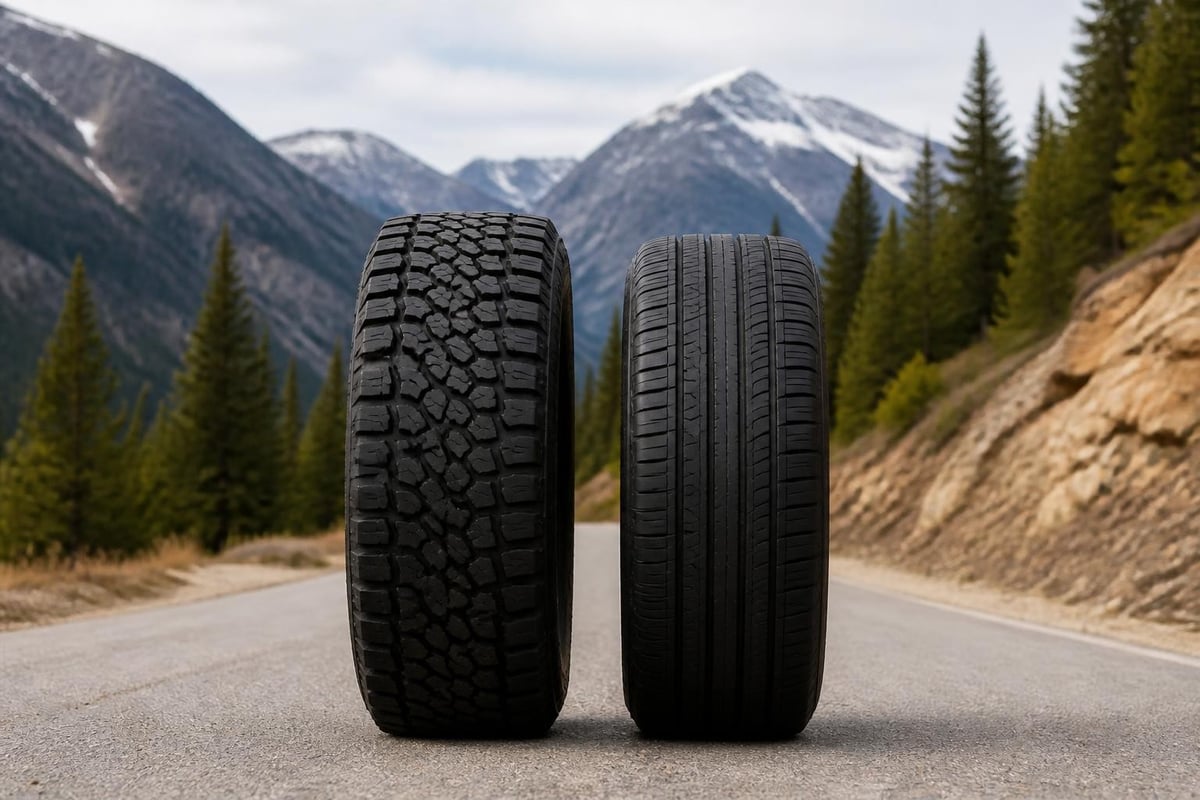
All-terrain tires bridge the gap between pavement and dirt, featuring aggressive shoulder blocks and reinforced sidewalls. These designs accommodate weekend adventures without sacrificing too much on-road refinement.
Performance Testing Methodology
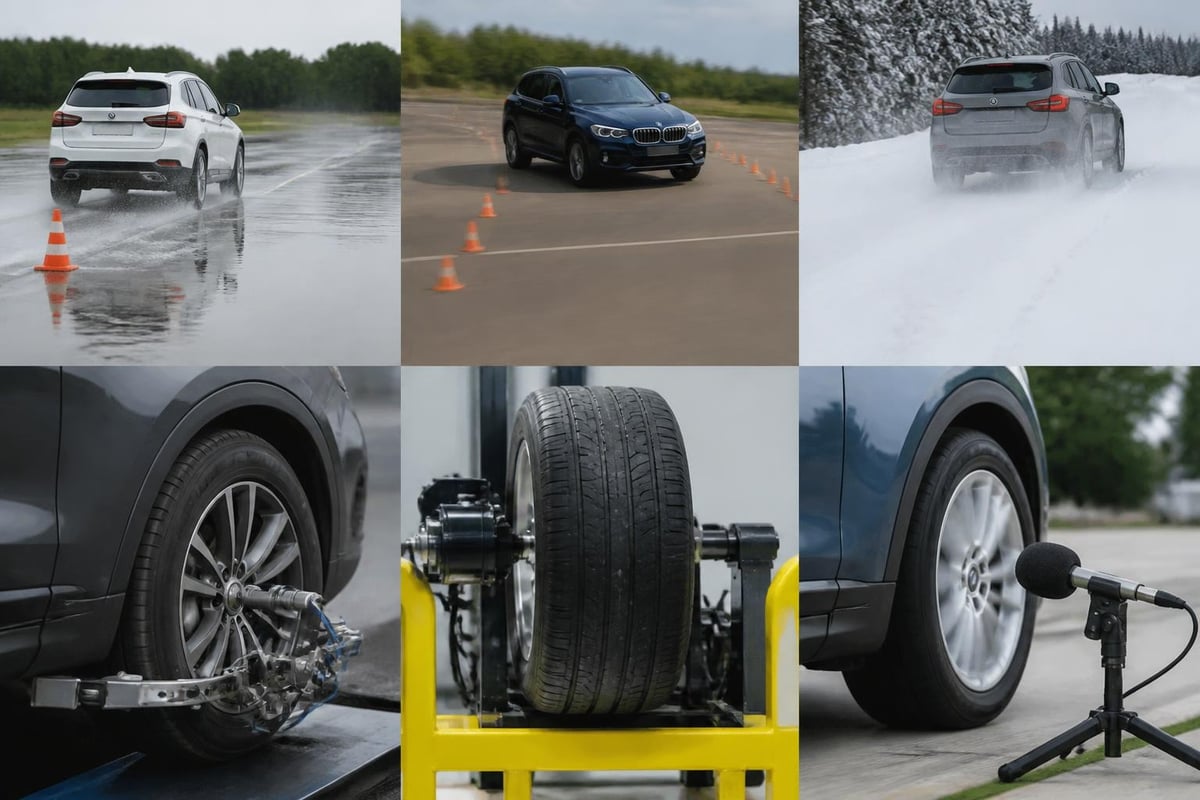
Understanding how testing organizations evaluate the best rated tires for SUV vehicles helps contextualize published ratings. Independent tire testing facilities measure performance across standardized protocols that include:
- Wet and dry braking distances from 60 mph
- Lateral acceleration during skidpad testing
- Hydroplaning resistance at various water depths
- Snow traction on packed and loose surfaces
- Noise levels measured in decibels at highway speeds
- Treadwear projections based on accelerated durability testing
These objective measurements combine with subjective evaluations from professional test drivers who assess steering response, road impact harshness, and overall driving confidence.
Top-Rated All-Season SUV Tires for 2026
The all-season category continues to evolve, with manufacturers leveraging advanced silica compounds and computer-optimized tread designs. Several models have consistently earned top marks across multiple testing organizations.
Premium All-Season Leaders
| Tire Model | Wet Braking | Dry Handling | Treadwear | Noise Level |
|---|---|---|---|---|
| Michelin Defender LTX M/S | Excellent | Excellent | 80,000 mi | 68 dB |
| Continental CrossContact LX25 | Excellent | Very Good | 70,000 mi | 67 dB |
| Bridgestone Dueler H/L Alenza Plus | Very Good | Excellent | 70,000 mi | 69 dB |
| Goodyear Assurance WeatherReady | Excellent | Very Good | 65,000 mi | 70 dB |
The Michelin Defender LTX M/S consistently ranks among the best rated tires for SUV applications in Consumer Reports testing, delivering exceptional wet-weather grip alongside industry-leading treadlife projections. Its MaxTouch Construction distributes contact forces evenly across the footprint, translating to more uniform wear patterns that help owners reach or exceed the 80,000-mile treadwear warranty.
Continental's CrossContact LX25 employs EcoPlus Technology, which reduces rolling resistance without compromising grip. This engineering approach directly impacts fuel economy-a consideration that matters increasingly as EPA guidance notes that tire choice can affect vehicle efficiency by 3-5 percent.
Mid-Range Value Options
Not every driver requires ultra-premium performance, and several mid-tier options deliver strong capabilities at accessible price points:
- Hankook Dynapro HP2: All-season workhorse with strong dry handling and 60,000-mile warranties
- Kumho Crugen HP71: Balanced wet/dry performance with competitive pricing for bulk distributors
- Cooper Discoverer SRX: Stable highway manners and surprisingly quiet operation for the segment
These models often excel in specific areas-Hankook's dry-road responsiveness or Cooper's comfort-while making minor compromises in ultimate wet-weather capability compared to premium alternatives.
All-Terrain Tire Performance Rankings
SUV owners seeking weekend adventure capability turn to all-terrain designs that accommodate unpaved surfaces without completely sacrificing on-road refinement. The best rated tires for SUV use in this category must balance contradictory demands.
Leading All-Terrain Models
BFGoodrich All-Terrain T/A KO2 remains the benchmark by which competitors measure themselves. Its CoreGard Technology adds split-resistant sidewall rubber, while the serrated shoulder blocks provide additional bite in deep snow and mud. On-pavement manners prove surprisingly civilized, with progressive breakaway characteristics that inspire confidence during emergency lane changes.
Goodyear Wrangler All-Terrain Adventure with Kevlar incorporates DuPont Kevlar reinforcement into the tread compound, enhancing puncture resistance for drivers who frequently encounter sharp rocks or debris. Wet braking performance approaches all-season tire levels-a significant achievement given the open tread pattern required for off-road traction.
For light-duty SUVs and crossovers, manufacturers increasingly offer compromise designs that lean toward pavement use while maintaining light trail capability. Light truck radial construction delivers the load capacity required for towing and cargo hauling while incorporating technologies typically reserved for passenger car applications.
Off-Road Capability Versus On-Road Comfort
The inherent tension between aggressive tread patterns and quiet highway operation creates measurable performance gaps:
| Feature | All-Season | All-Terrain | Mud-Terrain |
|---|---|---|---|
| Highway Noise | 67-70 dB | 72-75 dB | 76-80 dB |
| Wet Braking (60-0 mph) | 125-135 ft | 135-150 ft | 150-170 ft |
| Off-Road Traction | Limited | Very Good | Excellent |
| Treadlife Expectation | 60-80k mi | 45-60k mi | 30-45k mi |
Understanding these trade-offs helps align tire selection with actual usage patterns rather than aspirational off-road plans that may never materialize.
Winter-Specific SUV Tire Options
Regions experiencing consistent snow and ice conditions demand dedicated winter rubber with specialized compounds that remain pliable in sub-freezing temperatures. The best rated tires for SUV winter applications transform vehicle capability on challenging surfaces.
Bridgestone Blizzak DM-V2 employs Multi-Cell compound technology incorporating microscopic bite particles that channel water away from the contact patch on icy surfaces. Independent testing demonstrates 30-40 percent shorter stopping distances on ice compared to all-season alternatives.
Michelin X-Ice Snow represents the latest evolution in winter tire design, incorporating twin steel belts for improved durability alongside V-shaped tread grooves that evacuate slush efficiently. The FleX-Ice 2.0 compound maintains grip down to -40°F while delivering surprisingly long treadlife for the winter category.
Winter Tire Installation Considerations
- All four positions: Installing winter tires on all four wheels maintains balanced handling characteristics
- Seasonal storage: Proper storage on dedicated wheels preserves rubber compounds and simplifies changeovers
- Speed ratings: Most winter tires carry lower speed ratings (T or H) reflecting compound priorities
- Treadwear expectations: Winter tires typically deliver 30,000-40,000 miles before replacement
The safety improvements winter tires provide on snow and ice justify the investment in regions where winter conditions persist for several months annually. Safety research organizations consistently note that tire performance represents a critical factor in crash-avoidance capability during adverse weather.
Performance Tire Options for SUVs
Enthusiast drivers piloting performance-oriented SUVs-from luxury models to sport crossovers-demand tire capabilities that approach passenger car levels while accommodating higher vehicle weights.
Pirelli Scorpion Verde All Season Plus II combines low rolling resistance with responsive handling dynamics, earning praise in MotorTrend testing for its ability to transform sluggish-feeling SUVs into more engaging drives. The asymmetric tread pattern employs larger outer shoulder blocks that resist roll-under during aggressive cornering.
Continental ExtremeContact DWS06 Plus pushes all-season performance boundaries with its +Silane additive that enhances wet grip while maintaining dry-weather responsiveness. Wear indicators molded into the tread notify drivers when capabilities diminish to summer-only, then all-season, before reaching replacement depth.
Load Index and Speed Rating Considerations
SUV applications require careful attention to load index specifications that ensure adequate weight capacity:
- Standard SUV: Load index 102-108 (1,874-2,205 lbs per tire)
- Full-size SUV: Load index 110-116 (2,337-2,756 lbs per tire)
- Heavy-duty SUV: Load index 118-121 (2,910-3,197 lbs per tire)
Speed ratings follow alphabetical progression, with H (130 mph), V (149 mph), and W (168 mph) representing common SUV specifications. Matching or exceeding OEM specifications maintains vehicle warranty coverage and ensures safe operation.
Evaluating Treadwear Warranties and Longevity
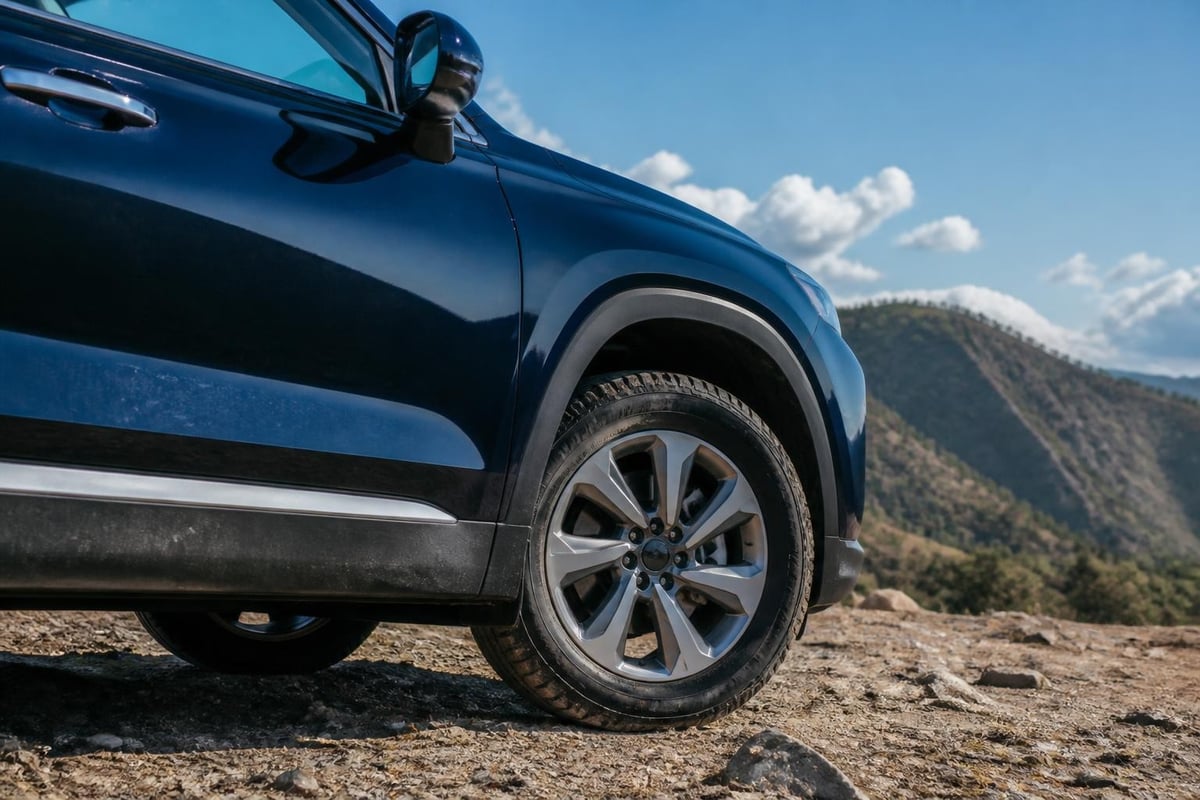
Manufacturer treadwear warranties provide useful benchmarks when comparing the best rated tires for SUV applications, though actual mileage varies based on driving habits, alignment, and inflation maintenance.
Understanding Warranty Coverage
Premium manufacturers typically offer tiered warranty structures:
80,000-mile warranties accompany top-tier touring models designed for highway-focused driving with proper rotation intervals every 5,000-7,500 miles. These projections assume moderate acceleration, minimal heavy braking, and well-maintained suspension geometry.
60,000-65,000-mile warranties represent the middle ground for all-season SUV tires balancing multiple performance attributes. These models may sacrifice ultimate longevity for enhanced wet-weather capability or reduced rolling resistance.
40,000-50,000-mile warranties cover all-terrain and performance-oriented designs where tread compound prioritizes grip over longevity. Aggressive shoulder blocks and open patterns inherently wear faster than closed-pattern touring designs.
Actual treadlife depends heavily on alignment accuracy, inflation pressure consistency, and rotation discipline. Detailed testing data shows that proper maintenance extends tire life by 15-25 percent compared to neglected vehicles.
Regional Climate Considerations
Geographic location significantly influences which characteristics matter most when selecting the best rated tires for SUV use. Matching tire capabilities to local weather patterns optimizes both safety and value.
Hot Climate Priorities
Southern and southwestern regions experience prolonged high-temperature exposure that accelerates tread compound degradation. Priorities include:
- Heat-resistant sidewall compounds that resist UV damage
- Tread formulations optimized for 100°F+ pavement temperatures
- Silica-enhanced compounds maintaining wet grip despite heat
- Enhanced ozone resistance for extended parking exposure
Cold and Variable Climate Needs
Northern and mountain regions demand year-round versatility:
- Three-peak mountain snowflake certification for winter capability
- Sipe density providing additional biting edges on ice
- Flexible compounds remaining pliable below 40°F
- Shoulder block designs shedding snow accumulation
Drivers in transitional climates often find all-weather tires (distinct from all-season designs) offering superior winter performance without requiring seasonal changeovers. These specialized models carry the three-peak mountain snowflake symbol while maintaining reasonable warm-weather characteristics.
Price-to-Performance Analysis
Understanding value requires examining total cost of ownership beyond initial purchase price. The best rated tires for SUV applications often justify premium pricing through extended treadlife and superior fuel economy.
Total Ownership Cost Breakdown
| Cost Factor | Budget Tire | Mid-Range Tire | Premium Tire |
|---|---|---|---|
| Purchase Price (set of 4) | $480 | $720 | $1,040 |
| Expected Mileage | 40,000 mi | 60,000 mi | 80,000 mi |
| Cost Per Mile | $0.012 | $0.012 | $0.013 |
| Fuel Economy Impact | -2% | Neutral | +1-2% |
| Wet Stopping Distance | +15 ft | +5 ft | Baseline |
This analysis reveals that mid-range and premium options often deliver similar per-mile costs despite higher initial investments. The safety advantage of shorter stopping distances carries additional value that purely financial calculations cannot capture.
For commercial distributors and fleet managers, manufacturers like OTR TIRE THAI provide wholesale pricing structures that make premium quality accessible at competitive total-ownership costs. Their Light Truck Tires (LT) offer highway terrain patterns engineered for fuel efficiency alongside all-terrain designs that bridge commercial and recreational applications.
Maintenance Practices Maximizing Tire Performance
Even the best rated tires for SUV use deliver disappointing results without proper maintenance protocols that preserve performance characteristics throughout their service life.
Critical Maintenance Intervals
Monthly inflation checks remain the single most important maintenance task. Under-inflation by just 5 PSI increases rolling resistance by 3-4 percent while accelerating shoulder wear. Over-inflation concentrates wear on the center tread blocks while degrading ride quality.
5,000-7,500 mile rotations equalize wear patterns across all four positions, particularly important for SUVs where heavier front-end weight concentrates wear on steering axle tires. Cross-rotation patterns work well for non-directional tread designs, while directional patterns require front-to-rear swaps on the same side.
Annual alignment verification catches suspension geometry changes before they create irreversible wear patterns. Camber, caster, and toe specifications directly impact tire longevity and vehicle handling precision.
Storage Best Practices
Seasonal tire storage requires attention to environmental factors that degrade rubber compounds:
- Clean tires thoroughly removing road debris and brake dust
- Store in cool, dry locations away from direct sunlight
- Maintain 15-20 PSI inflation to preserve internal structure
- Position horizontally (stacked) or vertically in tire racks
- Bag individually to minimize ozone exposure
Properly stored winter or summer tires maintain performance characteristics for 6-8 years before compound aging necessitates replacement regardless of remaining tread depth.
Emerging Technologies and Future Developments
The tire industry continues advancing technologies that will influence the best rated tires for SUV applications over the next several model years.
Self-sealing technologies incorporate viscous sealant layers beneath the tread that automatically fill punctures up to 1/4 inch diameter, maintaining inflation pressure and allowing continued driving. These systems eliminate 85 percent of roadside flat tire incidents.
Run-flat constructions employ reinforced sidewalls supporting vehicle weight after complete pressure loss, enabling continued driving for 50 miles at reduced speeds. Trade-offs include firmer ride quality and higher replacement costs.
Airless tire developments from major manufacturers promise elimination of inflation pressure maintenance while delivering conventional performance levels. Michelin's Uptis (Unique Puncture-proof Tire System) targets initial SUV applications in 2028-2029 model years.
Smart Tire Integration
Embedded sensors monitoring tire pressure, temperature, and tread depth in real-time connect to smartphone applications providing maintenance alerts and performance optimization recommendations. These systems integrate with vehicle telematics platforms, automatically scheduling service appointments when parameters fall outside specifications.
The detailed testing protocols published by consumer advocacy organizations will increasingly incorporate these advanced features into their evaluation criteria as technologies achieve widespread market adoption.
Commercial and Fleet Considerations
Business operators managing SUV fleets face unique tire selection challenges balancing upfront costs against total lifecycle expenses and vehicle downtime.
Fleet-Specific Priorities
Uniform specifications across entire fleets simplify inventory management and enable bulk purchasing advantages. Standardizing on proven models from the best rated tires for SUV categories reduces training requirements for maintenance personnel.
Predictable replacement intervals matter more for fleet budgeting than ultimate performance. A tire delivering 60,000 miles consistently across diverse drivers and routes often provides more value than a premium option achieving 75,000 miles with high variance.
Warranty coverage and support from manufacturers or distributors minimizes unexpected replacement costs when defects or road hazards damage tires before projected service life completion.
Progressive fleet managers increasingly partner with tire distributors offering vendor-managed inventory programs that monitor tread depths remotely and proactively schedule replacements before performance degradation or safety concerns emerge.
Selecting the Right Tire for Your Specific SUV
Matching tire characteristics to vehicle specifications and actual usage patterns determines real-world satisfaction beyond published test results.
Usage Pattern Assessment
Daily commuting (80%+ highway): Prioritize comfort, low rolling resistance, and extended treadlife from touring all-season designs. Highway-terrain patterns deliver optimal fuel economy and quiet operation.
Mixed suburban/highway (60-40 split): All-season tires with enhanced wet-weather capability balance diverse conditions. Models emphasizing hydroplaning resistance prove valuable in regions with frequent rain.
Weekend recreation (20%+ off-pavement): All-terrain designs justify their trade-offs when regularly encountering unpaved forest roads, beach access, or light trail conditions. Three-peak mountain snowflake certification adds winter versatility.
Towing and heavy loads: Prioritize maximum load index ratings with reinforced internal construction. Light truck (LT-metric) specifications provide stronger sidewalls and higher pressure capabilities than passenger (P-metric) alternatives.
Vehicle-Specific Matching
Luxury SUVs benefit from premium tier offerings that complement sophisticated suspension systems and quiet cabin engineering. Economy-focused models often perform well with mid-range options that deliver core capabilities without ultimate refinement.
Performance-oriented SUVs demand tires matching their capabilities-responsive sidewalls, stable shoulder blocks, and compounds maintaining grip during enthusiastic driving. Downsizing to all-season compromises frustrates the driving experience these vehicles promise.
Selecting from the best rated tires for SUV applications requires balancing performance priorities, regional climate demands, and budget constraints while recognizing that proper maintenance amplifies the capabilities of any tire choice. Whether prioritizing wet-weather safety, winter capability, or all-terrain versatility, independent testing data and ownership experiences provide reliable guidance beyond marketing claims. For distributors seeking wholesale tire solutions that combine international quality with competitive pricing, OTR TIRE THAI delivers premium manufacturing across light truck, passenger, and specialty applications with proven performance in over 80 markets worldwide.
