
Blog
Best Road Tires: Performance, Durability & Speed Guide
Aug
Selecting the best road tires transforms your cycling experience, whether you're competing in criteriums, logging training miles, or commuting through urban environments. Road tires represent the only contact point between your bicycle and the pavement, directly influencing speed, comfort, and safety. In 2026, the road tire market offers unprecedented choices across construction methods, tread compounds, widths, and pressure specifications. Understanding how these variables interact helps riders and distributors make informed decisions that balance performance, durability, and value. This comprehensive guide examines the critical factors that define the best road tires and provides actionable insights for optimizing your selection.
Rolling Resistance: The Science of Speed
Rolling resistance determines how much energy you lose to tire deformation as the contact patch continuously flexes under your weight. Lower rolling resistance translates directly into higher speeds for the same power output or reduced effort to maintain pace.
Measurement Standards and Real-World Data
Independent testing facilities measure rolling resistance under controlled laboratory conditions, typically on smooth steel drums at specific loads and speeds. BicycleRollingResistance maintains the most comprehensive database of road tire rolling resistance, testing hundreds of models using consistent methodology. Their results show that the best road tires lose as little as 15-18 watts per tire at 29 km/h and 60 kg load, while budget options may consume 25-30 watts or more.
Recent testing at the Silverstone Sports Engineering Hub revealed fascinating insights into how compound formulation and casing construction influence efficiency. Top-performing tires achieved these results through:
- Supple casing materials that flex easily, minimizing hysteresis losses
- High thread-count fabrics (260-320 TPI) that reduce internal friction
- Optimized rubber compounds balancing grip and energy return
- Appropriate inflation pressure matched to tire width and rider weight
The relationship between tire width and rolling resistance has fundamentally shifted. Wider tires at lower pressures now demonstrate lower rolling resistance on real-world surfaces compared to narrow, high-pressure options that were once considered fastest.
Pressure Optimization for Different Widths
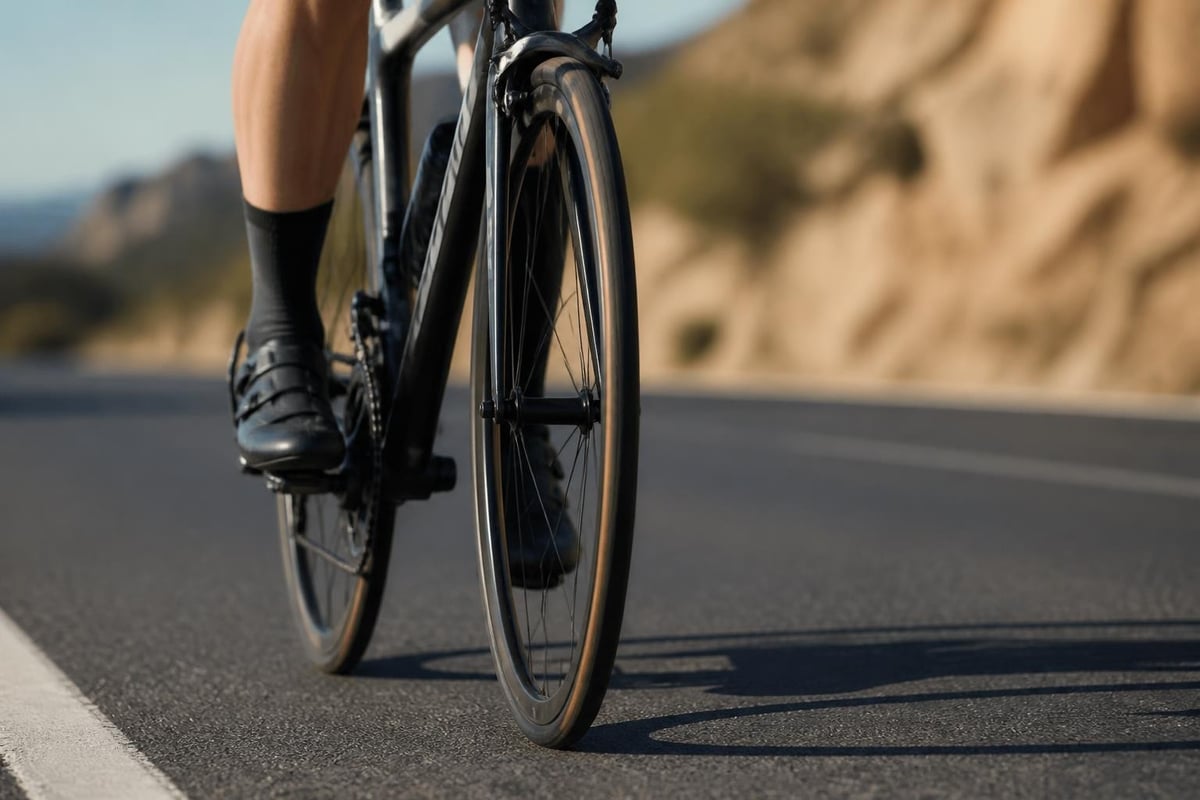
Modern understanding recognizes that optimal pressure depends on tire width, rider weight, road surface, and desired comfort. A 25mm tire might perform best at 85-95 psi for a 75kg rider, while a 28mm tire achieves lower rolling resistance at 70-80 psi. The ETRTO recommendations provide engineering guidance for safe pressure ranges across tire and rim combinations.
| Tire Width | Rider Weight 60-70kg | Rider Weight 70-80kg | Rider Weight 80-90kg |
|---|---|---|---|
| 25mm | 75-85 psi | 85-95 psi | 95-105 psi |
| 28mm | 65-75 psi | 70-80 psi | 80-90 psi |
| 30mm | 55-65 psi | 60-70 psi | 70-80 psi |
| 32mm | 50-60 psi | 55-65 psi | 65-75 psi |
Tubeless Versus Clincher Construction
The tubeless revolution continues reshaping road cycling, with conversion rates among performance-oriented riders exceeding 65% in competitive markets. Each construction method offers distinct advantages that appeal to different use cases.
Tubeless tires eliminate the inner tube, sealing directly against the rim through an airtight bead interface and liquid sealant. This construction reduces rotating weight, allows lower operating pressures without pinch-flat risk, and provides instant puncture sealing for small holes. The best road tires in tubeless configuration deliver measurably lower rolling resistance because the casing flexes without tube friction.
Practical Considerations for Each System
Tubeless advantages:
- Self-sealing capability handles thorns and small debris
- Lower minimum pressure improves comfort and control
- Reduced weight (60-90 grams per wheelset)
- Better grip through higher contact-patch deformation
Clincher advantages:
- Simpler installation requiring only tire levers
- Universal rim compatibility without tape or valves
- Easier roadside repairs with spare tubes
- Lower initial investment and learning curve
Professional teams increasingly specify tubeless for racing, citing the performance benefits and reduced mechanical risk. However, clincher tires remain relevant for training fleets, rental programs, and markets where tubeless infrastructure hasn't matured.
Tread Compounds and Durability Trade-Offs
Rubber formulation fundamentally determines how the best road tires balance grip, longevity, and rolling efficiency. Softer compounds provide superior traction but wear faster and may roll slightly slower. Harder compounds extend service life to 5,000-8,000 kilometers but sacrifice some grip, particularly in wet conditions or aggressive cornering.
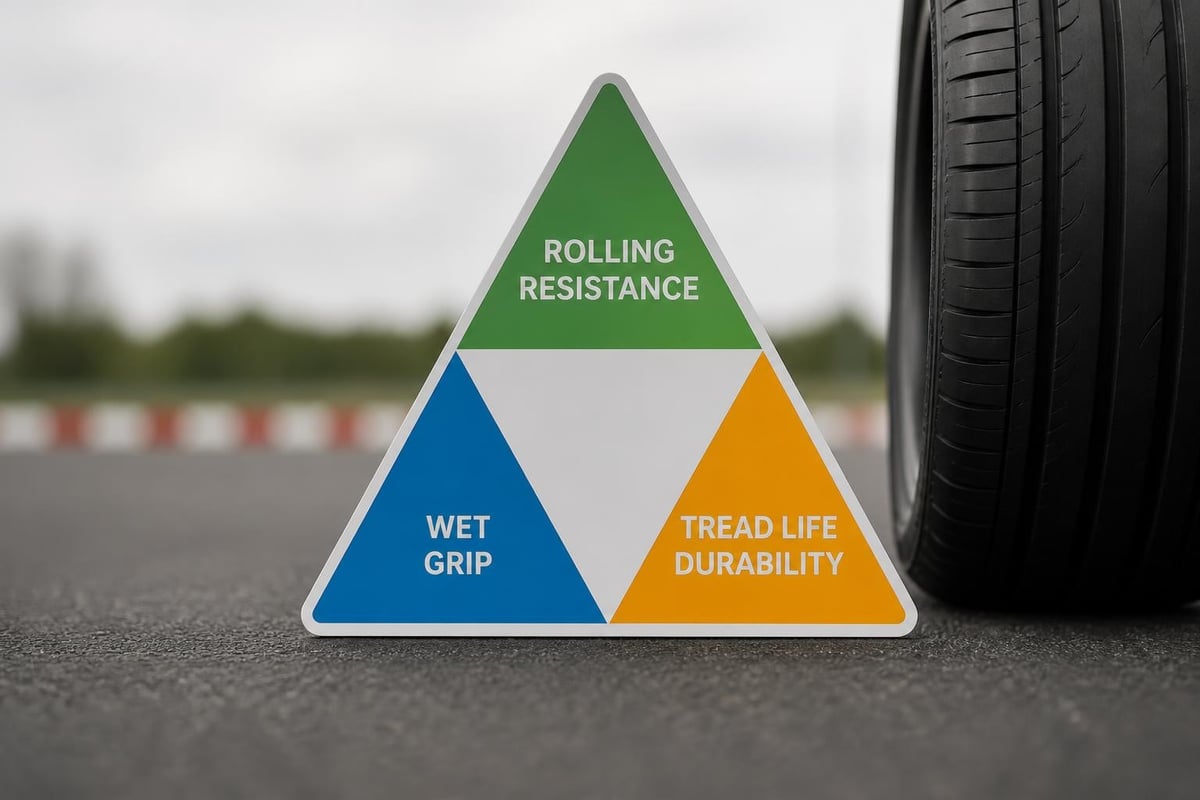
Premium manufacturers layer multiple compounds within a single tire. A harder center strip handles most straight-line contact, delivering durability and efficiency. Softer shoulder compounds activate during cornering, providing confidence-inspiring grip when leaned over. This dual-compound construction appears in most of the best road tires designed for mixed-use applications.
Tread Life Expectations by Category
| Tire Category | Typical Lifespan | Primary Use | Compound Hardness |
|---|---|---|---|
| Racing | 2,000-3,500 km | Competition | Soft (40-50 Shore A) |
| Training | 4,000-6,000 km | High mileage | Medium (50-60 Shore A) |
| All-Season | 5,000-8,000 km | Year-round | Hard (60-70 Shore A) |
| Touring | 6,000-10,000 km | Loaded riding | Very Hard (65-75 Shore A) |
Width Selection: Aerodynamics Meets Comfort
The trend toward wider road tires reflects evolving understanding of aerodynamics, comfort, and real-world rolling resistance. While 23mm tires dominated professional racing a decade ago, 25mm became standard by 2020, and 28-30mm options now appear regularly in Grand Tour competition.
BikeRadar’s comprehensive testing demonstrated that 28mm tires produce lower aerodynamic drag than 25mm options when mounted on modern wider rims, provided the tire width closely matches the external rim width. The aerodynamic sweet spot occurs when the tire measures 105-110% of the rim's external width.
Wider tires absorb road vibration more effectively, reducing fatigue on rough pavement. This comfort advantage translates into sustained power output during long rides or multi-day events. Additionally, the larger air volume provides a more forgiving ride quality that many cyclists prefer for mixed-surface riding or deteriorating road conditions.
Matching Tire Width to Riding Style
25mm width:
- Ideal for smooth pavement and competitive racing
- Lowest weight option for climbing-focused events
- Requires higher pressure (85-100 psi)
28mm width:
- Versatile choice balancing speed and comfort
- Optimal for varied road conditions
- Most popular width among the best road tires in 2026
30-32mm width:
- Maximum comfort for endurance and gravel-road crossover
- Lower pressure capability (50-70 psi)
- Growing segment for all-road and adventure applications
Puncture Protection Technologies
Flat tires disrupt training plans, competitive events, and commuting schedules. The best road tires incorporate puncture-resistant technologies that significantly reduce mechanical failures without excessive weight penalties.
Protection systems vary by manufacturer but generally fall into these categories:
Sub-tread breaker layers: Woven aramid, polyamide, or composite fabrics positioned between the tread rubber and casing that deflect penetrating objects.
Sidewall reinforcement: Additional material protecting the vulnerable sidewall area from cuts and abrasions during cornering or contact with road edges.
Bead-to-bead coverage: Comprehensive protection extending across the entire casing rather than just the central contact area, adding 40-80 grams but providing maximum security.
Sealant compatibility: Tubeless-ready construction that works with liquid sealants to automatically plug punctures up to 6mm diameter.
Testing protocols measure puncture resistance by pressing standardized objects (typically 1mm steel wire) into inflated tires under controlled force. The best road tires withstand 50-80 pounds of penetration force before puncturing, while basic models fail at 20-30 pounds.
Seasonal Considerations and Wet-Weather Performance
Road conditions vary dramatically across seasons, and tire selection should account for temperature ranges, precipitation frequency, and surface contamination. Winter cycling in northern climates demands different rubber formulations than summer riding in arid regions.
Cold-Weather Compound Flexibility
Rubber hardens as temperature drops, reducing grip and increasing rolling resistance. Premium winter-specific road tires use compounds that remain pliable below 10°C (50°F), maintaining traction on cold, wet pavement. Some manufacturers specify distinct summer and winter options within their range, though many of the best road tires use all-season compounds effective from -5°C to 40°C.
Wet-weather performance depends on multiple factors:
- Silica content in the compound improves wet grip
- Minimal tread siping helps channel water on flooded surfaces
- Soft shoulder compounds maintain cornering grip on painted lines and metal surfaces
- Appropriate pressure that allows the contact patch to conform around surface water
Casing Construction and Thread Count
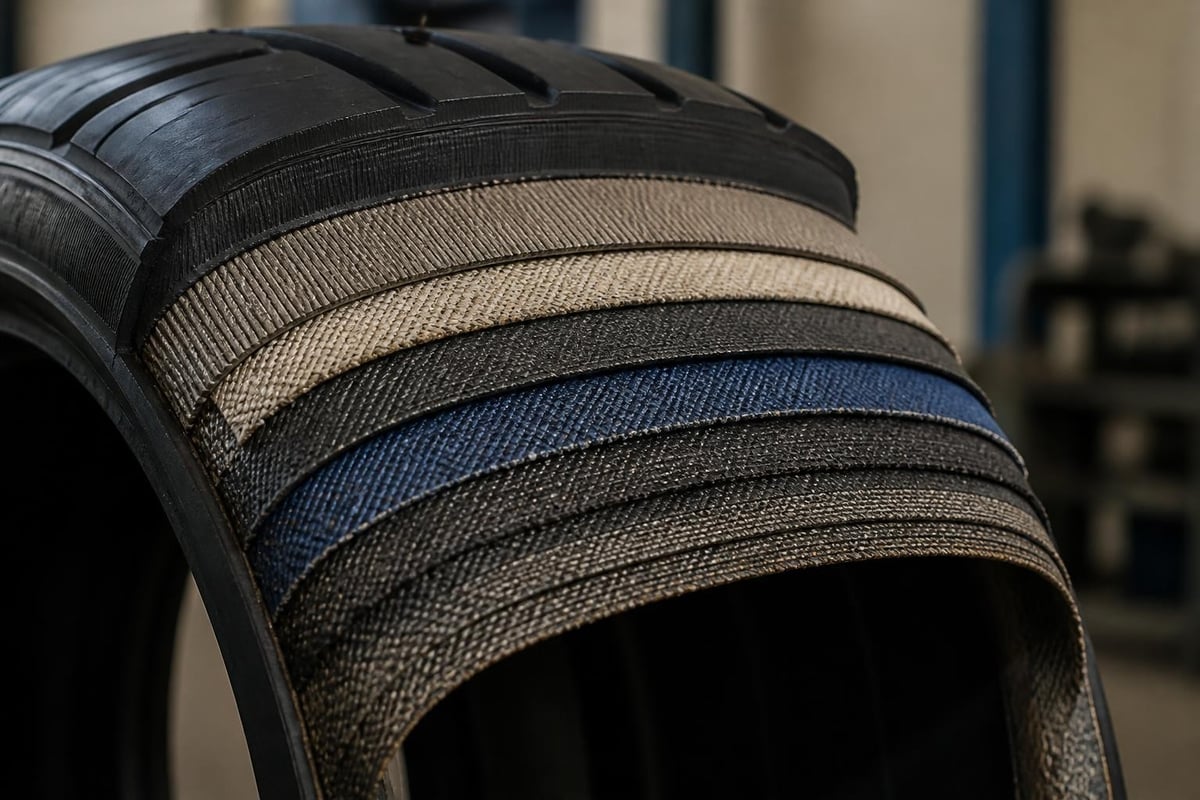
The tire casing, composed of woven textile cords embedded in rubber, provides structural integrity and influences ride quality. Thread count (threads per inch, or TPI) indicates how finely the fabric is woven. Higher TPI generally correlates with better performance characteristics.
60-120 TPI casings: Durable, economical construction suitable for training, commuting, and heavy riders. The coarser weave creates a stiffer casing that requires higher pressure and rolls slightly slower but resists cuts and impacts effectively.
180-260 TPI casings: Premium construction balancing suppleness and durability. These casings flex more easily, reducing rolling resistance and improving comfort. Most of the best road tires targeting competitive and enthusiast markets use this range.
280-320+ TPI casings: Ultra-supple racing construction delivering minimum rolling resistance and maximum ride quality. The very fine weave requires careful handling and typically shows accelerated wear, making these options best suited for competition rather than daily training.
Weight Considerations for Climbing and Acceleration
Rotating weight affects acceleration more significantly than static frame weight because it must be both accelerated linearly and spun up rotationally. The best road tires balance weight savings against durability and puncture protection.
Typical weight ranges by category:
| Category | Weight per Tire (700x25mm) | Protection Level |
|---|---|---|
| Racing | 180-220g | Minimal |
| Performance | 220-260g | Moderate |
| Training | 260-300g | Good |
| All-Season | 300-350g | Maximum |
For climbing-focused events, weight reduction delivers measurable advantages. Saving 100 grams per tire (200g total) equates to approximately 0.5-1 watt savings during sustained climbing, which accumulates meaningfully over multi-hour ascents. However, riders should evaluate whether the weight savings justify potential compromises in puncture protection and tread life.
Manufacturer Quality Standards and Certification
Road tire manufacturing involves precise quality control to ensure consistent performance and safety. Reputable manufacturers comply with international standards and conduct extensive testing before market release.
Key certifications and standards include:
- ETRTO compliance ensuring dimensional compatibility with standardized rims
- ISO 4210 bicycle safety requirements covering tire construction and performance minimums
- ECE R75 European approval for motorcycle tires (sometimes referenced for e-bike tires)
- Manufacturer-specific testing for rolling resistance, puncture resistance, and durability
The Thai tire manufacturing sector has established strong quality credentials, with facilities producing tires that meet international standards for both bicycle and automotive applications. While passenger car radial (PCR) tires differ significantly from bicycle road tires in construction and application, the manufacturing expertise, quality control processes, and compound formulation knowledge transfer across product categories.
Selecting Tires for Specific Applications
Different riding objectives require different tire priorities. Matching tire characteristics to intended use optimizes both performance and value.
Competitive Racing
Prioritize rolling resistance and weight over durability. The best road tires for racing feature supple high-TPI casings, soft grip-oriented compounds, and minimal puncture protection. Tubeless construction provides insurance against flats without the weight penalty of heavy breaker layers.
High-Mileage Training
Durability becomes paramount when accumulating 300-500 kilometers weekly. Select tires with robust puncture protection, harder-wearing compounds, and reinforced sidewalls. The slightly higher rolling resistance of training tires becomes negligible compared to the time and expense saved avoiding roadside repairs.
All-Weather Commuting
Year-round reliability demands tires that perform across temperature extremes, wet conditions, and debris-laden urban streets. Look for all-season compounds, comprehensive puncture protection, and reflective sidewall striping for visibility. Moderate width (28-30mm) handles varied surfaces while maintaining efficiency.
Endurance and Sportive Events
Long-distance events require tires that balance speed with comfort and reliability. The best road tires for endurance riding typically measure 28-30mm, feature moderate puncture protection, and use compounds that remain supple throughout day-long efforts. Tubeless setup provides peace of mind against mechanicals during remote sections.
Maintenance Practices That Extend Tire Life
Proper maintenance maximizes the service life and performance of road tires regardless of quality tier.
Pressure checks: Verify inflation at least weekly, as tires lose 1-3 psi daily through normal permeation. Underinflation accelerates sidewall fatigue and increases puncture risk, while overinflation harshens ride quality and reduces grip.
Visual inspection: Examine tires before each ride for embedded debris, cuts, or unusual wear patterns. Remove stones and glass shards before they work through the casing. Address damage promptly to prevent catastrophic failure.
Rotation strategy: Front tires wear slower than rear tires due to weight distribution. Swapping front to rear at 50% tread life equalizes wear and extends total wheelset tire life by 20-30%.
Storage conditions: Store spare tires in cool, dark locations away from ozone sources (electric motors, welding equipment). UV exposure and ozone degrade rubber compounds even when tires aren't being used.
Cleaning: Remove accumulated road grime that can embed into the tread compound and accelerate wear. Simple soap and water cleaning every few weeks maintains optimal rubber condition.
Price-to-Performance Analysis
Road tire pricing spans from $25 to $90+ per tire, reflecting differences in materials, construction, and brand positioning. Road.cc’s buyer’s guide regularly evaluates whether premium pricing delivers proportional performance gains.
Testing consistently shows that the best road tires in the $50-70 range deliver 85-95% of the performance of $80-90 flagship models. The premium segment offers marginal improvements in rolling resistance (1-2 watts), slightly better ride quality, and enhanced aesthetics. For most riders, mid-range options provide excellent value.
Budget tires below $35 show more significant performance compromises, typically rolling 4-8 watts slower and wearing 30-50% faster than premium options. However, they serve perfectly well for indoor training, backup wheels, or casual recreational riding where maximum performance isn't required.
Choosing the best road tires involves balancing rolling resistance, durability, grip, and comfort based on your specific riding priorities and conditions. The right tire selection enhances every ride while reducing mechanical disruptions and maintenance frequency. While this guide focuses on bicycle road tires, the principles of tire engineering, compound formulation, and quality manufacturing apply across all tire categories. OTR TIRE THAI brings decades of tire manufacturing expertise to international markets, delivering premium quality across agricultural, industrial, truck, and specialty tire segments. Contact OTR TIRE THAI today to discuss how our engineering capabilities and wholesale pricing can serve your tire distribution needs.
