
Blog
USA Made Tires: Manufacturing, Quality & Market Insights
Oct
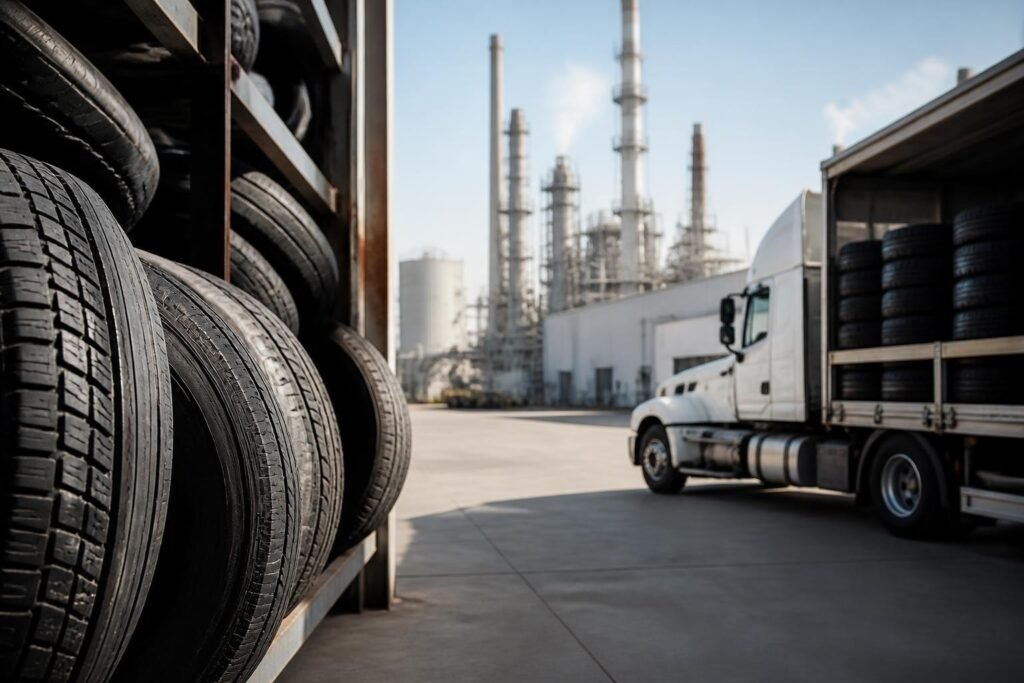
The conversation around usa made tires has intensified in recent years as supply chain disruptions, trade policies, and consumer preferences reshape the tire industry. While the United States remains a significant player in tire manufacturing, the reality is more nuanced than simple country-of-origin labeling suggests. Distributors, fleet managers, and procurement professionals need to understand the current state of domestic tire production, the quality benchmarks that define American-made products, and how global sourcing strategies complement or compete with domestic capacity. This article examines the manufacturing landscape, regulatory environment, and strategic considerations surrounding usa made tires in 2026.
The Current State of USA Tire Manufacturing
The U.S. tire manufacturing sector operates a network of production facilities across multiple states, yet domestic production represents only a portion of total consumption. According to the U.S. Tire Manufacturers Association’s 2024 forecast, domestic shipments continue to grow, but the picture is more complex than raw tonnage suggests.
Major domestic manufacturers maintain facilities in:
- South Carolina (passenger and light truck radials)
- Tennessee (commercial truck and industrial tires)
- Alabama (passenger car and SUV tires)
- Mississippi (off-the-road and specialty applications)
- Oklahoma (agricultural and specialty segments)
These plants produce millions of tires annually, yet imported tires account for a substantial share of the market. The NIST Annual Report on the U.S. Manufacturing Economy highlights that while the rubber product manufacturing sector maintains competitive advantages in automation and process innovation, cost pressures continue to favor offshore production for price-sensitive segments.
Production Capacity and Specialization
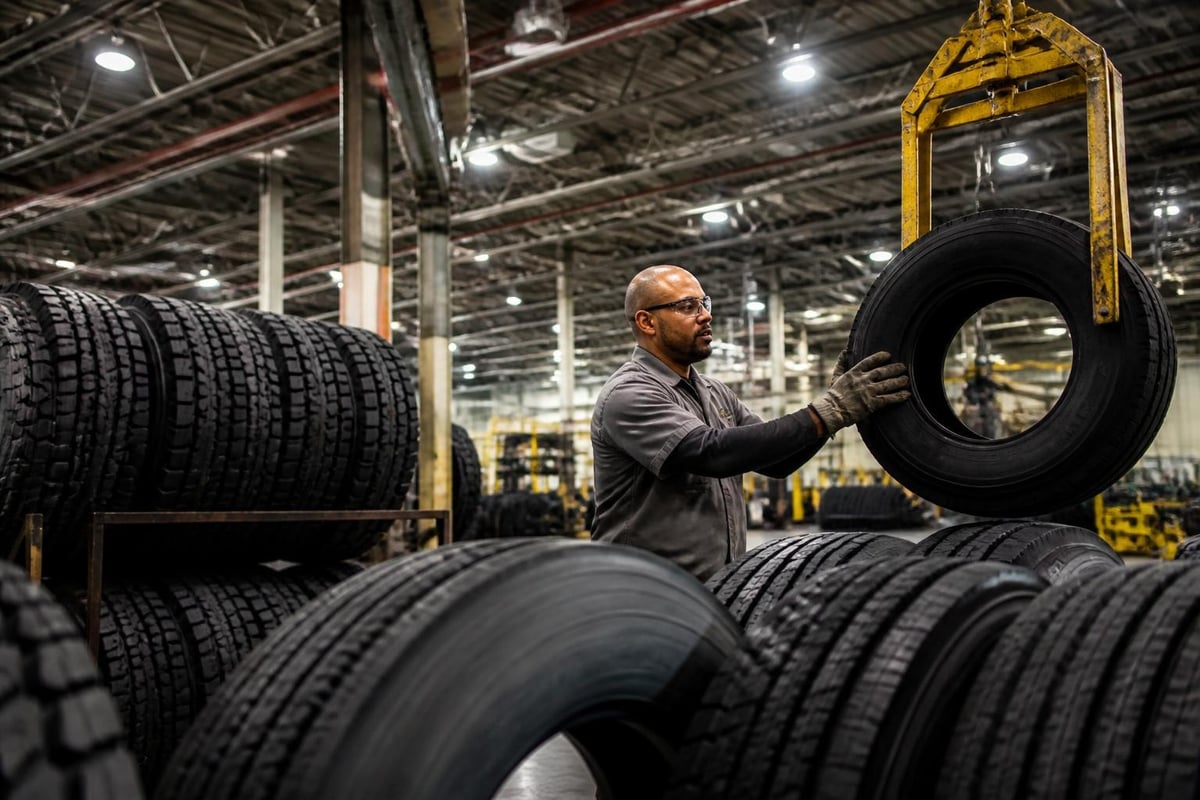
Domestic tire plants increasingly focus on specialized, high-value segments rather than competing on volume in commodity categories. Commercial truck tires, particularly those meeting EPA SmartWay certification, represent a growing share of domestic output. Plants leverage proximity to major freight corridors and logistics hubs to serve fleet customers who prioritize rapid replacement cycles and just-in-time inventory.
| Tire Category | Domestic Share | Primary Advantage | Import Pressure |
|---|---|---|---|
| Passenger Car Radials | 40-45% | Brand loyalty, R&D | High |
| Light Truck/SUV | 50-55% | Performance compounds | Medium-High |
| Commercial TBR | 35-40% | Fleet partnerships | Medium |
| OTR/Specialty | 25-30% | Custom applications | Low-Medium |
The data reflects a strategic reality: usa made tires compete most effectively when quality, service, and technical support outweigh pure cost considerations.
Quality Standards and Certification Requirements
Every tire sold in the United States must meet Department of Transportation (DOT) standards, regardless of origin. The Federal Motor Vehicle Safety Standards (FMVSS) 139 for passenger cars and FMVSS 119 for commercial vehicles establish minimum performance thresholds for treadwear, traction, and temperature resistance.
DOT certification requires:
- Registration with the National Highway Traffic Safety Administration
- Uniform Tire Quality Grading (UTQG) compliance for passenger tires
- Load and speed rating verification through standardized testing
- Plant identification codes embedded in the tire sidewall
Domestic manufacturers benefit from proximity to testing facilities and regulatory bodies, enabling faster iteration cycles when standards evolve. However, as Consumer Reports’ investigation demonstrates, country of origin does not reliably predict performance. Tires manufactured in Thailand, Indonesia, or other Asian facilities often match or exceed the quality of usa made tires when tested under identical protocols.
Environmental and Health Compliance
The EPA’s proposed NESHAP amendments affecting rubber tire manufacturing impose stringent emissions controls on domestic plants. These regulations drive capital investment in pollution control technology but also raise production costs. The economic analysis accompanying the amendments projects modest cost increases per tire, yet the compliance burden creates a barrier that offshore facilities-shipping finished goods rather than manufacturing domestically-avoid entirely.
End-of-life tire management also differs significantly by production location. The EPA’s tire crumb research addresses concerns about recycled tire materials, and domestic manufacturers increasingly participate in closed-loop recycling programs that recover materials from scrap tires for new production. This circular approach aligns with sustainability goals but adds complexity and cost that pure import models sidestep.
Strategic Sourcing: Balancing Domestic and International Supply
For distributors and fleet operators, the decision to specify usa made tires involves more than patriotic preference. Supply chain resilience, lead times, technical support, and total cost of ownership all factor into sourcing strategies.
Recent academic research on reshoring and supply-chain resilience highlights that geographic diversification reduces risk exposure to regional disruptions. A distributor relying exclusively on domestic production faces capacity constraints during demand surges, while one sourcing globally can pivot between suppliers based on availability and price.
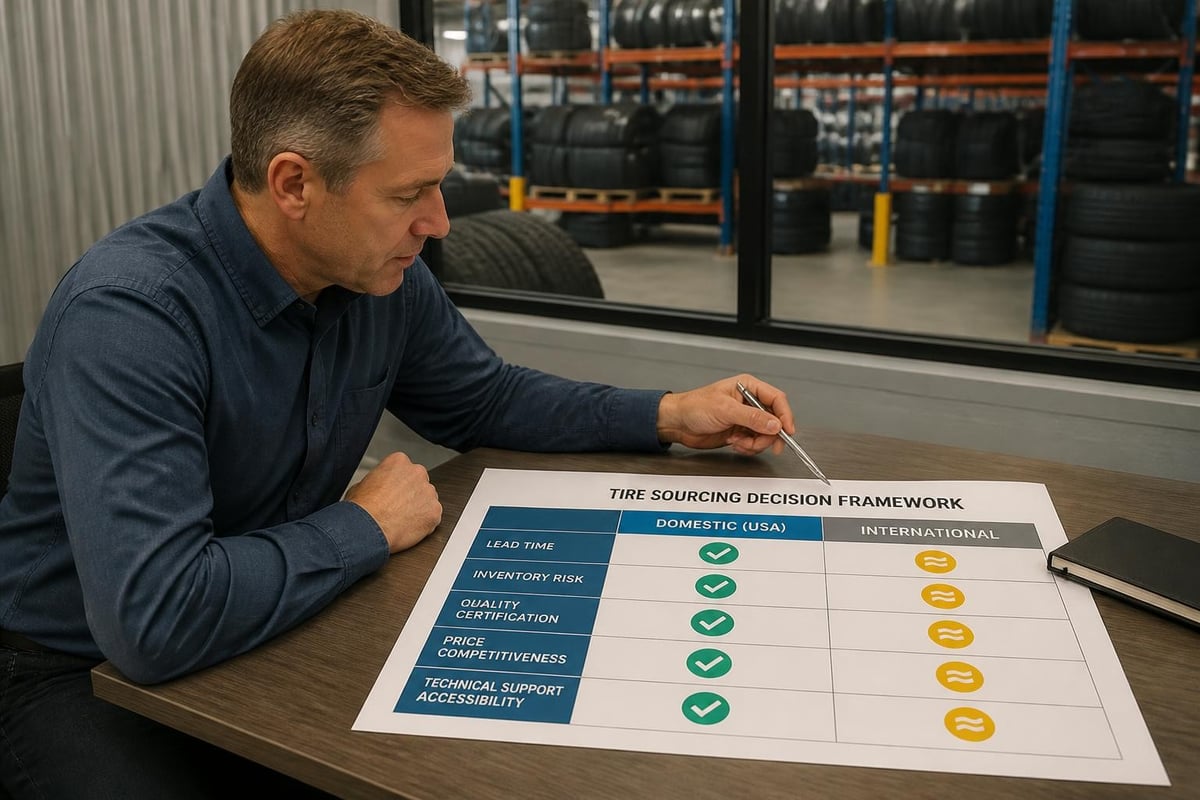
Key considerations for multi-source strategies include:
- Lead time variability: Domestic plants ship within days; overseas containers require 30-45 days ocean transit plus customs clearance
- Minimum order quantities: USA made tires often available in smaller lot sizes; international orders may require full container loads
- Currency fluctuation: Imported tires expose buyers to exchange rate risk over long procurement cycles
- Warranty and claims: Domestic manufacturers provide local claims processing; international suppliers require third-party administration
A balanced portfolio typically includes domestic suppliers for fast-moving SKUs with unpredictable demand and international partners for high-volume, price-sensitive segments with stable consumption patterns.
The Role of International Manufacturing Partners
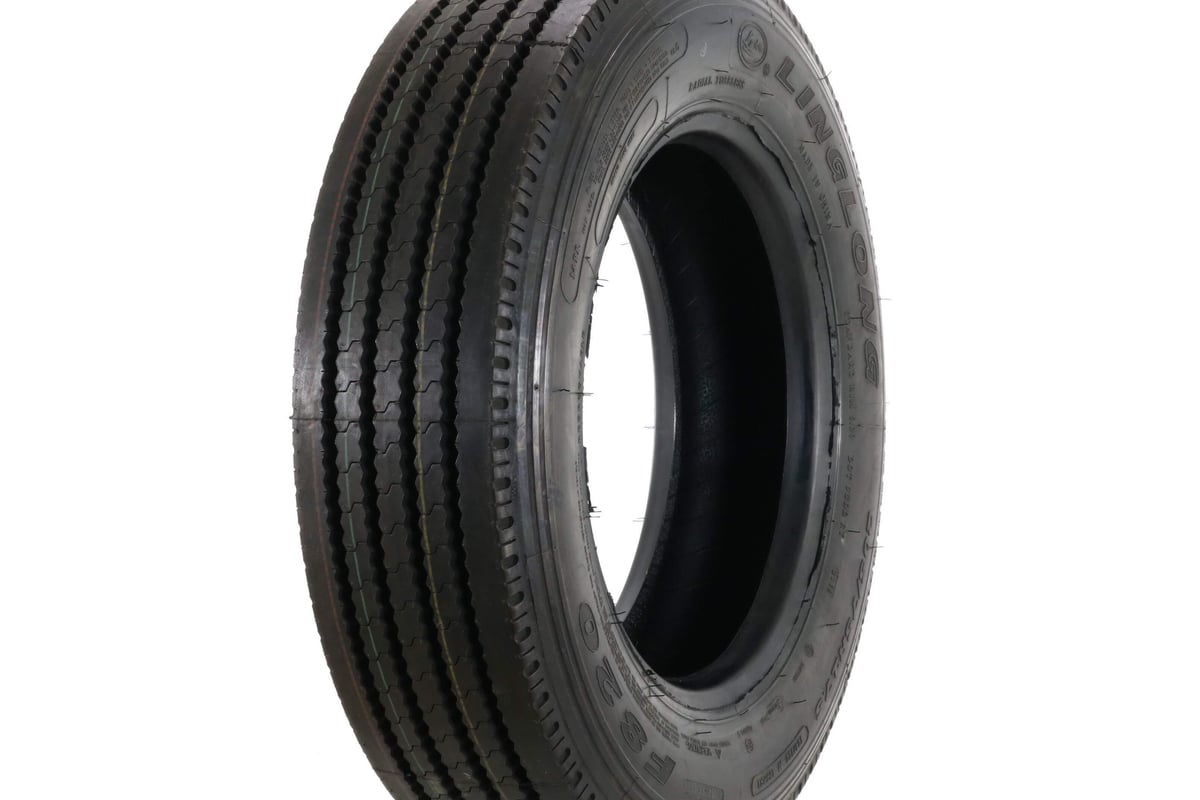
Tire distributors increasingly recognize that manufacturing location matters less than production standards and quality systems. Thailand-based manufacturers, for instance, operate facilities certified to ISO 9001, ISO 14001, and IATF 16949 standards-the same frameworks governing usa made tires. These plants serve global markets, including original equipment manufacturers, and invest in R&D comparable to multinational tire brands.
For commercial truck applications, distributors can source from manufacturers specializing in TBR tires that meet DOT, ECE, and INMETRO certifications simultaneously, enabling inventory fungibility across North American, European, and Latin American markets. This global certification approach would be prohibitively expensive for a plant focused solely on the U.S. market, yet international facilities achieve it through economies of scale.
Market Dynamics and Pricing Pressures
The competitive landscape for usa made tires reflects broader trends in American manufacturing. Labor costs, regulatory compliance, and legacy pension obligations create a structural cost disadvantage relative to facilities in countries with lower wage scales and less stringent environmental rules.
Typical cost structure comparison (per tire):
| Cost Component | USA Manufacturing | International Manufacturing |
|---|---|---|
| Raw Materials | $22-28 | $20-25 |
| Labor | $12-18 | $4-7 |
| Energy | $3-5 | $2-4 |
| Compliance/Environmental | $4-6 | $1-2 |
| Logistics (to U.S. market) | $2-3 | $6-9 |
| Total Landed Cost | $43-60 | $33-47 |
These figures are illustrative and vary by tire size and type, but the pattern is consistent: domestic production pays a premium in labor and compliance that offsets logistics savings. The gap narrows for bulky, low-density products like agricultural tires or OTR tires, where ocean freight costs escalate, but for passenger car tires and light truck applications, the international cost advantage remains substantial.
Consumer Perception and Brand Positioning
Marketing usa made tires as premium products succeeds in specific market segments. Fleet buyers with "Buy American" procurement mandates, patriotic consumers, and applications requiring rapid technical support justify price premiums. However, the majority of tire purchases prioritize value, and blind testing consistently shows that trained drivers cannot reliably distinguish domestic from imported tires based on performance alone.
Brand positioning strategies therefore emphasize attributes beyond origin: warranty coverage, road hazard protection, fuel efficiency ratings, and dealer network density. Domestic manufacturers leverage these elements to justify price differentials, while international suppliers compete on certifications, test data, and total cost of ownership calculations.
Technical Innovation and R&D Investment
One area where usa made tires retain a competitive edge is in advanced compound development and smart tire technology. Domestic plants with adjacent R&D centers can rapidly prototype new tread formulations, test them under controlled conditions, and iterate based on real-world fleet feedback. This cycle time advantage matters most in emerging segments like electric vehicle tires, which require low rolling resistance, noise optimization, and load capacity for battery weight.
Recent innovations from U.S. facilities include:
- Silica-enhanced compounds reducing rolling resistance by 12-15% for EPA SmartWay compliance
- Sensor-embedded tires transmitting pressure and temperature data for predictive maintenance
- Retreading-optimized casing designs extending service life for commercial truck applications
- Bio-based oils replacing petroleum derivatives in tread compounds for sustainability claims
These innovations eventually diffuse to global production, but early adopters can access them through domestic suppliers first. For fleets piloting new technologies or seeking competitive differentiation, this lead time justifies premium pricing.

Regulatory Trends Affecting Domestic Production
Environmental regulations continue to reshape the economics of usa made tires. California's tire efficiency standards, more stringent than federal requirements, drive national product development because manufacturers cannot economically produce state-specific variants. As other states adopt California's framework, compliance costs increase uniformly.
The Occupational Safety and Health Administration (OSHA) also imposes workplace safety standards that raise operating costs relative to less regulated jurisdictions. Automated material handling, closed-loop chemical systems, and enhanced ventilation protect workers but require capital investment that offshore competitors can defer.
Conversely, tariff policies can shift competitive dynamics overnight. The Section 301 tariffs on Chinese tires, in effect since 2018 and periodically adjusted, initially redirected sourcing to Southeast Asian suppliers but did not significantly boost domestic production. Manufacturers optimized supply chains around tariff structures rather than reshoring capacity, illustrating that trade policy alone cannot overcome structural cost disadvantages without complementary investments in productivity and automation.
Distribution Channels and Aftermarket Strategies
Domestic tire plants typically partner with established dealer networks and wholesale distributors who value inventory availability and technical support. These relationships create stickiness that insulates usa made tires from pure price competition. A distributor carrying a domestic brand benefits from rapid replenishment, co-op advertising funds, and factory-trained sales support-advantages that offshore suppliers struggle to replicate without substantial local infrastructure investment.
Distribution channel preferences by customer segment:
- National fleets: Multi-source globally, negotiate annual contracts, prioritize total cost of ownership
- Regional fleets: Prefer domestic suppliers for service availability, accept moderate price premiums
- Independent dealers: Source opportunistically, balance price and delivery speed, willing to mix brands
- Retail chains: Emphasize private label and value tiers, predominantly import-focused
Understanding these preferences helps manufacturers and distributors align product positioning with channel expectations. For comprehensive tire product offerings, distributors can evaluate options across multiple tire categories and certifications.
The Future of USA Tire Manufacturing
Looking ahead, the trajectory of usa made tires depends on automation, sustainability mandates, and supply chain reconfiguration. Fully automated plants reduce labor cost differentials, and domestic facilities are investing heavily in robotics for material handling, building, and curing processes. These investments require scale to justify, pushing manufacturers toward fewer, larger plants serving continental markets.
Sustainability pressures also favor domestic production in some scenarios. Carbon border adjustments, if implemented, would tax imported goods based on embedded emissions, narrowing the cost gap for domestically produced tires with lower transportation footprints. Consumer demand for recycled content and circular economy models similarly advantages local production integrated with scrap tire collection and processing infrastructure.
However, these trends unfold slowly, and the tire industry's global integration makes sudden reshoring unlikely. Instead, expect a tiered market where usa made tires occupy premium and specialty niches while high-volume segments remain import-dominated.
Practical Guidance for Distributors and Procurement Teams
For businesses evaluating usa made tires versus international alternatives, a structured assessment framework yields better outcomes than blanket policies. Start by categorizing your product mix into strategic tiers based on volume, margin, and customer sensitivity.
Tier 1 (Strategic): High-visibility segments where brand reputation, technical support, and supply security justify premiums. Consider domestic suppliers or international partners with local warehousing and technical staff.
Tier 2 (Core): Moderate-volume SKUs with stable demand and competitive pricing pressure. Multi-source between domestic and international suppliers, using lead time and cost to determine allocation.
Tier 3 (Tactical): Price-sensitive, high-volume commodity segments where customers prioritize cost above all else. International sourcing with container-level orders and longer lead times optimizes landed cost.
This tiered approach balances risk, cost, and service level without forcing binary domestic/import decisions. It also positions distributors to shift allocation dynamically as market conditions evolve.
Building Supplier Relationships
Whether sourcing usa made tires or international alternatives, distributor success depends on supplier relationships beyond transactional purchasing. Request factory audits, review quality documentation, and establish clear communication protocols for technical issues. The best international suppliers operate with transparency comparable to domestic manufacturers, providing traceability, test reports, and responsive engineering support.
For those exploring global partnerships, consulting comprehensive tire catalogs helps identify manufacturers with the breadth and certification depth to serve diverse market needs. The goal is not to replace domestic suppliers but to build a resilient, multi-source portfolio that serves customers effectively across economic cycles.
Understanding the landscape of usa made tires requires looking beyond simplistic domestic-versus-import frameworks to evaluate manufacturing capabilities, quality systems, and strategic fit for specific market segments. Whether you prioritize domestic production for its service advantages or global sourcing for competitive pricing, the key is matching supply chain strategy to customer needs. OTR TIRE THAI delivers internationally certified tires across agricultural, commercial truck, OTR, and specialty categories, giving distributors the quality and breadth to compete effectively in any market. Explore our complete product range to find the right solutions for your distribution business.
