
Blog
Wholesale Tire Distributors: Your Complete Guide (2026)
Sep
The wholesale tire distribution sector forms the critical link between tire manufacturers and retail dealers, moving billions of dollars in inventory across global supply chains every year. Understanding how wholesale tire distributors operate, source inventory, manage relationships, and deliver value to both manufacturers and retailers has become essential for anyone in the tire industry. In 2026, this channel continues to evolve with consolidation, technology integration, and shifting customer expectations reshaping the competitive landscape.
The Role of Wholesale Tire Distributors in the Supply Chain
Wholesale tire distributors function as the middle layer in a three-tier system that moves tires from factory to end consumer. Manufacturers produce tires at scale in facilities around the world, but they rarely sell directly to the thousands of independent tire dealers, service centers, and automotive shops that install tires on vehicles.
Instead, wholesale distributors purchase inventory in bulk from manufacturers, warehouse it regionally, and resell it to retail dealers in smaller quantities. This model provides several critical functions:
- Geographic coverage: Distributors maintain warehouse networks that position inventory closer to dealers than factory locations permit
- Inventory risk: Wholesalers absorb the financial burden of stocking slow-moving sizes and SKUs
- Credit extension: Many distributors offer net-30 or net-60 payment terms to dealers
- Delivery logistics: Next-day or same-day delivery to retail customers within their service territory
- Technical support: Product training, warranty processing, and merchandising assistance
According to the U.S. Census Bureau’s NAICS 423130 profile, tire and tube merchant wholesalers represent a distinct industry classification with specific economic characteristics that differentiate them from both manufacturers and retailers.
Primary Distribution Models
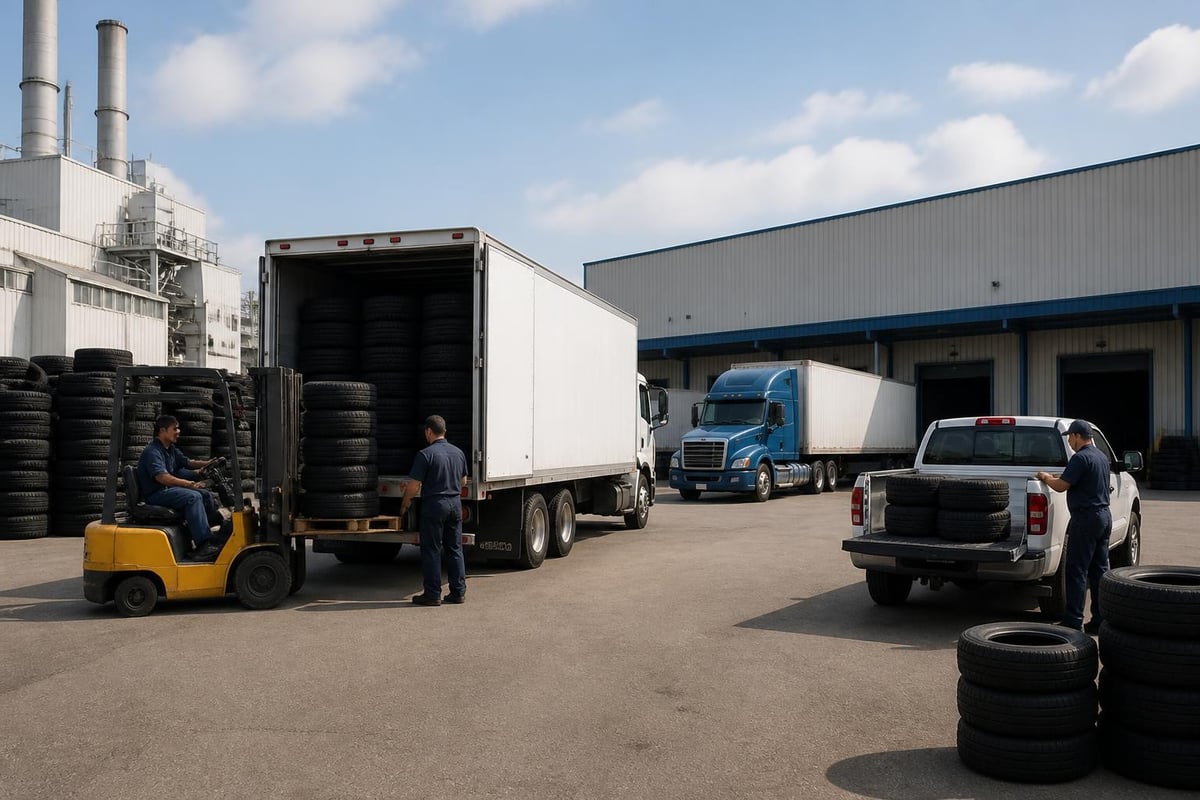
The wholesale tire industry operates through several distinct distribution models, each serving different market segments and customer needs.
National multi-brand distributors carry extensive inventory across all tire categories from multiple manufacturers. These large players maintain hundreds of warehouses and serve tens of thousands of dealer accounts. They negotiate volume-based pricing from manufacturers and compete on breadth of selection, delivery speed, and dealer support services.
Regional specialists focus on specific geographic territories, often with deeper penetration in their markets than national competitors. These distributors build strong personal relationships with local dealers and may offer more flexible credit terms or faster emergency delivery.
Manufacturer-owned distribution networks are operated directly by tire companies to control their brand presence and dealer relationships. These captive distributors typically carry only their parent company's products plus selected complementary brands.
| Distribution Model | Geographic Scope | Brand Range | Primary Advantage |
|---|---|---|---|
| National Multi-Brand | Continental U.S. | 15-25 brands | Complete selection |
| Regional Specialist | 5-10 state radius | 8-15 brands | Local relationships |
| Manufacturer-Owned | Variable by brand | 1-3 brands | Direct factory support |
Sourcing Strategies for Wholesale Tire Distributors
Successful wholesale tire distributors build their business on strong manufacturer relationships and strategic sourcing decisions. The ability to secure favorable pricing, payment terms, and product allocation directly impacts profitability and competitive positioning.
Direct Manufacturer Relationships
Most distributors purchase the majority of their inventory directly from tire manufacturers through formal distributor agreements. These contracts typically include:
- Territory definitions specifying exclusive or non-exclusive geographic rights
- Volume commitments requiring minimum annual purchase levels
- Pricing schedules with tiered discounts based on volume
- Marketing support including co-op advertising funds and dealer incentive programs
- Product allocation guaranteeing access to high-demand sizes during shortage periods
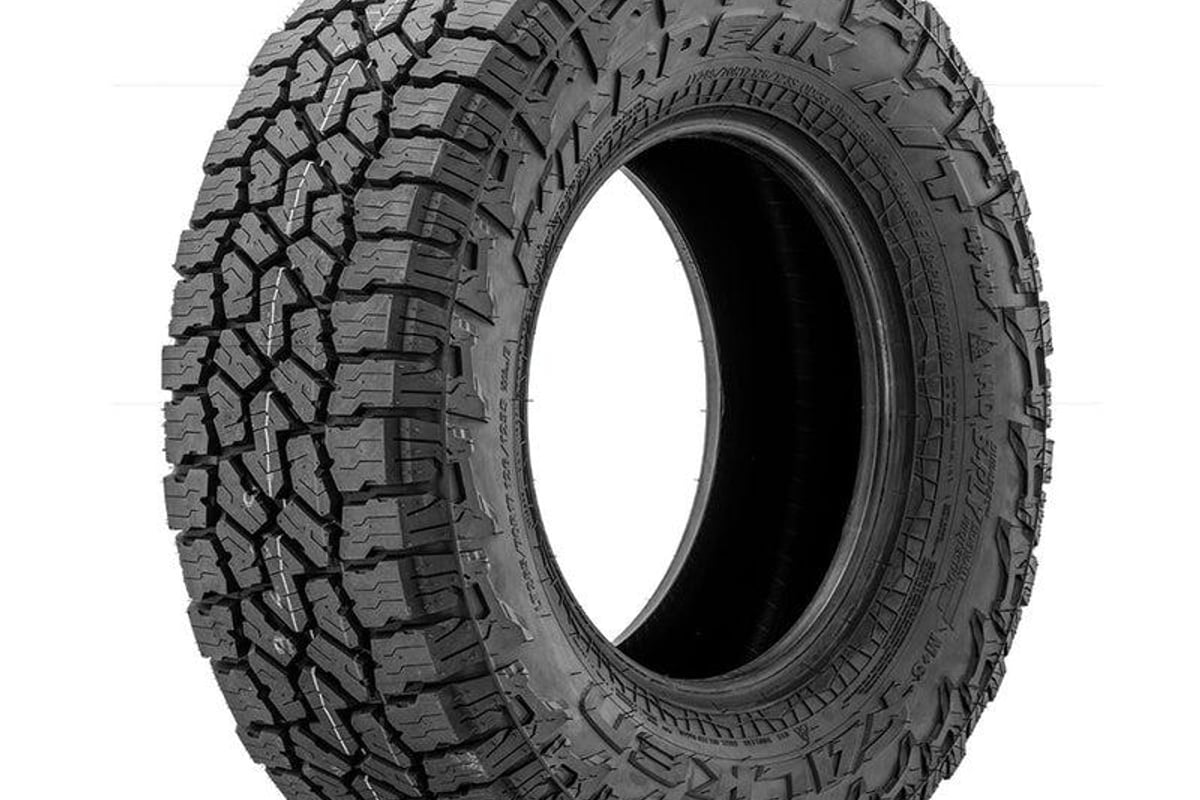
Thailand has emerged as a significant manufacturing hub for wholesale tire distributors seeking quality products at competitive wholesale prices. Many manufacturers in the region, such as producers of semi truck tires from Thailand, offer comprehensive product lines with international certifications that meet DOT, ECE, and other regulatory standards required for global distribution.
Distributors evaluating new manufacturing partners typically assess several key criteria:
- Quality certifications including ISO, DOT, ECE, and other market-specific approvals
- Production capacity to ensure consistent supply during peak demand periods
- Product breadth across multiple categories to consolidate sourcing
- Container pricing and minimum order quantities for international shipments
- Payment terms and letter of credit requirements
- Warranty support and claim processing procedures
Private Label and Import Programs
Many wholesale tire distributors supplement branded inventory with private-label programs that offer higher margins and exclusive positioning. These programs involve contracting with manufacturers to produce tires under the distributor's own brand names.
Private label advantages for distributors include:
- Margin improvement of 8-15% compared to branded equivalents
- Protection from price competition on identical SKUs
- Exclusive dealer relationships not available to competitors
- Flexibility to specify compounds, patterns, and quality levels
The import business requires different operational capabilities than domestic branded distribution. Distributors must manage ocean freight logistics, customs clearance, currency fluctuations, and longer lead times. However, the margin opportunity and product differentiation often justify these complexities.
Inventory Management and Working Capital
Inventory represents the largest asset and biggest financial risk for wholesale tire distributors. A mid-sized regional distributor might carry $15-30 million in tire inventory across 3,000-5,000 SKUs at any given time.
Stocking Depth and Breadth Decisions
Distributors constantly balance two competing objectives: having enough inventory to meet dealer demand immediately while minimizing capital tied up in slow-moving stock.
Stocking breadth refers to the total number of unique SKUs carried. Broader selection attracts more dealers but increases inventory carrying costs. Many distributors apply an 80/20 rule, keeping deep stock on fast-moving sizes while stocking minimally or relying on manufacturer drop-ships for specialty items.
Stocking depth determines how many units of each SKU to warehouse. Deep inventory prevents stock-outs on popular items but risks obsolescence if demand shifts. Advanced distributors use data analytics to optimize stock levels by location based on historical sales patterns and seasonal trends.
Seasonal planning presents particular challenges. Winter tire demand spikes in October-November in northern markets, requiring distributors to build inventory through summer months. This seasonal bulge can double working capital requirements and strains credit lines.
- Stock winter inventory June-August when factories offer early-buy discounts
- Begin shipping to dealers September-October before peak demand
- Liquidate remaining winter stock January-March to free capital
- Rebuild all-season and summer inventory March-June
Warehouse Network Design
Strategic warehouse placement directly impacts delivery speed, freight costs, and service levels. National distributors operate hub-and-spoke networks with large regional distribution centers supplemented by smaller satellite warehouses.

Modern tire warehouses incorporate specialized handling equipment including tire racking systems, forklift operations, and automated inventory tracking. Efficient facilities can turn inventory 6-8 times annually, while poorly managed operations may turn only 3-4 times, tying up excessive capital.
Pricing Strategies and Margin Management
Wholesale tire distributors typically operate on gross margins of 18-28% depending on product category, competitive intensity, and value-added services. Understanding pricing dynamics across the value chain helps distributors optimize their position.
Manufacturer Cost Structure
Tire manufacturers incur substantial fixed costs in plant operations, raw materials, and technology development. Their pricing to distributors reflects:
- Raw material costs (rubber, carbon black, steel, petroleum-based synthetics)
- Manufacturing overhead and labor
- Research and development amortization
- Brand marketing and advertising investments
- Distribution and logistics to deliver to wholesale customers
According to industry analysis from Modern Tire Dealer, manufacturer pricing to distributors has increased 15-22% across most categories since 2021, driven by raw material inflation and supply chain disruptions.
Distributor Markup and Competitive Pricing
Wholesale tire distributors add their margin to cover operating expenses and generate profit:
| Expense Category | % of Revenue |
|---|---|
| Warehouse & Facilities | 4-6% |
| Delivery Fleet & Logistics | 3-5% |
| Sales & Customer Service | 6-9% |
| Administrative & Technology | 2-4% |
| Financing & Bad Debt | 1-2% |
| Total Operating Expense | 16-26% |
This leaves net profit margins of 2-5% for most distributors before tax. High-volume national distributors may operate on thinner margins (1.5-3%) offset by scale efficiencies, while regional specialists with premium service may achieve 4-6% net margins.
Competitive dynamics vary by market. In dense urban areas with multiple distributors competing for dealer business, pricing pressure remains intense. Rural markets with fewer competitors may support higher margins but generate lower sales volume per territory.
Distribution Channels and Customer Segmentation
Wholesale tire distributors serve diverse customer types with different buying behaviors, service expectations, and profitability profiles.
Independent Tire Dealers
Traditional independent tire dealers represent the core customer base for most distributors. These single-location or small-chain retailers purchase tires for installation on customer vehicles along with automotive service work.
Characteristics of independent dealer customers:
- Purchase 50-500 tires monthly depending on market size
- Value next-day delivery and fill-rate performance
- Require credit terms (typically net-30)
- Need technical support on product selection and applications
- Expect warranty processing and claim assistance
Distributors differentiate their service to independent dealers through delivery frequency, emergency stock availability, dealer training programs, and point-of-sale merchandising support. Building loyalty in this segment requires consistent relationship management and problem-solving.
National Retail Chains
Large tire retail chains including Discount Tire, Tire Kingdom, and similar multi-state operators purchase through different channels. Many negotiate direct with manufacturers for their highest-volume SKUs while relying on distributors for slower-moving sizes, regional brands, and fill-in inventory.
Chain retailers demand:
- Consistent national pricing across all markets
- Dedicated account management and reporting
- Integration with their inventory management systems
- Vendor-managed inventory programs in some cases
- Category performance analytics and recommendations
Commercial and Fleet Accounts
Some wholesale tire distributors maintain dedicated commercial sales teams serving fleet operators, municipalities, construction companies, and other end users directly. This channel bypasses the retail dealer layer but requires different capabilities including on-site service, contract negotiations, and billing systems.
Commercial customers purchasing directly from distributors typically buy in higher volumes (500+ tires annually) and focus heavily on total cost of ownership rather than individual tire price. Delivery logistics, invoicing accuracy, and emergency availability often matter more than small price differences.
Technology and Digital Transformation
The wholesale tire distribution industry has historically lagged other sectors in technology adoption, but digital transformation accelerated dramatically after 2020. Modern distributors now deploy sophisticated systems across their operations.
Enterprise Resource Planning (ERP)
Integrated ERP platforms connect purchasing, inventory management, warehousing, sales, delivery, and accounting into unified systems. Leading distributors use these platforms to:
- Automate reorder points based on sales velocity and lead times
- Track inventory location down to specific warehouse bins
- Optimize delivery routing and vehicle loading
- Generate customer-specific pricing and contract compliance
- Produce real-time financial reporting and analytics
Implementation of comprehensive ERP systems requires significant investment ($500K to $5M+ depending on company size) but delivers operational efficiencies that improve margins and customer service.
B2B E-Commerce Portals
Dealer-facing online ordering systems have become table stakes for competitive distributors. These portals allow retail customers to:
- Check real-time inventory availability across warehouse locations
- View customer-specific pricing and payment terms
- Place orders 24/7 outside business hours
- Track order status and delivery schedules
- Access invoices and account history
Sophisticated portals integrate with dealers' own point-of-sale systems, enabling automated reordering based on retail sales data. This level of integration strengthens distributor-dealer relationships and increases wallet share.
Data Analytics and Business Intelligence
Progressive wholesale tire distributors leverage sales data to drive strategic decisions:
- Demand forecasting using historical patterns, weather data, and economic indicators
- SKU rationalization identifying underperforming products to discontinue
- Pricing optimization finding opportunities to improve margin without sacrificing volume
- Customer segmentation targeting high-value accounts for retention programs
- Supplier performance tracking fill rates, quality issues, and delivery consistency
Access to industry benchmarking data, such as the comprehensive statistics available in Modern Tire Dealer’s 2025 Facts Issue, helps distributors compare their performance against industry averages and identify improvement opportunities.
Industry Consolidation and Market Dynamics
The wholesale tire distribution landscape has undergone significant consolidation over the past two decades, reshaping competitive dynamics and market structure.
Major Consolidation Trends
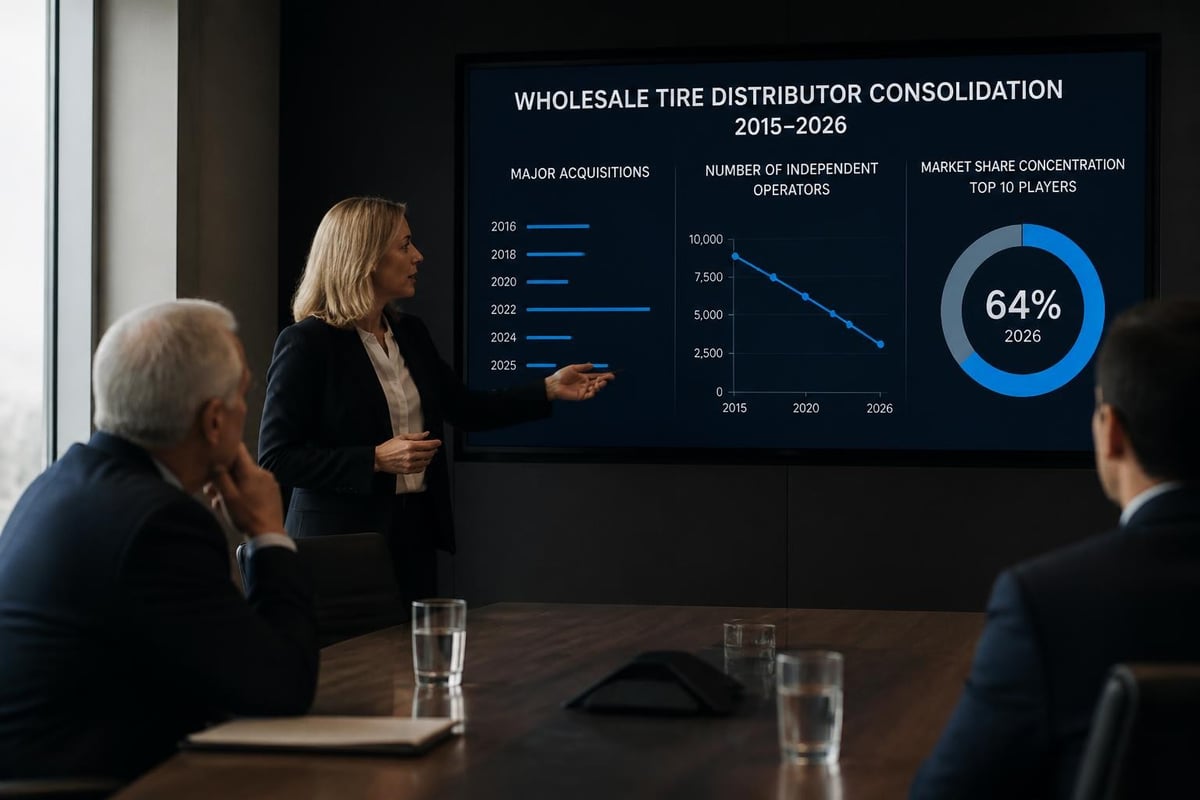
Industry concentration has increased as larger distributors acquire regional competitors and independent operations. This consolidation wave reflects several drivers:
Capital intensity: Modern distribution requires substantial investment in warehouses, delivery fleets, technology systems, and working capital that favors larger players with stronger balance sheets.
Margin pressure: Manufacturer price increases and retail pricing resistance squeeze distributor margins, making scale economies more critical for profitability.
Succession challenges: Many family-owned distributors face ownership transitions as founders retire without family members willing to continue the business.
Financial analysis from KPMG’s aftermarket warehouse distributors market overview indicates that private equity investors see value creation opportunities through buy-and-build strategies that consolidate fragmented regional markets.
Impact on Manufacturers and Dealers
Distributor consolidation creates both opportunities and challenges across the supply chain.
For tire manufacturers, working with fewer, larger distributors:
- Simplifies account management and reduces sales costs
- Increases negotiating leverage for large distributors on pricing
- Concentrates channel risk if a major distributor exits or fails
- May reduce geographic coverage in smaller markets
For retail dealers, distributor consolidation:
- Can improve service consistency across wider territories
- May reduce local competition among distributors
- Creates dependency on fewer supplier relationships
- Sometimes eliminates preferred regional partners through acquisition
Emerging Competition from Direct Models
Some manufacturers and retailers experiment with models that bypass traditional wholesale distribution entirely. Direct-to-consumer tire sales through e-commerce, manufacturer-owned retail stores, and installer network programs all challenge the conventional three-tier structure.
However, the wholesale tire distributor model has proven resilient because it efficiently solves real logistical and financial challenges. Maintaining inventory in thousands of SKUs across hundreds of locations, extending credit to thousands of small dealers, and providing daily delivery service requires specialized capabilities that most manufacturers and retailers prefer to outsource.
Building Successful Distributor-Manufacturer Partnerships
Strong partnerships between wholesale tire distributors and manufacturers create value for both parties through aligned incentives, clear communication, and mutual commitment to market growth.
Key Elements of Effective Partnerships
Successful distributor-manufacturer relationships share several characteristics:
Transparent communication about inventory levels, sales trends, and market feedback helps manufacturers plan production and introduce new products effectively. Distributors who share point-of-sale data enable better demand forecasting.
Fair and stable pricing policies reduce conflict and allow distributors to make multi-quarter inventory commitments confidently. Frequent price changes or selective discounting to some distributors undermines trust.
Realistic territory expectations acknowledge market conditions and competitive realities rather than setting unattainable quotas that frustrate both parties.
Joint business planning creates shared goals for market share growth, new product launches, and customer acquisition with clear roles and resource commitments from each partner.
Responsive warranty and quality support protects distributor profitability when defects occur and maintains end-customer satisfaction. Slow claim processing damages dealer relationships and erodes distributor loyalty to the manufacturer.
Program Groups and Buying Consortia
Many independent wholesale tire distributors participate in program groups or buying consortia that pool volume across multiple companies to negotiate better terms with manufacturers. These organizations, which include groups like American Tire Distributors' TIA program and others, provide smaller distributors access to pricing and programs similar to larger national competitors.
The Tire Industry Association offers resources and networking opportunities that help distributors stay current on industry trends, regulatory requirements, and best practices.
International Sourcing and Global Supply Chains
As manufacturing has globalized, wholesale tire distributors increasingly source inventory from international suppliers to complement domestic brands. This trend has accelerated as manufacturers in Asia, particularly Thailand, Vietnam, and Indonesia, have invested in quality improvements and international certifications.
Evaluating International Manufacturers
Distributors considering imports from overseas manufacturers should conduct thorough due diligence:
- Factory audits to verify production capacity, quality systems, and working conditions
- Product testing including laboratory analysis and field trials before large-scale commitments
- Certification verification ensuring compliance with all applicable regulatory requirements
- Supply chain reliability assessing on-time delivery performance and communication responsiveness
- Financial stability reviewing company financials and payment histories with other customers
Building relationships with reputable manufacturers in established tire-producing regions offers distributors access to quality products at competitive wholesale prices without sacrificing performance or safety standards.
Logistics and Import Considerations
International tire sourcing requires managing complex logistics:
- Ocean freight container booking and routing from origin ports
- Customs clearance including duties, classification, and compliance documentation
- Inland transportation from U.S. ports to distribution warehouses
- Lead time management typically 60-90 days from order to warehouse receipt
- Currency hedging to manage exchange rate volatility on large purchase commitments
Distributors who master these processes gain significant competitive advantages through product differentiation and margin improvement while maintaining quality standards their dealer customers demand.
Future Outlook for Wholesale Tire Distributors
The wholesale tire distribution sector faces both challenges and opportunities in the coming years as market conditions, technology, and customer expectations continue evolving.
Electric vehicle adoption will gradually shift product mix toward tires designed for EVs' unique characteristics including increased weight and instant torque. Distributors who anticipate this transition and secure relationships with manufacturers developing EV-specific products will gain competitive advantage.
Sustainability pressures from regulators and consumers will increase demand for tires using sustainable materials, offering longer tread life, and enabling end-of-life recycling. Distribution partners who support manufacturers' sustainability initiatives through take-back programs and environmental reporting will strengthen their market position.
Digital integration between manufacturers, distributors, and dealers will continue deepening through API connections, automated replenishment, and shared analytics platforms. Distributors investing in technology infrastructure will operate more efficiently and provide superior dealer service.
Market consolidation will likely continue as scale advantages in purchasing, logistics, and technology create barriers for smaller independent distributors. However, regional specialists who differentiate through superior service, flexible credit, or category expertise can maintain profitable niches.
The broader automotive aftermarket landscape, tracked comprehensively in the Auto Care Association’s Factbook, shows steady growth despite challenges from vehicle electrification and changing retail models.
Wholesale tire distributors remain essential partners connecting manufacturers with retail markets through efficient logistics, inventory management, and dealer support services. Success in this industry requires balancing operational excellence, strategic manufacturer partnerships, customer service quality, and financial discipline to navigate competitive pressures and market changes. OTR TIRE THAI partners with qualified distributors worldwide who seek premium quality tires across agricultural, forklift, solid, TBR, PCR, OTR, and industrial categories at competitive wholesale prices, backed by international certifications and reliable supply chain performance. Contact our distribution team to explore partnership opportunities in your market.
