
Blog
Wide Tires on Trucks: Performance, Efficiency & Trade-Offs
Sep
The choice of tire configuration on commercial trucks has evolved significantly over the past two decades, with wide tires on trucks emerging as a compelling alternative to traditional dual-tire setups. Fleet managers, owner-operators, and tire distributors worldwide now face decisions that balance operational efficiency, regulatory compliance, and total cost of ownership. Understanding the technical advantages, infrastructure impacts, and real-world performance characteristics of wide-base tires is essential for making informed purchasing decisions that align with both business objectives and sustainability goals.
Understanding Wide-Base Tire Technology
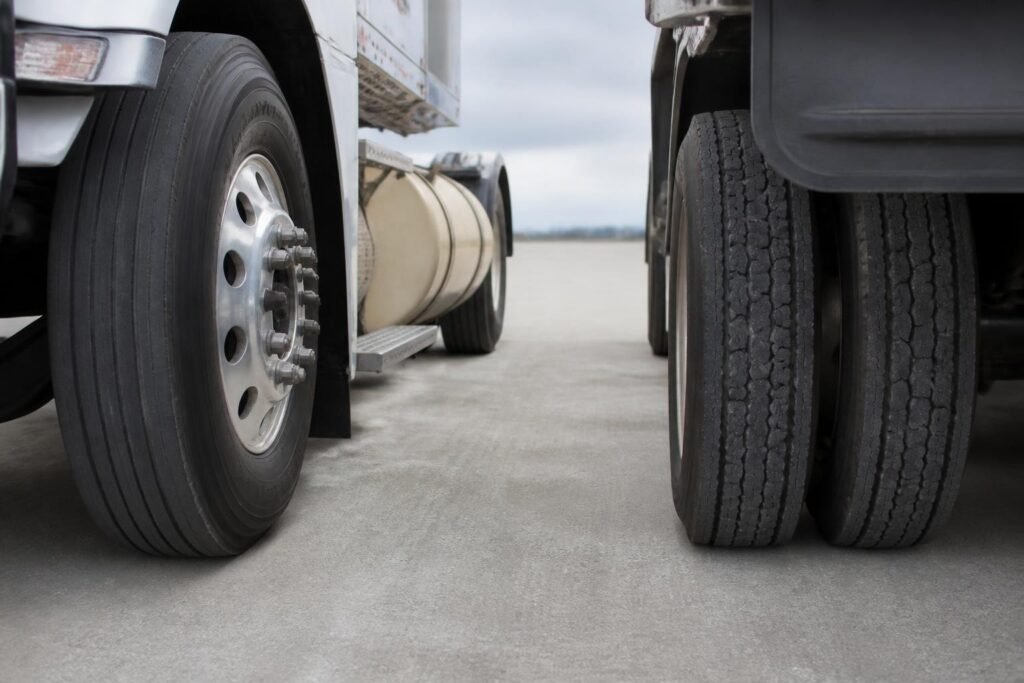
Wide tires on trucks typically refer to single tire configurations that replace conventional dual-wheel assemblies on drive and trailer axles. Instead of mounting two narrow tires side by side, a single wider tire carries the same axle load.
The most common wide-base tire size for Class 8 trucks in North America is 445/50R22.5, though 455/55R22.5 and other dimensions are also available. These tires measure approximately 17.5 inches wide compared to the roughly 11-inch width of a standard 11R22.5 dual tire.
Load Capacity and Engineering Standards
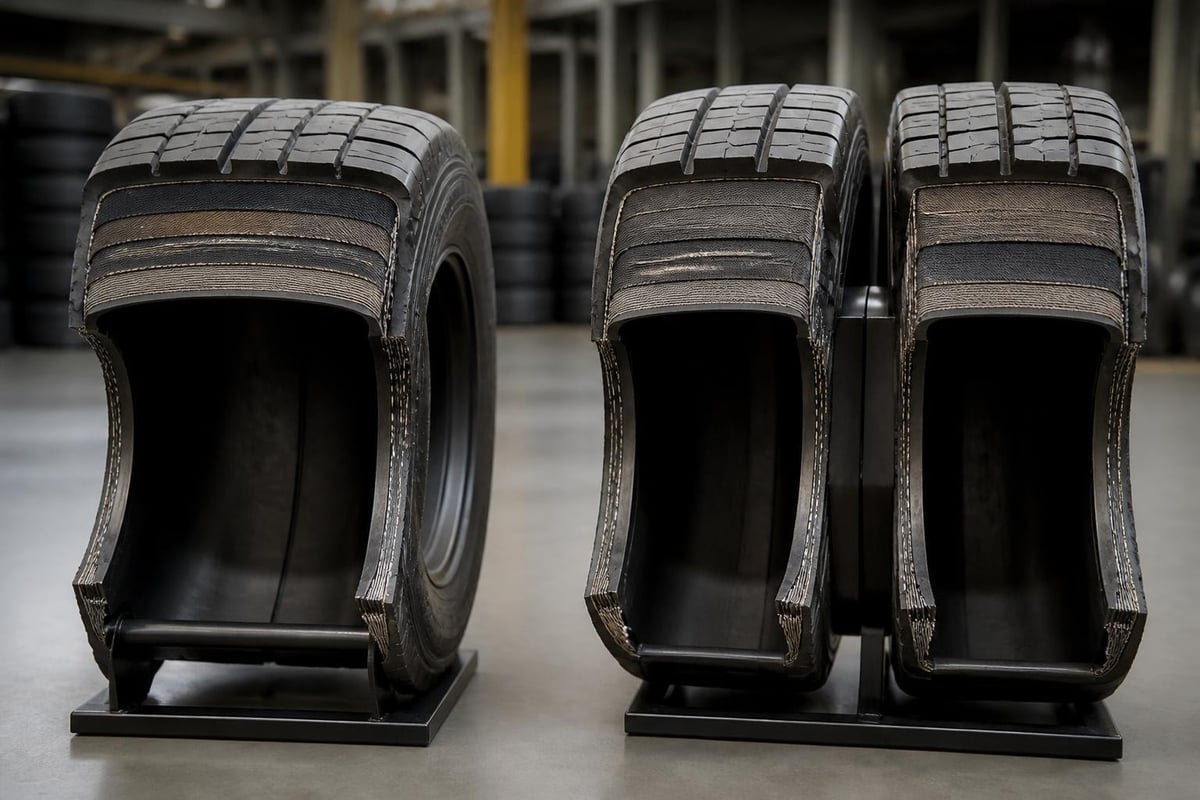
Wide-base tires achieve equivalent or superior load ratings through advanced casing construction and optimized contact-patch geometry. A single 445/50R22.5 tire is rated to carry the same load as two 11R22.5 tires when properly inflated.
Key engineering features include:
- Reinforced sidewall construction to handle lateral forces
- Wider steel-belt packages for improved stability
- Specialized bead designs to prevent unseating under cornering loads
- Advanced tread compounds that balance wear life with traction
Modern wide tires on trucks meet all Department of Transportation (DOT) and Economic Commission for Europe (ECE) certification requirements. Manufacturers conduct rigorous endurance testing that simulates millions of road miles under maximum load conditions.
Fuel Efficiency and Rolling Resistance Benefits
One of the primary drivers behind the adoption of wide tires on trucks is measurable fuel savings. The North American Council for Freight Efficiency has documented that wide-base tires can deliver between 2% and 6% improvement in fuel economy compared to conventional duals.
Rolling resistance represents the energy lost as a tire deforms under load during rotation. Wide-base tires reduce rolling resistance through several mechanisms.
Physics of Reduced Energy Loss
| Factor | Dual Tires | Wide-Base Single | Impact |
|---|---|---|---|
| Number of sidewalls flexing | 4 per axle position | 2 per axle position | 50% reduction in flexing surfaces |
| Total tire weight | Higher (two tires + hardware) | Lower (single tire) | Reduced rotational mass |
| Contact patch optimization | Two smaller patches | One larger, optimized patch | Improved pressure distribution |
The EPA has recognized wide-base tires as a verified SmartWay technology. This certification reflects measured improvements in fuel consumption and greenhouse gas emissions across standardized test protocols.
For a typical over-the-road tractor-trailer averaging 120,000 miles per year at 6.5 miles per gallon, a 3% fuel improvement translates to approximately 554 gallons saved annually. At current diesel prices, this represents significant operational savings that compound across multi-truck fleets.
Rolling Resistance Measurement Standards
Transportation Research Board studies have established standardized methods for measuring tire rolling resistance under controlled conditions. These protocols account for inflation pressure, load, speed, and ambient temperature.
Wide tires on trucks consistently demonstrate lower rolling resistance coefficients in laboratory testing. However, real-world performance depends heavily on proper inflation maintenance and matching tire specifications to actual duty cycles.
Weight Savings and Payload Advantages
Eliminating one tire and wheel assembly per axle position delivers immediate weight reduction. A complete dual-wheel setup (two tires, two wheels, associated hardware) weighs approximately 250-280 pounds more than a single wide-base configuration.
For a standard five-axle tractor-trailer, converting drive axles and all four trailer positions from duals to wide tires on trucks can save 800-1,000 pounds of unproductive weight. This additional payload capacity directly impacts revenue per load.
Weight reduction breakdown:
- Drive axle (one position): ~250 lbs saved
- Trailer axles (four positions): ~1,000 lbs saved
- Total potential savings: ~1,250 lbs per vehicle
In weight-sensitive operations such as bulk hauling, intermodal container transport, or maximum-cube freight, these weight savings enable fleets to carry additional revenue-generating cargo on every trip without exceeding legal gross vehicle weight limits.
Maintenance and Operational Considerations
Wide tires on trucks present a different maintenance profile compared to conventional duals. Understanding these differences is critical for fleet budgeting and service planning.
Inflation Pressure Management
Wide-base tires require higher inflation pressures than duals, typically 110-120 PSI compared to 95-105 PSI for standard 11R22.5 duals. This higher pressure is necessary to support equivalent loads with a single tire.
Pressure monitoring becomes more critical because:
- Underinflation causes rapid shoulder wear and accelerated casing damage
- The single tire has no redundancy if air loss occurs
- Fuel economy benefits disappear when operating below recommended pressure
- Heat buildup increases exponentially with insufficient inflation
Fleets operating wide tires on trucks should implement automated tire pressure monitoring systems (TPMS) that provide real-time alerts when pressure drops below safe thresholds. Manual pressure checks should occur at least weekly, following guidelines similar to those in industry tire care standards.
Tire Rotation and Wear Patterns
Wide-base configurations simplify rotation procedures by eliminating inner/outer dual positions. However, they also eliminate the redundancy that allows a vehicle to limp to a service facility when one dual fails.
Uneven wear on wide tires on trucks often indicates alignment issues, overloading, or improper inflation. Because these tires carry the full axle load individually, catching wear problems early is essential to maximize casing life and retreadability.
| Maintenance Aspect | Dual Tires | Wide-Base Tires | Fleet Impact |
|---|---|---|---|
| Number of tires to check | More positions | Fewer positions | Reduced inspection time |
| Spare tire inventory | Standard size (interchangeable) | Specialized size (limited interchangeability) | Higher inventory cost |
| Roadside failure redundancy | Can operate on one dual temporarily | Complete loss of tire function | Increased towing risk |
| Rotation complexity | Inner/outer position swaps | Simpler cross-rotation | Reduced labor time |
Infrastructure and Pavement Impact
The switch to wide tires on trucks has generated extensive research into pavement wear and infrastructure longevity. A comprehensive Florida DOT study evaluated how wide-base tires affect road surfaces compared to dual configurations.
Pavement Stress Distribution
Wide-base tires create different loading patterns on road surfaces. The single, wider contact patch distributes weight differently than two narrower dual patches separated by several inches.
Key findings from pavement research include:
- Wide-base tires can increase transverse pavement strain in thin asphalt surfaces
- On adequately designed modern highways, structural damage is comparable to duals
- Concentrated loading in the wheel path may accelerate rutting on weak pavements
- Bridge deck loading changes due to altered contact-patch geometry
State departments of transportation have largely concluded that on properly engineered highways meeting current design standards, wide tires on trucks do not cause significantly greater pavement damage than conventional duals. However, on older or thinner pavements not designed for current loading, the concentrated contact patch may contribute to accelerated deterioration.
Regulatory and Policy Framework
California’s Air Resources Board has incorporated tire technology into greenhouse gas reduction strategies for heavy-duty vehicles. The Tractor-Trailer GHG regulation includes provisions that recognize low-rolling-resistance tires, including many wide-base designs, as verified technologies for meeting emissions targets.
These regulatory frameworks create market incentives for fleets to adopt fuel-efficient tire technologies. As more jurisdictions implement carbon pricing or emissions regulations, the fuel economy advantages of wide tires on trucks gain additional economic value beyond direct diesel cost savings.
Performance in Diverse Operating Conditions
The effectiveness of wide tires on trucks varies considerably based on operating environment, duty cycle, and road conditions. Fleet managers must match tire technology to their specific applications.
Highway Long-Haul Applications
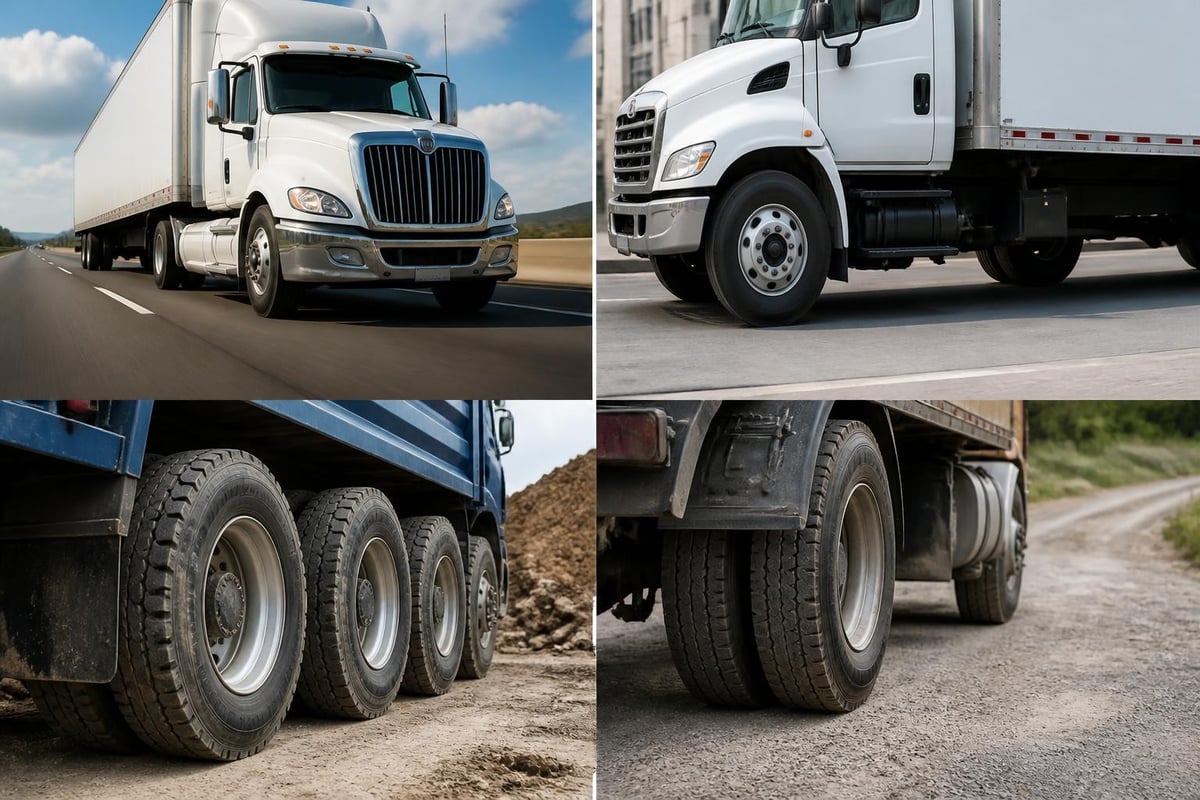
Over-the-road linehaul operations represent the ideal application for wide-base tires. These fleets operate primarily on interstate highways with smooth, well-maintained surfaces where rolling resistance reductions translate directly into fuel savings.
Advantages in highway service:
- Maximum fuel economy benefit on consistent high-speed operation
- Weight savings particularly valuable for long-distance freight
- Simplified maintenance with fewer tire positions
- Reduced labor for pre-trip inspections
Long-haul carriers running dedicated lanes with predictable load weights can optimize inflation pressures and maximize the return on investment from wide tires on trucks.
Regional and Vocational Challenges
Regional delivery, construction, and vocational applications present more complex trade-offs. Frequent stops, lower average speeds, and mixed-surface operation reduce the fuel economy advantage.
In severe-duty applications involving unpaved surfaces, construction sites, or frequent maneuvering, the reduced scrub resistance of a single wide tire may lead to faster shoulder wear compared to duals. The higher inflation pressure required by wide tires on trucks can also contribute to a harsher ride quality when operating empty or lightly loaded.
For operations that prioritize versatility and damage tolerance over maximum fuel efficiency, conventional dual configurations may remain the more practical choice despite their weight and rolling resistance penalties.
Total Cost of Ownership Analysis
Evaluating wide tires on trucks requires a comprehensive financial analysis that extends beyond initial purchase price. Fleet managers should consider the complete lifecycle cost across multiple replacement cycles.
Upfront Investment and Payback Period
Wide-base tires typically cost 15-25% more per tire than a single conventional dual. However, because you need only one wide-base tire instead of two duals, the net cost per axle position is often 30-40% lower when including wheel assemblies.
Sample cost comparison (per axle position, 2026 pricing):
| Component | Dual Configuration | Wide-Base Single | Difference |
|---|---|---|---|
| Tires (quantity × unit price) | 2 × $425 = $850 | 1 × $525 = $525 | -$325 |
| Wheel assemblies | 2 × $180 = $360 | 1 × $190 = $190 | -$170 |
| Total per position | $1,210 | $715 | -$495 savings |
For a complete tractor-trailer conversion (one drive axle position, four trailer positions), the upfront savings approach $2,475 before accounting for labor and disposal costs for removed dual hardware.
Operational Savings and Revenue Enhancement
Fuel savings accumulate throughout the tire's service life. A fleet averaging 10,000 miles per month per truck with a 3% fuel improvement saves approximately $150-200 monthly per vehicle at typical diesel prices.
The payload capacity increase also generates revenue opportunities. For a fleet hauling 1,000 loads annually near maximum legal weight, an additional 1,000 pounds of payload capacity potentially generates $50,000-75,000 in additional revenue depending on commodity and freight rates.
Retreading and End-of-Life Value
Wide tires on trucks built to premium quality standards are fully retreadable, extending the casing's economic life across multiple tread cycles. However, the specialized sizing means fewer retreading facilities maintain wide-base molds compared to ubiquitous 11R22.5 equipment.
Casings that qualify for retreading typically receive two or three additional service lives, with each retread costing 30-40% of a new tire. This dramatically improves the tire's total cost per mile over its complete lifecycle.
Selecting the Right Wide-Base Tire Strategy
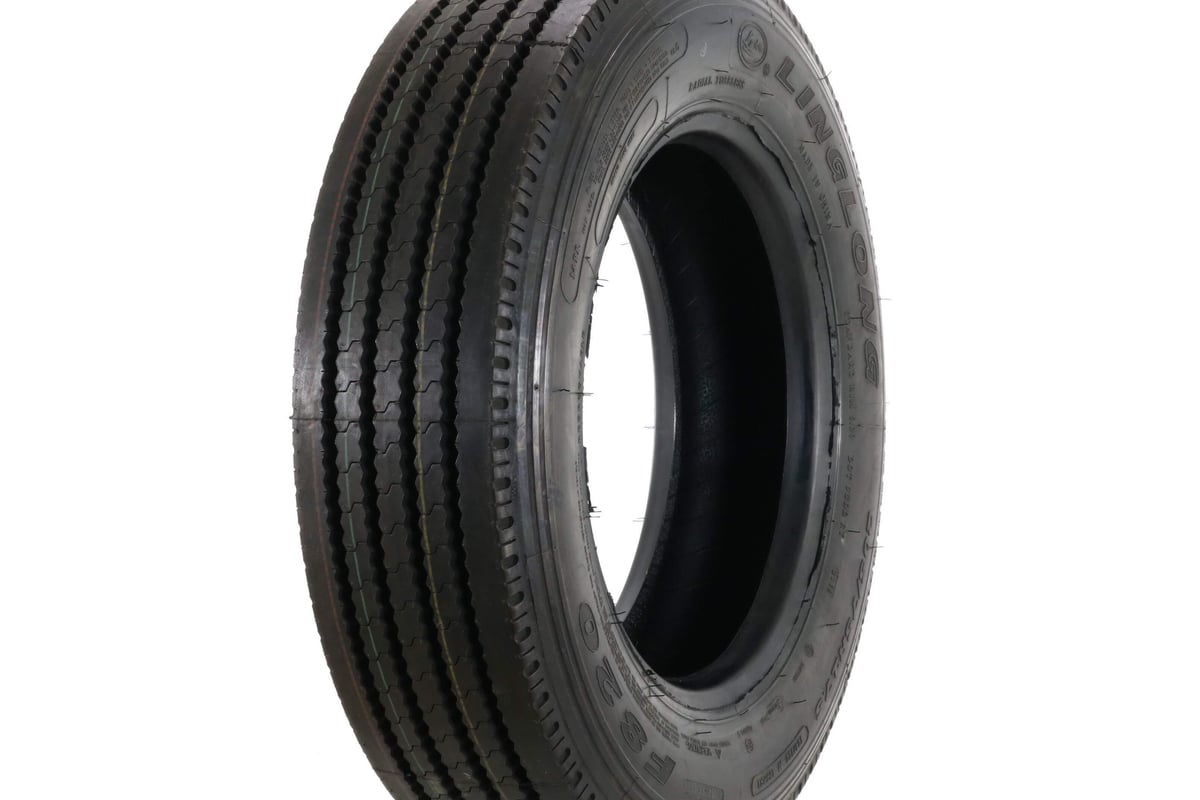
Manufacturers like OTR TIRE THAI produce wide-base tire options engineered for specific markets and applications. These tires incorporate advanced compounds and construction techniques developed for international quality standards while maintaining wholesale pricing structures that support distributor margins.
Commercial truck tire programs from established manufacturers feature DOT and ECE certifications that ensure global compliance. For fleets operating in multiple jurisdictions, this certification coverage simplifies fleet standardization and regulatory compliance.
Matching Tire Technology to Fleet Requirements
Successful implementation of wide tires on trucks requires careful alignment between tire specifications and operational demands:
For maximum fuel economy: Select low-rolling-resistance compounds verified under EPA SmartWay or equivalent programs. Prioritize tires with optimized tread designs that minimize energy loss while maintaining adequate wear life.
For severe-duty applications: Choose reinforced constructions with deeper tread depths and cut-resistant compounds. Accept slightly higher rolling resistance in exchange for durability and damage tolerance.
For mixed fleets: Consider a phased approach that converts highway tractors and trailers to wide-base while maintaining duals on vocational equipment. Monitor performance data to inform future purchasing decisions.
For weight-sensitive operations: Prioritize the payload advantage by converting all feasible positions to wide tires on trucks, then optimize other vehicle specifications to maximize legal payload capacity.
Integration with Fleet Management Systems
Modern tire programs extend beyond the physical product to include data analytics, predictive maintenance, and performance monitoring. Wide tires on trucks generate different data signatures than conventional duals, requiring updated baseline parameters in fleet management software.
Pressure Monitoring Integration
Automated TPMS systems should be configured with appropriate alert thresholds for wide-base specifications. Because these tires operate at higher nominal pressures, alarm setpoints must reflect the different pressure ranges.
A typical configuration might set:
- Critical low-pressure alarm: 90 PSI (20% below target)
- Warning threshold: 105 PSI (10% below target)
- Target operating range: 110-120 PSI
- High-pressure alarm: 135 PSI (potential overinflation)
Real-time pressure data enables predictive maintenance that addresses slow leaks before they cause tire damage or fuel economy degradation.
Mileage Tracking and Replacement Planning
Fleet management systems should track wide-base tire mileage separately from dual positions to accurately project replacement timing and budget requirements. Because wide tires on trucks may exhibit different wear rates depending on application, historical data specific to your operation provides the most accurate planning information.
Establishing removal criteria based on tread depth, casing condition, and projected remaining service life helps maximize the value extracted from each tire while avoiding premature removal or excessive risk from worn tires.
Future Developments in Wide-Base Technology
Tire manufacturers continue advancing wide-base designs through materials science, tread pattern optimization, and smart tire technologies. Several emerging trends will shape the next generation of wide tires on trucks.
Low-Rolling-Resistance Compounds
Advanced silica-based tread compounds continue improving the already favorable rolling resistance characteristics of wide-base tires. These formulations maintain or improve wet traction and wear resistance while further reducing energy loss during tire deformation.
Third-generation low-RR compounds entering the market in 2026 promise an additional 5-8% rolling resistance reduction compared to current-generation products, potentially pushing total fuel economy improvements above 7% for highway applications.
Sustainable Materials and Circular Economy
The tire industry is incorporating higher percentages of sustainable and renewable materials into tire construction. Bio-based rubbers, silica derived from rice hull ash, and recycled steel cord are appearing in commercial tire specifications.
These developments align with corporate sustainability goals while often delivering performance benefits. Many sustainable materials exhibit properties that reduce rolling resistance or improve tread life compared to traditional petroleum-based inputs.
Smart Tire Integration
Embedded sensors that monitor tire temperature, pressure, and tread wear in real-time are moving from prototype to production. These sensors communicate wirelessly with vehicle telematics systems, providing continuous condition updates without manual inspection.
For wide tires on trucks, where maintaining optimal inflation pressure is critical to performance, smart tire technology offers significant value by detecting pressure loss within minutes rather than days. This early warning prevents the accelerated wear and fuel economy degradation that result from operating underinflated.
Wide tires on trucks represent a proven technology that delivers measurable fuel savings, weight reduction, and simplified maintenance when matched to appropriate applications. Fleet managers who carefully evaluate their specific duty cycles, infrastructure conditions, and total cost parameters can make informed decisions that optimize both operational efficiency and financial performance. OTR TIRE THAI manufactures commercial truck tires engineered to international quality standards, offering distributors in over 80 countries access to advanced tire technology at competitive wholesale pricing that supports profitable fleet tire programs worldwide.
