
Blog
295 75R22.5 Drive Tires: Complete Specifications Guide
Aug
The commercial trucking industry relies on precise tire specifications to maximize fleet performance and minimize operating costs. Among the most common sizes for heavy-duty applications, 295 75r22 5 drive tires represent a critical component for long-haul operations, regional distribution, and mixed-service fleets. Understanding the technical characteristics, load ratings, and performance attributes of this tire size enables fleet managers and distributors to make informed purchasing decisions that directly impact fuel efficiency, tread life, and overall operational safety. This comprehensive guide examines the key specifications, construction features, and selection criteria that define quality drive tires in the 295/75R22.5 category.
Understanding the 295/75R22.5 Tire Size Designation
The alphanumeric code on every commercial tire communicates essential dimensional and construction information. In the 295 75r22 5 drive tires specification, each element serves a specific purpose in identifying the tire's physical characteristics.
The first number (295) indicates the tire's section width in millimeters when properly mounted and inflated. This measurement represents the distance from sidewall to sidewall, providing approximately 11.6 inches of width that contributes to the tire's contact patch and load distribution capabilities.
Aspect Ratio and Construction Type
The second number (75) represents the aspect ratio, calculated as the sidewall height expressed as a percentage of the section width. A 75-series tire features a sidewall height that is 75% of its section width, creating a balanced profile that offers both load capacity and ride quality. The letter "R" designates radial construction, which has become the industry standard for commercial applications due to superior fuel economy, longer tread life, and improved handling characteristics compared to bias-ply designs.
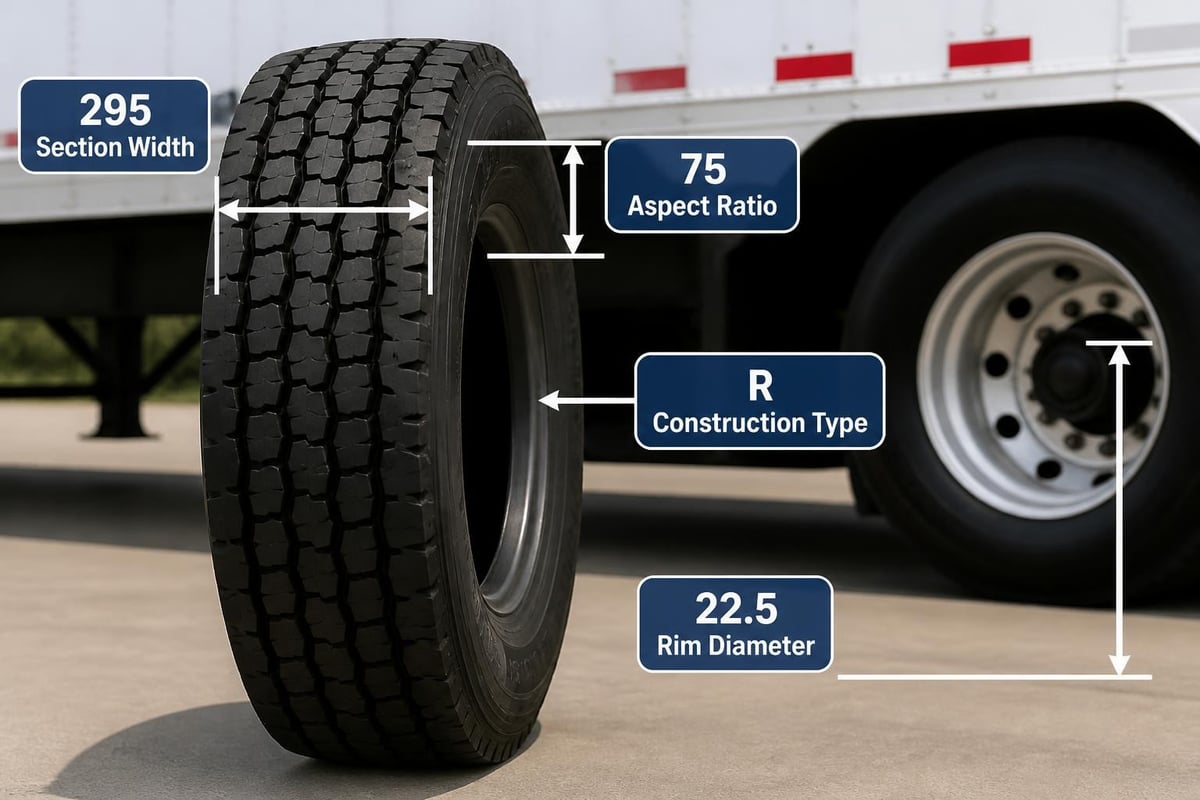
The final numbers (22.5) specify the rim diameter in inches, indicating compatibility with 22.5-inch wheels commonly used on Class 8 trucks and heavy-duty commercial vehicles.
Load Capacity and Ply Rating Specifications
Commercial tire selection hinges on matching load capacity to actual vehicle requirements. The 295 75r22 5 drive tires category encompasses several load range options, each engineered for specific weight-bearing applications.
| Load Range | Ply Rating | Max Load (Single) | Max Load (Dual) | Max Pressure |
|---|---|---|---|---|
| G | 14 | 6,175 lbs | 5,675 lbs | 110 psi |
| H | 16 | 6,610 lbs | 6,005 lbs | 120 psi |
| J | 18 | 7,160 lbs | 6,610 lbs | 135 psi |
Load range G represents the most common specification for standard highway applications, while ranges H and J support heavier gross vehicle weights and specialized hauling operations. Fleet managers must calculate the actual load per tire position, factoring in vehicle weight, cargo capacity, and weight distribution to ensure compliance with manufacturer specifications and Department of Transportation regulations.
Selecting Appropriate Load Range
The decision between load ranges involves balancing load requirements against ride quality considerations. Higher ply ratings increase load capacity but may transmit more road harshness to the vehicle and cargo. Understanding tire types and pricing considerations helps distributors match specifications to end-user applications.
Regional delivery operations with frequent load/unload cycles often perform optimally with Load Range G, while linehaul operations consistently running at maximum gross vehicle weight benefit from the additional capacity of ranges H or J.
Drive Position Tread Pattern Design
The tread pattern on 295 75r22 5 drive tires directly influences traction, tread life, and fuel consumption. Drive position tires require aggressive lug patterns that deliver torque to the pavement while resisting irregular wear patterns that plague the drive axle position.
Key tread design elements include:
- Deep lug depth (typically 23/32" to 25/32" in new condition) for extended service life
- Closed shoulder designs that prevent stone retention and sidewall damage
- Wide circumferential grooves for water evacuation and wet traction
- Stone ejector platforms within tread grooves to expel debris
- Siping patterns that enhance traction without compromising block stiffness
The lug pattern orientation significantly affects performance characteristics. Directional patterns with angled lugs optimize forward traction and self-cleaning properties, while non-directional designs offer more flexibility in tire rotation strategies and typically exhibit more even wear patterns across mixed service applications.
Construction Technology and Materials
Modern 295 75r22 5 drive tires incorporate advanced materials and construction techniques that extend service life beyond 100,000 miles in optimal conditions. The internal architecture combines multiple components engineered for specific performance attributes.
Steel Belt Package Configuration
The belt package forms the structural foundation of radial tire construction. Premium drive tires utilize four steel belts arranged in opposing angles to resist centrifugal forces at highway speeds while maintaining tread stability under load. The belt edges receive specialized treatment to prevent belt separation, a common failure mode in retreaded or improperly maintained commercial tires.
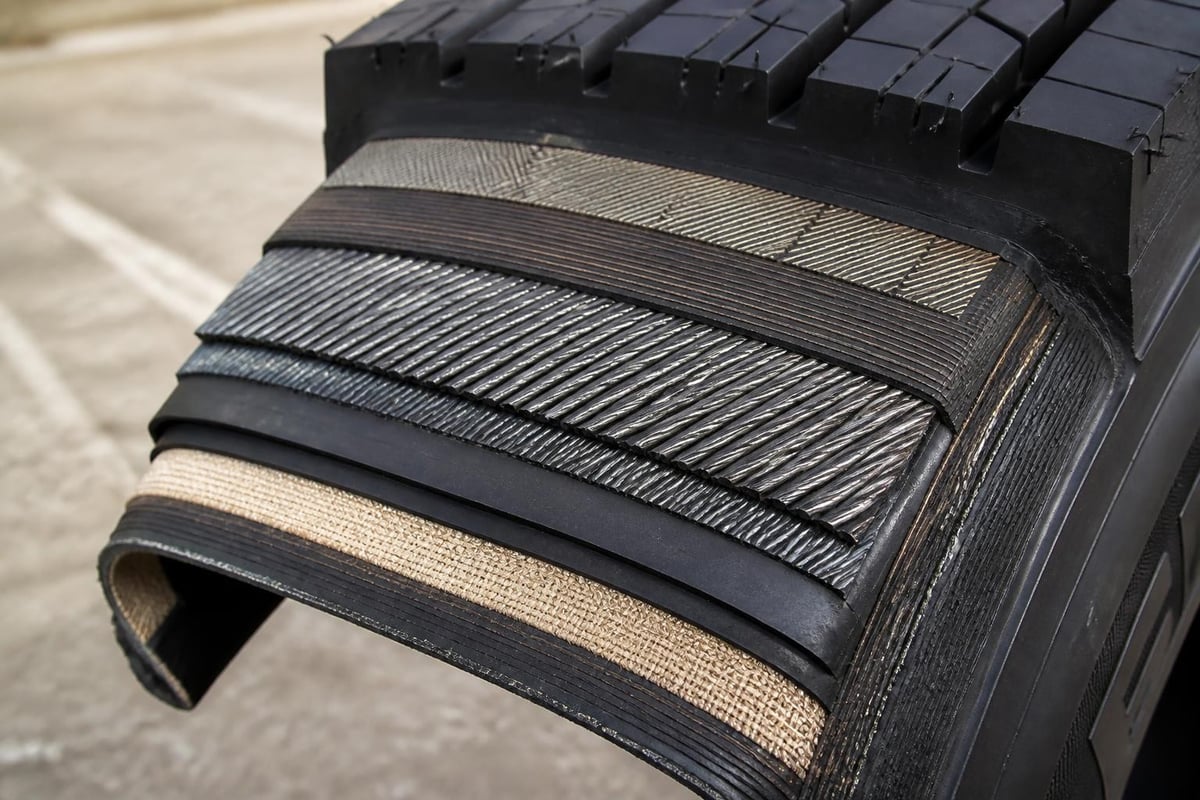
Cap plies positioned above the working belts provide additional protection against road hazards and distribute impact forces across the tread surface. This construction element proves particularly valuable for mixed-service operations that encounter both highway and construction site conditions.
Tread Compound Formulation
The rubber compound formulation balances competing demands for tread life, fuel efficiency, and traction. Premium manufacturers develop proprietary compounds that incorporate:
- Silica-enhanced base polymers for reduced rolling resistance
- Carbon black reinforcement for abrasion resistance and heat dissipation
- Antioxidants and anti-ozonants to prevent age-related cracking
- Processing oils that maintain compound flexibility across temperature ranges
The compound's glass transition temperature determines low-temperature performance, critical for operations in northern climates where flexibility must be maintained below freezing to preserve traction and prevent cracking.
Performance Ratings and Certifications
Commercial tire performance extends beyond basic dimensional specifications. Multiple rating systems and certifications provide standardized metrics for comparing options across manufacturers. Reviewing performance scores and ratings offers valuable insight into real-world tire performance.
The Department of Transportation (DOT) requires all tires sold in the United States to meet Federal Motor Vehicle Safety Standard (FMVSS) 119, which establishes minimum performance criteria for strength, endurance, and high-speed capability. The DOT number molded into each tire's sidewall provides manufacturing location and date code information essential for tracking service life and recall compliance.
SmartWay Verification for Fuel Efficiency
The Environmental Protection Agency's SmartWay program verifies low rolling resistance tires that contribute to fleet fuel economy improvements. While primarily associated with trailer positions, some drive tire models achieve SmartWay verification through advanced compound formulations and optimized tread designs. Fleet operations committed to sustainability and fuel cost reduction should prioritize SmartWay-verified options when selecting 295 75r22 5 drive tires.
Maintenance Requirements and Service Life
Maximizing return on tire investment requires systematic maintenance protocols that address the specific demands of the drive axle position. Drive tires experience higher operating temperatures, greater torque stress, and more severe wear patterns than steer or trailer positions.
Essential maintenance practices include:
- Monthly inflation pressure checks using calibrated gauges
- Quarterly alignment verification to prevent rapid shoulder wear
- Visual inspections for irregular wear indicating mechanical issues
- Removal from service at 4/32" remaining tread depth
- Proper torque specifications for wheel fasteners (450-500 lb-ft for hub-piloted systems)
Drive position tires removed from service with adequate casing integrity become candidates for retreading, extending asset utilization and reducing per-mile tire costs. Quality casings can support two or three retread cycles, provided they've been properly maintained and haven't sustained structural damage.
Comparing Premium and Value-Grade Options
The 295 75r22 5 drive tires category spans a broad price spectrum, from value-grade imports to premium domestic and international brands. Understanding the performance and longevity differences justifies the price differential. Comparing available brands and models reveals the range of options in this tire size.
| Category | Price Point | Expected Tread Life | Key Features |
|---|---|---|---|
| Premium | $425-$575 | 120,000-150,000 miles | Advanced compounds, comprehensive warranties, proven casings |
| Mid-Grade | $325-$425 | 90,000-120,000 miles | Reliable performance, limited warranties, good retreadability |
| Value | $250-$325 | 70,000-100,000 miles | Basic construction, minimal warranties, variable quality |
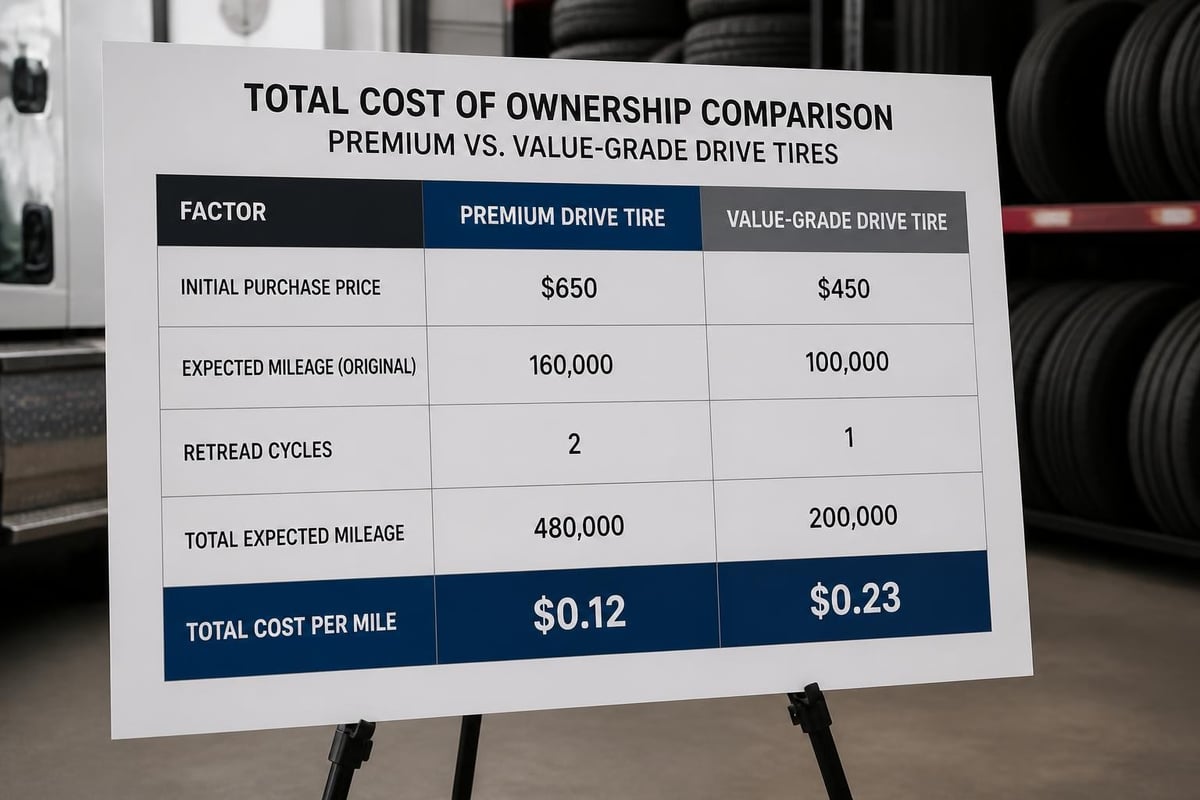
Total cost of ownership calculations should account for expected mileage, retread potential, and downtime costs associated with premature failures. Premium tires commanding 40% higher initial costs frequently deliver 50-60% longer service life, resulting in lower per-mile expenses and fewer service interruptions.
Application-Specific Selection Criteria
Different operational profiles demand distinct tire characteristics. Matching 295 75r22 5 drive tires to specific applications optimizes performance and maximizes value. Reading user reviews from commercial drivers provides practical insights into real-world performance across various applications.
Long-Haul Highway Operations
Linehaul operations accumulate 100,000+ miles annually on interstate highways. These applications prioritize fuel efficiency, high-speed durability, and long original tread life. Tires designed for highway service feature lower rolling resistance compounds, optimized tread patterns with reduced void ratios, and construction elements that minimize heat buildup during sustained high-speed operation.
Regional Distribution and Mixed Service
Regional operations encounter diverse road conditions including urban streets, secondary highways, and occasional unpaved surfaces. Mixed-service drive tires balance highway efficiency with enhanced traction characteristics and more robust casings that withstand the increased stress of frequent acceleration, braking, and turning cycles.
Severe Service Applications
Construction, logging, and energy sector operations subject tires to extreme conditions. Severe service drive tires incorporate deeper tread depths (up to 28/32"), reinforced sidewalls, and cut-resistant compounds designed to withstand sharp rocks, metal debris, and aggressive surfaces encountered in off-highway applications.
Seasonal Considerations and Winter Performance
Operating conditions throughout 2026 will continue to challenge fleets with extreme weather variations. While most 295 75r22 5 drive tires are designed as all-position, all-season products, winter conditions in northern regions present unique challenges.
The Three-Peak Mountain Snowflake (3PMSF) symbol identifies tires that meet specific snow traction performance criteria in standardized testing. Few drive position tires carry this designation due to the inherent conflict between deep lug patterns optimized for traction and the siping density required for winter certification. Fleets operating in severe winter conditions should evaluate specialized winter drive tires or implement chain requirements during adverse weather.
Winter operation best practices:
- Increase inspection frequency to identify weather-related damage
- Reduce inflation pressure slightly (5-10 psi) to improve contact patch in snow
- Monitor tread depth more closely as winter traction degrades significantly below 8/32"
- Implement chain policies before tread depth falls below legal minimum
Quality Standards from Thai Manufacturing
Thailand has emerged as a significant manufacturing hub for commercial truck tires, combining modern production facilities with competitive pricing structures. OTR TIRE THAI represents this manufacturing excellence through comprehensive quality control and international certification compliance.
Drive tires manufactured in Thailand undergo rigorous testing protocols aligned with DOT, ECE, and other international standards. Modern facilities utilize advanced mixing technology, precision curing systems, and automated inspection processes that ensure consistent quality across production runs. For distributors seeking reliable sources of Semi Truck Tires from Thailand, the combination of quality certifications and competitive wholesale pricing creates compelling value propositions for serving commercial fleets.
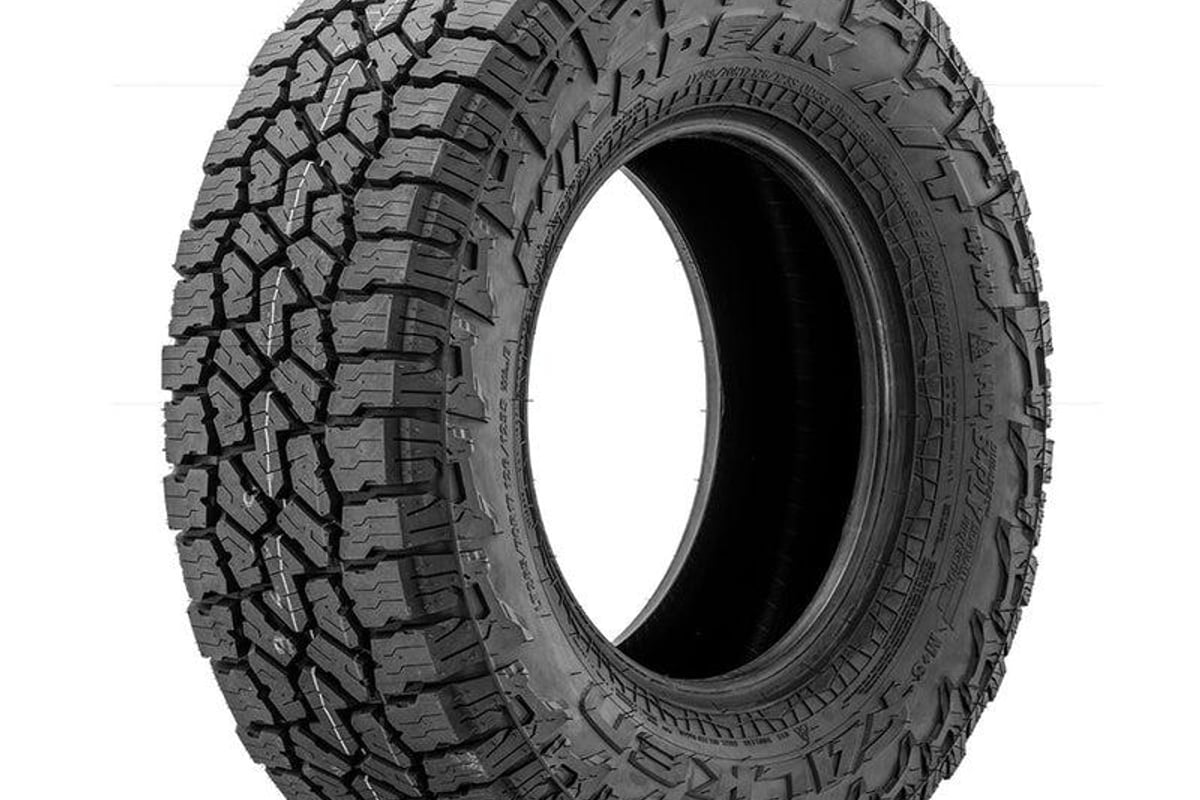
Manufacturing Process Quality Control
State-of-the-art Thai manufacturing facilities implement quality control at every production stage. Raw materials undergo laboratory analysis to verify compound specifications. During construction, X-ray and shearography inspection systems identify potential defects before tires enter service. Final balancing and uniformity testing ensure each tire meets strict tolerance standards that minimize vibration and irregular wear.
Emerging Technologies and Future Developments
The commercial tire industry continues to evolve with technologies that enhance performance, extend service life, and reduce environmental impact. Several innovations are reshaping the 295 75r22 5 drive tires category as we progress through 2026.
Low rolling resistance compounds have improved significantly without sacrificing tread life or wet traction. Advanced silica formulations combined with optimized polymer chains reduce hysteresis (energy loss through heat generation) while maintaining the molecular bonds necessary for abrasion resistance. These compound improvements deliver 3-5% fuel economy gains compared to previous generation products.
Intelligent Tire Technologies
Sensor-equipped tires that monitor pressure, temperature, and tread depth in real-time are transitioning from experimental to commercially available products. These intelligent systems provide fleet managers with continuous data streams that enable predictive maintenance, identify developing mechanical issues through irregular wear patterns, and verify proper inflation across entire fleets without manual inspection.
Retread Compatibility and Casing Management
Original equipment drive tires represent only the first phase of tire asset management. Quality 295 75r22 5 drive tires provide excellent retread platforms when properly maintained throughout their original tread life. Exploring comprehensive product selections helps identify both new and retread-compatible options.
Casing quality determines retread potential. Premium manufacturers engineer casings with specific retread characteristics including:
- Robust undertread layers that protect belt packages from road damage
- Thick sidewall rubber gauges that withstand multiple buffing cycles
- Reinforced bead areas that maintain dimensional stability through multiple mounting cycles
- Heat-resistant compounds that prevent degradation from thermal stress
Fleets implementing comprehensive casing management programs achieve 40-60% reductions in tire costs per mile compared to operations that dispose of tires after original tread depletion. The investment in quality original equipment casings generates returns through multiple retread cycles extending total service life beyond 300,000 miles.
Inflation Pressure Management Systems
Proper inflation pressure remains the single most critical factor in maximizing drive tire performance and longevity. Under-inflation causes excessive heat buildup, accelerated shoulder wear, and increased rolling resistance. Over-inflation reduces the contact patch area, compromising traction and promoting center-rib wear.
Modern tire pressure monitoring systems (TPMS) provide real-time alerts when inflation pressures deviate from specifications. These systems have evolved from simple warning indicators to comprehensive fleet management tools that track pressure trends, identify slow leaks before they cause damage, and document compliance with maintenance protocols.
Optimal inflation pressure management:
- Check pressures when tires are cold (before operation or after three-hour rest period)
- Adjust for load conditions according to manufacturer load/inflation tables
- Account for altitude changes on mountain routes (1 psi change per 2,000 feet elevation)
- Install valve caps with pressure indicators for quick visual verification
- Maintain nitrogen inflation in operations where precise pressure stability is critical
Warranty Coverage and Manufacturer Support
Warranty terms vary significantly across manufacturers and price points in the 295 75r22 5 drive tires category. Understanding warranty coverage and claim procedures protects distributor margins and end-user relationships.
Comprehensive warranties cover manufacturing defects including tread separation, sidewall failures, and structural issues that occur during normal service. Mileage warranties provide prorated credit toward replacement tires when original tread wears out before specified mileage thresholds. Road hazard warranties address damage from debris, potholes, and other external factors beyond normal wear.
Premium manufacturers distinguish themselves through responsive technical support, efficient claims processing, and field adjustment policies that minimize dispute resolution time. Distributors should evaluate manufacturer support capabilities alongside product specifications when selecting tire lines to represent in their markets.
Selecting the right 295 75r22 5 drive tires requires balancing specifications, application requirements, and total cost of ownership considerations to optimize fleet performance. Whether you're sourcing for long-haul operations, regional distribution networks, or specialized applications, partnering with an established manufacturer ensures access to quality products backed by comprehensive technical support. OTR TIRE THAI delivers premium commercial truck tires at competitive wholesale prices to distributors in over 80 countries, combining Thai manufacturing excellence with international quality standards and renowned partner brands to support your commercial tire business growth.
