
Blog
295 80R225 Tire Guide: Specs, Applications & Selection
Aug
The 295 80R225 tire size represents a critical specification in the commercial trucking industry, particularly for medium to heavy-duty applications. Understanding this designation requires knowledge of tire sizing conventions, load capacities, and operational parameters that directly impact fleet performance and safety. This tire size has gained prominence among fleet operators who demand reliable performance across diverse hauling conditions while maintaining cost-effectiveness and regulatory compliance.
Decoding the 295 80R225 Specification
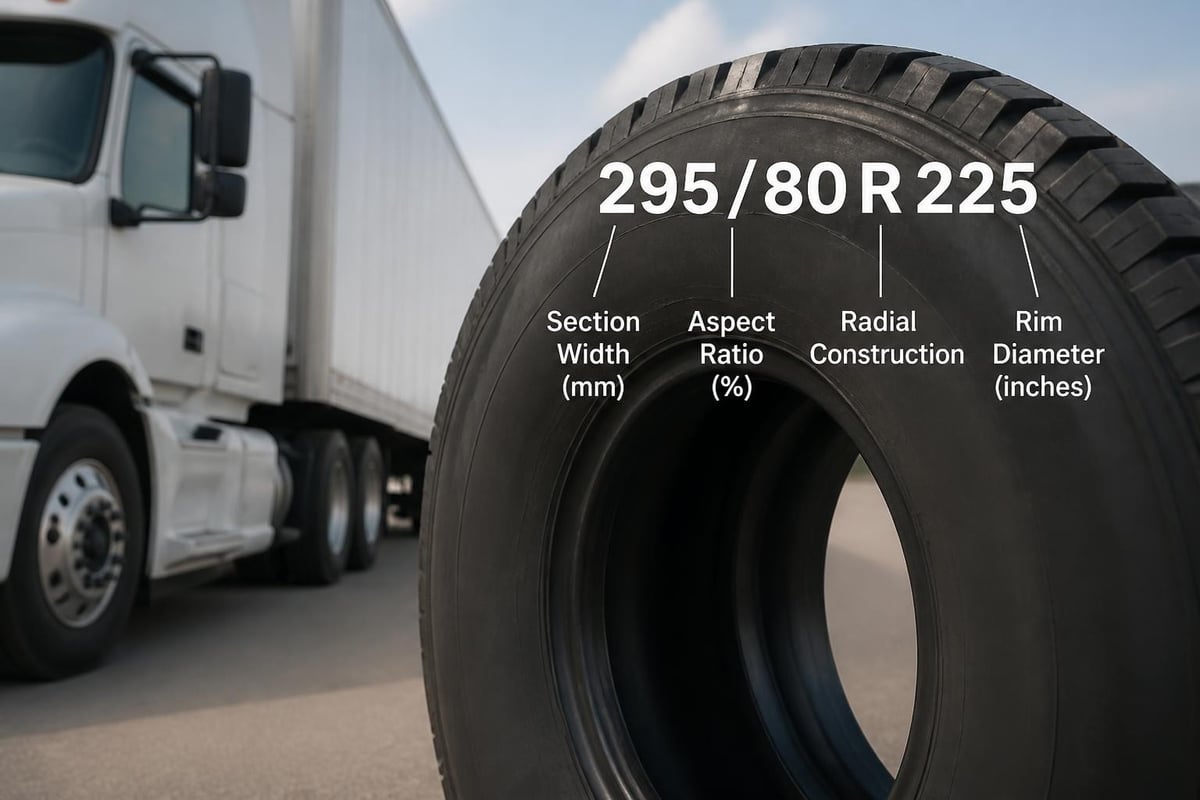
The alphanumeric code 295 80R225 contains essential information about tire dimensions and construction. The first number, 295, represents the section width in millimeters-the distance from sidewall to sidewall when the tire is properly mounted and inflated. This measurement translates to approximately 11.6 inches, providing a substantial footprint for load distribution.
The aspect ratio of 80 indicates that the sidewall height equals 80 percent of the section width. In the case of 295 80R225 tires, this means the sidewall stands approximately 236 millimeters tall. This relatively high profile contributes to ride comfort and load-carrying capability, characteristics valued in commercial transportation.
The "R" designation confirms radial construction, the industry standard since the 1970s for commercial truck tires. Radial design offers:
- Superior heat dissipation during extended highway operation
- Improved fuel efficiency through reduced rolling resistance
- Enhanced tread life compared to bias-ply alternatives
- Better handling characteristics at highway speeds
The final number, 225, specifies the rim diameter in millimeters. This measurement ensures proper matching between tire and wheel assembly, preventing mounting errors that could compromise safety.
Load Capacity and Ply Rating Considerations
Load index ratings for 295 80R225 tires typically range from 144 to 152, corresponding to maximum load capacities between 5,800 and 7,500 pounds per tire when properly inflated. The specific load rating depends on ply rating and intended application, with higher ratings reserved for heavy-haul scenarios.
| Ply Rating | Load Index | Max Load (lbs) | Typical Application |
|---|---|---|---|
| 16 PR | 144/142 | 5,800/5,500 | Regional delivery |
| 18 PR | 146/143 | 6,170/5,790 | Long-haul transport |
| 20 PR | 148/145 | 6,550/6,170 | Heavy-duty hauling |
| 22 PR | 150/147 | 6,940/6,550 | Severe service |
Ply rating denotes the tire's load-carrying capacity and structural strength rather than the actual number of fabric layers. Modern radial construction achieves equivalent strength with fewer plies through advanced materials and engineering. Fleet managers must match ply ratings to gross axle weight ratings (GAWR) to maintain compliance with Department of Transportation regulations.
Speed Rating and Performance Parameters
Speed ratings for 295 80R225 tires commonly fall within the J to L range, corresponding to maximum sustained speeds of 62 to 75 mph. These ratings reflect controlled testing conditions and should inform operational speed limits, particularly for loaded vehicles. According to safety recommendations from transportation authorities, proper tire selection based on speed requirements significantly reduces the risk of tire-related incidents.
Fleet operators running interstate routes benefit from L-rated tires capable of sustained 75 mph operation, while regional delivery fleets may find J-rated variants sufficient for their lower-speed applications. The speed rating interacts with load capacity-operating at maximum load typically requires reduced speeds to prevent excessive heat buildup.
Commercial Applications for 295 80R225 Tires
This tire size serves diverse commercial vehicle segments, each with distinct performance requirements. Understanding these applications helps fleet managers optimize tire selection for their specific operational profiles.
Regional Haul and Delivery Operations
Medium-duty trucks operating on regional delivery routes represent a primary market for 295 80R225 tires. These vehicles typically run 200 to 400 miles per day, making frequent stops for cargo loading and unloading. The tire specification balances:
- Adequate load capacity for varied cargo weights
- Durability against curb scuffing and loading dock contact
- Fuel efficiency to minimize operating costs
- Tread patterns optimized for mixed highway and urban driving
Distribution centers supplying retail chains, food service operations, and industrial facilities rely heavily on this tire size for their delivery fleets. The combination of load capacity and dimensional compatibility with popular truck chassis makes 295 80R225 an industry standard.
Refuse and Waste Management Vehicles
Garbage trucks and refuse collection vehicles operate under some of the most demanding conditions in commercial transportation. The 295 80R225 specification provides the robustness these applications demand through enhanced sidewall protection and cut-resistant compounds.
Key performance attributes for refuse applications include:
- Resistance to sidewall damage from curb contact during collection routes
- Durability against debris and sharp objects common in waste environments
- Load capacity sufficient for fully loaded compactor bodies
- Traction in residential neighborhoods with varied pavement conditions
Waste management fleets often specify premium-grade 295 80R225 tires with reinforced casings to maximize service life in these harsh operating conditions.

Position-Specific Selection: Steer, Drive, and Trailer
Optimal fleet performance requires matching tire design to wheel position. The 295 80R225 size is available in patterns engineered for steer, drive, and trailer positions, each optimized for distinct performance characteristics.
Steer position tires prioritize directional control and even wear distribution. Rib patterns with multiple continuous grooves provide straight-line tracking stability while evacuating water for wet traction. The five-rib configuration common in steer tires delivers predictable handling response critical for vehicle control.
Drive position designs feature aggressive lug patterns with deep tread depth, typically 22/32 to 24/32 inches when new. These patterns provide traction on varied surfaces while incorporating stone ejectors to prevent retention damage. For fleets running Semi Truck Tires from Thailand, drive tires with closed-shoulder designs offer extended service life through reduced irregular wear patterns.
Trailer positions benefit from fuel-efficient designs with low rolling resistance compounds. These tires contribute to overall fleet fuel economy while providing the durability needed for extended highway service. Many 295 80R225 trailer tires now meet EPA SmartWay verification requirements, helping fleets demonstrate environmental compliance.
Dual Versus Single Configuration
The 295 80R225 specification accommodates both dual and wide-single configurations, each offering distinct advantages. Dual mounting provides redundancy-if one tire fails, the companion tire can support the load temporarily. This configuration remains popular for heavy-haul applications where maximum load capacity is essential.
Wide-single configurations using appropriately rated 295 80R225 tires reduce overall vehicle weight, potentially increasing payload capacity. The single tire also simplifies maintenance procedures and reduces the number of wheels requiring service. However, wide-single setups lack the redundancy of dual configurations, making tire condition monitoring even more critical.
Inflation Pressure Management
Proper inflation pressure represents the single most important factor in tire performance and longevity. For 295 80R225 tires, recommended pressures typically range from 90 to 120 PSI depending on load and position.
Under-inflation accelerates wear on the tire shoulders while generating excessive heat through increased flexing. A tire running just 10 percent below recommended pressure can experience up to 15 percent reduction in service life. Over-inflation concentrates wear in the center tread area and reduces the contact patch, compromising traction and ride quality.
Best practices for inflation management include:
- Check pressures when tires are cold, before daily operation begins
- Use calibrated pressure gauges accurate within ±2 PSI
- Adjust pressures seasonally to account for temperature changes
- Implement tire pressure monitoring systems (TPMS) for real-time alerts
- Document pressure checks as part of preventive maintenance records
Temperature affects inflation pressure at a rate of approximately 1 PSI per 10°F change. Fleet operators in regions with significant seasonal temperature variation must adjust pressures accordingly to maintain optimal performance year-round.

Tread Depth Monitoring and Replacement Criteria
Federal Motor Carrier Safety Administration regulations require minimum tread depths of 4/32 inch on steer axles and 2/32 inch on other positions. However, many fleet managers replace tires well before reaching these legal minimums to maintain performance and safety margins.
| Position | Legal Minimum | Recommended Replacement | Performance Impact |
|---|---|---|---|
| Steer | 4/32" | 6/32" | Wet traction, handling |
| Drive | 2/32" | 4/32" | Traction, fuel economy |
| Trailer | 2/32" | 4/32" | Fuel efficiency, stability |
Regular tread depth measurements using calibrated gauges help fleet managers predict replacement timing and budget accordingly. Advanced fleets employ tread depth data to calculate cost per mile and identify vehicles or routes causing accelerated wear.
Uneven wear patterns signal alignment issues, improper inflation, or mechanical problems requiring correction. Common wear patterns include:
- Shoulder wear: Under-inflation or overloading
- Center wear: Over-inflation
- Cupping: Suspension or balance issues
- Heel-toe wear: Improper toe alignment or insufficient rotation
Seasonal Considerations and All-Season Performance
While 295 80R225 tires are predominantly all-season designs, performance characteristics vary across temperature ranges and precipitation conditions. Commercial truck operators in northern climates must account for winter traction requirements when selecting tires for this size specification.
All-season tread compounds maintain flexibility across a broad temperature range, typically from -20°F to 120°F. However, performance in severe winter conditions-deep snow, ice, and sustained sub-zero temperatures-requires specialized winter tread patterns and rubber formulations.
The Three-Peak Mountain Snowflake (3PMSF) symbol identifies tires meeting specific snow traction performance criteria. Fleets operating in regions with frequent winter weather should consider 295 80R225 options carrying this designation for improved safety during challenging conditions.
Summer heat presents distinct challenges, particularly for long-haul operations crossing desert regions. Tires with heat-resistant compounds and enhanced casing designs help prevent thermal degradation during sustained high-temperature operation.
Retreading Economics and Lifecycle Management
Quality 295 80R225 casings support multiple retreading cycles, extending tire lifecycle and reducing total cost of ownership. Retreading involves removing worn tread, inspecting the casing, and bonding new tread rubber through precision manufacturing processes.
A properly maintained steer tire casing may support two to three retread cycles, while drive and trailer positions often achieve three to four cycles. This extends the useful life of the original tire investment by 200 to 400 percent compared to running tires to scrap after initial tread wear.
Retreading benefits include:
- Cost savings of 30 to 50 percent compared to new tire purchase
- Reduced environmental impact through material conservation
- Maintained performance when using quality retread processes
- Flexibility to select tread patterns optimized for current operations
Successful retreading programs require disciplined casing management. Maintaining proper inflation, avoiding overload conditions, and promptly repairing injuries preserve casing integrity for future retread cycles. Fleet managers should partner with reputable retread facilities offering comprehensive casing inspection and quality guarantees.
Procurement Strategies for Fleet Operators
Effective tire procurement balances initial purchase price against total lifecycle costs. The lowest-priced 295 80R225 tire rarely delivers the best value when accounting for tread life, fuel efficiency, and retreadability.
Smart procurement practices include:
- Establishing performance specifications aligned with operational requirements
- Qualifying multiple suppliers to ensure competitive pricing and supply continuity
- Negotiating volume agreements that provide price stability and priority allocation
- Requesting detailed warranty terms covering workmanship defects and road hazard protection
- Evaluating total cost of ownership rather than focusing solely on purchase price
Fleet managers should request comprehensive technical data including rolling resistance coefficients, projected tread life under specific operating conditions, and retreadability ratings. This information enables informed comparisons between competing tire offerings.
Quality Certification and Regulatory Compliance
Commercial truck tires sold in North America must meet Department of Transportation standards and carry DOT certification markings. These markings include manufacturer identification, tire size, and date code information essential for recall tracking and age-based replacement decisions.
The DOT tire identification number includes a four-digit date code indicating the week and year of manufacture. For example, a code of "2426" indicates production during the 24th week of 2026. Industry best practices recommend removing tires from service after ten years regardless of remaining tread depth, as rubber compounds degrade over time even with limited use.
Additional certifications may include:
- ECE (Economic Commission for Europe) markings for international markets
- EPA SmartWay verification for low rolling resistance trailer tires
- ISO quality management system compliance for manufacturing facilities
- FMVSS (Federal Motor Vehicle Safety Standards) conformance
These certifications provide assurance that tires meet established performance and safety requirements, protecting fleet operators from liability while ensuring driver safety.
Emerging Technologies and Future Developments
The commercial tire industry continues advancing through materials science innovations and smart tire technologies. Recent developments affecting the 295 80R225 segment include:
Silica-enhanced tread compounds improve wet traction while reducing rolling resistance, delivering simultaneous gains in safety and fuel efficiency. These compounds now appear in premium tire lines across major manufacturers.
Integrated tire sensors monitor pressure, temperature, and tread depth in real-time, transmitting data to fleet management systems. This technology enables proactive maintenance interventions before minor issues become roadside failures.
Specialized casing designs using advanced steel cord reinforcement provide improved retreadability while reducing overall tire weight. These innovations support fleet sustainability goals through extended lifecycle performance and reduced material consumption.
Understanding the 295 80R225 tire specification empowers fleet managers to make informed decisions that optimize safety, performance, and operating costs. From proper inflation management to strategic procurement and lifecycle planning, attention to tire fundamentals delivers measurable returns across commercial operations. OTR TIRE THAI manufactures premium quality truck and bus radial tires including specifications compatible with diverse commercial applications, offering distributors worldwide access to factory-direct pricing backed by international quality certifications. Contact our team to discuss how our tire solutions can support your fleet requirements.
