
Blog
Tyres Factory: Manufacturing Process & Industry Insights
Sep
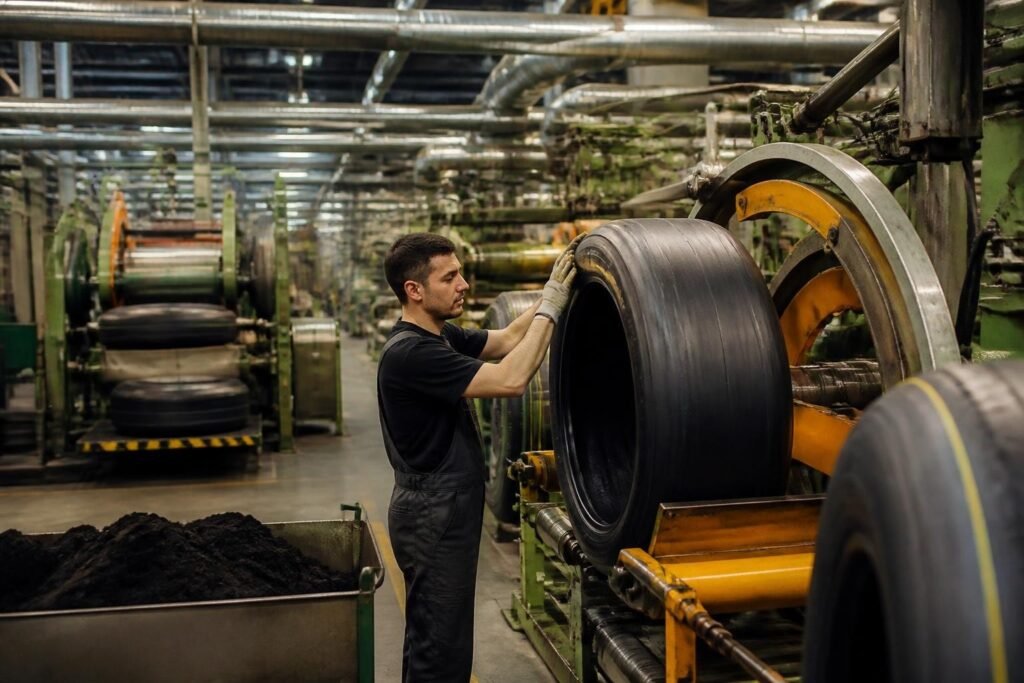
The global tire industry stands as one of manufacturing's most sophisticated sectors, with each tyres factory representing a complex ecosystem of precision engineering, advanced materials science, and rigorous quality control. Modern tire production facilities combine traditional rubber expertise with cutting-edge automation to produce millions of units annually, serving markets from passenger vehicles to heavy industrial equipment. Understanding the inner workings of a tyres factory reveals not only the technical complexity of tire manufacturing but also the strategic decisions manufacturers face regarding capacity, sustainability, and market positioning.
The Core Manufacturing Process in a Tyres Factory
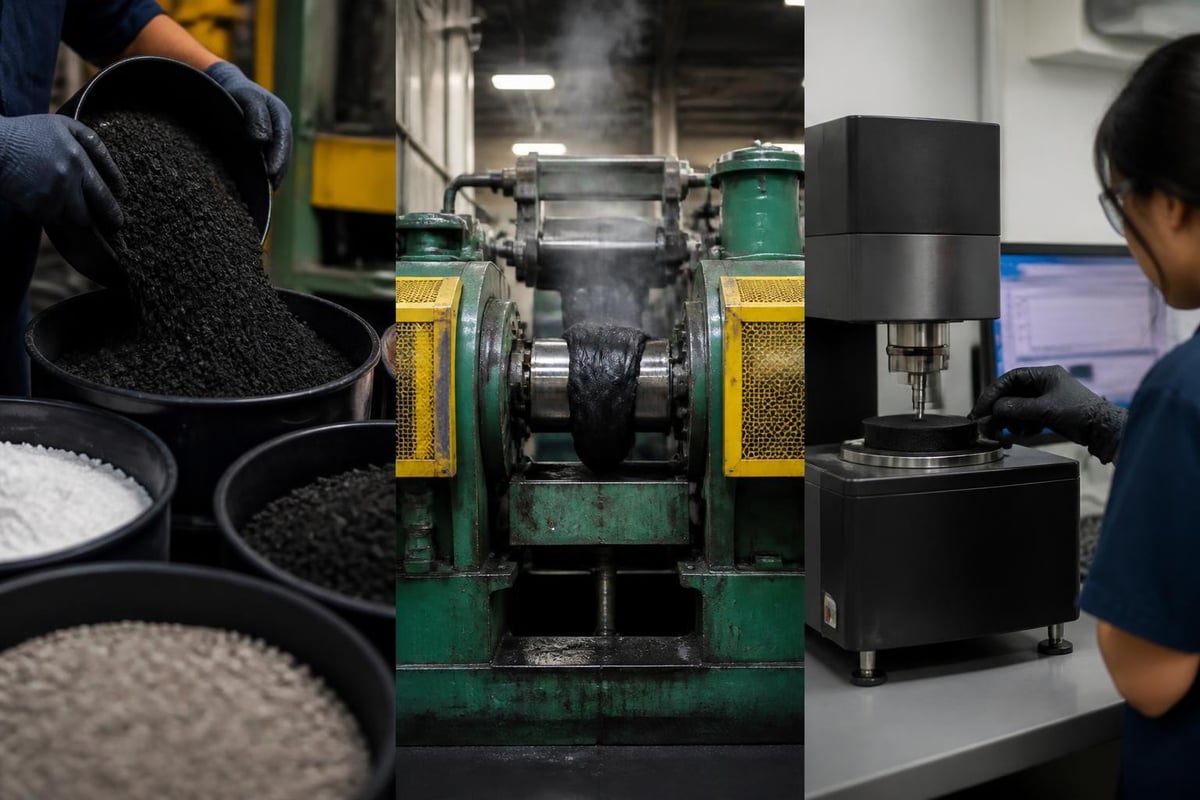
A tyres factory transforms raw materials into finished products through a carefully sequenced multi-stage process. The journey begins with compound mixing, where raw rubber, carbon black, silica, oils, and chemical additives are blended according to precise formulas. These recipes vary significantly depending on the tire type-agricultural, commercial truck, or passenger car-and each compound directly influences performance characteristics like traction, durability, and rolling resistance.
Raw Material Management and Compound Development
The mixing department operates as the foundation of quality in any tyres factory. Banbury mixers apply high shear forces and controlled temperatures to create homogeneous batches of rubber compound. Modern facilities now integrate Industry 4.0 automation and sensor technology to monitor viscosity, temperature profiles, and mixing consistency in real time. This data-driven approach ensures batch-to-batch uniformity, a critical requirement for maintaining consistent tire performance across production runs.
Compound development laboratories work alongside production teams to optimize formulations for specific applications. For instance, TBR (Truck and Bus Radial) compounds require higher heat resistance and cut resistance than passenger car compounds, while OTR (Off-The-Road) formulations prioritize puncture resistance and extended service life under extreme loads. These specialized requirements mean a diversified tyres factory maintains dozens of distinct compound recipes, each requiring separate inventory management and quality verification.
Building and Assembly Operations
The tire building process represents the heart of any tyres factory, where flat components transform into the recognizable tire shape. This stage combines multiple sub-assemblies: the inner liner (for air retention), body plies (for strength), belts (for stability), and tread (for traction). Each component arrives at the building drum from dedicated preparation departments.
First-Stage Building: Carcass Construction
Tire building machines assemble the carcass-the tire's structural foundation-by layering rubber-coated textile or steel cords onto a rotating drum. The number of plies and cord angles determine the tire's load capacity and handling characteristics. Commercial truck tires typically use steel cord plies for maximum strength, while passenger car tires may combine polyester body plies with steel belts for a balance of comfort and performance.
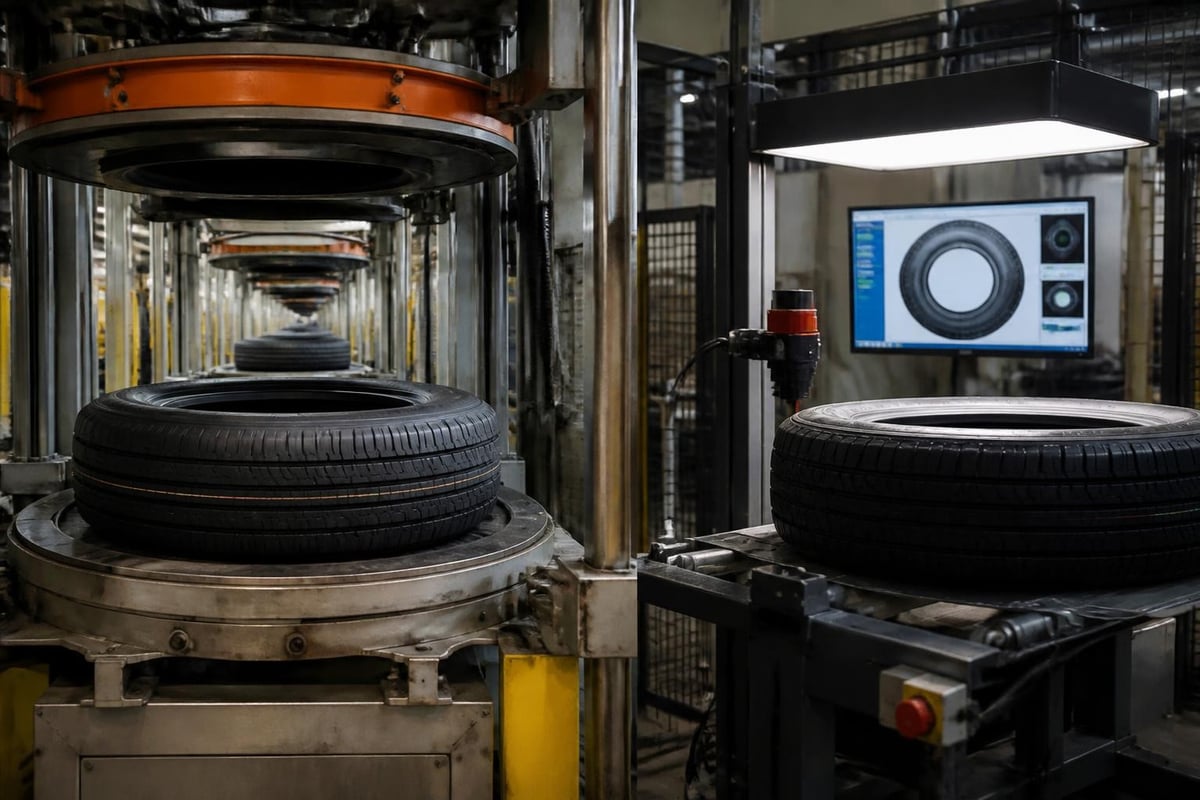
Precision matters enormously at this stage. Ply alignment variations of even one degree can create handling imbalances or premature wear patterns. Leading tyres factory facilities employ automated vision systems to verify cord angles and component placement before advancing to the second stage.
Second-Stage Building: Belt and Tread Application
The second-stage building machine expands the cylindrical carcass into its final toroidal shape and applies steel belts and the tread package. Belt tension must be carefully controlled; too loose reduces cornering stability, while excessive tension can cause belt separation during service. The tread itself arrives as an extruded strip precisely cut to length and width specifications.
| Building Stage | Components Applied | Critical Quality Parameters |
|---|---|---|
| First Stage | Inner liner, body plies, bead bundles | Ply angle accuracy, bead centering |
| Second Stage | Steel belts, tread, sidewall | Belt tension uniformity, tread splice quality |
| Inspection | Visual and dimensional checks | Diameter, width, runout tolerances |
Many modern tyres factory operations have consolidated first and second stage building onto single-stage machines, reducing material handling and improving geometric accuracy. However, large OTR and specialized tires often still require traditional two-stage processes due to size and complexity.
Vulcanization and Curing Technology
After building, green tires move to curing presses where heat and pressure trigger the chemical crosslinking (vulcanization) that transforms plastic rubber compounds into elastic, durable tire materials. Each tyres factory must carefully manage curing parameters-time, temperature, and pressure-to achieve optimal physical properties without under-curing (soft, weak tires) or over-curing (brittle, crack-prone tires).
Press Types and Efficiency Considerations
Modern facilities predominantly use bladder curing presses, where an inflatable rubber bladder applies internal pressure while heated molds shape the outer surface and imprint tread patterns. Press cycle times range from 8-12 minutes for passenger car tires to 30-45 minutes for large commercial and OTR sizes. This curing duration directly impacts tyres factory capacity; a facility with 50 passenger car presses running 12-minute cycles can theoretically produce 600 tires per hour at full utilization.
Recent investments in tire manufacturing have focused heavily on press automation and energy efficiency. Variable frequency drives, steam recovery systems, and optimized heating element designs reduce energy consumption by 15-20% compared to older equipment. For high-volume facilities processing millions of tires annually, these efficiency gains translate to substantial cost savings and reduced environmental footprint.
Mold Design and Tread Pattern Replication
Precision-machined aluminum or steel molds determine final tread patterns, siping details, and sidewall branding. A tyres factory typically maintains hundreds of mold sets to accommodate different tire sizes and patterns within a product line. Mold lifecycle management becomes a significant operational consideration; high-volume passenger car molds may produce 2,000-3,000 tires before requiring refurbishment, while specialized OTR molds see much longer service intervals due to lower production volumes.
Quality Assurance and Testing Protocols
Quality control permeates every stage of tyres factory operations, but post-cure inspection represents the final verification before shipping. Automated uniformity machines spin each tire at high speed while measuring radial force variation, lateral force variation, and geometric parameters. Tires exceeding tolerance limits are segregated for analysis or recycling.
Destructive and Non-Destructive Testing
Beyond 100% uniformity inspection, statistical sampling supports destructive testing programs. Test laboratories section tires to verify internal construction, measure belt adhesion strength, conduct high-speed endurance runs, and simulate service conditions. These programs validate that production tires match design specifications and regulatory requirements.
In the United States, EPA emission standards for tire manufacturing also influence quality systems by requiring facilities to monitor and control hazardous air pollutant emissions during compound mixing and curing. Compliance documentation becomes part of the quality record for each production batch.
Performance Validation Programs
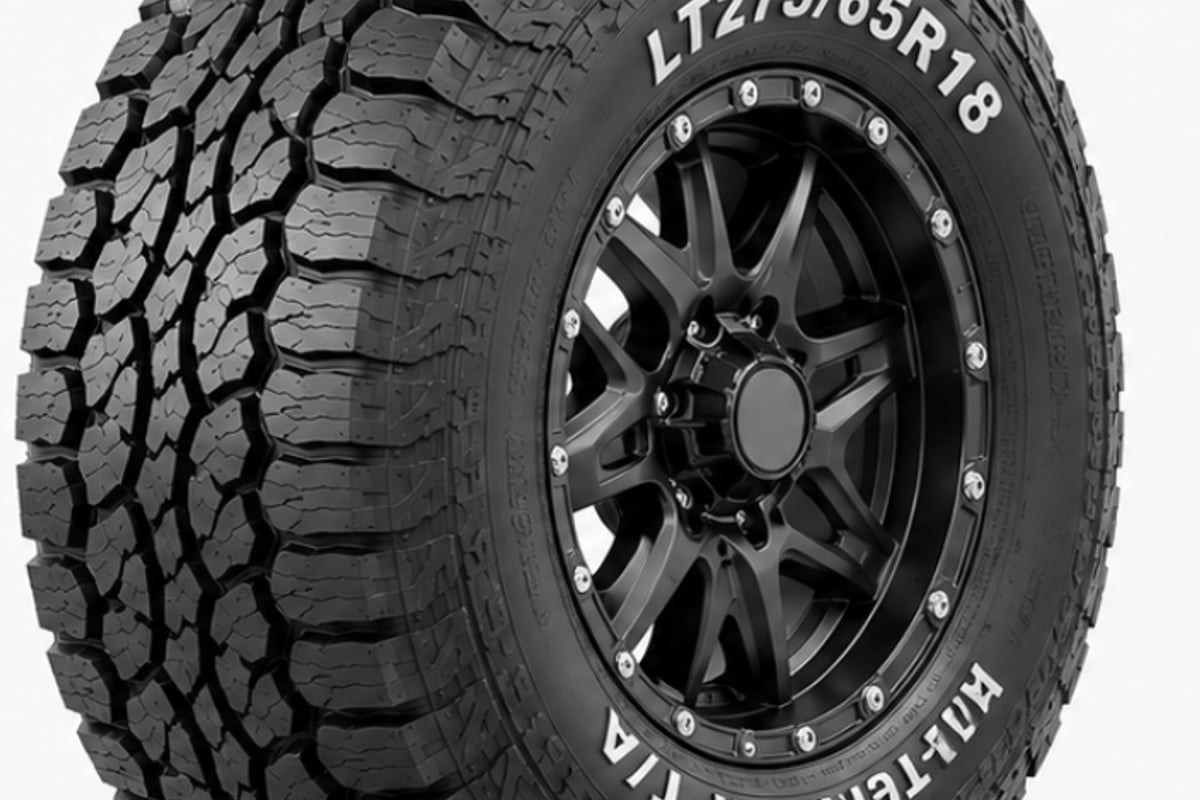
Leading manufacturers operate dedicated test fleets and proving grounds to validate tire performance under real-world conditions. For a tyres factory producing commercial truck tires, this means logging thousands of miles on highway routes, measuring tread wear rates, fuel economy impacts, and durability. Our TBR lineup at OTR TIRE THAI covers all three positions with specialized designs: steer tires feature an optimized five-rib pattern for straight-line stability, drive tires use deep closed-shoulder lugs with stone ejectors for long-haul durability, and trailer tires employ low-rolling-resistance compounds that help fleets meet efficiency standards and reduce fuel costs per mile. These validation programs directly inform compound and design improvements fed back into production specifications.
Sustainability and Circular Economy Initiatives
Environmental considerations increasingly shape tyres factory design and operations. Compound development teams work to increase sustainable material content-using bio-based oils instead of petroleum derivatives, incorporating recycled rubber and carbon black recovered from end-of-life tires, and optimizing silica content for lower rolling resistance and improved fuel economy.
Energy and Resource Efficiency
- Heat recovery systems capture waste heat from curing presses and reuse it for compound preheating or facility heating, reducing natural gas consumption
- Closed-loop water systems recycle cooling water through filtration and treatment rather than discharging to municipal systems
- LED lighting retrofits and high-efficiency motors cut electrical demand by 20-30%
- Solvent reduction programs minimize VOC emissions during manufacturing processes
European circular economy policies increasingly influence global tire manufacturing practices, as regulatory frameworks drive material efficiency, recyclability requirements, and extended producer responsibility programs. A modern tyres factory must design products and processes with end-of-life recovery in mind, not merely disposal.
End-of-Life Tire Management
The economic impact of tire manufacturing in Europe documents how the industry supports extensive collection and recycling infrastructure. Forward-thinking manufacturers design tires for easier material separation and recovery, while investing in research on devulcanization technologies that could enable true closed-loop tire-to-tire recycling. Current recycling primarily converts scrap tires into crumb rubber for sports surfaces, asphalt modification, and molded products, though lifecycle emission factors show meaningful environmental benefits compared to landfill disposal or incineration without energy recovery.
Production Planning and Market Responsiveness
Efficient tyres factory operations require sophisticated production planning that balances product mix, equipment utilization, and inventory targets. Unlike industries that can easily switch between similar products, tire manufacturing involves significant changeover complexity when moving between sizes or patterns-mold changes, compound switches, and building machine adjustments can consume 30-60 minutes per transition.
Demand Forecasting and Capacity Allocation
Manufacturers analyze seasonal patterns, regional market trends, and customer order books to optimize production schedules. Agricultural tire demand peaks before planting seasons; commercial truck tire demand correlates with freight volumes and fleet replacement cycles. A diversified tyres factory producing multiple tire categories gains flexibility to shift capacity toward high-demand segments, though this requires maintaining broader equipment and tooling inventories.
Capacity planning extends beyond press count to consider bottlenecks throughout the value chain. A facility might install additional curing presses only to discover mixing capacity becomes the constraint, or that final inspection throughput limits overall output. Systematic capacity analysis identifies these limitations before they impact customer service levels.
Workforce Development and Technical Expertise
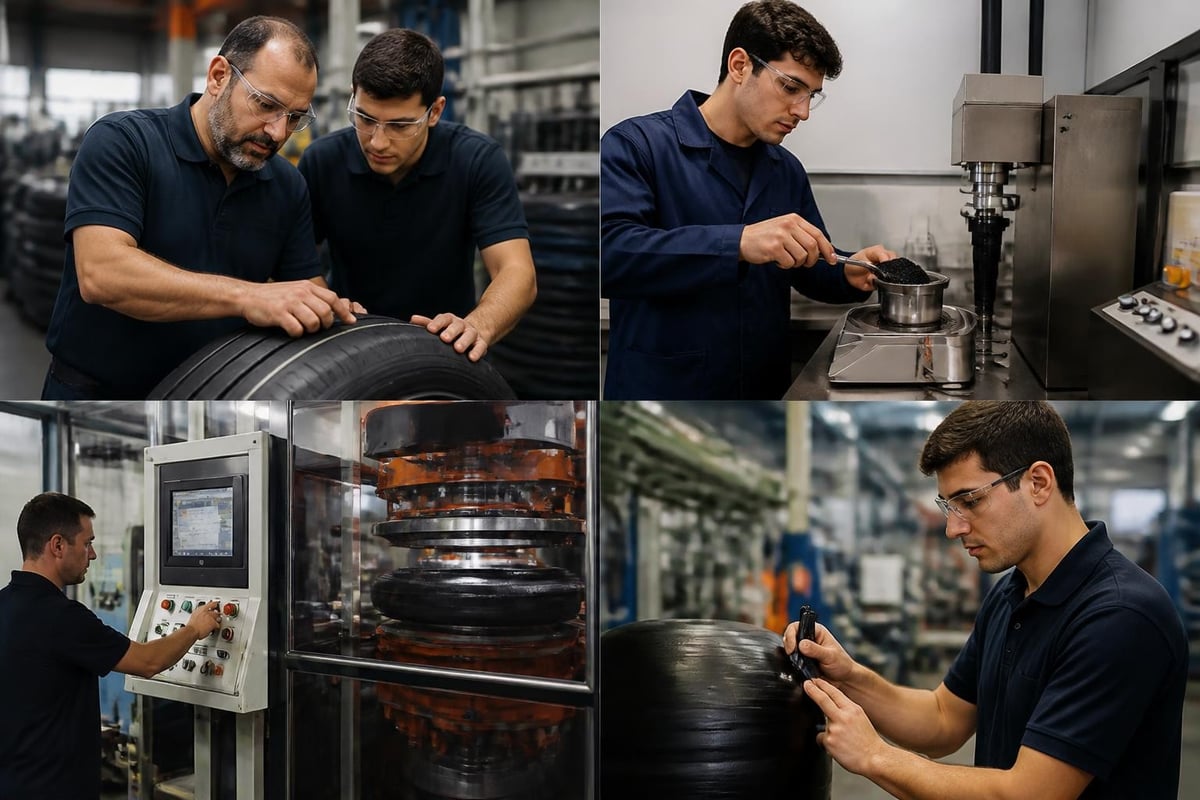
Despite increasing automation, a tyres factory remains highly dependent on skilled workers who understand compound science, building techniques, process troubleshooting, and quality principles. Training programs must develop expertise across multiple domains:
- Compound mixing technicians who can interpret viscosity curves and adjust mixing parameters
- Building operators who recognize subtle quality defects and maintain precise component placement
- Curing press technicians who manage complex heating profiles and diagnose press malfunctions
- Quality inspectors trained in measurement techniques and defect analysis
- Maintenance specialists with mechanical, electrical, and automation troubleshooting skills
Workforce continuity presents ongoing challenges as experienced personnel retire. Leading manufacturers invest heavily in apprenticeship programs, technical certifications, and knowledge transfer initiatives to preserve institutional expertise. This human capital investment proves just as critical as equipment modernization for maintaining competitive manufacturing performance.
Global Manufacturing Footprint and Regional Strategies
The location of tyres factory facilities reflects strategic decisions about market proximity, labor costs, raw material access, and trade policy. Major manufacturers operate globally distributed networks, with plants positioned to serve regional markets while managing logistics costs and tariff exposure. Thailand has emerged as a significant tire manufacturing hub, combining skilled labor, established rubber supply chains, and favorable trade agreements with key export markets.
Localization Versus Centralization
Manufacturers face ongoing decisions about whether to concentrate production in large-footprint facilities that maximize economies of scale, or to distribute capacity across multiple regional plants positioned near customers. Centralized mega-factories achieve lower unit costs through high-volume specialization but incur higher logistics expenses and longer lead times to distant markets. Regional facilities reduce transportation costs and improve customer responsiveness but sacrifice some manufacturing efficiency.
Product characteristics influence these decisions. Commodity passenger car tires, where price competition dominates, favor centralized high-volume production. Specialized OTR tires with lower volumes and higher customization requirements often suit distributed manufacturing closer to mining, construction, and agricultural end users who value technical support and rapid replacement availability.
Technology Roadmap and Industry Evolution
The tyres factory of 2030 will look markedly different from today's facilities, driven by digitalization, automation, and sustainability imperatives. Key technology trajectories include:
| Technology Area | Current State | Emerging Developments |
|---|---|---|
| Automation | Semi-automated building, manual material handling | Fully automated tire assembly, AGV material transport |
| Process Control | Statistical process control, periodic sampling | Real-time compound monitoring, AI-based defect prediction |
| Sustainability | Incremental efficiency gains, limited recycled content | Bio-based materials, circular design, carbon-neutral operations |
| Customization | Fixed product lines, long lead times | On-demand production, rapid design iteration |
Additive manufacturing research explores 3D-printed tire concepts that could enable unprecedented design freedom and local production, though technical and economic hurdles currently limit these approaches to research prototypes. Near-term innovations focus on evolutionary improvements: smarter sensors, faster changeovers, higher material utilization, and tighter integration between design simulation and manufacturing reality.
Regulatory Compliance and International Standards
A tyres factory must navigate complex regulatory environments that vary by market. In addition to U.S. EPA emission standards, manufacturers face tire labeling requirements (rolling resistance, wet grip, noise), safety standards (load capacity, speed ratings, durability tests), and material restrictions (limits on aromatic oils, heavy metals).
Certification and Market Access
Product certification requirements directly impact manufacturing operations. DOT certification for the U.S. market requires specific manufacturing code formats molded into sidewalls, while ECE certification for European markets involves different marking requirements and test protocols. Export-oriented facilities typically pursue multiple certifications to access diverse markets, which complicates mold management and quality documentation but expands commercial opportunities.
Standards harmonization efforts through organizations like ISO help reduce redundant testing and certification burdens, yet significant regional differences persist. A globally competitive tyres factory must maintain expertise across multiple regulatory frameworks and adapt production processes to meet varying requirements without compromising efficiency.
Modern tire manufacturing combines material science, precision engineering, and operational excellence within facilities that increasingly prioritize sustainability alongside productivity. Whether you're a distributor seeking reliable supply or a fleet manager evaluating tire options, understanding tyres factory operations provides valuable context for quality and performance expectations. OTR TIRE THAI manufactures a comprehensive range of agricultural, commercial truck, OTR, and specialty tires in Thailand, serving distributors in over 80 countries with factory-direct pricing and international quality standards. Connect with our team to discuss your tire requirements and discover how our manufacturing expertise can support your business growth.
