
Blog
Good Off Road Tires: Expert Selection Guide 2026
Sep
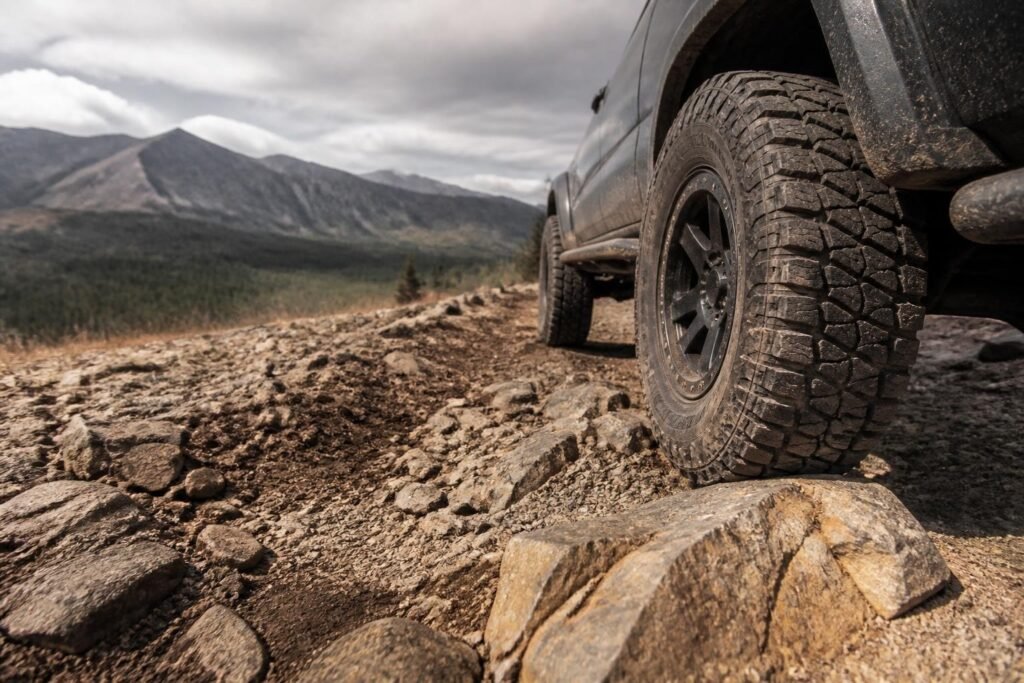
Off-road driving demands exceptional tire performance under conditions that challenge even the most capable vehicles. Whether you're navigating desert sand, climbing rocky trails, or powering through mud, your tires are the only point of contact between your vehicle and the terrain. Selecting good off road tires requires understanding how construction, tread design, and rubber compounds work together to deliver traction, durability, and safety in environments where pavement ends and adventure begins. For fleet operators, contractors, and distributors serving off-road markets, tire selection directly impacts productivity, safety records, and total cost of ownership across diverse applications from mining sites to agricultural operations.
Understanding Off-Road Tire Categories
Off-road tires span multiple categories, each engineered for specific terrain and use cases. Light truck tires designed for weekend recreation differ fundamentally from industrial off-the-road (OTR) tires built to support heavy equipment in mining operations.
All-Terrain Versatility
All-terrain (AT) tires represent the most popular compromise for vehicles that split time between highways and unpaved surfaces. These tires feature moderate tread depth, usually 12-15/32 inches when new, with a pattern that balances on-road comfort against off-road capability.
Key all-terrain features include:
- Symmetrical or asymmetric tread patterns with interlocking elements
- Siping for wet-weather traction on paved roads
- Reinforced sidewalls to resist punctures from rocks and debris
- Three-peak mountain snowflake (3PMSF) ratings on many models
The tread compound in quality AT tires uses silica-enhanced rubber that remains pliable across temperature extremes. Understanding proper tire selection fundamentals helps fleet managers match tire specifications to actual operating conditions rather than marketing claims.
Mud-Terrain Capability
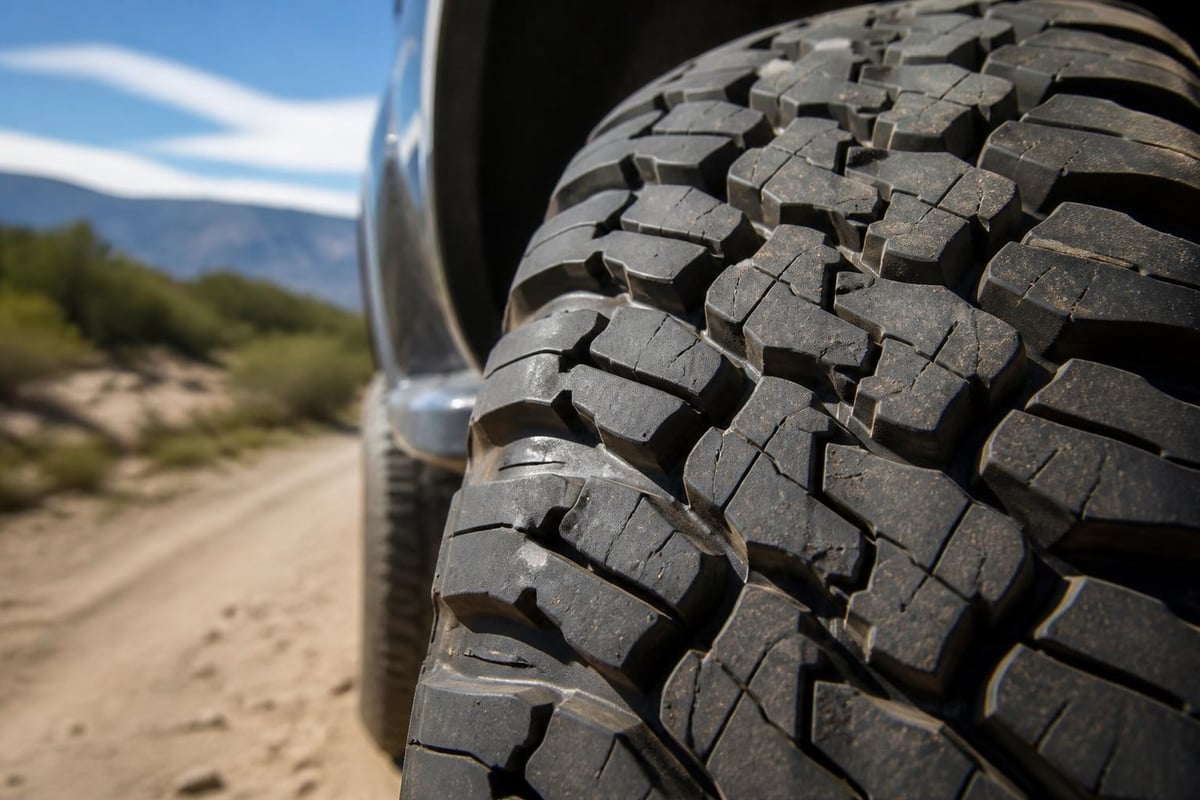
Mud-terrain (MT) tires prioritize maximum traction in soft, yielding surfaces where conventional treads pack with soil and lose grip. These aggressive tires feature large, widely spaced lugs that self-clean as the tire rotates, expelling mud from the tread voids.
Modern MT designs incorporate several performance-critical elements. Tread depths of 18-21/32 inches when new provide extended service life even as material wears. Stone ejectors molded into the tread base prevent rocks from drilling into the casing. Reinforced three-ply sidewalls resist cuts and punctures in rocky terrain where sidewall contact is unavoidable.
The trade-offs are significant. MT tires generate more road noise, reduce fuel economy by 10-15 percent compared to highway tires, and wear faster on pavement. For operations where off-road performance justifies these compromises, MT tires deliver unmatched traction in mud, sand, and loose soil.
Specialty Off-The-Road Applications
Industrial OTR tires serve construction equipment, mining vehicles, and agricultural machinery operating far from paved roads. These tires carry load ratings measured in tons rather than pounds and operate at inflation pressures specific to each application.
| Tire Type | Typical Application | Load Range | Key Feature |
|---|---|---|---|
| Earthmover L-3 | Loaders, dozers | 25-100 tons | Deep rock-resistant tread |
| Mining L-5 | Haul trucks | 50-400 tons | Extra-deep cut protection |
| Agricultural R-1 | Tractors | 5-20 tons | Self-cleaning tread bars |
| Grader G-2 | Motor graders | 10-30 tons | Smooth crown for finish work |
Each category adheres to specifications developed through decades of field experience. The environmental considerations of tire materials become especially important in sensitive ecosystems where heavy equipment operates.
Construction Elements That Define Performance
Good off road tires share construction characteristics that enable them to survive conditions that would destroy highway tires within hours. These design elements work as an integrated system where each component reinforces the others.
Casing and Ply Construction
The tire casing forms the structural foundation that contains air pressure and supports the vehicle's weight. Off-road tires typically use radial construction with steel belts running at 90 degrees to the direction of travel, topped by additional cap plies that stabilize the tread area.
Critical construction layers include:
- Inner liner: Air-impermeable rubber that maintains inflation pressure
- Body plies: Polyester or steel cords running bead to bead
- Steel belts: Circumferential reinforcement under the tread
- Cap plies: Nylon overlay that controls tread flex at high speeds
- Tread compound: Specialized rubber formulated for target terrain
Load range ratings (C, D, E, F) indicate ply strength and maximum inflation pressure. An LT285/75R16 Load Range E tire, for example, can safely inflate to 80 PSI and carry specific loads defined by federal tire safety standards.
Sidewall Protection Technology
Sidewalls represent a vulnerability in off-road environments where rocks, stumps, and debris make contact unavoidable. Premium off-road tires incorporate multiple protective strategies in their sidewall design.
Three-ply sidewall construction layers rubber-coated fabric or steel between the bead and shoulder to resist abrasion and impact damage. Some manufacturers add external sidewall lugs that extend tread elements onto the upper sidewall, providing additional grip in deep ruts while protecting the casing from scrubbing against obstacles.
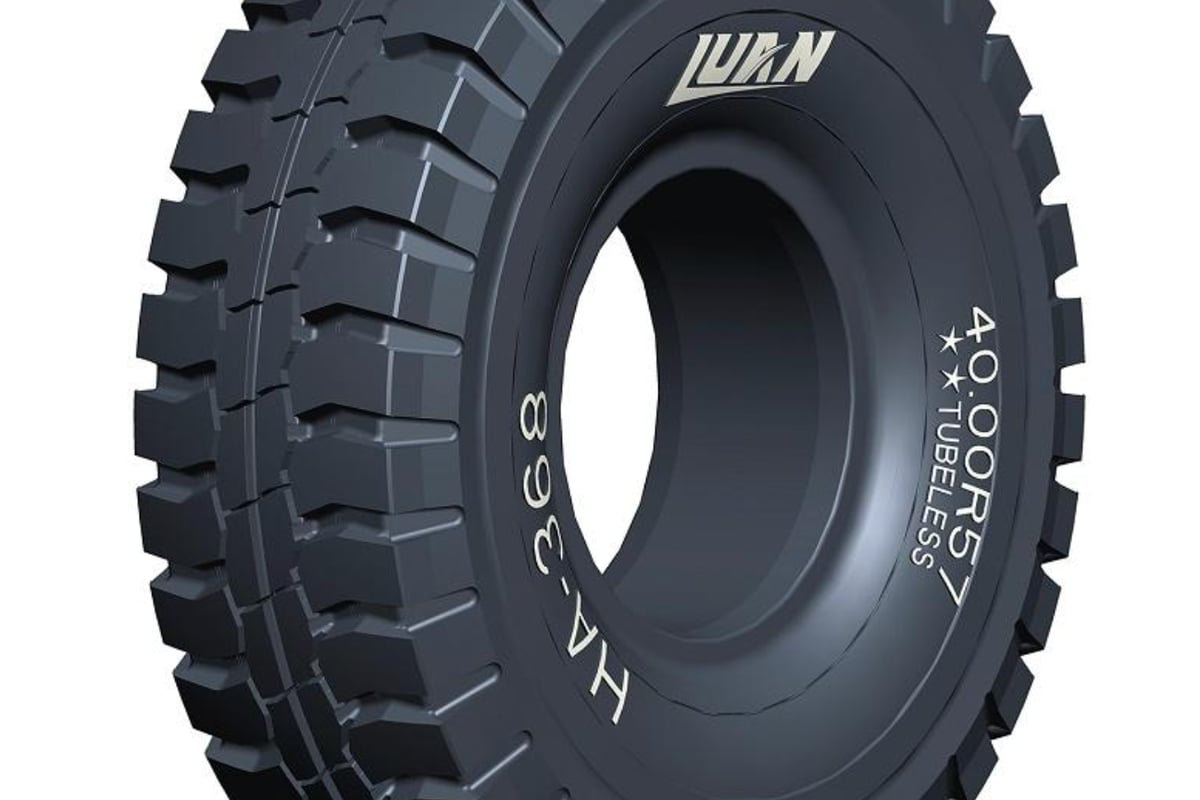
Our light truck tire range covers the full spectrum from highway terrain patterns optimized for fuel efficiency to mud-terrain designs with aggressive self-cleaning lugs. Each model incorporates sidewall protection and tread compounds matched to specific duty cycles, whether your fleet operates primarily on pavement with occasional trail use or tackles severe off-road conditions daily.
Bead and Rim Interface
The bead area anchors the tire to the wheel and seals the inflation chamber. Off-road tires use high-tensile steel wire bundles wrapped in rubber to create an inextensible hoop that resists the forces trying to unseat the tire during aggressive driving.
Bead design becomes critical for operators who air down tires to improve traction in sand or mud. Lower pressures increase the tire's footprint but also reduce the force holding beads against the rim. Quality off-road tires incorporate bead toe guards and specifically profiled bead seats that maintain seal integrity even at pressures below 15 PSI.
Tread Pattern Engineering for Specific Terrain
Tread pattern determines how a tire interacts with the ground, channeling forces and evacuating debris to maintain continuous contact. Engineers optimize patterns for target surfaces through careful attention to void ratio, block geometry, and edge density.
Void Ratio and Self-Cleaning
Void ratio measures the percentage of the tread area occupied by grooves rather than rubber blocks. Highway tires typically run 25-30 percent void, optimizing rubber contact for dry traction while providing channels for water evacuation. Good off road tires increase void ratios to 35-50 percent, creating space for mud and soil to escape the contact patch.
The spacing and angle of tread elements determines self-cleaning effectiveness. Blocks positioned too close together pack with mud that hardens as it dries, transforming an aggressive off-road tire into a slick that offers minimal traction. Proper spacing allows the tire to flex as it rotates, mechanically forcing trapped material out of the tread.
Edge Density and Bite
Tread blocks create edges where rubber meets ground. More edges generally improve traction on loose surfaces where the tire needs to dig through yielding material to find grip. MT tires maximize edge count through aggressive lug designs with multiple steps, angles, and sipes.
The trade-off involves tread block stability. Tall, narrow blocks with high edge density can flex excessively under load, squirming in the contact patch and generating heat. Premium tires use variable-pitch patterns that maintain high edge counts while supporting blocks through strategic tie-bars and buttressing.
| Pattern Type | Void Ratio | Best Terrain | Highway Manners |
|---|---|---|---|
| Highway Terrain | 25-30% | Pavement, light dirt | Excellent |
| All-Terrain | 35-40% | Mixed pavement/trail | Good |
| Mud-Terrain | 45-50% | Mud, sand, rock | Fair |
| Extreme Terrain | 50%+ | Dedicated off-road | Poor |
Directional vs. Symmetric Designs
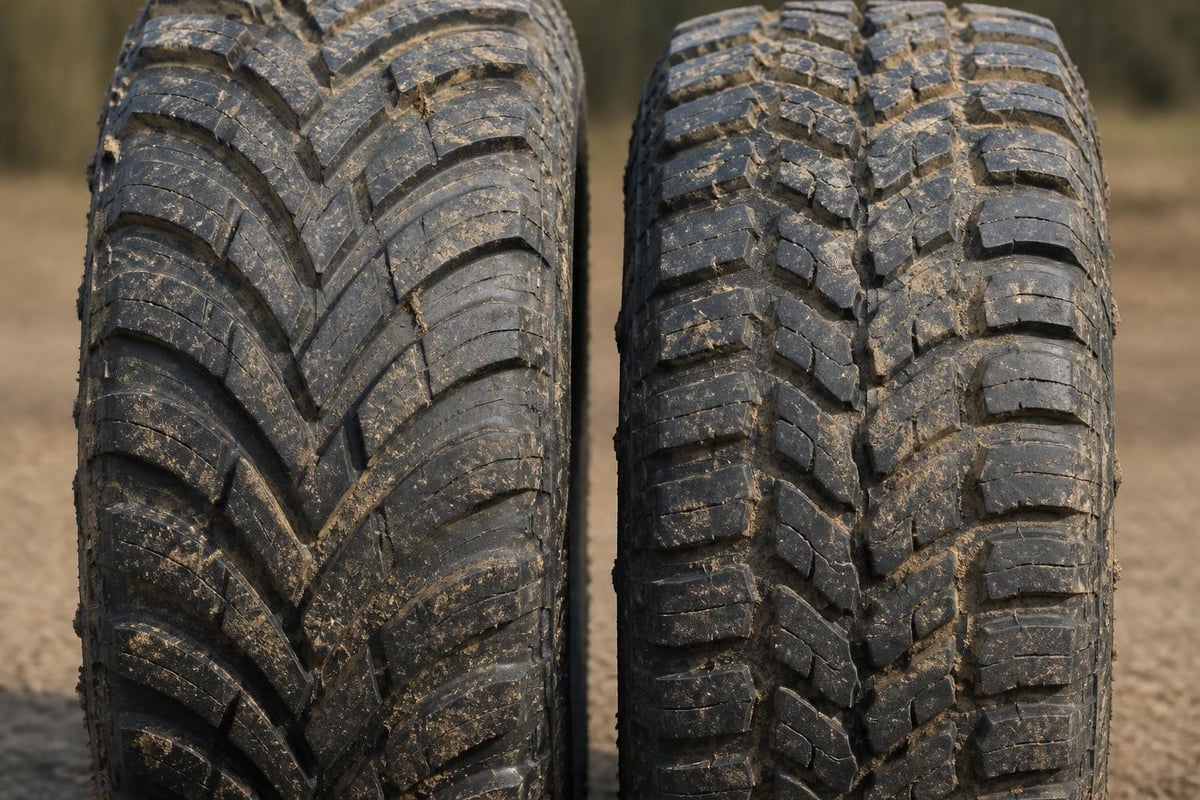
Directional tread patterns feature a V-shaped or arrowhead design that must rotate in a specific direction. These patterns excel at evacuating water, mud, and snow by channeling material from the center of the contact patch toward the shoulders where it exits to the sides.
Symmetric patterns allow rotation in either direction and typically wear more evenly since positions can be rotated freely. Many operators prefer symmetric designs for fleet applications where tire rotation extends service life and simplifies maintenance procedures.
Compound Formulation and Durability
The rubber compound that forms the tread determines cut resistance, wear rate, and traction across temperature ranges. Off-road tire compounds balance conflicting requirements through careful selection of base polymers, reinforcing agents, and chemical additives.
Cut and Chip Resistance
Off-road environments subject tires to sharp rocks, metal debris, and abrasive surfaces that can slice through soft rubber compounds. Manufacturers add cut-resistant compounds incorporating high levels of carbon black and silica reinforcement that maintain flexibility while resisting penetration.
The tread's base compound differs from the cap compound in many premium designs. A harder base layer resists cuts and controls heat buildup, while a softer cap layer maintains traction. This dual-compound construction appears in tires designed for mixed-use scenarios where both cut resistance and grip matter.
Temperature Performance Range
Rubber properties change dramatically with temperature. Compounds optimized for flexibility in winter conditions may become too soft in desert heat, leading to accelerated wear and potential tread separation. Good off road tires use polymer blends that maintain performance across operating temperatures from -40°F to 160°F.
Natural rubber content improves low-temperature flexibility and tear resistance. Synthetic polymers add heat resistance and ozone protection. The specific blend depends on target markets and typical operating conditions, with formulations varying between tires intended for Arctic operations versus desert use.
Sizing and Load Specifications for Off-Road Use
Proper tire sizing ensures adequate load capacity, correct speedometer calibration, and sufficient clearance for suspension articulation. Off-road applications often push these parameters beyond typical on-road requirements.
Interpreting LT Metric Sizing
Light truck tire sizes use alphanumeric codes that specify dimensions and capabilities. An LT285/75R16 Load Range E tire, for example, decodes as:
- LT: Light truck designation
- 285: Section width in millimeters (approximately 11.2 inches)
- 75: Aspect ratio (sidewall height is 75% of section width)
- R: Radial construction
- 16: Rim diameter in inches
- Load Range E: 10-ply rated strength
Plus-sizing for off-road use typically involves increasing section width and/or overall diameter while maintaining proper load capacity. Modern vehicles with advanced drivetrain systems can accommodate larger tires than previous generations, but careful measurement prevents interference with suspension components during full articulation.
Load Index and Speed Rating
Every tire carries a load index number indicating maximum weight capacity at specified inflation pressure. Off-road operations often require higher load indices than street driving since uneven terrain creates momentary overloads as weight shifts between tires.
Speed ratings matter less for dedicated off-road tires since most trail driving occurs well below highway speeds. However, tires used on vehicles that also see highway service require adequate speed ratings. An S-rated tire (maximum 112 mph) provides sufficient margin for most applications, while Q-rated (99 mph) or R-rated (106 mph) tires work for equipment that never exceeds trail speeds.
Selection Criteria for Different Operating Environments
Choosing good off road tires requires matching specific design features to the terrain, climate, and duty cycle where the vehicle operates. No single tire excels everywhere, so selection involves prioritizing the characteristics that matter most for primary use cases.
Desert and Sand Operation
Sandy terrain requires tires that float on yielding surfaces rather than digging in. Wider section widths distribute vehicle weight across larger contact patches, reducing ground pressure that causes tires to sink. Relatively smooth tread patterns with paddle-like elements work better than aggressive mud treads that simply dig holes in soft sand.
Desert tire priorities include:
- Wide section width for flotation (at least 12.5 inches)
- Lower air pressures (often 12-18 PSI for recreational use)
- Heat-resistant compounds for sustained high-temperature operation
- Cut-resistant construction for sharp rocks in hardpan areas
Operators in desert environments should consult public land management guidelines that may specify tire requirements for certain trail systems and emphasize fire prevention through proper equipment maintenance.
Rocky and Mountainous Terrain
Rock crawling and alpine trails demand maximum puncture resistance and sidewall protection. Tires for these environments use aggressive tread patterns with deep voids that grip irregular rock surfaces while thick sidewalls resist cuts from sharp edges.
Proper inflation becomes critical. While lower pressures improve traction on smooth surfaces, rocky terrain can pinch tire sidewalls against sharp edges when pressures drop too low. Most experienced operators maintain 25-30 PSI in rocky conditions as a compromise between traction and protection.
Mud and Clay Conditions
Wet clay and sticky mud challenge tires differently than sand or rock. The material packs into tread voids, filling the pattern until the tire effectively becomes a slick. Successful mud tires feature wide voids, aggressive self-cleaning designs, and soft compounds that maintain flexibility when caked with dried mud.
Three-stage self-cleaning designs work best. Initial void spacing allows mud to enter the pattern, tread flex during rotation breaks the mud loose, and centrifugal force as the tire spins throws debris clear of the contact patch. Without all three elements, even aggressive tread patterns fail in sticky conditions.
Maintenance Practices for Extended Service Life
Good off road tires represent significant investments, and proper maintenance practices directly affect service life, performance retention, and safety. Off-road use accelerates wear and introduces damage mechanisms absent in highway driving.
Inflation Management and Field Adjustments
Maintaining correct inflation pressure optimizes load distribution, wear characteristics, and rolling resistance. Off-road operators often adjust pressures for specific terrain, reducing inflation to improve traction on yielding surfaces before increasing pressure for highway transit.
Pressure adjustment requires understanding the relationship between inflation and load capacity. Each PSI reduction decreases maximum load capacity proportionally. A tire rated for 3,000 pounds at 50 PSI might safely carry only 2,400 pounds at 40 PSI. Operators must ensure reduced-pressure load capacity still exceeds actual vehicle weight after accounting for uneven terrain loading.
Rotation Schedules and Wear Monitoring
Regular rotation extends tire life by equalizing wear across all positions. Off-road vehicles often show uneven wear patterns due to drivetrain characteristics, with front tires wearing faster on vehicles with open differentials that spin inner wheels during turns.
Recommended rotation practices include:
- Inspect all tires every 3,000-5,000 miles for damage and wear
- Rotate tires every 5,000-7,000 miles following manufacturer patterns
- Monitor tread depth at multiple points across each tire
- Remove tires from service at 4/32-inch remaining depth for off-road use
Directional tires require front-to-rear rotation on the same side. Symmetric tires allow more flexible rotation patterns that can help offset uneven wear from alignment issues or driving habits.
Damage Assessment and Repair Limits
Off-road tires routinely sustain punctures, cuts, and impact damage that would sideline highway tires. Industry standards define repairable damage based on location, size, and severity. Punctures in the tread area up to 1/4 inch diameter are generally repairable using patch-plug combinations installed from inside the tire.
Sidewall damage typically exceeds safe repair limits since flexing stresses prevent patches from maintaining reliable bonds. Cuts longer than one inch, any damage exposing cords, or penetrations near the bead area require tire replacement. Operating on damaged tires risks catastrophic failure that can cause accidents and injuries, as documented in crash risk research examining tire condition factors.
Environmental and End-of-Life Considerations
Off-road tire selection increasingly involves environmental factors including manufacturing sustainability, in-service environmental impact, and end-of-life disposal options. Responsible operators consider these elements alongside traditional performance criteria.
Minimizing Environmental Impact During Use
Tire selection affects environmental impact through several mechanisms. Tread pattern aggressiveness determines the degree of soil disturbance on trails, with highly aggressive patterns churning topsoil and accelerating erosion. Tread compounds affect the quantity and composition of particulate matter released as tires wear.
Operators can minimize impact through conscious tire selection and driving practices. Less aggressive tread patterns adequate for the terrain reduce unnecessary soil disruption. Proper inflation maintains tread shape that minimizes uneven wear and associated particle release. Staying on designated trails prevents vegetation damage and protects sensitive ecosystems from unnecessary tire impacts.
Recycling and Disposal Programs
Scrap tires present environmental challenges but also recycling opportunities. EPA guidance on used tire handling outlines proper disposal procedures, recycling pathways, and beneficial reuse applications that divert tires from landfills.
Off-road tires often qualify for retreading programs that extend service life while reducing raw material consumption. Industrial OTR tires commonly receive multiple retreads over their service life, with proper casings supporting three to five tread replacements. Light truck tires increasingly offer retreading options as technology improves and cost structures make the process economically viable.
Matching Tires to Vehicle Capability and Use Case
The best off-road tire selection aligns with vehicle capabilities, typical terrain, and operational requirements rather than simply choosing the most aggressive pattern available. Thoughtful matching improves performance while controlling costs and minimizing unnecessary compromises.
Fleet and Commercial Considerations
Commercial operators selecting tires for off-road fleets balance initial cost against total cost of ownership. Premium tires with advanced compounds and robust construction often deliver lower per-mile costs through extended wear life and reduced downtime despite higher purchase prices.
Fleet managers should document actual operating conditions rather than relying on general classifications. A "construction site" application might involve primarily hard-packed dirt roads requiring durable highway-terrain tires, or it might mean navigating through wet clay requiring full mud-terrain capability. Accurate condition assessment prevents both over-specification that wastes money and under-specification that causes premature failures.
Seasonal Requirements and Tire Swaps
Operations in regions with distinct seasonal conditions benefit from seasonal tire changes that optimize performance for current weather. Dedicated winter tires with 3PMSF certification outperform all-season designs in snow and ice, while summer compounds maintain superior dry traction and wear resistance in warm months.
Tire storage for seasonal swaps requires protecting unmounted tires from environmental damage. Clean, dry storage away from direct sunlight and ozone sources (electric motors, welders) preserves rubber compounds. Stacking mounted tires on their sides or hanging unmounted tires prevents distortion that can cause balance problems when returned to service.
Selecting good off road tires demands understanding how construction, compound, and tread design interact to deliver performance in specific terrain conditions. Whether you're equipping a recreational 4×4, outfitting a commercial fleet, or sourcing tires for industrial equipment, matching tire specifications to actual operating requirements ensures optimal performance, safety, and value. OTR TIRE THAI manufactures premium off-road capable tires across light truck, commercial, agricultural, and industrial categories, serving distributors in over 80 countries with factory-direct pricing and international quality standards that meet the demands of the world's most challenging operating environments.
