
Blog
Low Cost Car Tires: Quality on a Budget in 2026

Oct
Finding low cost car tires that deliver reliable performance without compromising safety remains a top priority for vehicle owners in 2026. With inflation affecting every aspect of automotive ownership, drivers are seeking ways to reduce expenses while maintaining roadworthiness. The tire market has evolved significantly, offering budget-conscious consumers more options than ever before. Understanding how to evaluate affordable tires, maximize their lifespan, and make informed purchasing decisions can save hundreds of dollars per year without putting your family at risk.
Understanding the Budget Tire Market
The market for low cost car tires has matured considerably over the past decade. Manufacturers now produce entry-level tires that meet rigorous safety standards while maintaining competitive pricing. These tires typically feature simpler tread designs, fewer compound technologies, and shorter warranty periods compared to premium options.
Three distinct tiers dominate today's passenger tire market. Premium brands invest heavily in research and development, resulting in advanced compounds and tread patterns. Mid-tier offerings balance performance and price, often manufactured by the same companies under secondary brand names. Budget tires focus on meeting essential safety requirements at the lowest possible cost.
The distinction between these categories has blurred somewhat in recent years. Many budget tire manufacturers have improved quality control and adopted manufacturing techniques previously reserved for premium products. According to Consumer Reports’ tire testing resources, some affordable tires now perform comparably to mid-tier options in key safety metrics like wet braking and hydroplaning resistance.
Price Points and What They Include
Low cost car tires typically range from $50 to $100 per tire for standard passenger vehicles. This pricing usually covers the tire itself but excludes mounting, balancing, disposal fees, and valve stems. Understanding the complete cost picture prevents budget surprises at the checkout.
| Cost Component | Typical Range | Notes |
|---|---|---|
| Tire (each) | $50-$100 | Size and load rating affect price |
| Mounting & balancing | $15-$30 per tire | Some retailers offer free installation |
| Disposal fee | $3-$5 per tire | Environmental recycling charge |
| Valve stems | $2-$5 per tire | Often recommended with new tires |
| Total per tire | $70-$140 | Complete installed cost |

Key Performance Factors for Budget Tires
Safety should never be compromised when selecting low cost car tires. Several measurable performance characteristics indicate whether an affordable tire will protect your vehicle adequately. These factors directly impact braking distance, handling in adverse weather, and overall longevity.
Treadwear Ratings and Longevity
The Uniform Tire Quality Grading (UTQG) system provides standardized treadwear ratings. A rating of 400 means the tire should last twice as long as a tire rated 200 under controlled test conditions. Budget tires often carry ratings between 300 and 500, compared to 600 or higher for premium options.
Calculating real-world value requires dividing the purchase price by the expected mileage. A $70 tire rated for 40,000 miles costs $1.75 per thousand miles, while an $80 tire lasting 50,000 miles costs $1.60 per thousand miles. The slightly more expensive option delivers better long-term value.
Treadwear alone doesn't tell the complete story. Tire aging occurs regardless of mileage, with most manufacturers recommending replacement after six years. Budget-conscious buyers should consider their annual mileage when selecting tires to avoid replacing barely-worn tires due to age-related degradation.
Wet Traction and Safety Performance
Wet traction grades (AA, A, B, C) indicate how well tires grip wet pavement during controlled testing. The AAA buying guide on tire selection emphasizes that even budget tires should carry at least an 'A' wet traction rating for adequate safety margins.
Modern low cost car tires incorporate basic siping patterns and water evacuation channels. While not as sophisticated as premium tires, these features provide acceptable wet-weather performance for daily driving. Drivers in regions with frequent rain should prioritize wet traction ratings over minor price differences.
Testing organizations have documented that braking distances can vary by 10-20 feet between budget and premium tires in wet conditions. This difference proves critical during emergency stops, making wet traction ratings one of the most important specifications to verify before purchase.
Where to Find the Best Deals
Strategic shopping significantly impacts the final cost of low cost car tires. Multiple retail channels compete for budget-conscious customers, each offering distinct advantages. Understanding where and when to buy maximizes value while ensuring product authenticity.
Retail Channels Compared
Online retailers frequently offer the lowest base prices due to reduced overhead costs. Customers purchase tires that ship to local installers or directly to their homes. This approach requires coordinating installation separately but can save 15-30% compared to traditional retail.
Warehouse clubs leverage bulk purchasing power to negotiate competitive pricing. Membership fees offset some savings, but the included services (free rotation, lifetime balancing) add value for members already shopping at these locations. Installation quality varies by location, making research essential.
Independent tire shops may match or beat chain store pricing when asked. They often carry lesser-known budget brands and can source specific sizes quickly. Building a relationship with a local shop provides personalized service and flexibility that larger retailers cannot match.
Vehicle maintenance facilities like VODIS Automobile often partner with tire suppliers to offer competitive pricing on quality brands, particularly for European vehicles that require specific tire specifications.
The BBB’s tire buying guide recommends obtaining written quotes from at least three retailers and comparing total installed prices rather than tire-only costs. This practice reveals hidden fees and identifies truly competitive offers.
Maximizing Value from Budget Tires
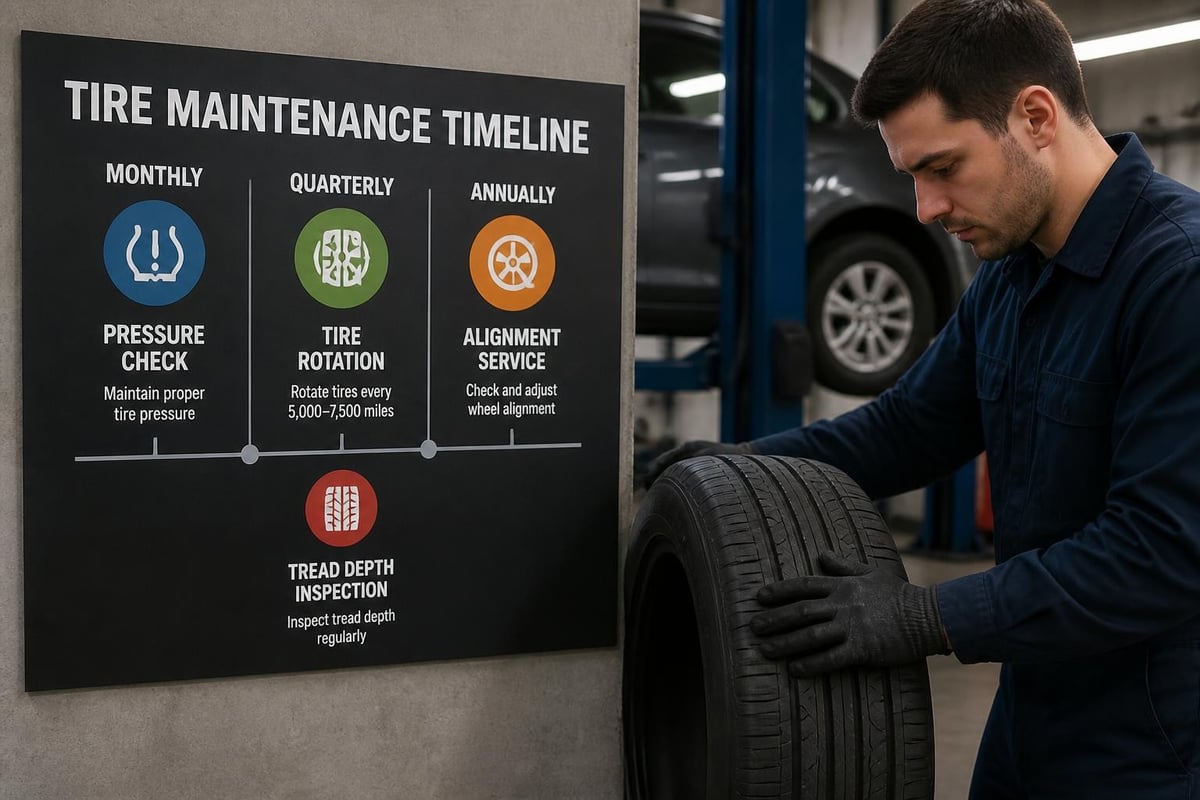
Proper maintenance extends tire life dramatically, turning a good deal into an exceptional value. Simple habits and regular checks prevent premature wear and unsafe conditions. These practices cost nothing but deliver measurable returns.
- Check tire pressure monthly using an accurate digital gauge
- Rotate tires every 5,000-7,000 miles following the vehicle manufacturer's pattern
- Inspect tread depth quarterly using the penny test (Lincoln's head should partially hide)
- Align wheels when installing new tires to prevent uneven wear
- Avoid aggressive driving that accelerates tread wear and reduces fuel economy
Inflation Pressure and Fuel Economy
Maintaining correct inflation pressure improves fuel economy by 3-5% while extending tread life. Under-inflated tires create excessive heat and accelerate shoulder wear. Over-inflation reduces the contact patch and causes center wear patterns.
The proper pressure appears on a placard inside the driver's door jamb, not on the tire sidewall. Tire sidewall numbers indicate maximum pressure, not the optimal operating pressure for your specific vehicle. Checking pressure when tires are cold (before driving) provides accurate readings.
Seasonal pressure adjustments matter in climates with significant temperature variation. Tire pressure drops approximately one PSI for every 10-degree Fahrenheit decrease in ambient temperature. Winter months often require adding air to maintain proper inflation.
For battery maintenance alongside tire care, services like Bateriku Sg Buloh demonstrate how regular automotive maintenance creates synergies that reduce overall ownership costs through comprehensive vehicle care programs.
Environmental Considerations of Budget Tires
The environmental impact of tires extends beyond initial manufacturing. Recent research has identified concerning pollutants released through normal tire wear, raising questions about the true cost of low-priced options. Understanding these factors helps consumers make informed decisions that balance budget constraints with environmental responsibility.
The EPA’s research on tire environmental impacts has documented how tire wear particles enter waterways and ecosystems. A single tire sheds approximately 1-2 pounds of material over its lifetime, releasing thousands of chemical compounds into the environment.
Chemical Additives and Emissions
Modern tires contain over 200 ingredients, including chemicals that prevent cracking and extend service life. One additive, 6PPD (used to prevent ozone degradation), transforms into 6PPD-quinone when exposed to air. Research published in peer-reviewed environmental studies has linked this compound to aquatic toxicity in urban runoff.
Budget tire manufacturers may use different additive packages compared to premium brands. The ITRC’s technical guidance on 6PPD provides regulatory context, though current standards apply uniformly across price points. Consumers cannot easily determine additive formulations, making manufacturer reputation an important consideration even when purchasing low cost car tires.
Longer-lasting tires reduce total particulate emissions over time by requiring fewer replacements. A budget tire lasting 40,000 miles releases less total material than two premium tires each lasting 30,000 miles at higher price points. The calculation becomes complex when factoring manufacturing emissions, transportation, and disposal.
End-of-Life Recycling
Proper disposal prevents environmental harm and recovers valuable materials. The EPA’s Used Tire Quick Start Guide outlines recycling pathways including tire-derived fuel, civil engineering applications, and crumb rubber production for playgrounds and athletic surfaces.
Most retailers charge disposal fees ($3-5 per tire) that fund recycling programs. These fees ensure tires enter legitimate recycling streams rather than illegal dumps or landfills. Budget-conscious consumers should verify that quoted prices include disposal to avoid surprises and ensure environmental compliance.
Brand Selection Strategies
Choosing between unknown budget brands and established manufacturers' entry-level lines requires evaluating several factors beyond initial cost. Brand reputation, warranty coverage, and local availability all influence long-term satisfaction and total cost of ownership.
Tier-Two Brands from Major Manufacturers
Many premium tire companies produce budget lines under different brand names. These tires benefit from advanced manufacturing processes and quality control systems while using simpler designs and less expensive materials. Examples include established manufacturers' economy offerings that share production facilities with premium products.
Researching corporate ownership reveals these connections. A budget brand manufactured in the same facility as premium tires often shares basic quality standards while eliminating advanced features most drivers never utilize. This strategy provides reassurance about fundamental safety and durability.
Warranty comparison reveals significant differences between brands. Budget tires may offer limited mileage warranties (20,000-40,000 miles) compared to premium warranties exceeding 60,000 miles. However, prorated warranty structures often provide minimal value after moderate wear, making initial quality more important than warranty length.
| Feature | Budget Unknown Brand | Major Manufacturer Budget Line | Mid-Tier Option |
|---|---|---|---|
| Price per tire | $50-$65 | $70-$85 | $90-$110 |
| Treadwear rating | 300-400 | 400-500 | 500-700 |
| Warranty | Limited/none | 40,000-50,000 miles | 60,000-80,000 miles |
| Availability | Online primarily | Wide retail network | Wide retail network |
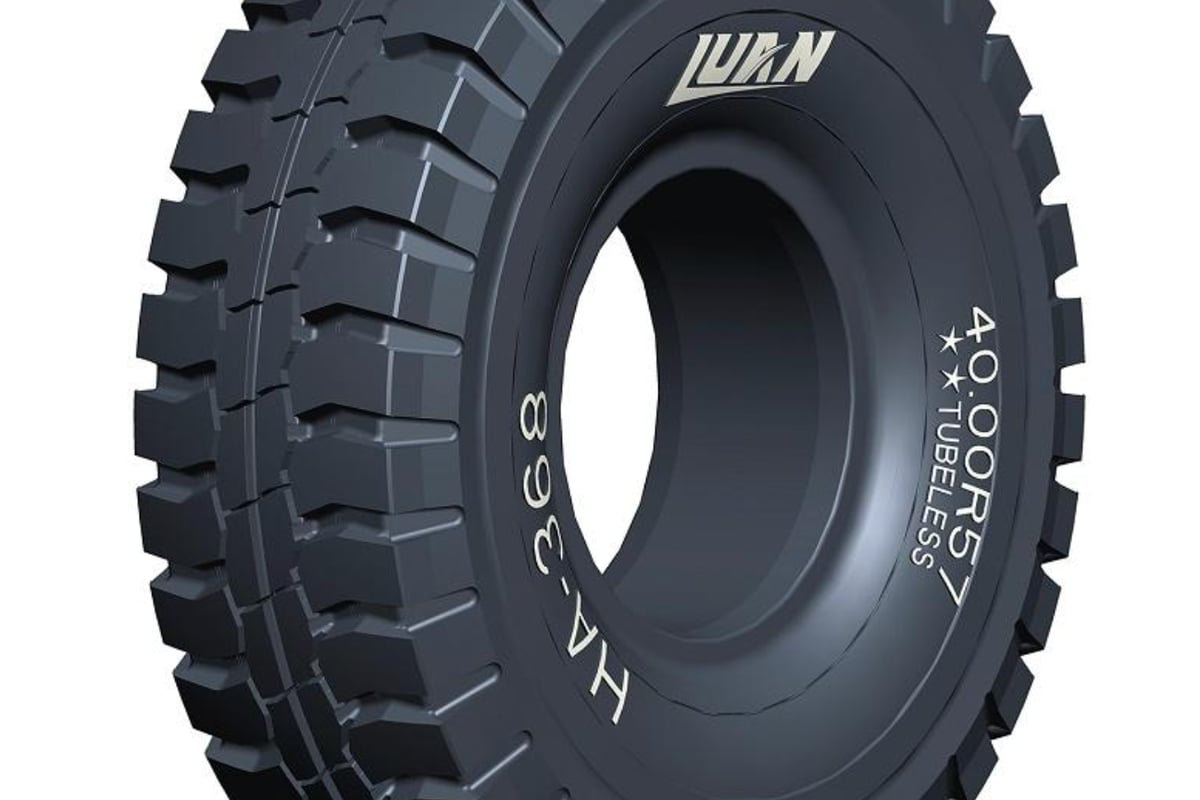
For commercial applications, specialized manufacturers like OTR TIRE THAI demonstrate how focused production expertise can deliver quality at competitive wholesale pricing across agricultural, industrial, and commercial tire segments. Their light truck tire range serves pickup fleets and commercial applications where budget constraints must balance with reliability requirements.
Size and Specification Considerations
Selecting the correct tire size and load rating ensures safety and optimal vehicle performance. Low cost car tires often cover popular sizes but may have limited availability in unusual specifications. Understanding how to read tire sidewall markings prevents costly mistakes.
Decoding Tire Specifications
A typical passenger tire marking reads "P215/65R15 95H." Each component provides critical information. The "P" indicates passenger tire, "215" is section width in millimeters, "65" represents aspect ratio (sidewall height as a percentage of width), "R" means radial construction, "15" is wheel diameter in inches, "95" indicates load index, and "H" specifies speed rating.
Load index and speed ratings cannot be downgraded safely. A tire rated 95 can carry 1,521 pounds per tire at maximum inflation. Selecting a lower load index risks tire failure under normal use. Similarly, speed ratings indicate sustained speed capability (H = 130 mph), with lower ratings potentially unsafe for highway driving.
Budget tire lines sometimes omit extreme sizes or specialized ratings. Vehicles requiring unusual specifications may find limited low-cost options, making mid-tier alternatives the practical minimum. Vehicle weight, typical loading, and driving conditions all factor into appropriate specification selection.
Installation and First-Use Best Practices
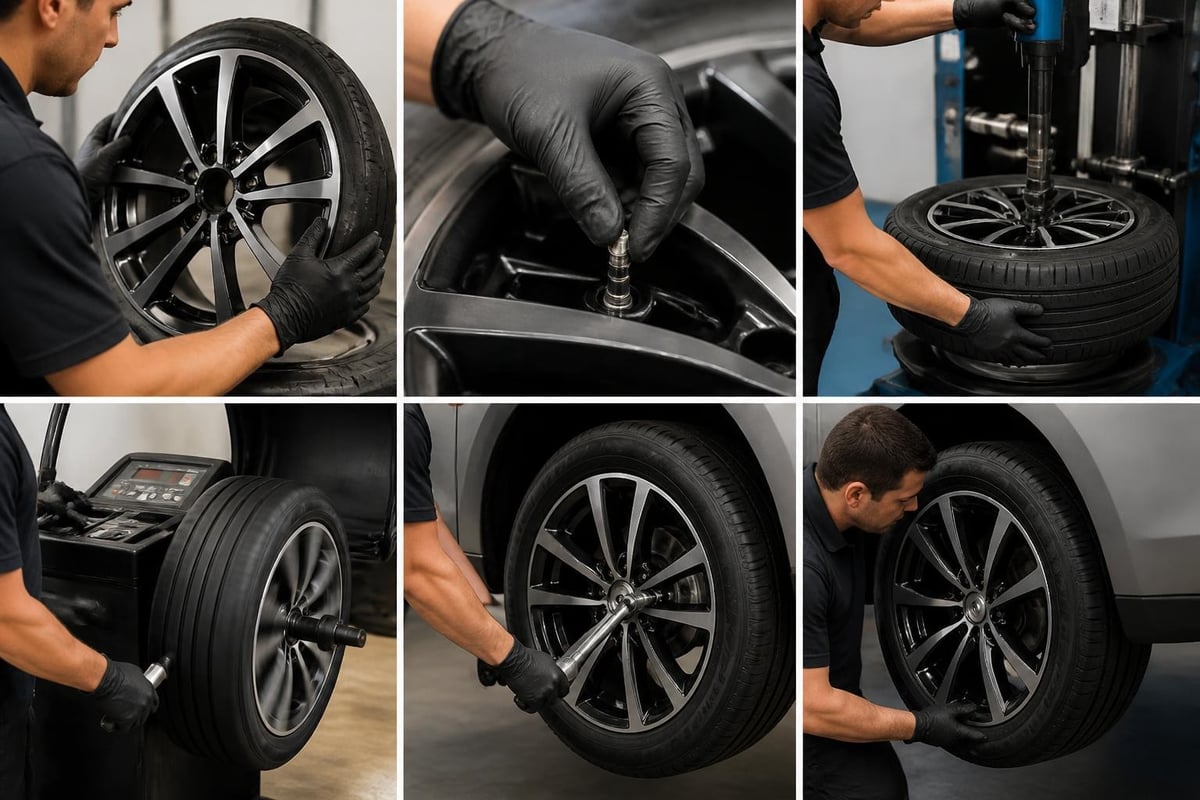
Professional installation ensures proper mounting, balancing, and inflation. While DIY installation reduces costs, improper mounting creates safety hazards and accelerates wear. Understanding what proper installation includes helps verify quality service regardless of where you purchase low cost car tires.
What Professional Installation Includes
Quality installation begins with inspecting wheels for damage, corrosion, or deformation. Technicians clean mounting surfaces, install new valve stems, and lubricate beads to ensure proper seating. Computerized balancing eliminates vibration by placing small weights at specific wheel locations.
Torque specifications matter critically for wheel safety. Lug nuts require precise torque (typically 80-100 lb-ft for passenger vehicles) applied in a star pattern. Over-torquing distorts brake rotors and damages studs; under-torquing allows wheels to loosen during driving.
After installation, driving cautiously for the first 50-100 miles allows tires to seat fully and compounds to cure. Retorquing lug nuts after 25-50 miles ensures they remain properly secured. Many installers offer free retorquing services within the first month.
Seasonal Factors and Tire Selection
Climate and seasonal conditions influence appropriate tire selection. All-season low cost car tires provide year-round capability in moderate climates but compromise performance in extreme conditions. Understanding regional weather patterns optimizes budget tire purchases.
All-Season versus Dedicated Winter Tires
All-season tires use compound formulations that remain flexible across a broad temperature range. They feature moderate siping and tread patterns balancing wet traction, snow capability, and wear characteristics. These compromises work well in regions with mild winters but underperform in sustained freezing conditions.
Dedicated winter tires use soft compounds that stay pliable below 45°F, providing superior grip on ice and snow. However, these same compounds wear rapidly in warm weather and reduce fuel economy. Drivers in regions with harsh winters achieve better safety and value by maintaining two tire sets despite the doubled storage requirements.
Calculating the seasonal tire equation requires comparing costs and risks. Two sets of budget tires ($400-600 total) last longer collectively than a single all-season set driven year-round. The all-season tires wear faster in summer and provide inadequate winter traction, while seasonal sets optimize performance year-round.
The IIHS safety ratings framework contextualizes how tire choice interacts with vehicle safety systems. Electronic stability control and anti-lock brakes operate more effectively with properly specified tires, making appropriate seasonal selection part of comprehensive vehicle safety.
Common Mistakes When Buying Budget Tires
Avoiding common purchasing errors prevents safety issues and financial losses. Budget-conscious shoppers sometimes prioritize immediate savings over total value, leading to poor outcomes. Recognizing these pitfalls supports better decision-making.
- Mixing tire brands or tread patterns creates handling imbalances and unpredictable behavior
- Selecting incorrect load ratings to save a few dollars risks catastrophic failure
- Ignoring manufacturing date codes results in purchasing old inventory with reduced service life
- Skipping wheel alignment when installing new tires causes rapid, uneven wear
- Choosing the absolute cheapest option without verifying safety ratings or reviews
Manufacturing Date Importance
Tire sidewalls include four-digit date codes indicating the week and year of manufacture. Code "2624" means the 26th week of 2024. Tires begin aging immediately, with rubber compounds deteriorating regardless of use. Purchasing tires more than two years old provides limited service life even with full tread depth.
Retailers sometimes discount old inventory significantly, creating apparent deals that deliver poor value. Asking about manufacturing dates before purchase prevents acquiring aging tires. Most experts recommend refusing tires more than 18 months old unless heavily discounted (50% or more) for short-term use.
Storage conditions affect aging rates. Tires stored in climate-controlled warehouses age more slowly than those exposed to heat, sunlight, and ozone. Unfortunately, consumers cannot easily verify storage history, making recent manufacturing dates the most reliable quality indicator.
Warranty and Road Hazard Protection
Understanding warranty coverage and optional protection plans helps evaluate true product value. Manufacturer warranties provide baseline protection, while retailer-offered road hazard coverage adds cost but may deliver peace of mind for drivers in areas with poor road conditions.
Manufacturer Warranties Explained
Basic low cost car tires typically include limited warranties covering manufacturing defects and materials. These warranties rarely cover tread wear, with mileage guarantees reserved for mid-tier and premium products. Defects are unusual, making these warranties minimal value beyond the first few months.
Tread-wear warranties, when included, operate on prorated bases. A tire warranted for 50,000 miles that wears out at 30,000 miles provides a 40% credit toward replacement. However, replacement requires purchasing the same brand, and credits apply to retail prices rather than competitive market rates. Real-world value often disappoints compared to promotional expectations.
Road hazard warranties sold by retailers cost $10-20 per tire and cover punctures, sidewall damage, and impact breaks. These plans make sense for drivers in areas with significant road debris, construction zones, or poor pavement maintenance. Otherwise, the cumulative cost of protection plans across tire replacements often exceeds out-of-pocket repair expenses.
Selecting low cost car tires requires balancing immediate budget constraints with long-term value, safety standards, and environmental considerations. By focusing on key performance ratings, maintaining proper care habits, and shopping strategically across retail channels, drivers can reduce tire expenses substantially without compromising roadworthiness. Whether you need passenger car tires, light truck options, or commercial applications, OTR TIRE THAI manufactures quality tires at wholesale prices for distributors worldwide, delivering international-grade products across agricultural, industrial, and passenger vehicle segments. Explore our comprehensive tire range to discover how manufacturer-direct pricing can meet your budget requirements without sacrificing the quality your fleet demands.
