Blog
Korean Tyre Brands: Industry Leaders & Market Insights

Oct
The global tire industry has witnessed remarkable transformation over the past two decades, with Korean manufacturers emerging as formidable competitors to established European, American, and Japanese brands. Korean tyre brands have systematically built their reputation through strategic investments in research and development, cutting-edge manufacturing facilities, and aggressive international expansion. Today, these manufacturers supply original equipment (OE) to major automotive companies worldwide while maintaining robust aftermarket distribution networks across six continents. Their success story reflects broader trends in Korea's industrial competitiveness and offers valuable insights for tire distributors, fleet managers, and industry stakeholders seeking reliable, high-performance products at competitive price points.
Global Market Position of Korean Tyre Brands
Korean tire manufacturers have secured a significant foothold in the global market, collectively representing approximately 10-12% of worldwide tire production by volume. The tire industry analysis from KPMG highlights how these companies have positioned themselves to compete among global top-tier manufacturers through sustained capital investment and technology partnerships.
The three major Korean tyre brands-Hankook Tire & Technology, Kumho Tire, and Nexen Tire-each operate multiple manufacturing facilities across Asia, Europe, and North America. Their combined production capacity exceeds 120 million tires annually, serving diverse market segments from passenger cars to commercial trucks, agricultural equipment, and off-the-road applications.
Market Share by Region
Korean manufacturers have achieved varying degrees of penetration across different geographic markets:
| Region | Market Share | Primary Distribution Strategy | Key Competitive Advantages |
|---|---|---|---|
| Asia-Pacific | 18-22% | Direct distribution, OE partnerships | Proximity, cost efficiency, regional brand recognition |
| North America | 8-10% | Dealer networks, retail chains | Competitive pricing, OE contracts with Asian automakers |
| Europe | 6-8% | Independent dealers, OE supply | EU manufacturing presence, ECE certification |
| Middle East & Africa | 12-15% | Distributor networks | Value positioning, technical support |
This geographic diversification strategy has enabled Korean tyre brands to weather regional economic fluctuations while maintaining consistent revenue growth. The emphasis on local manufacturing in key markets reduces logistics costs and currency exposure while demonstrating long-term commitment to regional customers.
Leading Korean Tyre Brands and Their Specializations
Each major Korean manufacturer has developed distinct brand identities and product portfolios tailored to specific market segments and customer requirements.
Hankook Tire & Technology
Founded in 1941, Hankook stands as Korea's largest and most internationally recognized tire manufacturer. The company operates eight manufacturing facilities globally, including plants in South Korea, China, Hungary, Indonesia, and the United States. Hankook's product range spans ultra-high-performance passenger tires, commercial truck radials, and specialty applications.
Key product lines include:
- Ventus series for high-performance vehicles
- Kinergy lineup for fuel-efficient passenger cars
- SmartFlex commercial truck tires
- DynaPro SUV and light truck tires
Hankook has secured OE contracts with premium automotive manufacturers including BMW, Mercedes-Benz, Audi, and Volkswagen, validating their engineering capabilities and quality standards. Their research and development center in South Korea employs over 700 engineers focused on next-generation tire compounds, tread patterns, and manufacturing processes.
Kumho Tire Company
Established in 1960, Kumho has built its reputation on technological innovation and motorsport heritage. The company maintains four manufacturing facilities across Korea, China, and Vietnam, with plans for significant domestic expansion. According to Reuters reporting on Kumho’s investment plans, the company is investing 661 billion won in new factory construction in Hampyeong County.
Kumho's product strategy emphasizes performance tires for enthusiast vehicles while maintaining strong positions in commercial and passenger segments. Their Ecsta and Ecowing brands have gained recognition among performance-oriented consumers, while Crugen products target the growing SUV and crossover market.
Nexen Tire Corporation
Nexen, founded in 1942, represents Korea's third-largest tire manufacturer with a focused approach to innovation and customer service. The company operates production facilities in Korea and China while maintaining strong distribution networks throughout developed and emerging markets.
Nexen has differentiated itself through aggressive product development cycles and competitive pricing strategies. Their N'Fera performance line competes directly with premium European brands, while Roadian products serve the light truck and SUV segments. The company's recent investments in European manufacturing demonstrate commitment to local production near key markets, as detailed in industry coverage of Korean manufacturers’ expansion plans.
Manufacturing Excellence and Quality Standards
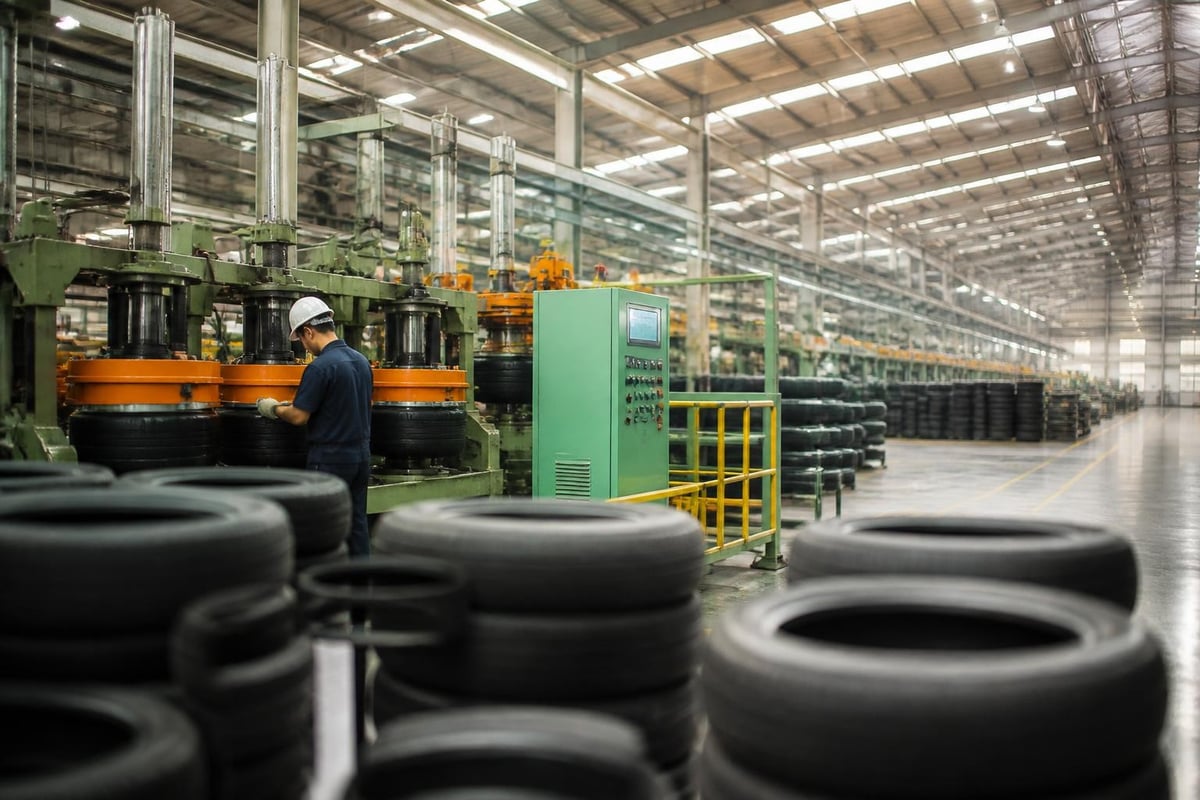
Korean tyre brands have invested billions of dollars in state-of-the-art manufacturing infrastructure that rivals or exceeds global competitors in automation, precision, and quality control. Modern Korean tire factories incorporate advanced robotics, real-time quality monitoring systems, and environmental controls that ensure consistent product specifications batch after batch.
Production Technology and Innovation
Manufacturing processes at Korean facilities employ several cutting-edge technologies:
- Automated mixing systems that precisely control compound formulations to within 0.1% variance
- Laser-guided cutting equipment ensuring exact component dimensions
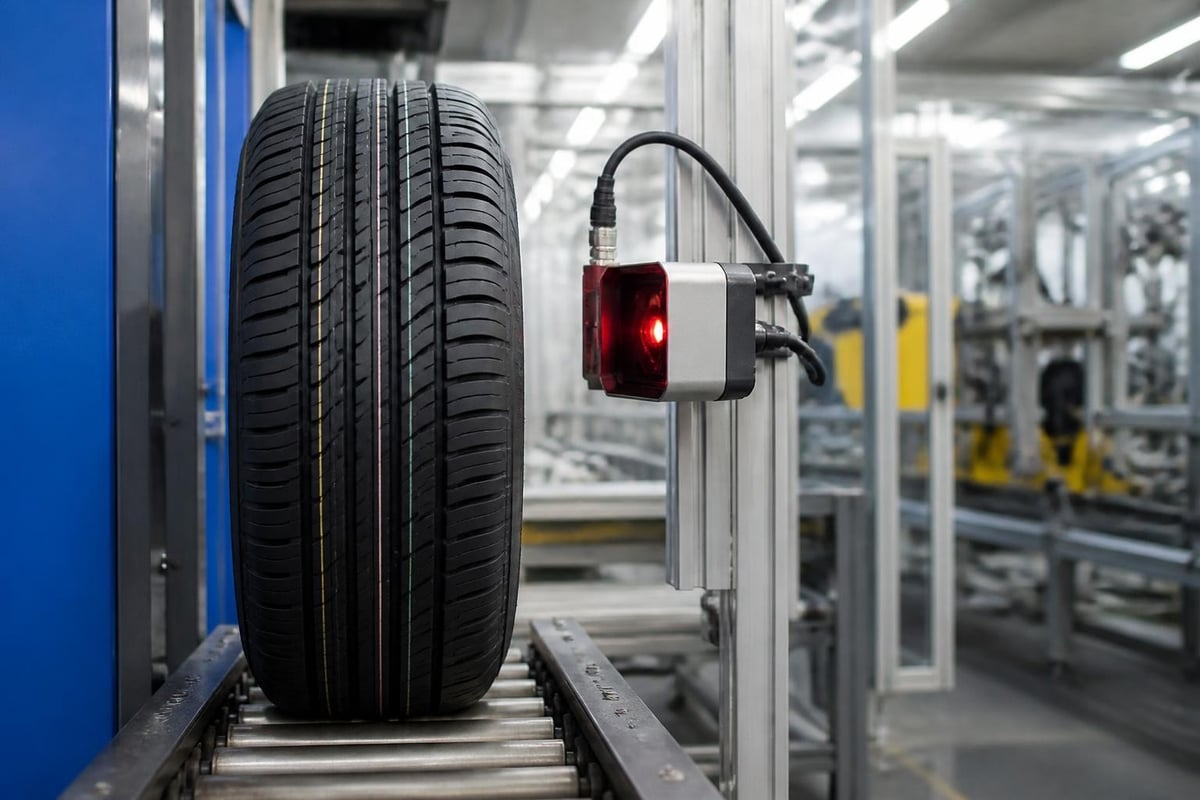
- X-ray inspection stations detecting internal structural defects before final assembly
- Uniformity optimization machines balancing each tire to minimize vibration
- Automated visual inspection using AI-powered cameras to identify surface imperfections
These technological investments translate directly into product quality and performance consistency. Korean manufacturers maintain rigorous testing protocols that include high-speed durability runs, wet traction measurements, noise level assessments, and rolling resistance evaluations. Products destined for international markets receive certification from relevant authorities including DOT (United States), ECE (Europe), and various national standards organizations.
Product Range and Application Segments
Korean tyre brands offer comprehensive product portfolios addressing virtually every vehicle category and application requirement. This breadth enables distributors to source multiple tire types from a single manufacturing partner, simplifying procurement and inventory management.
Passenger Car Radial (PCR) Tires
The PCR segment represents the largest volume category for Korean manufacturers, with products spanning economy, mid-range, and premium performance tiers. Korean brands have successfully competed against established names by offering comparable performance characteristics at attractive price points, particularly in emerging markets where price sensitivity remains high.
Design innovations in Korean PCR tires focus on:
- Fuel efficiency through low rolling resistance compounds
- Wet performance via advanced silica-enhanced tread formulations
- Noise reduction using variable pitch tread patterns
- Tread life through optimized contact patch geometry
Truck and Bus Radial (TBR) Tires
Commercial vehicle tires represent a strategic growth area for Korean manufacturers, who have developed extensive TBR lineups covering steer, drive, and trailer positions. These products serve regional haul, long-haul, mixed-service, and specialized applications including urban delivery and construction site operations.
Korean TBR tires compete effectively on total cost of ownership metrics by delivering:
- Extended tread life through durable compounds and optimized void ratios
- Multiple retread cycles with robust casing construction
- Fuel savings via reduced rolling resistance
- Predictable wear patterns that maximize removal mileage
For distributors seeking reliable semi truck tire options, Korean-manufactured TBR products offer proven performance with comprehensive size availability and competitive factory pricing.
Light Truck and SUV Tires
The global shift toward SUVs, crossovers, and pickup trucks has created substantial opportunity for Korean tyre brands in the light truck (LT) segment. Manufacturers have responded with dedicated product lines offering highway terrain (HT), all-terrain (AT), and mud-terrain (MT) tread patterns.
Korean LT tires emphasize:
- Load capacity meeting or exceeding OE specifications
- Durability in mixed on-road and off-road conditions
- Comfort through advanced noise dampening
- All-season capability for year-round use in varied climates
Specialty and Industrial Applications
Beyond mainstream automotive segments, Korean manufacturers produce tires for agricultural equipment, material handling vehicles, construction machinery, and industrial applications. This diversification provides revenue stability and demonstrates engineering versatility across demanding use cases.
Strategic Expansion and Future Investments
Korean tyre brands continue investing heavily in manufacturing capacity expansion, particularly in strategic markets where local production offers logistical advantages and tariff benefits. The European Rubber Journal’s coverage of Hankook’s expansion investments details planned facility upgrades and new construction projects designed to meet growing European demand.
North American Manufacturing Growth
The United States represents a critical market for Korean manufacturers, driven by large vehicle populations, high annual mileage, and premium pricing opportunities. All three major Korean brands either operate or plan facilities in Tennessee, demonstrating commitment to the North American market through substantial capital deployment.
Recent and planned investments include:
- Hankook: $1.2 billion Tennessee plant expansion targeting 11 million units annual capacity
- Kumho: Ongoing evaluation of US manufacturing sites for future greenfield development
- Nexen: Continued optimization of existing distribution infrastructure while assessing production options
These investments position Korean tyre brands to compete more effectively against domestic US manufacturers and other international competitors by reducing logistics lead times, eliminating ocean freight costs, and qualifying for Buy American procurement preferences.
European Market Strategies
European expansion follows similar logic, with manufacturers establishing production footprints in Hungary and other Central European locations that offer skilled labor, modern infrastructure, and access to major automotive manufacturing clusters. Local production facilitates OE partnerships with European automakers while serving aftermarket demand through efficient distribution networks.
The transition to electric vehicles presents both challenges and opportunities for tire manufacturers globally. Korean brands are investing in EV-specific tire development that addresses unique requirements including:
- Higher load capacity for battery weight
- Lower rolling resistance for extended range
- Reduced noise transmission due to absent engine sound
- Enhanced durability against instant torque wear patterns
Business Model Evolution Beyond Manufacturing
Korean tire companies are increasingly adopting service-oriented business models that extend beyond traditional product sales into digital platforms, subscription services, and fleet management solutions. This evolution reflects broader industry trends toward recurring revenue streams and enhanced customer relationships, as explored in reporting on Korean manufacturers’ service expansion.
Digital Integration and Connected Tires
Leading Korean tyre brands have developed mobile applications and web platforms that enable end-users and fleet operators to:
- Monitor tire pressure and temperature in real-time
- Track tread depth and predict replacement timing
- Access installation service provider networks
- Review product warranties and file claims electronically
- Receive maintenance reminders based on usage patterns
Connected tire technology embeds sensors within tire structures that transmit data to vehicle telematics systems and cloud-based analytics platforms. This capability enables predictive maintenance strategies that reduce unexpected failures while optimizing replacement intervals based on actual condition rather than arbitrary mileage thresholds.
Fleet Management Solutions
Commercial fleet operators represent high-value customers for tire manufacturers due to purchase volumes and ongoing service requirements. Korean brands have developed comprehensive fleet programs offering:
| Service Component | Value Proposition | Implementation Model |
|---|---|---|
| Tire management software | Real-time fleet tire tracking | Cloud-based SaaS platform |
| Installation network | Nationwide service coverage | Certified installer partnerships |
| Inventory optimization | Reduced stock holding costs | Consignment and VMI programs |
| Retreading coordination | Extended tire life economics | Third-party retread management |
| Performance analytics | Data-driven replacement decisions | Quarterly business reviews |
These value-added services strengthen customer relationships beyond transactional product sales while generating incremental revenue from subscription fees, service commissions, and data licensing arrangements.
Quality Assurance and Testing Protocols
Korean tyre brands maintain rigorous quality assurance programs that begin with raw material selection and continue through final product delivery. Comprehensive testing protocols ensure products meet or exceed international safety and performance standards across all intended operating conditions.
Laboratory Testing Procedures
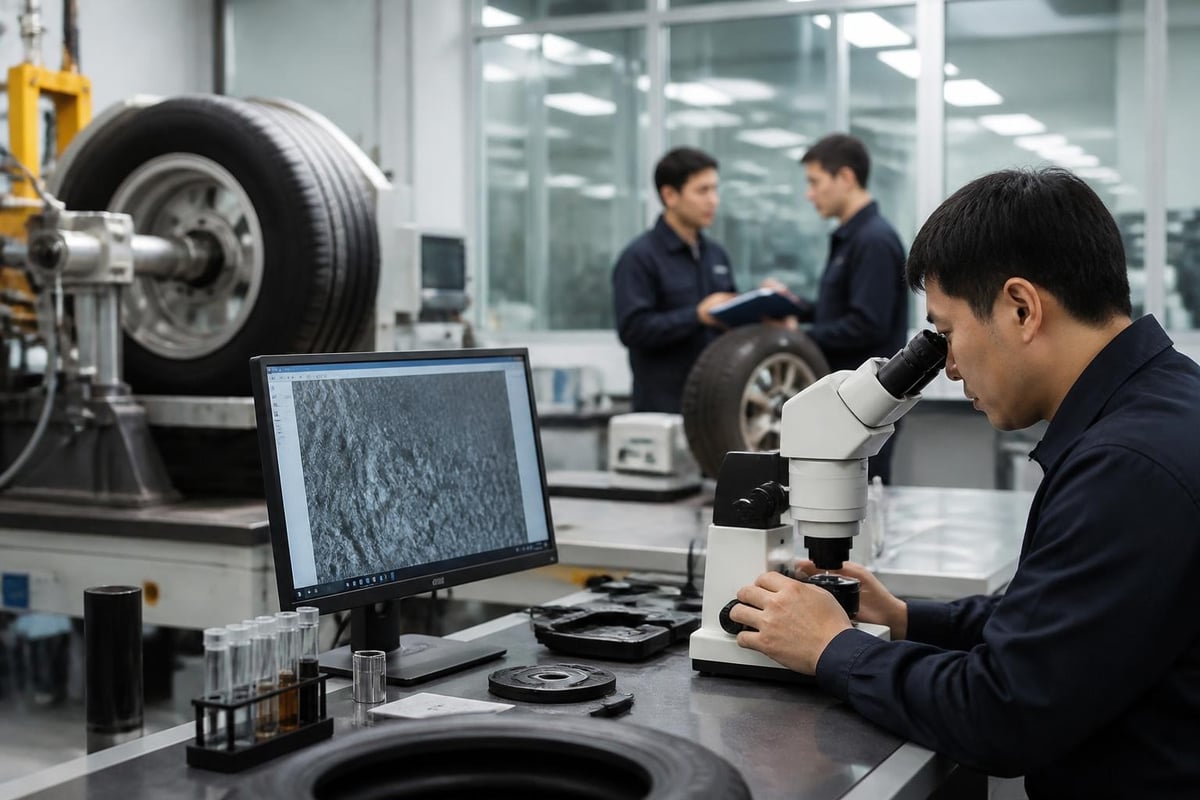
Before products enter commercial production, prototype tires undergo extensive laboratory evaluation:
- Indoor drum testing simulating thousands of miles of highway operation
- Dynamic mechanical analysis characterizing compound properties across temperature ranges
- Tread adhesion testing verifying bond strength between rubber layers
- Bead durability cycling confirming rim seating integrity through repeated mounting
- High-speed endurance runs validating structural integrity at maximum rated speeds
Field Testing and Validation
Laboratory results require confirmation through real-world field testing conducted across diverse climatic conditions, road surfaces, and vehicle applications. Korean manufacturers operate test fleets throughout Europe, North America, and Asia that accumulate millions of test kilometers annually under instrumented conditions.
Field validation programs assess:
- Actual tread wear rates compared to laboratory predictions
- Subjective handling and comfort characteristics
- Noise levels measured inside vehicles during normal operation
- Wet and dry traction performance on public roads
- Resistance to environmental damage (UV exposure, ozone cracking, thermal cycling)
Data from field testing feeds back into design optimization cycles, enabling continuous product improvement based on verified customer experience rather than theoretical modeling alone.
Environmental Sustainability Initiatives
Korean tire manufacturers have implemented ambitious environmental sustainability programs addressing resource consumption, emissions reduction, and circular economy principles. These initiatives respond to regulatory requirements, corporate social responsibility commitments, and customer expectations for environmentally conscious products.
Sustainable Materials and Manufacturing
Modern tire production at Korean facilities incorporates several sustainability-focused practices:
- Renewable content: Integration of natural rubber from sustainably managed plantations and bio-based oils replacing petroleum derivatives
- Recycled materials: Utilization of recovered carbon black and recycled steel cord in appropriate applications
- Energy efficiency: Installation of cogeneration systems, LED lighting, and waste heat recovery equipment reducing facility energy intensity
- Water conservation: Closed-loop cooling systems and rainwater harvesting minimizing freshwater consumption
- Waste reduction: Near-zero landfill disposal through material recycling and waste-to-energy conversion
End-of-Life Tire Management
Korean manufacturers participate actively in tire collection and recycling programs throughout markets where they sell products. These initiatives ensure proper disposal of worn tires while recovering valuable materials for alternative uses including:
- Tire-derived fuel for cement kilns and power generation
- Crumb rubber for playground surfaces, athletic tracks, and asphalt modification
- Pyrolysis processes recovering carbon black, steel, and hydrocarbon oils
- Retreading operations extending product service life
Competitive Advantages for Distributors and Fleet Operators
Organizations sourcing tires from Korean manufacturers benefit from several competitive advantages that translate directly into improved profitability and customer satisfaction.
Price-Performance Value Proposition
Korean tyre brands consistently deliver performance characteristics comparable to premium European and Japanese competitors while maintaining pricing typically 15-25% lower. This value gap enables distributors to capture price-sensitive market segments without sacrificing product quality or safety margins.
Total cost of ownership analysis often reveals Korean tires matching or exceeding more expensive alternatives when factors beyond initial purchase price receive consideration:
- Longer tread life reducing replacement frequency
- Lower rolling resistance decreasing fuel consumption
- Predictable wear patterns simplifying inventory planning
- Strong warranty support minimizing claim-related losses
Supply Chain Reliability
Established Korean manufacturers maintain robust supply chains with multiple production sites, substantial finished goods inventory, and sophisticated logistics networks. This infrastructure provides distributors with:
- Consistent product availability across full size ranges
- Shorter lead times compared to single-factory competitors
- Flexibility to accommodate seasonal demand fluctuations
- Technical support resources in local languages and time zones
For businesses seeking dependable supply partnerships, tire inspection protocols ensure incoming inventory meets specified quality standards before distribution to end customers.
Product Development Responsiveness
Korean manufacturers demonstrate notable agility in developing products tailored to specific regional requirements or emerging market needs. This responsiveness stems from:
- Centralized decision-making structures enabling rapid product approval
- In-house compound development capabilities accelerating formulation cycles
- Flexible manufacturing systems accommodating specialized production runs
- Direct customer feedback channels informing design priorities
Certification and Compliance Standards
Korean tyre brands maintain comprehensive certification portfolios ensuring products meet regulatory requirements across all major markets. This compliance foundation provides distributors with confidence when entering new territories or pursuing government procurement opportunities.
International Quality Certifications
Major Korean manufacturers hold certifications including:
- ISO 9001: Quality management systems
- ISO 14001: Environmental management systems
- ISO 45001: Occupational health and safety management
- IATF 16949: Automotive quality management system
- DOT: United States Department of Transportation approval
- ECE R30/R54/R117: European vehicle regulations
- CCC: China Compulsory Certification
- INMETRO: Brazilian certification requirements
These certifications require regular third-party audits verifying continued compliance with established standards, providing objective validation of manufacturing quality and management system effectiveness.
Performance Testing Standards
Beyond regulatory compliance, Korean tires undergo testing according to industry performance standards:
| Standard | Description | Test Parameters |
|---|---|---|
| ISO 362 | Exterior noise measurement | Pass-by noise levels at specified speeds |
| ISO 28580 | Rolling resistance | Coefficient of rolling resistance |
| ISO 15222 | Wet grip performance | Wet braking distance index |
| ASTM F1805 | Indoor tire testing | Endurance, high-speed, strength protocols |
Meeting these voluntary standards demonstrates commitment to performance excellence beyond minimum regulatory requirements.
Market Trends Influencing Korean Tyre Brands
Several macro trends are shaping strategic decisions at Korean tire manufacturers and creating opportunities for distributors aligned with these companies.
Electric Vehicle Transition
The automotive industry's shift toward electric propulsion creates specific tire requirements that play to Korean manufacturers' engineering strengths. EV-specific tire development focuses on:
- Acoustic optimization: Enhanced noise dampening compensating for absent engine sound masking
- Efficiency maximization: Ultra-low rolling resistance extending vehicle range
- Load handling: Reinforced construction supporting heavier battery pack weights
- Durability enhancement: Compounds resisting wear from instant torque delivery
Korean brands have committed substantial R&D resources toward EV tire development, positioning themselves as preferred partners for automakers transitioning their model lineups toward electrification.
Autonomous Vehicle Preparation
Self-driving vehicle technology will eventually transform tire requirements and replacement cycles. Korean manufacturers are exploring implications including:
- Extended service intervals due to optimized driving patterns
- Integrated sensor compatibility for vehicle-to-infrastructure communication
- Enhanced structural monitoring through embedded tire intelligence
- Standardized specifications facilitating automated tire changing
While fully autonomous vehicles remain years from mass deployment, Korean tyre brands are investing proactively in relevant technologies to maintain competitiveness as the industry evolves.
Subscription and Mobility Services
Changing vehicle ownership patterns toward subscription services and shared mobility platforms are creating new customer relationships and business models. Korean manufacturers are developing programs specifically targeting:
- Ride-hailing fleet operators requiring high-mileage durability
- Car-sharing services needing rapid tire replacement logistics
- Subscription platforms seeking bundled tire maintenance services
- Mobility-as-a-service providers demanding usage-based pricing models
Korean tyre brands have established themselves as credible global competitors through sustained investment in manufacturing excellence, product innovation, and international expansion. Their comprehensive product portfolios, competitive pricing, and proven quality make them attractive sourcing partners for tire distributors seeking reliable supply relationships. Whether you're sourcing passenger car tires, commercial truck products, or specialized industrial applications, OTR TIRE THAI offers premium quality tires from renowned international partners at wholesale prices, serving distributors across more than 80 countries with the manufacturing expertise and global perspective that today's tire market demands.
