
Blog
Truck Tires: Complete Guide for Fleet Managers in 2026

Jul
Selecting the right truck tires represents one of the most critical decisions facing fleet managers and transportation professionals in 2026. With commercial vehicles operating under demanding conditions and strict regulatory oversight, understanding tire specifications, maintenance protocols, and performance characteristics directly impacts operational costs, safety records, and fleet efficiency. Modern truck tires incorporate advanced compound formulations and tread designs engineered for specific axle positions and duty cycles, making informed selection essential for maximizing return on investment across diverse transportation applications.
Understanding Truck Tire Classifications and Applications
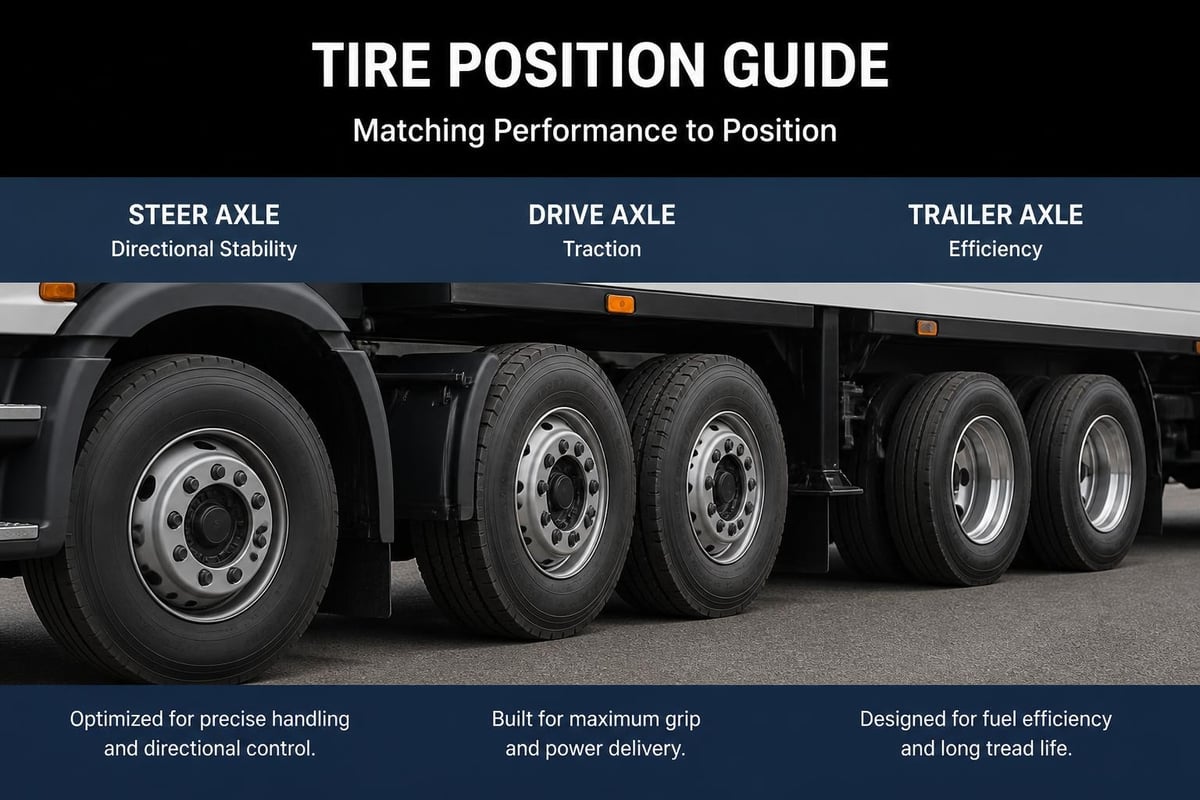
Commercial truck tires fall into distinct categories based on their intended axle position and operational demands. Each category addresses specific performance requirements that optimize vehicle handling, fuel economy, and service life.
Steer Position Tires
Steer tires mount on the front axle and require exceptional straight-line stability, responsive handling characteristics, and resistance to irregular wear patterns. These tires typically feature rib-pattern treads with multiple circumferential grooves that channel water away from the contact patch while maintaining consistent road contact. The design prioritizes:
- Precise steering response for driver control
- Even wear distribution across the tread surface
- Low rolling resistance to support fuel efficiency
- Strong sidewall construction to resist curb scuffing
Federal regulations under 49 CFR § 393.75 mandate minimum tread depth requirements of 4/32 inch for steer axle tires, recognizing their critical role in vehicle control and safety.
Drive Axle Tires
Drive position tires deliver power to the pavement through aggressive tread blocks engineered for maximum traction under loaded conditions. Deep lug patterns with stone ejectors prevent debris retention while providing grip on varied road surfaces. Key performance attributes include:
- High torque resistance for acceleration and hill climbing
- Enhanced traction on wet and unpaved surfaces
- Reinforced tread blocks to minimize squirm and heat buildup
- Extended tread depth for longer service intervals
The compound formulations in drive tires balance wear resistance against the heat generation inherent in power transmission, with many modern designs incorporating silica-enhanced rubber that maintains flexibility across temperature extremes.
Trailer Position Tires
Trailer tires prioritize fuel efficiency and long-haul durability over traction characteristics. Since trailer axles don't transmit power, these tires feature shallower tread patterns with reduced rolling resistance. Many fleets specify SmartWay-certified trailer tires that meet EPA efficiency standards while delivering predictable wear characteristics across hundreds of thousands of miles.
| Position | Primary Function | Tread Pattern | Minimum Tread Depth |
|---|---|---|---|
| Steer | Directional control | Multi-rib | 4/32 inch |
| Drive | Power transmission | Deep lug | 2/32 inch |
| Trailer | Load support | Shallow rib | 2/32 inch |
Tire Construction Technologies for Commercial Applications
Modern truck tires utilize radial construction almost universally, replacing bias-ply designs that dominated earlier decades. Radial construction layers steel belts perpendicular to the direction of travel beneath the tread, providing superior heat dissipation, fuel economy, and tread life compared to diagonal bias plies.
Steel-belted radial tires incorporate multiple belt packages that stabilize the tread area while allowing sidewalls to flex independently. This separation of functions reduces internal friction and heat buildup during sustained highway operation. The casing construction typically includes:
- Polyester or steel cord body plies running bead to bead
- Steel stabilizer belts under the tread crown
- Cap plies that contain the belt package
- Tread compound formulated for specific applications
Advanced manufacturing processes ensure uniformity across the tire structure, minimizing vibration and irregular wear patterns that compromise ride quality and service life. Quality control protocols at leading manufacturers verify dimensional tolerances, belt alignment, and compound consistency throughout production runs.
Load Range and Ply Ratings Explained
The load-carrying capacity of truck tires depends on their internal structure and inflation pressure. Load range designations replaced the older ply rating system but both remain in use across the industry. Understanding these specifications ensures proper tire selection for specific gross vehicle weight ratings (GVWR) and cargo loads.
Load Range G tires, for example, feature 14-ply construction and support maximum loads at 110 psi inflation pressure. Load Range H increases to 16-ply construction with 120 psi ratings. The relationship between load capacity, inflation pressure, and tire dimensions follows standards outlined in 49 CFR 571.119, which governs performance requirements for new pneumatic tires on vehicles exceeding 10,000 pounds GVWR.
Calculating Proper Load Capacity
Fleet managers must verify that tire load ratings exceed the maximum axle weight under fully loaded conditions. The calculation accounts for:
- Gross axle weight rating (GAWR) for each axle
- Number of tires per axle position (single or dual configuration)
- Load distribution between front and rear axles
- Safety margin for unexpected load variations
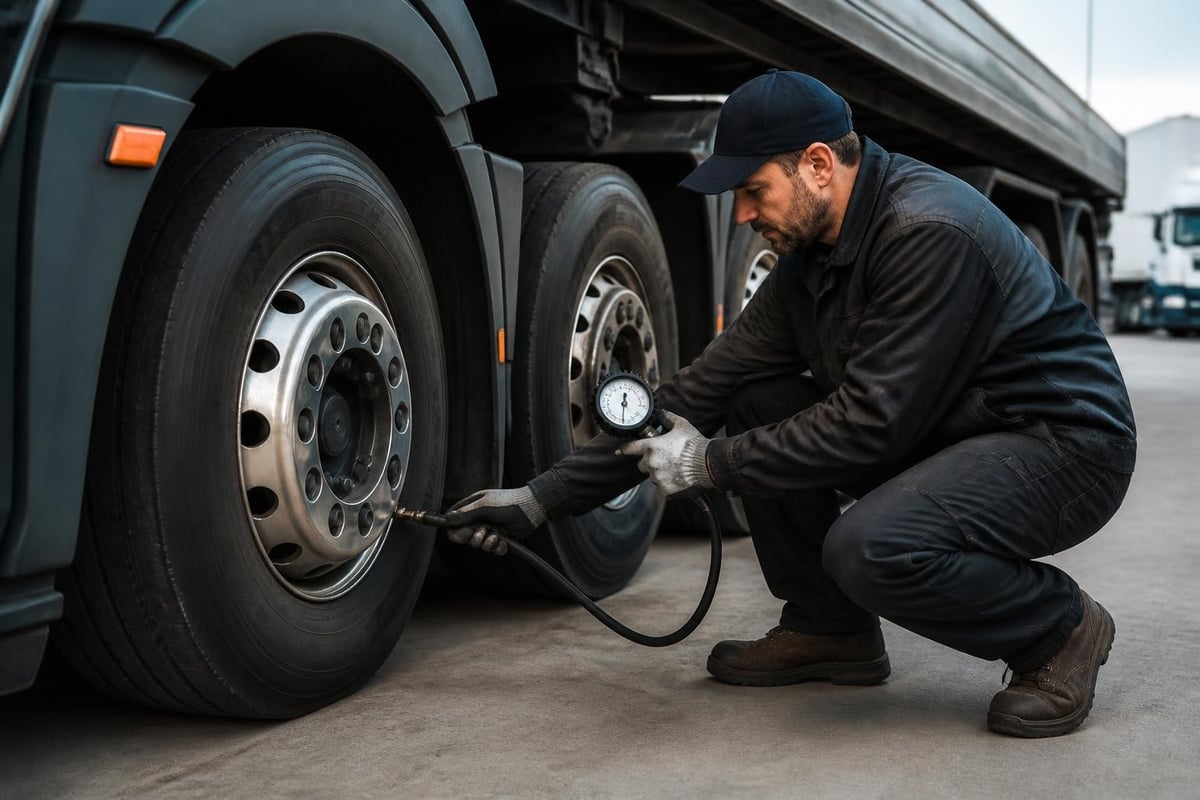
Underinflation represents a leading cause of premature tire failure, as reduced pressure increases sidewall flexing and heat generation. Pressure monitoring systems have become standard equipment on most commercial vehicles, providing real-time alerts when inflation drops below specified thresholds.
Tread Depth Regulations and Maintenance Standards
Federal motor carrier safety regulations establish minimum tread depth requirements that vary by axle position, reflecting the different performance demands across steer, drive, and trailer applications. DOT tire tread depth regulations enforce these standards through roadside inspections and carrier compliance reviews.
Steer axle tires must maintain at least 4/32 inch tread depth measured in any two adjacent major grooves at three locations across the tire width. This deeper requirement recognizes the critical safety function of maintaining directional control under all weather conditions. Drive and trailer positions permit operation down to 2/32 inch, though many fleets retire tires earlier to preserve resale value and avoid emergency roadside failures.
Regular tread depth measurement forms a cornerstone of comprehensive truck tire service and rotation programs. Digital depth gauges provide consistent readings across multiple measurement points, documenting wear progression and identifying irregular patterns that indicate alignment issues, improper inflation, or mechanical problems.
Rotation Protocols for Extended Tread Life
Systematic tire rotation equalizes wear across multiple wheel positions, maximizing the total mileage extracted from each tire investment. Optimal rotation intervals depend on operational factors including:
- Vehicle configuration and axle spacing
- Typical load distribution patterns
- Road surface conditions and route characteristics
- Tire design and compound formulation
Most fleets implement rotation schedules between 25,000 and 50,000 miles, with some high-mileage operations rotating as frequently as every 15,000 miles. Rotation patterns vary by vehicle configuration but generally move tires from positions with faster wear rates to those experiencing slower degradation.
Selecting Tread Patterns for Specific Applications
Tread pattern selection aligns tire performance characteristics with operational requirements and typical road conditions. Highway fleets operating predominantly on interstate routes specify different designs than regional carriers serving mixed pavement and unpaved roads.
Highway tread patterns feature closed-shoulder designs with continuous ribs that minimize road noise, reduce rolling resistance, and deliver even wear across long-distance routes. These patterns excel on dry and wet pavement but sacrifice traction on unpaved surfaces or in severe weather conditions.
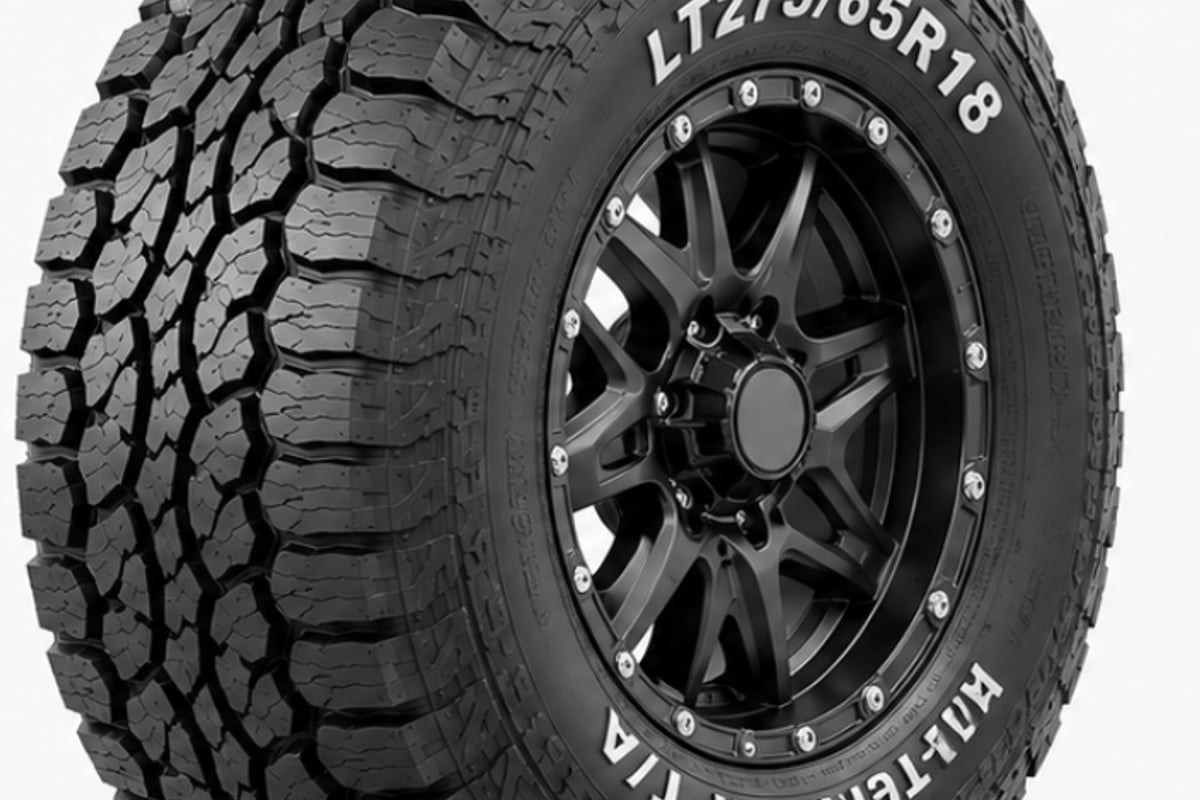
All-position treads balance highway efficiency against moderate off-road capability, making them suitable for vehicles that encounter varied road surfaces. Aggressive shoulder blocks provide extra grip while maintaining acceptable noise levels and fuel economy for mixed-service applications.
Regional and vocational treads incorporate deeper lugs with wider spacing to enhance traction on construction sites, logging roads, and other challenging surfaces. Stone ejector features prevent debris wedging between tread blocks, reducing penetration damage and extending casing life for future retreading.
For fleets operating semi-trucks across diverse conditions, Semi Truck Tires from Thailand provide position-specific solutions engineered for each application. Steer tires deliver optimized five-rib patterns for straight-line stability, drive tires feature deep closed-shoulder lugs with stone ejectors for mixed-surface durability, and trailer tires incorporate low-rolling-resistance compounds that support EPA SmartWay compliance while reducing fuel costs per mile.
Tire Quality Grading and Performance Metrics
The Uniform Tire Quality Grading (UTQG) system provides standardized performance ratings across three categories: treadwear, traction, and temperature resistance. While 49 CFR 575.104 mandates these ratings for passenger car tires, many commercial tire manufacturers voluntarily provide similar information to help fleet managers compare products.
Treadwear ratings indicate expected service life under controlled test conditions, with higher numbers suggesting longer tread durability. A tire rated 500 should theoretically last twice as long as one rated 250 when operated under identical conditions. Real-world results vary based on vehicle configuration, load distribution, maintenance practices, and road conditions.
Traction grades (AA, A, B, C) measure wet braking performance on controlled surfaces. Most commercial truck tires achieve A or B ratings, with premium products earning AA grades through advanced tread compounds and pattern designs. Traction becomes particularly critical in regions experiencing frequent precipitation or seasonal winter conditions.
| Quality Metric | Rating Scale | Commercial Tire Range |
|---|---|---|
| Treadwear | 100-800+ | 300-600 typical |
| Traction | AA to C | A to AA typical |
| Temperature | A to C | A to B typical |
Temperature resistance ratings indicate the tire's ability to dissipate heat during sustained high-speed operation. Grade A tires withstand speeds exceeding 115 mph, while Grade B remains stable above 100 mph. Commercial applications rarely approach these velocities, but temperature ratings correlate with overall durability and resistance to heat-related failures.
Seasonal Considerations and Weather Performance
Truck tires must perform reliably across diverse weather conditions and seasonal temperature variations. While passenger vehicles often switch between summer and winter tires, commercial fleets typically specify all-season designs that balance year-round capability against seasonal optimization.
Winter traction depends on tread pattern geometry and rubber compound flexibility at low temperatures. Tires incorporating higher natural rubber content and silica-enhanced compounds maintain pliability when temperatures drop below freezing, preserving grip on cold pavement and light snow. Deep sipes cut into tread blocks create additional biting edges that improve traction on slippery surfaces.
Severe winter conditions may require dedicated winter tires marked with the three-peak mountain snowflake (3PMSF) symbol, indicating certification for severe snow service. Some jurisdictions mandate winter tires or chain usage during specific months or weather events, requiring fleets to maintain equipment inventories that meet regional requirements.
Research examining truck-involved crashes under different weather conditions demonstrates the significant impact of proper tire selection and maintenance on accident severity and frequency. Adequate tread depth, appropriate pattern selection, and correct inflation pressure directly influence vehicle control during adverse weather events.
Fuel Efficiency Through Tire Selection
Rolling resistance accounts for approximately 30-40% of total fuel consumption in highway trucking operations, making tire selection a primary lever for improving fleet fuel economy. Low rolling resistance (LRR) tire designs reduce the energy lost to heat and deformation as the tire flexes under load.
Advanced compound formulations incorporating silica fillers reduce internal friction without sacrificing wet traction or tread durability. Optimized tread patterns minimize tread block squirm and void volume, further reducing energy losses. The combined effect of LRR tires across steer, drive, and trailer positions can improve fuel economy by 3-7% compared to conventional designs.
SmartWay certification from the Environmental Protection Agency identifies tires meeting specific rolling resistance and treadwear thresholds. The program helps fleet managers identify fuel-efficient options while ensuring adequate service life. Many carriers specify SmartWay tires for line-haul trailer positions where efficiency gains accumulate across millions of annual miles.
Emerging research on connected eco-driving systems for heavy-duty trucks demonstrates how tire selection integrates with broader efficiency strategies including route optimization, predictive cruise control, and driver coaching programs. Properly specified and maintained truck tires form the foundation for these advanced fuel-saving technologies.
Inspection Protocols and Failure Prevention
Systematic tire inspection prevents roadside failures, reduces maintenance costs, and ensures compliance with federal safety standards. Comprehensive inspection programs examine multiple failure indicators including:
- Tread depth measurements at regular intervals
- Sidewall condition and evidence of cuts, bulges, or weather checking
- Valve stem integrity and proper cap installation
- Correct inflation pressure when tires are cold
- Evidence of irregular wear patterns indicating mechanical issues
Pre-trip inspections required under FMCSA regulations include visual tire examinations for obvious defects, proper inflation, and adequate tread depth. Tire standards and defects under 49 CFR 393.75 identify specific conditions that place vehicles out of service until corrected, including exposed belt material, sidewall separations, and tread depth below regulatory minimums.
Implementing digital inspection tools streamlines documentation and trending analysis. Mobile applications allow technicians to record measurements, photograph defects, and track tire history across rotation cycles and vehicle reassignments. This data identifies recurring problems, validates maintenance intervals, and supports warranty claims when premature failures occur.
Retreading Strategies for Cost Management
Retreading extends casing life while reducing tire acquisition costs, making it standard practice across most commercial fleets. Quality casings can support three or more retread cycles when properly maintained, delivering total service life exceeding 500,000 miles from steer position tires and 750,000 miles from drive tires.
Casing inspection determines retread eligibility through detailed examination of internal structure using shearography and other non-destructive testing methods. Qualified casings proceed through:
- Initial inspection and rejection of damaged units
- Buffing to remove worn tread and prepare bonding surface
- Application of new tread rubber through molding or pre-cure processes
- Curing to vulcanize new tread to casing structure
- Final inspection and quality verification
Premium casings from manufacturers like Bridgestone and Continental command higher retread values due to superior construction quality and documented durability. Initial purchase price premiums for quality new tires often prove economical when total lifecycle costs account for multiple retread cycles.
Retreading regulations require proper marking and certification to ensure performance equivalence with new tires. Reputable retreaders maintain quality systems certified to industry standards, providing warranties that protect fleet investments while ensuring safety compliance.
Emerging Technologies in Commercial Tire Design
Innovation continues advancing truck tire performance through materials science, manufacturing precision, and data integration. Technologies entering commercial service in 2026 include:
Smart tires incorporating embedded sensors transmit real-time data on inflation pressure, tread temperature, and wear progression directly to fleet management systems. This continuous monitoring enables predictive maintenance scheduling and immediate alerts for developing problems before they cause failures.
Advanced compound formulations utilize nano-scale fillers and polymer chemistry to enhance multiple performance characteristics simultaneously. Recent developments achieve lower rolling resistance while improving wet traction and extending tread life, eliminating traditional performance trade-offs.
3D-printed tread patterns allow rapid prototyping and customization for specific applications, with some manufacturers offering bespoke designs for specialized vocational fleets. This flexibility enables optimization for unique operating conditions without requiring large production runs.
Airless tire technology continues development for commercial applications, though widespread adoption remains years away. Current prototypes demonstrate promising durability and puncture resistance but require additional refinement before matching the performance, efficiency, and cost-effectiveness of pneumatic designs across diverse trucking applications.
Tire Management Systems and Fleet Optimization
Comprehensive tire management programs integrate selection, maintenance, and disposal into systematic processes that optimize total cost of ownership. Effective programs incorporate:
- Standardized specifications aligned with operational requirements
- Preventive maintenance schedules based on mileage and calendar intervals
- Inventory management ensuring adequate spare availability
- Performance tracking documenting actual costs per mile
- Continuous improvement processes refining specifications and practices
Digital tire management platforms consolidate data from multiple sources including tire purchases, rotation services, retread processing, and disposal transactions. Analytics identify patterns across vehicle types, routes, and maintenance providers, supporting evidence-based decisions that reduce costs while maintaining safety and reliability.
Total cost of ownership calculations account for acquisition price, installation labor, maintenance expenses, fuel economy impact, retread potential, and final disposal costs. This comprehensive view often reveals that premium initial purchases deliver superior value through extended service life and improved operational efficiency.
Third-party tire management services offer turnkey solutions for fleets lacking internal expertise or scale to negotiate favorable pricing. These providers leverage purchasing power across multiple clients while bringing specialized knowledge of product performance and maintenance best practices.
Selecting and maintaining truck tires requires balancing multiple performance criteria including safety, efficiency, durability, and cost-effectiveness across diverse operating conditions. Understanding position-specific requirements, regulatory standards, and maintenance protocols enables fleet managers to optimize tire investments while ensuring compliance and reliability. OTR TIRE THAI manufactures premium truck tires engineered for demanding commercial applications, delivering international quality at wholesale pricing to distributors in over 80 countries. Contact our technical team to discuss specifications that match your fleet requirements and operational demands.
