
Blog
Best Off Road Tires: A Complete 2026 Buyer’s Guide
Sep
Selecting the best off road tires requires understanding how construction, tread design, and compound chemistry work together to deliver traction across unpaved terrain while maintaining acceptable on-road behavior. Whether you're outfitting a fleet of commercial pickups that split time between job sites and highways, or specifying rubber for recreational 4×4 vehicles tackling weekend trails, the tire beneath your vehicle determines capability, safety, and operating costs. Modern off-road tire engineering has evolved substantially, with manufacturers balancing increasingly sophisticated trade-offs between mud clearance, rock resistance, pavement wear, and fuel economy. This guide examines the technical factors that separate exceptional off-road tires from mediocre ones, providing distributor-level insight into what makes certain patterns and constructions perform in real-world conditions.
Understanding Off-Road Tire Categories and Applications
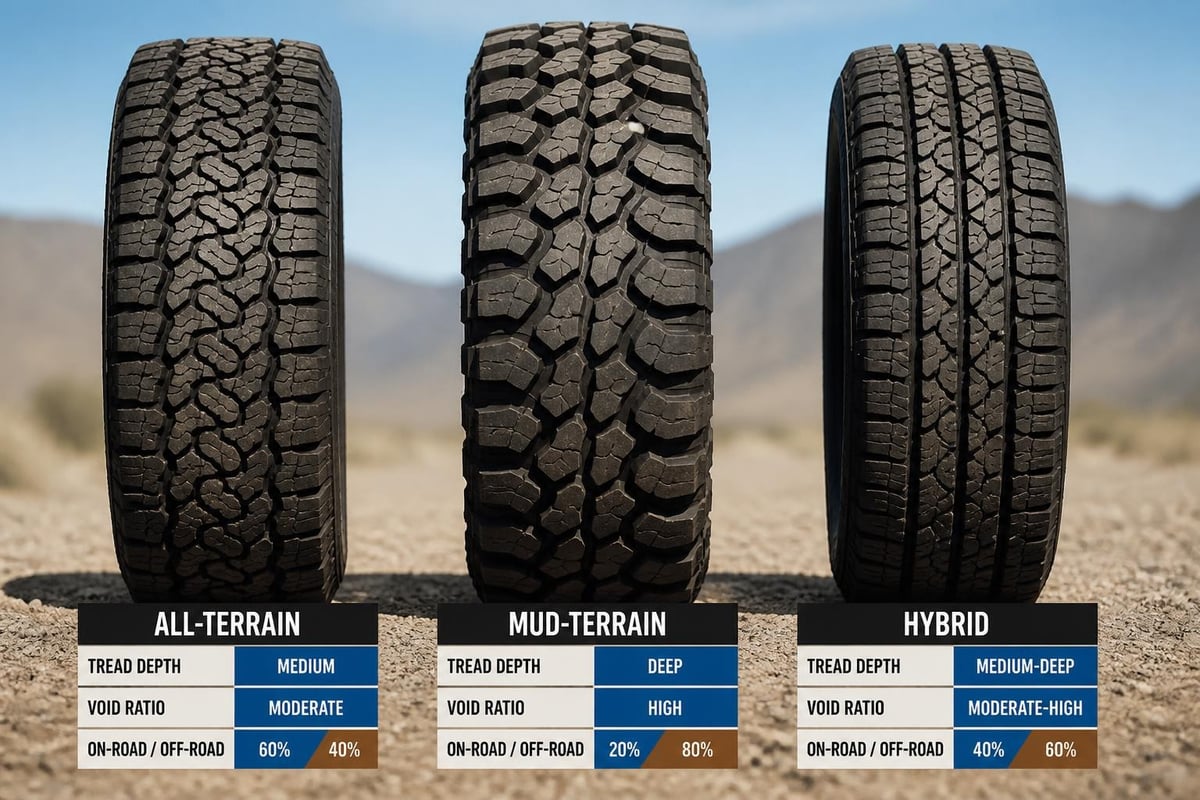
Off-road tires fall into three primary categories, each optimized for different terrain ratios and use cases. All-terrain (AT) tires represent the most versatile choice, typically splitting duty 60/40 between pavement and dirt. These designs feature moderate tread depth (12-15mm new), open shoulder blocks for loose-surface bite, and siping patterns that maintain wet-road traction.
Mud-terrain (MT) tires push the capability envelope further, with aggressive void ratios often exceeding 30% and lugs spaced to self-clean in clay and sticky mud. The trade-off comes in highway noise, accelerated pavement wear, and reduced fuel economy. These patterns shine in scenarios where vehicles regularly encounter deep ruts, standing water, or agricultural fields.
Terrain-Specific Design Elements
Rock crawling demands different tire architecture than sand running. Reinforced sidewalls with three-ply construction resist pinch cuts when aired down over boulders, while wide footprints at lower pressures (15-20 PSI) float over soft sand without digging.
According to testing methodology outlined by SAE International’s tire measurement standards, evaluating off-road traction requires controlled surfaces that replicate mud viscosity, rock angularity, and sand compaction. Laboratory drums cannot fully simulate trail conditions, making field validation essential for any manufacturer claiming superior off-road performance.
The best off road tires for mixed commercial use typically feature:
- Void ratio between 22-28% for dirt clearance without excessive road noise
- Tread depth of 14-16mm when new, supporting 50,000+ mile service life
- Three-peak mountain snowflake (3PMSF) certification for year-round capability
- Load range E or higher for commercial pickup applications
- Silica-enhanced compounds that remain pliable in temperature extremes
Construction Technology That Defines Performance
Radial construction dominates the off-road segment in 2026, with bias-ply designs now relegated to specialized agriculture and industrial applications. Radial tires place steel belts at 90-degree angles to the tread centerline, allowing the sidewall to flex independently from the contact patch. This separation improves ride quality on washboard surfaces and reduces heat buildup during sustained highway driving between job sites.
| Construction Feature | Benefit | Application |
|---|---|---|
| Steel belt package (2-4 plies) | Puncture resistance, tread stability | All commercial off-road use |
| Polyester casing | Ride comfort, impact absorption | Light truck, recreational 4×4 |
| Nylon cap ply | High-speed integrity above 100 km/h | Highway-capable AT patterns |
| Kevlar sidewall inserts | Cut resistance in sharp-rock terrain | Extreme rock crawling |
Compound Chemistry and Wear Characteristics
Tread compounds balance durability against grip through carbon black loading, silica content, and polymer selection. Natural rubber content above 40% improves tear resistance, critical when tire lugs encounter sharp granite or basalt. Synthetic polymers contribute temperature stability, preventing the excessive softening that accelerates wear on hot asphalt between trail sessions.
Consumer Reports’ tire testing protocols measure treadwear through accelerated 10,000-kilometer road courses. Their data consistently shows that aggressive mud-terrain patterns sacrifice 20-30% tread life compared to all-terrain equivalents when operated primarily on pavement. Distributors serving mixed-use fleets must weigh this cost against the capability gained during off-highway operation.
Performance Metrics That Matter for Selection
Objective comparison of off-road tire performance requires examining specific, measurable attributes rather than marketing claims. Traction coefficients on wet clay, sidewall stiffness under lateral load, and self-cleaning efficiency all determine real-world capability.
Traction and Grip Measurement
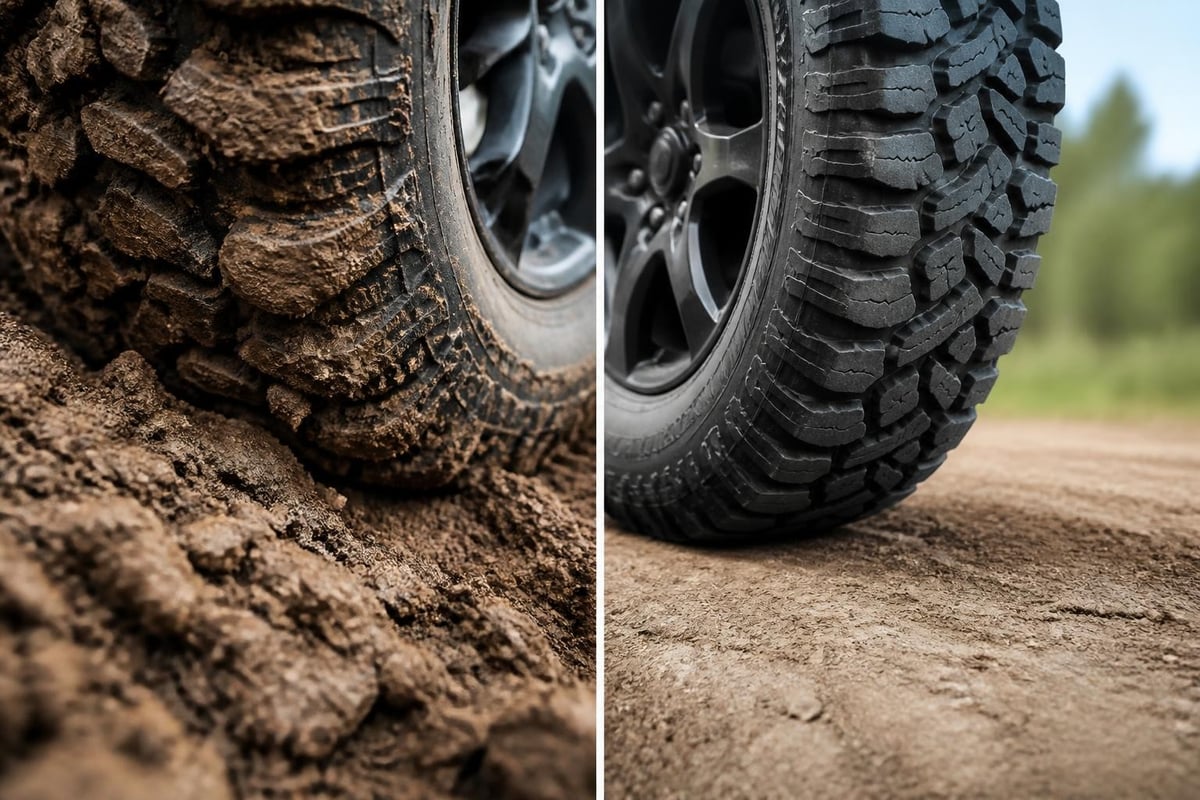
The best off road tires generate traction through three mechanisms: mechanical interlock (tread blocks digging into substrate), adhesion (rubber-to-surface molecular bonding), and hysteresis (energy loss as rubber deforms around surface irregularities). Soft terrain emphasizes mechanical interlock, requiring tall lugs with staggered spacing. Hard-packed surfaces rely more on compound adhesion and contact patch pressure distribution.
Independent testing by Tire Rack’s evaluation teams measures off-road traction using standardized hill-climb gradients with instrumented vehicles. Their 2026 results demonstrate that void ratio alone doesn't predict mud performance. Lug geometry, especially the leading edge angle and trailing chamfer, determines whether a tire clears material or packs full.
Environmental Considerations in Modern Tire Design
Off-road tire operation generates wear particles that differ substantially from highway tread erosion. Aggressive lugs shed rubber at accelerated rates when operated on pavement, and the particle size distribution skews toward larger fragments compared to conventional passenger tire wear.
Research published in Environment International quantifies the elemental composition of tire wear particles, finding elevated zinc levels from rubber vulcanization and processing aids. While off-road environments may contain these particles more diffusely than urban runoff concentrates them, conscientious fleet operators increasingly consider wear characteristics when selecting tires for vehicles that transition frequently between trail and pavement.
Regulatory Landscape and Industry Response
The European Union's consideration of tire wear particle limits, discussed extensively in European Rubber Journal coverage, signals coming scrutiny even for specialty segments like off-road tires. Manufacturers investing in lower-wear compounds and optimized tread designs position themselves advantageously as regulations evolve. Distributors serving environmentally conscious fleet operators should prioritize suppliers demonstrating measurable progress in wear reduction without sacrificing essential off-road capability.
Selecting Tires for Specific Vehicle Applications
Commercial pickups operating in construction, utility maintenance, and resource extraction face different demands than recreational SUVs. Load capacity, speed rating, and puncture resistance requirements vary significantly across these use cases.
Light Truck and Commercial Fleet Considerations
Fleet managers specifying tires for three-quarter-ton and one-ton pickups must ensure load range matches typical cargo weights plus a safety margin. Load range E (10-ply rating) represents the minimum for trucks regularly hauling equipment or towing trailers, while load range F or G becomes necessary for consistent maximum payload operation.
For distributors serving commercial fleets, offering comprehensive light truck tire options ensures customers find the right balance between off-road capability and on-road durability. Light Truck Tires from manufacturers like OTR TIRE THAI provide DOT and ECE certified options spanning highway terrain, all-terrain, and mud-terrain patterns, all engineered specifically for the demanding cycle of pavement commutes and unpaved work sites.
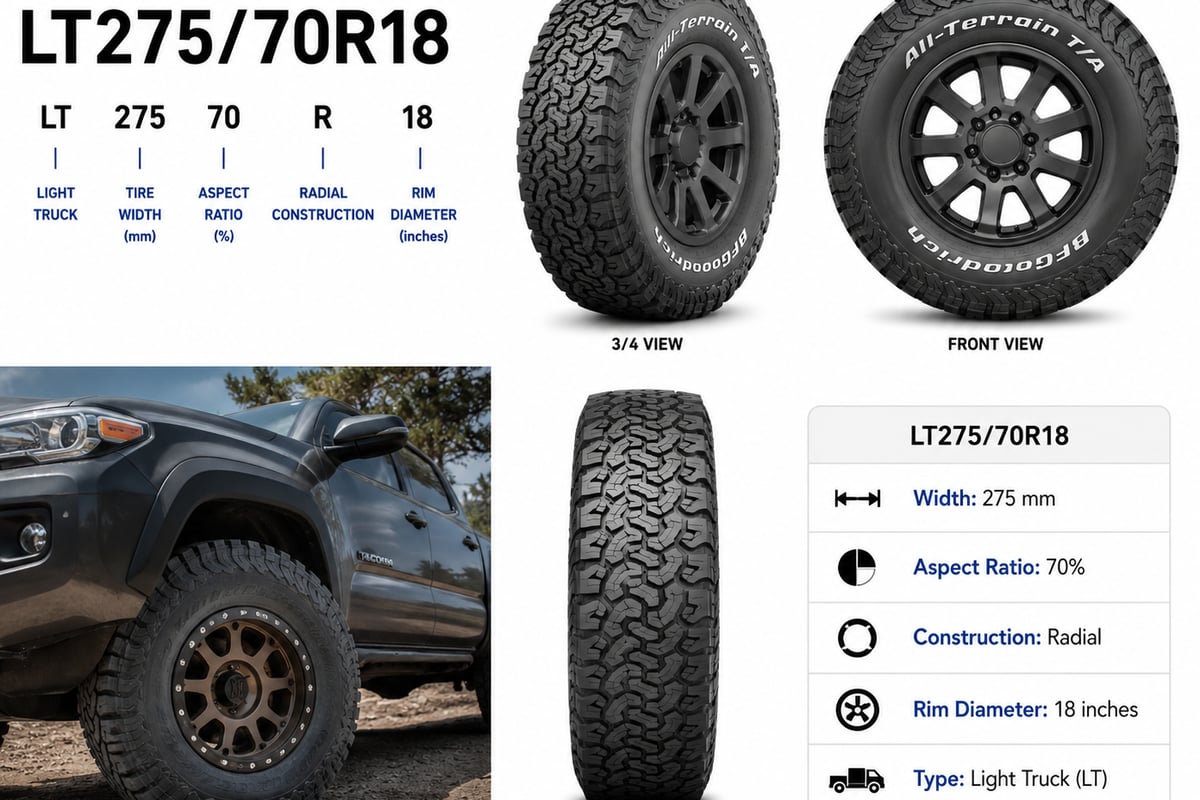
Speed ratings also matter for commercial applications. An S-rating (180 km/h maximum) suffices for trucks limited to work zones and rural roads, but fleets operating on motorways between job sites should specify T-rated (190 km/h) or higher tires to maintain safe margins during highway transit.
| Vehicle Type | Recommended Load Range | Typical Application | Priority Features |
|---|---|---|---|
| Half-ton pickup (1500-series) | C or D | Light duty, occasional trail | Comfort, fuel economy |
| Three-quarter ton (2500-series) | E | Regular towing, equipment transport | Load capacity, durability |
| One-ton (3500-series) | E or F | Maximum payload, commercial use | Puncture resistance, sidewall strength |
| Medium-duty chassis cab | F or G | Utility bodies, service trucks | Heat resistance, retreadability |
Recreational and Enthusiast Applications
Recreational four-wheel-drive vehicles prioritize maximum traction over tread life, making aggressive mud-terrain patterns the preferred choice for dedicated trail rigs. These applications benefit from:
- Maximum void ratio (30-35%) for self-cleaning in mud and snow
- Reinforced sidewalls supporting aired-down pressures (12-18 PSI)
- Larger diameter options (35-37 inches) for ground clearance
- Softer compounds sacrificing longevity for grip
Weekend warriors who drive primarily on-road to reach trailheads make better candidates for hybrid or rugged all-terrain patterns. Popular Mechanics’ tire comparison testing highlights how modern AT tires have narrowed the capability gap with MT patterns while maintaining 70% of highway tire comfort and efficiency.
Tread Pattern Architecture and Design Philosophy
The geometric arrangement of tread blocks determines both traction generation and noise characteristics. Center ribs provide straight-line stability during highway driving, while shoulder lugs extend grip during cornering and deliver bite when terrain turns loose.
Block Spacing and Void Management
The best off road tires employ variable pitch patterns, where lug spacing changes in a calculated sequence around the tire's circumference. This approach breaks up the harmonic frequencies that create droning noise on pavement, making aggressive patterns more tolerable during highway transit.
Stone ejectors, small rubber protrusions in void channels, prevent rocks from wedging between lugs and drilling toward the casing. This feature proves essential for tires operating in quarries, mining access roads, or volcanic terrain where sharp aggregate dominates.
Siping Strategies for All-Surface Traction
Sipes are narrow slits molded into tread blocks that open under load, creating additional biting edges on wet or icy surfaces. Off-road tire siping differs from highway tire design in depth and density. Full-depth sipes (cutting through the entire block) maintain wet traction as the tire wears, while 3D interlocking geometries prevent excessive block squirm that would sacrifice dry traction and accelerate wear.
Modern manufacturing allows variable-depth siping, with denser patterns in the shoulder region for off-camber traction and sparser center siping to preserve highway stability. This customization delivers the best off road tires that genuinely excel across mixed conditions rather than compromising everything to achieve marginal gains in a single terrain type.
Size Selection and Fitment Considerations
Upsizing from original equipment specifications delivers ground clearance and a larger contact patch at reduced pressures, but introduces compromises that distributors must help customers understand. A shift from 265/70R17 to 285/75R17 adds approximately 25mm of ground clearance but may require suspension modifications and recalibration of speedometer and traction control systems.
Plus-Sizing Trade-offs
Larger diameter tires improve obstacle clearance and reduce effective gearing, which can benefit low-speed crawling but hurts highway fuel economy. Weight increases proportionally with size, adding unsprung mass that degrades ride quality and acceleration. For commercial fleets, these factors translate directly to operating costs.
Aspect ratio selection balances sidewall flex (beneficial for conforming to rocks and ruts) against sidewall durability under load. A 65-series tire flexes more readily than a 75-series equivalent, potentially improving traction over irregular surfaces but increasing the risk of pinch flats when aired down aggressively.
Maintenance Practices That Extend Service Life
Even the best off road tires fail prematurely without proper maintenance protocols. Pressure management tops the list, as both over-inflation and under-inflation accelerate wear and increase failure risk.
Optimal pressure practices include:
- Check pressures weekly when cold (before operation)
- Adjust for load: increase 5-7 PSI when hauling maximum payload
- Air down for off-road traction, typically reducing to 60-70% of highway pressure
- Re-inflate immediately upon returning to pavement
- Invest in quality pressure monitoring systems for fleet vehicles
Rotation intervals matter more for aggressive off-road patterns than highway tires. Staggered lug designs wear unevenly between front (steering) and rear (drive) positions, making 5,000-kilometer rotations essential to maximize total fleet tire investment.
Damage Inspection Protocols
Off-road operation introduces puncture risks from sharp rocks, broken glass in remote areas, and embedded debris. Weekly inspections should examine:
- Sidewalls for bulges, cuts, or embedded objects
- Tread depth remaining (replace at 4mm for maintained off-road capability)
- Irregular wear patterns indicating alignment or pressure issues
- Valve stems for cracks or damage from trail debris
Professional remounting and rebalancing every 20,000 kilometers corrects the minor rim damage and bead seating issues that accumulate during off-road use, preventing the vibrations that fatigue suspension components and reduce driver comfort.
Matching Tires to Driving Conditions and Climate
Geographic location dictates tire selection as much as vehicle type. Desert Southwest operators prioritize heat resistance and puncture protection, while Pacific Northwest fleets need wet traction and siping for mossy, slippery trail surfaces.
Winter capability has become non-negotiable for year-round commercial operations in northern regions. The three-peak mountain snowflake certification verifies performance in snow acceleration, braking, and traction testing. Many modern all-terrain tires carry this rating without sacrificing dry-surface capability, making them practical single-set solutions for fleets operating across seasonal conditions.
Thailand's tropical climate presents unique challenges for tire manufacturers, requiring compounds that resist rapid aging from heat cycling and UV exposure. OTR TIRE THAI’s manufacturing expertise in tropical conditions ensures their products deliver consistent performance in hot, humid environments that accelerate degradation of substandard rubber formulations.
Cost Analysis Beyond Purchase Price
Total cost of ownership (TCO) calculation reveals that premium off-road tires often deliver lower per-kilometer costs than budget alternatives. A tire costing 40% more but lasting 60% longer and reducing fuel consumption by 3% generates positive ROI within the first replacement cycle for high-mileage commercial fleets.
| Cost Factor | Budget Tire | Premium Tire | TCO Impact |
|---|---|---|---|
| Purchase price | $185 | $260 | Higher initial |
| Expected kilometers | 45,000 | 72,000 | 60% longer life |
| Fuel economy penalty | 2-4% vs OE | 0-1% vs OE | Reduced operating cost |
| Retreadability | No | Yes (1-2 cycles) | Extended service |
| Warranty coverage | 12 months | 36 months | Risk mitigation |
Distributors serving price-sensitive markets must educate customers on these long-term economics rather than competing solely on invoice price. Fleet operators calculating true per-kilometer costs consistently choose the best off road tires based on durability and efficiency rather than lowest initial purchase price.
Evaluating Manufacturer Claims and Marketing
The off-road tire market suffers from inflated capability claims that mislead buyers. Terms like "extreme terrain" and "maximum traction" lack standardized definitions, allowing manufacturers to apply them arbitrarily. Distributors protect their reputation by vetting supplier claims through third-party test data and customer field reports.
Legitimate performance validation comes from:
- Independent testing by organizations like Tire Rack and Consumer Reports
- DOT and ECE certification demonstrating compliance with safety standards
- Field trials by commercial fleets tracking tread life and failure rates
- Engineering white papers explaining design choices and validation methodology
Manufacturers who publish detailed specifications including void ratio, tread depth, compound hardness, and belt construction signal transparency that budget-focused competitors often avoid. OTR TIRE THAI provides comprehensive technical data sheets for all tire lines, enabling distributors to make informed comparisons and match products precisely to customer requirements.
Future Developments in Off-Road Tire Technology
The trajectory of off-road tire development in 2026 and beyond focuses on contradictory goals: maintaining capability while reducing weight, environmental impact, and noise. Emerging technologies show promise for reconciling these demands.
Self-sealing tire technology, incorporating liquid sealant layers within the casing, prevents 90% of punctures from causing air loss. This approach proves especially valuable for remote operations where roadside repairs pose safety and productivity challenges.
Airless tire concepts, still several years from commercial off-road applications, eliminate puncture vulnerability entirely through structural spoke designs. Current prototypes sacrifice the shock absorption that pneumatic tires provide, limiting appeal for comfort-sensitive applications, but continuous development narrows the performance gap.
Run-flat capabilities traditionally compromise ride quality and add weight, but newer designs using reinforced sidewall inserts maintain acceptable comfort while enabling temporary operation after pressure loss. For commercial fleets operating in remote locations, this capability transforms a breakdown into a manageable inconvenience rather than a costly rescue operation.
Selecting the best off road tires requires balancing terrain capability, durability, and operating cost while considering vehicle application and service conditions. Understanding construction technology, tread design philosophy, and real-world performance metrics empowers distributors to guide customers toward optimal choices rather than accepting marketing claims at face value. OTR TIRE THAI supports distributors worldwide with premium quality off-road tire options manufactured to international standards, backed by comprehensive technical support and competitive wholesale pricing that enables profitable customer solutions across diverse applications and markets.
