
Blog
Agricultural Tires: Selection, Performance & Soil Impact
Oct
Modern farming operations demand specialized tire solutions that balance traction, soil preservation, and operational efficiency. Agricultural tires represent one of the most critical equipment investments for farm operations, directly influencing fuel consumption, soil health, equipment longevity, and ultimately crop yields. Unlike highway or passenger tires, these specialized components must perform across diverse terrain conditions while minimizing ground pressure and maximizing drawbar pull. Understanding the nuances of tire selection, maintenance, and deployment strategies has become essential for both equipment distributors and farm operators seeking to optimize return on investment.
Engineering Fundamentals of Agricultural Tire Design
The construction of agricultural tires differs substantially from road-oriented designs, reflecting the unique demands of field operations. Modern agricultural tire architecture incorporates flexible sidewalls, larger air volumes, and specialized tread compounds engineered to deliver traction across mud, loose soil, and stubble while operating at significantly lower inflation pressures than conventional tires.
Carcass Construction and Load Distribution
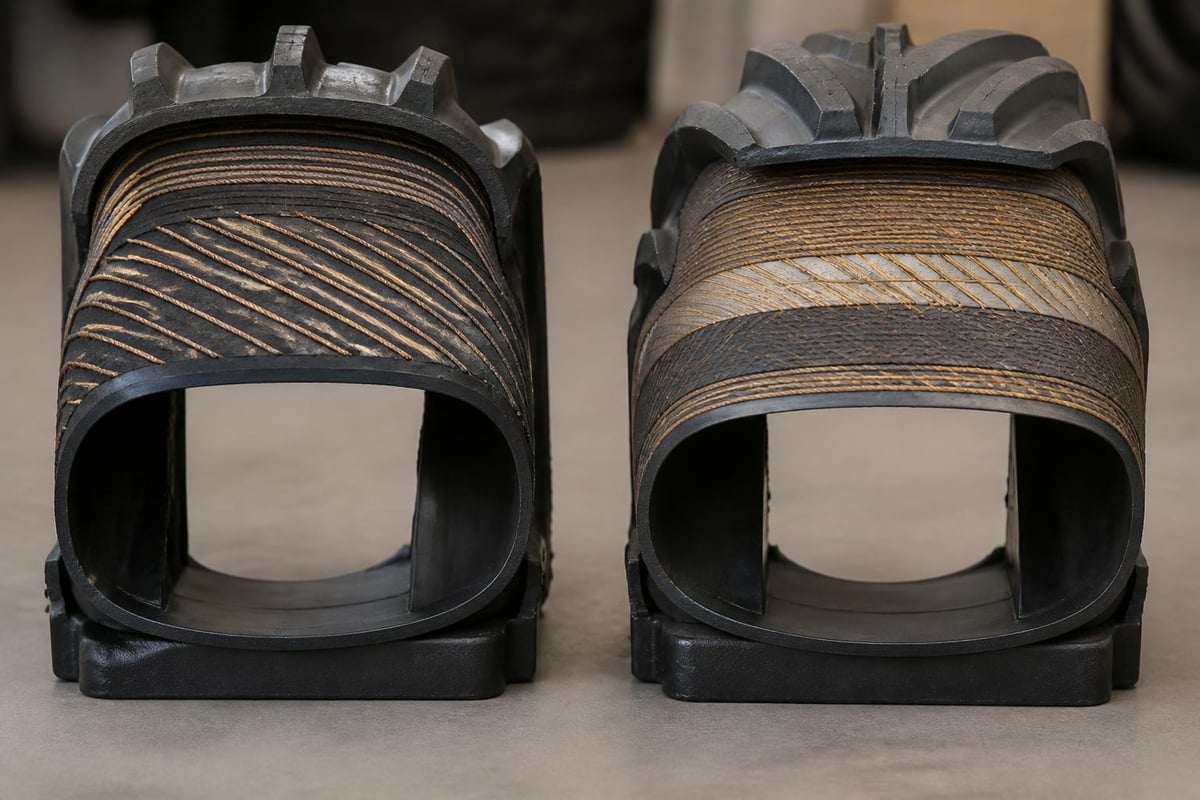
Radial agricultural tires have become the industry standard for most applications, featuring cords that run perpendicular to the direction of travel. This construction allows the sidewall and tread to function independently, enabling lower inflation pressures without compromising load capacity. The radial design distributes ground pressure more evenly across the contact patch, reducing soil compaction by up to thirty percent compared to bias-ply alternatives in controlled studies.
Key construction elements include:
- Steel belt packages that maintain tread stability under heavy loads
- Polyester or nylon carcass plies for flexibility and impact resistance
- Reinforced bead areas to prevent unseating during low-pressure operation
- Compound formulations balancing cut resistance with tread life
Bias-ply designs remain relevant for specific applications where sidewall strength trumps ride quality, particularly in industrial and construction settings. These tires feature crisscrossed plies that create a stiffer, more puncture-resistant sidewall suited to loader work and applications involving sharp debris.
Tread Pattern Engineering for Traction and Self-Cleaning
Lug angle, spacing, and depth directly determine how effectively agricultural tires convert engine torque into forward motion. R1 tread patterns-the most common agricultural designation-feature angled lugs typically twenty-three degrees from the centerline, providing a balance between straight-line stability and rotational traction. According to recent research on tread pattern design, optimized lug angles can improve traction efficiency by fifteen to twenty percent while reducing slippage and associated fuel consumption.
| Tread Type | Lug Depth | Primary Application | Soil Conditions |
|---|---|---|---|
| R1 | Standard | General field work | Normal moisture |
| R1W | 20% deeper | Wet, muddy conditions | High moisture |
| R3 | Shallow | Turf, orchard work | Minimal disturbance |
| R4 | Industrial | Loader, backhoe | Hard surfaces, debris |
Self-cleaning characteristics become critical in heavy clay or wet conditions where mud accumulation between lugs destroys traction. Wider lug spacing and curved lug profiles promote mud shedding as the tire rotates, maintaining consistent ground contact. The SAE J3229 standard provides performance benchmarks for agricultural wheel assemblies, ensuring that tire and rim combinations can withstand the cyclical stress of field operations.
Inflation Pressure Management and Soil Health
Perhaps no single factor influences both tire performance and soil compaction more profoundly than inflation pressure. The relationship between tire pressure, contact area, and ground pressure forms the foundation of sustainable soil stewardship in mechanized agriculture.
The Physics of Ground Pressure
Ground pressure approximates tire inflation pressure across the contact patch. A tire inflated to twenty PSI creates roughly twenty PSI of pressure on the soil surface, while the same tire at forty PSI doubles that pressure. This direct relationship means proper inflation management serves as the most accessible tool for reducing compaction risk.
Reducing inflation pressure increases the contact patch area, spreading equipment weight over more soil surface. However, this strategy requires careful balancing against sidewall stress, rim protection, and the tire's load-carrying capacity. Operating consistently below recommended pressures accelerates sidewall fatigue and increases heat buildup, potentially leading to catastrophic failure.
Dual-pressure strategies have emerged as best practice:
- Field pressure: Lowered to minimum safe level for reduced compaction
- Transport pressure: Increased for road travel to protect sidewalls and improve handling
- Seasonal adjustment: Modified based on soil moisture and load conditions
Central tire inflation systems automate this adjustment, allowing operators to modify pressure from the cab based on real-time conditions. While representing significant upfront investment, these systems deliver measurable fuel savings and compaction reduction for operations running equipment across varied terrain daily.
Compaction Depth and Long-Term Soil Structure
Surface compaction from tire pressure represents only part of the soil health equation. Research from the University of Minnesota Extension demonstrates that subsoil compaction from axle loads persists for years, reducing root penetration and water infiltration long after surface disturbance heals. Total equipment weight-not just tire selection-determines compaction risk below eight to ten inches depth.
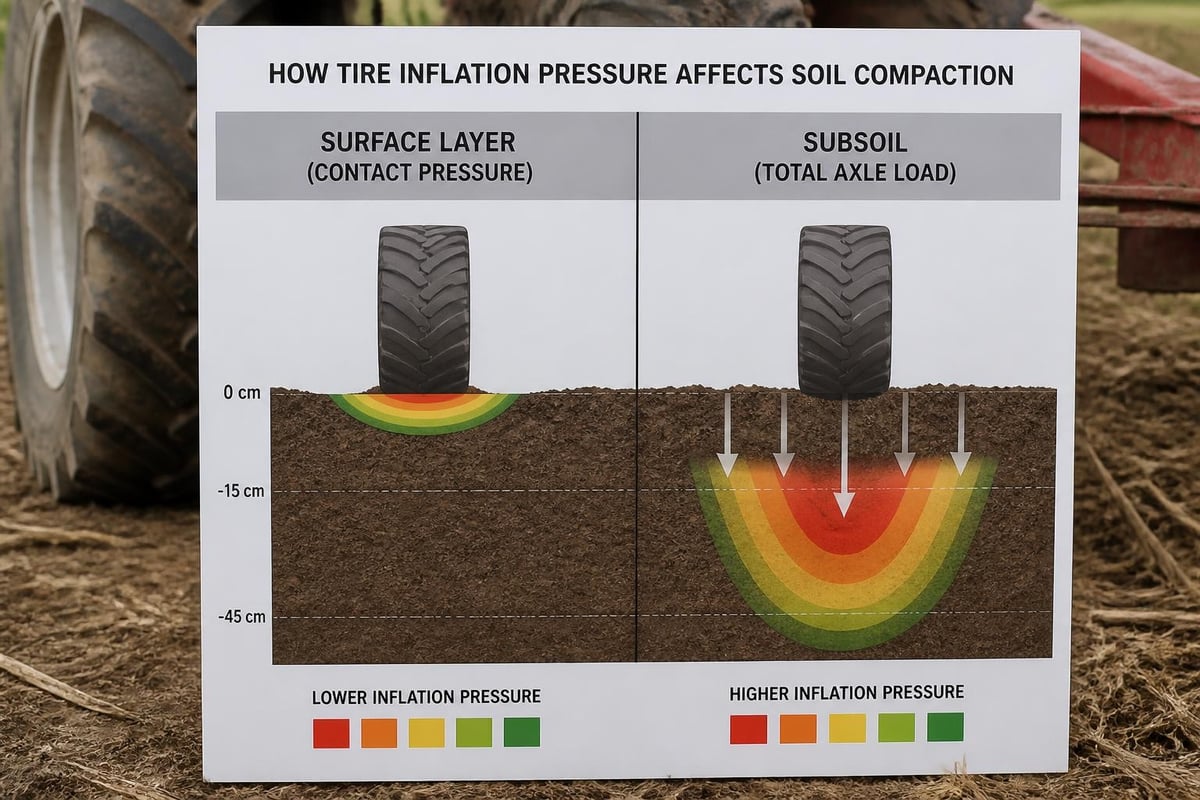
This reality means distributors serving large-scale operations should emphasize both tire technology and operational practices. Penn State Extension guidance on avoiding soil compaction recommends controlled traffic farming, where equipment follows permanent lanes, limiting the percentage of field area exposed to wheel traffic. Pairing this practice with properly specified agricultural tires multiplies the soil conservation benefit.
Tire Selection Criteria for Different Agricultural Applications
Farm equipment diversity demands equally diverse tire specifications. A combine harvester operates under fundamentally different conditions than a tractor pulling tillage equipment, requiring distinct tire characteristics for optimal performance.
Row-Crop Tractors and Primary Tillage
High-horsepower tractors performing primary tillage need maximum traction with minimal slippage. R1W tires with twenty percent additional lug depth excel in these applications, particularly in spring conditions when fields retain moisture. The deeper lugs penetrate surface residue and reach firmer soil below, providing bite without excessive wheel spin.
Load capacity becomes critical as tractor weights have increased substantially with rising horsepower ratings. Modern four-wheel-drive tractors commonly exceed thirty thousand pounds before adding implements. Tire manufacturers address this through increased air volume (larger tire dimensions) and reinforced construction rated for higher loads at equivalent pressures.
For distributors working with wholesale tire manufacturers, understanding regional soil types and common farming practices enables better inventory planning. Clay-heavy regions require different tread specifications than sandy loam areas, and stocking decisions should reflect local agronomic conditions.
Harvest Equipment and Seasonal Loading
Combines, grain carts, and other harvest equipment create unique tire challenges through extreme seasonal weight fluctuations. An empty grain cart might weigh five thousand pounds, while a loaded unit exceeds forty thousand pounds-an eight-fold increase that demands tires capable of handling peak loads without chronic overinflation during light operation.
Dual and triple tire configurations address this challenge through:
- Distributing load across multiple contact patches
- Reducing individual tire pressure requirements
- Increasing total flotation area to minimize compaction
- Providing redundancy against mid-harvest failures
Flotation tires-extra-wide designs with large air volumes-serve specialized roles in harvest operations. These tires sacrifice some traction for dramatically increased footprint area, making them ideal for grain carts and other support equipment that prioritize soil preservation over pulling power.
Durability Factors and Service Life Optimization
Agricultural tires face punishing service conditions that test every aspect of construction quality. Stubble damage, rim slippage, ozone weathering, and cyclical flexing all contribute to premature failure when tires are mismatched to applications or poorly maintained.
Stubble and Sidewall Puncture Resistance
Post-harvest stubble, particularly corn and sorghum stalks, creates sharp hazards that penetrate sidewalls and tread bases. Tires operating in these conditions benefit from reinforced sidewall construction and stubble-deflector tread elements that shield vulnerable areas. Compound formulation also matters-harder rubber resists cuts better but may sacrifice traction and ride quality.
Regular inspection protocols catch developing damage before catastrophic failure. Systematic tire inspection practices should examine sidewalls for cuts, embedded debris, and weather checking, particularly on equipment stored outdoors year-round. Early detection allows repair before structural integrity is compromised.
| Failure Mode | Primary Cause | Prevention Strategy | Detection Method |
|---|---|---|---|
| Sidewall cut | Stubble penetration | Stubble guards, compounds | Visual inspection |
| Rim slip | Under-inflation | Proper pressure, ballast | Valve stem position |
| Tread separation | Heat buildup | Load/pressure match | Irregular wear |
| Weather cracking | UV/ozone exposure | Covered storage, dressings | Sidewall inspection |
Load and Pressure Matching for Extended Life
Operating agricultural tires within manufacturer specifications dramatically extends service life. The relationship between load, pressure, and speed follows published load-inflation tables that specify minimum safe pressures for given weights and velocities. Chronic under-inflation accelerates sidewall fatigue, while over-inflation concentrates wear on the tread center and increases operator fatigue through harsh ride quality.
Annual agricultural tire maintenance cycle showing pre-season inspection points, mid-season pressure checks, post-harvest damage assessment, and off-season storage procedures that maximize tire service life
Ballasting strategies interact closely with tire selection. Liquid ballast increases traction weight on drive axles but also increases soil compaction and places additional stress on tire sidewalls. Front-wheel-assist tractors reduce the need for aggressive ballasting by distributing pulling force across four driven tires rather than two, extending tire life while improving traction efficiency.
Regulatory Considerations and Safety Standards
Agricultural tires operate in a complex regulatory environment spanning transportation safety, environmental protection, and workplace safety domains. Understanding these requirements helps distributors guide customers toward compliant solutions while avoiding liability exposure.
Department of Transportation and Road Transport
When agricultural equipment travels public roads-an unavoidable reality for most farming operations-tires must meet Department of Transportation specifications for speed rating and construction. The Federal Register maintains updated classifications for off-road and agricultural tire applications, including specific markings and performance requirements.
Speed ratings for agricultural tires typically fall well below highway tire specifications, with most designs limited to twenty-five to thirty miles per hour maximum sustained speed. Operators must understand these limitations to avoid heat-related failures during road transport between fields or to market.
Critical safety practices include:
- Matching transport speed to tire speed rating
- Increasing inflation pressure for road transport per manufacturer tables
- Ensuring proper wheel torque and lug nut condition
- Avoiding sudden lane changes or panic stops that stress sidewalls
University of Florida IFAS guidance on safe tractor operations emphasizes tire condition as a fundamental safety factor, particularly for operations involving steep terrain or road shoulders where tire failure could cause rollover accidents.
Environmental and Soil Conservation Regulations
Soil health initiatives at state and federal levels increasingly recognize soil compaction as a form of land degradation requiring management attention. The FAO’s technical guidance on soil physical degradation frames compaction within broader agricultural sustainability goals, noting its effects on water infiltration, erosion resistance, and carbon sequestration capacity.
While few jurisdictions directly regulate tire selection, conservation programs often incentivize practices that reduce compaction risk. Equipment distributors can position appropriate agricultural tire solutions as tools for meeting program requirements and accessing associated financial support. Understanding soil compaction science enables more credible technical consultation with customers navigating these programs.
Market Trends and Technology Developments
The agricultural tire market continues evolving in response to equipment trends, precision agriculture adoption, and sustainability pressures. Distributors who understand emerging technologies can better anticipate customer needs and inventory requirements.
Precision Agriculture Integration
GPS-guided controlled traffic farming requires tires that maintain consistent dimensions under varying loads to preserve precise lane positioning across seasons. This demand favors radial construction with its superior dimensional stability and has accelerated the decline of bias-ply agricultural tires in row-crop applications.
Automated inflation systems represent the next integration frontier, potentially linking tire pressure to implement load sensors and field mapping systems. Such systems could automatically reduce pressure when entering field headlands or increase pressure when returning to transport mode, optimizing performance without operator intervention.
Sustainability and Lifecycle Considerations
Environmental consciousness increasingly influences purchasing decisions, creating opportunities for tires demonstrating measurable sustainability advantages. Lower rolling resistance reduces fuel consumption and emissions per acre farmed. Extended tread life reduces disposal frequency and associated environmental costs. Distributors who can quantify these benefits address customer concerns beyond initial purchase price.
Retreading programs for agricultural tires remain underdeveloped compared to trucking applications but represent potential value recovery for operators managing large fleets. The structural integrity requirements and irregular wear patterns of agricultural service create technical challenges, though specialty retreaders have developed solutions for specific tire lines and applications.
For distributors seeking reliable manufacturing partners, working with established producers ensures consistent quality and specification compliance. Light truck tire manufacturers who also produce agricultural lines often bring cross-industry quality systems and testing capabilities that benefit all product categories.
Selection Framework for Distributors and End Users
Matching agricultural tires to specific applications requires systematic analysis of operating conditions, equipment specifications, and performance priorities. A structured selection process reduces costly mismatches and builds customer confidence in distributor expertise.
Application Assessment Methodology
Begin every tire recommendation by documenting the equipment type, typical loads, operating speeds, and predominant soil conditions. A tractor pulling a chisel plow through spring clay faces entirely different demands than the same tractor mowing summer pasture, potentially justifying different tire specifications or dual sets for seasonal swap.
Critical assessment questions include:
- What percentage of operation occurs on paved roads versus fields?
- What are minimum and maximum equipment loads throughout the operating year?
- What soil types dominate the operating environment?
- Does the operation practice controlled traffic or random trafficking?
- What inflation adjustment capability exists (manual, semi-automated, fully automated)?
Answers to these questions guide selection among R1, R1W, or specialty tread patterns, radial versus bias construction, and standard versus increased flexion (IF) or very high flexion (VF) technologies. IF and VF tires carry higher loads at reduced pressures compared to standard designs, offering compaction advantages where equipment weight cannot be reduced.
Total Cost of Ownership Analysis
Initial purchase price represents only one component of agricultural tire cost. Fuel consumption influenced by rolling resistance, replacement frequency driven by wear rate, downtime costs from premature failure, and crop yield impacts from soil compaction all contribute to total ownership cost.
| Cost Component | Calculation Method | Typical Impact Range |
|---|---|---|
| Purchase price | Invoice cost | Baseline (100%) |
| Fuel efficiency | Rolling resistance × hours × fuel cost | 15-25% of purchase |
| Service life | Cost ÷ total hours to replacement | Variable, 200-300% |
| Downtime | Failure frequency × repair time × opportunity cost | 5-10% annually |
| Yield impact | Compaction effect × acres × crop value | Difficult to quantify |
Distributors who help customers quantify these factors differentiate themselves from price-focused competitors. Demonstrating that a tire costing twenty percent more delivers thirty percent longer service life makes the value proposition self-evident, building long-term customer relationships based on performance rather than lowest initial cost.
Agricultural tire selection fundamentally shapes farm equipment performance, operational costs, and long-term soil health outcomes. Understanding the engineering principles, application requirements, and performance trade-offs enables distributors and operators to make informed decisions that optimize both immediate productivity and sustainable land stewardship. OTR TIRE THAI manufactures premium agricultural tires engineered for international quality standards, serving distributors across more than eighty countries with wholesale pricing and technical support. Contact our team to discuss how our agricultural tire solutions can meet your specific market requirements and customer applications.
